

By Global Environmental Desk
Published October 2026
Executive Overview
Africa’s monitored wildlife populations have suffered an alarming average decline of 80% since 1970, according to the newly released Living Planet Report 2026. The comprehensive global assessment, published on October 8, tracks the shifting fortunes of mammals, birds, reptiles, amphibians, and fish across the globe, revealing a planetary biodiversity crisis that continues to outpace current conservation efforts.
While Africa’s 80% contraction is stark, it sits within a broader worldwide emergency. Globally, monitored vertebrate populations have dropped by an average of 73%. Latin America and the Caribbean recorded the most catastrophic regional decline at 95%. However, the figures do not imply that 80% of all individual wild animals or entire species in Africa have vanished from the face of the earth. Rather, the metric—compiled using the prestigious Living Planet Index (LPI)—measures the average proportional change in the size of thousands of monitored animal populations over half a century.
Crucially, the report is not entirely a chronicle of despair. Hidden within the sweeping statistical averages are vital pockets of resilience—islands of recovery forged through decades of persistent, community-led conservation, targeted anti-poaching measures, and legal reforms. Released just as international governments prepare to evaluate progress toward the ambitious Kunming-Montreal Global Biodiversity Framework, the report serves as both a sobering warning siren and a roadmap for systemic, structural transformation.
Detailed Chronology and Methodological Scope: Tracking 50 Years of Change
To understand the gravity of the Living Planet Report 2026, one must examine the rigorous methodology underpinning the data. Managed by the Zoological Society of London (ZSL) in partnership with the World Wide Fund for Nature (WWF), the Living Planet Index represents the gold standard in tracking vertebrate population trends globally.
The Evolution of the Index
- 1970 (The Baseline): The index established its temporal baseline, capturing the state of global ecosystems at the dawn of modern environmental awareness. Over subsequent decades, scientists expanded the scope of monitored species to build a comprehensive picture of vertebrate health.
- The 2026 Assessment: The latest iteration draws on an unprecedented dataset: 35,803 population trends spanning 5,790 vertebrate species worldwide. By consistently tracking these populations through standardized monitoring protocols, researchers can observe whether specific groups are expanding, holding steady, or collapsing.
- Release Day (October 8, 2026): The report dropped globally, instantly shifting the discourse among environmental policymakers, international NGOs, and sovereign governments. Its release is strategically timed ahead of upcoming biodiversity summits, where world leaders must answer for their commitments under international treaties.
Clarifying the Metrics
Experts emphasize the need for careful nuance when interpreting the 80% figure. A common misconception is that Africa has lost 80% of its total animal biomass or that four out of every five individual animals have died. Instead, the index aggregates population trends. If a monitored herd of elephants drops from 1,000 to 100 individuals, it registers a 90% decline in that specific population.
When aggregated across thousands of species—many of which are experiencing steep, downward spirals—the cumulative effect pulls the overall index down drastically. Conversely, the report reveals that roughly half of all populations included in the index are actually stable or increasing. However, the sheer magnitude of the catastrophic declines among the remaining 50% outweighs these localized victories, skewing the overall index deeply into negative territory.
Supporting Context & Metrics: Pressures, Drivers, and Regional Realities
The erosion of Africa’s biodiversity does not happen in a vacuum. It is driven by an interlocking matrix of anthropogenic pressures, ecological fragmentations, and systemic global forces.
The Primary Threats
Across global assessments, habitat destruction and degradation consistently rank as the most frequently reported pressures facing wildlife populations. In Africa, this manifests in several distinct ways:
- Habitat Fragmentation: The relentless expansion of agricultural frontiers, industrial logging, and large-scale mining operations carves up pristine wilderness. Roads and other linear infrastructure slice through once-continuous ecosystems, isolating wildlife populations and rendering previously impenetrable remote regions fully accessible to human exploitation.
- Overexploitation and Poaching: Illegal wildlife trade, commercial hunting, and localized bushmeat poaching exert immense pressure on vulnerable species.
- Global Megatrends: Climate change, environmental pollution, the proliferation of invasive species, and wildlife diseases compound these localized threats, creating compounding vulnerabilities.
Case Study: The Congo Basin and African Forest Elephants
Nowhere is this multi-faceted crisis more apparent than in the Congo Basin, the planet’s second-largest tropical rainforest and a vital global carbon sink. The region faces mounting pressures from unchecked agricultural expansion, commercial timber concessions, and resource extraction corridors.

According to WWF data highlighted in the report, populations of the African forest elephant (Loxodonta cyclotis) have plummeted by more than 60% over recent decades. These intelligent, highly social architects of the forest play an irreplaceable role in seed dispersal and ecosystem maintenance. Their loss triggers cascading ecological consequences throughout the Congo Basin, severely compromising the forest’s structural integrity and its capacity to sequester carbon.
The Southern African Counter-Example: Savanna Elephants
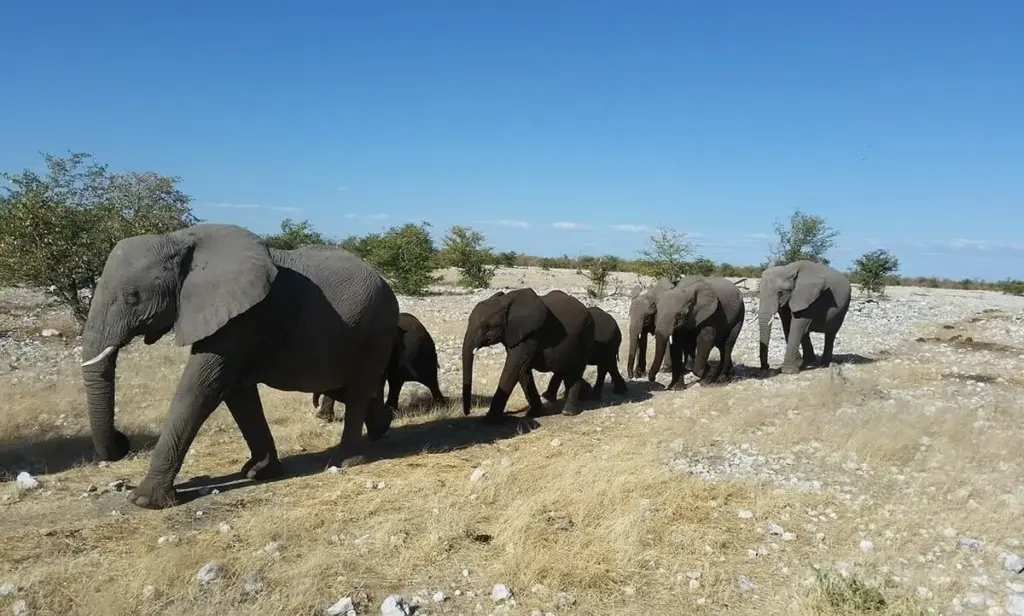
Conversely, the report demonstrates that active, innovative management can bend the curve. In Southern Africa, savanna elephants (Loxodonta africana) remain classified as endangered and face downward pressures across substantial portions of their historic range.
However, in specific regions where local communities are empowered to directly manage wildlife—and where those communities reap tangible economic benefits from conservation initiatives—elephant populations are actually on the rise. These localized success stories are rarely isolated; they are invariably backed by robust anti-trafficking law enforcement, judicial reforms to prosecute wildlife criminals, and systemic crackdowns on systemic corruption.
Official Statements: Voices from the Frontlines
The release of the Living Planet Report 2026 prompted urgent responses from conservation leaders, policy architects, and Indigenous advocates, emphasizing that technical interventions alone will not suffice.
"Reversing this trend requires coordinated action across governments, civil society and other sectors, with Indigenous Peoples and local communities at the centre," stated Nadège Nzoyem, WWF’s Regional Director for the Congo Basin, during the official launch.
Nzoyem’s emphasis on local stewardship reflects a growing consensus within the global conservation community. For decades, "fortress conservation" models—which marginalize or displace local populations in the name of nature protection—have frequently backfired, alienating the very people best positioned to defend local ecosystems. Modern conservation frameworks increasingly recognize that sustainable biodiversity management must be participatory, equitable, and economically viable for rural communities.
Furthermore, international policy frameworks are shifting to address the root causes of ecological decline. Governments are currently preparing to assess their baseline performance against the Kunming-Montreal Global Biodiversity Framework. Adopted under the Convention on Biological Diversity, the framework outlines 23 targeted outcomes to be achieved by 2030, including:
- Halting human-induced extinctions and actively supporting the recovery of threatened species.
- Conserving at least 30% of the world’s terrestrial, inland water, and marine areas (widely known as the "30×30" target).
- Reforming financial flows to eliminate harmful subsidies that drive environmental degradation.
Future Outlook: Beyond Symptom Treatment to Systemic Transformation
The overarching message of the Living Planet Report 2026 is clear: protecting individual species in isolated protected areas or fencing off shrinking habitats is a necessary but profoundly insufficient strategy.
The Need for Systemic Overhauls
To genuinely reverse biodiversity loss, humanity must tackle the underlying, systemic drivers embedded in global civilization. The report argues that foundational sectors—including global food production systems, energy generation models, and international financial architectures—must undergo radical transformation.
- Transforming Food Systems: Industrial agriculture remains one of the primary engines of habitat conversion. Transitioning toward regenerative agriculture, sustainable agroforestry, and localized food security networks can alleviate the pressures pushing wild ecosystems to the brink.
- Reforming Financial Flows: Public and private financial institutions must pivot away from funding extractive industries that degrade natural capital. Instead, capital markets must channel investments into green infrastructure, sustainable livelihoods, and conservation finance mechanisms.
- Empowering Indigenous Guardians: Indigenous Peoples and local communities manage lands that safeguard a vast percentage of the remaining global biodiversity. Secure land tenure rights and financial recognition for these communities are paramount for long-term ecological stability.
Conclusion
Africa’s 80% wildlife decline since 1970 is more than a statistical metric; it is an urgent distress signal from the heart of the planet’s most vital ecosystems. Yet, the resilience observed in community-managed landscapes proves that decline is not destiny. If global leaders, financial institutions, and local communities can summon the political will to enact systemic change ahead of the 2030 targets, the next half-century could chronicle a historic global renaissance for biodiversity rather than its twilight.



