

Executive Overview
In modern fitness and sports medicine, substantial resources are dedicated to training visible, high-impact muscle groups. Athletes and fitness enthusiasts obsess over quad development, glute activation, hamstring flexibility, and core stability. Yet, the literal foundation of human movement—the foot—remains largely ignored. Consisting of 26 bones, 33 joints, and over 100 muscles, tendons, and ligaments, the human foot is an evolutionary masterpiece of engineering. Despite this complexity, modern lifestyle habits and footwear design have effectively casted and deconditioned these vital structures.
Recent clinical insights and a growing body of biomechanical research suggest that ignoring foot health is a critical blind spot in long-term physical durability. Dysfunction at the ground level does not remain isolated; it propagates upward through the ankle, knee, hip, and spine, contributing to chronic lower back tightness, hip instability, and premature joint wear.
This investigative report explores the biomechanics of foot health, details a rigorous 30-day structural foot-reconstruction trial, examines the neurological feedback loops governing movement, and analyzes the paradigm shift toward functional, minimalist footwear.
Detailed Chronology: The 30-Day Foot Reconstruction Experiment
To evaluate the practical implications of foot-focused training and minimalist footwear, an empirical 30-day self-experiment was conducted. The objective was to systematically reintroduce sensory input and load to the intrinsic muscles of the feet through targeted interventions, structural adjustments, and a comprehensive footwear overhaul.
[Day 1-7] ------------> [Day 8-15] -----------> [Day 16-22] ----------> [Day 23-30]
Footwear Audit &        Toe Spacers &           Barefoot Grounding     Transition to Functional
Slipper Elimination     Active Strength Work    & Sensory Activation   Footwear & Assessment
Phase 1: The Footwear Audit and Environmental Baseline (Days 1–7)
The experiment began with a comprehensive audit of daily footwear. Traditional athletic and casual shoes were evaluated based on three primary criteria: toe-box width, heel-to-toe drop, and sole cushioning. The results were telling: the majority of standard shoes featured tapered toe boxes that compressed the hallux (big toe) and lateral digits, along with highly cushioned, elevated heels that altered natural standing posture.
To establish an immediate baseline of natural movement, all supportive house slippers and cushioned slides were eliminated. The subject committed to complete barefoot movement while indoors. This initial phase exposed immediate weaknesses; the absence of artificial arch support forced the intrinsic muscles, such as the flexor digitorum brevis, to engage directly with flat, hard flooring. By day four, mild fatigue was noted along the plantar fascia, indicating that these underused muscle groups were beginning to adapt to the lack of external support.
Phase 2: Active Realignment via Toe Spacers (Days 8–15)
To counteract years of structural compression caused by narrow-toed athletic footwear, anatomical toe spacers were introduced. Designed to restore the natural fan-like shape of the human foot, the spacers were worn during sedentary evening hours, starting with 15-minute intervals and progressing to 60 minutes.

Initially, the structural stretch was highly uncomfortable, highlighting the degree of chronic adaptive shortening in the transverse metatarsal ligaments and adductor hallucis muscles. This intervention was especially critical following lateral-movement-heavy activities like pickleball, which subject the feet to intense lateral forces inside restrictive shoe chambers. By the end of the second week, the initial discomfort subsided, replaced by a noticeable release of tension across the metatarsal arch.
Phase 3: Intrinsic Muscle Activation and Strength Drills (Days 16–22)
With structural alignment underway, a daily routine of foot-specific strength and mobility work was integrated directly into the workday. Utilizing a standing desk to eliminate barriers to consistency, the following protocols were performed:
- Eccentric Calf Raises: Executed slowly, focusing on a controlled five-second lowering phase to build load tolerance in the Achilles tendon and plantar complex.
- "Short-Foot" Exercises (Plantar Domed Arch): Actively pulling the ball of the foot toward the heel without curling the toes, thereby engaging the abductor hallucis and elevating the medial longitudinal arch.
- Toe Isolation Drills: Attempting to lift the big toe independently while keeping the lesser toes pressed to the floor, and vice versa. This drill proved highly humbling, revealing a stark lack of motor control and neuromuscular connection.
- Barefoot Balance Training: Performing single-leg balance drills on unstable surfaces to force rapid, micro-adjustments throughout the foot and ankle complex.
Phase 4: Integrating Functional Footwear (Days 23–30)
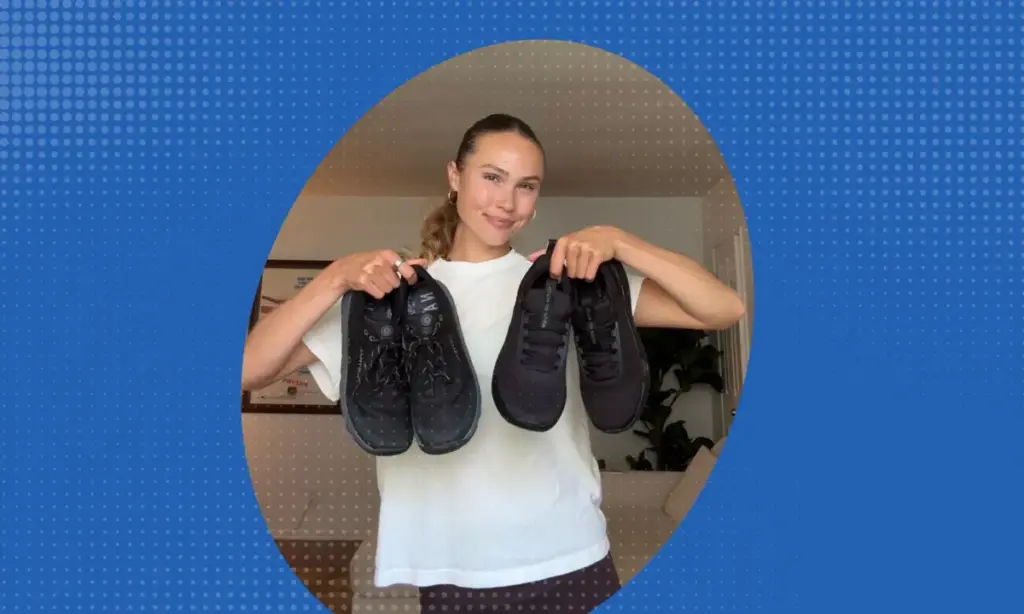
The final phase involved testing specialized footwear designed to permit natural foot function while providing adequate protection for daily life and athletic pursuits. Two distinct models were evaluated:
- The Astral TR1 Sensi HT: A zero-drop, lightweight shoe constructed with natural fibers and featuring a wide, anatomically correct toe box. Designed to maximize ground feel without completely stripping away protection, these were introduced gradually for daily walks, errands, and light training. The immediate sensation was one of liberation; the toes were allowed to splay naturally during the terminal stance phase of gait, providing a significantly wider and more stable base of support.
- While On Earth’s Move Trainer: Selected for higher-impact gym workouts and athletic training, this model features a wide toe box paired with a minimal 6mm heel-to-toe drop. This design offered a middle ground, providing a touch of protective cushioning for dynamic, lateral movements while still encouraging active foot engagement and preventing the sensory dampening typical of traditional trainers.
By day 30, returning to standard, tapered athletic shoes felt restrictive and uncomfortable. The feet had adapted to the increased space and sensory feedback, rendering conventional footwear choices counterintuitive to natural movement.
Supporting Context & Metrics: The Biomechanics of the Kinetic Chain
To understand why foot health is so critical to longevity, one must analyze the body through the lens of the ascending kinetic chain. The foot is not an isolated component; it is the primary interface between the human neuromuscular system and the earth.
   [Spine]       <-- Chronic Lower Back Tightness / Compensatory Shear
      ^
   [Hips]        <-- Pelvic Tilt & Lateral Instability
      ^
   [Knees]       <-- Patellar Tracking Issues & Valgus Collapse
      ^
   [Ankles]      <-- Restricted Dorsiflexion & Pronation Compensation
      ^
  [The Foot]     <-- Weak Arch / Compressed Toes (The Root Cause)
The Ascending Kinetic Chain
During gait, running, or lifting, force is transmitted from the ground upward. If the foot is weak, stiff, or structurally compromised, it cannot absorb or distribute these forces correctly.
For instance, a collapsed medial arch or a locked big toe joint (hallux limitus) alters the mechanics of the entire leg. If the big toe cannot extend properly during the push-off phase of walking, the body compensates by externally rotating the foot. This compensation forces the ankle to roll inward (overpronation), causing internal rotation of the tibia and femur. This chain reaction alters patellar tracking at the knee, compromises hip stability, and ultimately forces the lumbar spine to undergo compensatory micro-rotations to keep the head level.
What presents clinically as chronic lower back tightness or knee pain is, in many cases, a structural failure originating at the foot.
The Neurological Feedback Loop
The soles of the feet are densely populated with thousands of specialized nerve endings known as mechanoreceptors. These receptors (including Pacinian corpuscles and Merkel discs) monitor pressure, shear force, and skin stretch, instantly relaying this information to the central nervous system. This sensory loop allows the brain to map where the body is in space (proprioception) and dynamically adjust muscle recruitment to maintain balance.
| Footwear Type | Sole Thickness / Drop | Proprioceptive Feedback | Intrinsic Muscle Engagement |
|---|---|---|---|
| Traditional Cushioned Shoe | High (10–12mm drop) | Severely Dampened | Minimal (Passive Splinting) |
| Functional / Minimalist Shoe | Zero to Low (0–6mm drop) | Highly Active | High (Active Stabilization) |
| Barefoot | 0mm | Maximum | Maximum (Full Range of Motion) |
Modern, heavily cushioned athletic shoes act as sensory deprivation chambers. By placing a thick layer of synthetic foam between these mechanoreceptors and the ground, the brain receives delayed and muffled signals. To compensate for this lack of sensory clarity, the nervous system often stiffens the joints of the lower extremity, ironically increasing the impact forces transmitted to the knees and hips.
Official Statements & Clinical Perspectives
Medical and sports science experts are increasingly pointing to foot strength as an essential component of healthy aging and physical independence.
Dr. Courtney Conley, a chiropractic physician and a leading authority on foot and gait mechanics, emphasizes that declining foot strength has direct, measurable consequences on life expectancy and autonomy.
"Foot strength is a critical predictor of how well we age," states Dr. Conley. "A decline in foot and toe flexor strength directly correlates with reduced gait speed, compromised balance, and a significantly elevated risk of falls in older populations. We spend decades treating the symptoms of aging joints while completely ignoring the very foundation that keeps us upright and mobile."
Furthermore, research published in sports medicine journals indicates that strengthening the intrinsic foot muscles can yield substantial performance benefits for athletes. Improved toe-flexor strength enhances force production during sprinting, while a more stable arch reduces the risk of common overuse injuries such as plantar fasciitis, Achilles tendonitis, and shin splints.

Future Outlook: The Structural Revolution in Footwear
The fitness and footwear industries are on the cusp of a major paradigm shift. For decades, consumer footwear design was dictated by aesthetic trends and the marketing of passive support technologies—such as thick air pockets, rigid plastic orthotics, and heavy motion-control features. However, as the long-term consequences of these designs become clear, a growing consumer demand for functional footwear is emerging.
Traditional Paradigm                       Future Paradigm
--------------------                       ---------------
• Passive support & splinting              • Active muscle engagement
• Tapered toe boxes for aesthetics        • Wide, anatomical toe boxes
• Maximum cushioning & high drop           • Low/Zero drop for natural posture
• Muffled sensory feedback                 • Restored proprioceptive feedback
This structural revolution is characterized by several key shifts:
- The Rise of Wide Toe Boxes: Brands are increasingly moving away from the traditional, symmetrical shoe point, recognizing that a wide toe box allows the hallux to act as a natural stabilizer, preventing overpronation and improving balance.
- Zero-Drop Geometry: Flat platforms that keep the heel and forefoot at the same height are transitionally replacing steep heel drops, allowing the Achilles tendon and calf muscles to operate at their natural, functional lengths.
- Integrative Training Programs: Forward-thinking physical therapists and strength coaches are integrating foot-specific warm-ups and barefoot training blocks into standard athletic programming.
Practical Recommendations for Transitioning Safely
For individuals looking to reclaim their foot strength and transition to functional footwear, clinical experts advise caution. Decades of wearing highly structured shoes cannot be undone in a few days. An abrupt transition can overload unconditioned tissues, leading to stress fractures or tendonitis.
- Incorporate Barefoot Time Gradually: Begin by spending 1 to 2 hours barefoot at home each day, actively engaging in short-foot exercises and balance drills.
- Use Toe Spacers Progressively: Start with 10 to 15 minutes of passive wear in the evenings, slowly increasing the duration as joint mobility improves.
- Implement a Phased Footwear Transition: Replace daily walking shoes with a transitional model featuring a wider toe box and moderate cushioning (such as a 4–6mm drop) before moving directly to true zero-drop, ultra-thin minimalist shoes.
- Prioritize Eccentric Loading: Perform slow, controlled calf raises and ankle mobility exercises daily to build tissue resilience in the lower leg and Achilles tendon.
Ultimately, the journey to long-term physical durability does not begin in the mirror or on a weight rack. It begins at the ground level, with the 29 muscles and 26 bones that form the foundation of every step, stride, and lift. Reclaiming foot health is not merely a fitness trend; it is a fundamental requirement for lifelong movement, longevity, and physical autonomy.



