

By The Outlaw Ocean Project & Mongabay
Executive Overview
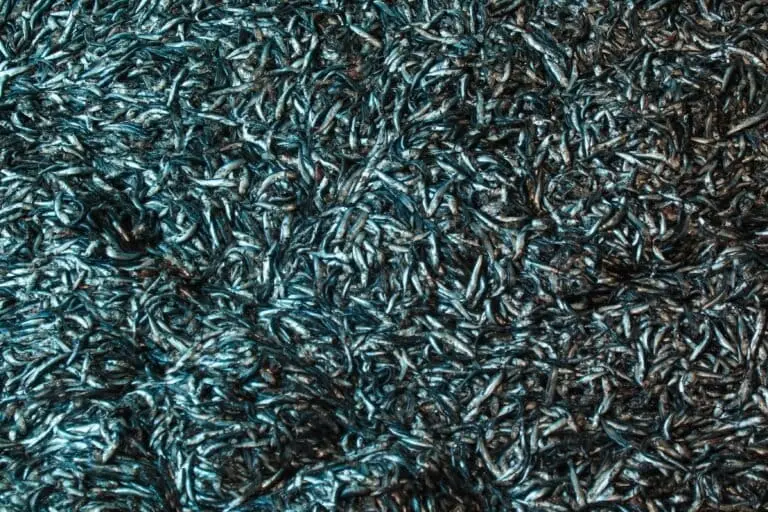
For decades, the global aquaculture and livestock industries have relied heavily on a dark-yellow powder known as fishmeal to feed farm-raised salmon, shrimp, tilapia, and poultry. Produced by drying and pulverizing wild-caught fish, this critical agricultural commodity underpins more than half of all seafood consumed worldwide. However, the path from ocean to feed trough has long been fraught with industrial hazards.
In the mid-20th century, fishmeal cargo posed a terrifying threat to global shipping. As the organic material decayed and oxidized, it routinely underwent spontaneous combustion, turning cargo holds and processing plants into infernos. The crisis was so severe that insurers blamed fishmeal for making the 1960s one of the worst decades in living history for maritime vessel losses.
The industry found a seemingly miraculous solution in 1967: ethoxyquin, a chemical antioxidant developed by Cargill. When mixed into fishmeal, ethoxyquin suppressed oxidation, virtually eliminating spontaneous combustion and allowing safe, bulk transport across continents.
Yet, this triumph of industrial safety harbored a hidden cost. Decades later, toxicological studies revealed that ethoxyquin—and an impurity known as p-phenetidine—carried significant carcinogenic and mutagenic risks. This discovery triggered a sweeping regulatory backlash, culminating in a full ban across the European Union, the United Kingdom, and several EEA member states.

Today, the controversy has expanded beyond cargo ships into consumer supermarkets, pet food aisles, and international courtrooms. As major exporters pivot to alternative chemical replacements like butylated hydroxyanisole (BHA)—which carries its own carcinogenic concerns—regulators, scientists, and consumers are forced to reckon with an unsettling reality: the chemical additives keeping the global fishmeal trade stable may be compromising human health and aquatic ecosystems.
Detailed Chronology: From Maritime Disasters to Modern Bans
The Age of Spontaneous Combustion (1950s–1960s)
Long before fishmeal became a cornerstone of modern industrial aquaculture, it was recognized as a notoriously volatile cargo. Because the pulverized powder undergoes rapid oxidation as it decays, it generates internal heat that can easily trigger explosive fires.
Historical records paint a dramatic picture of the danger:
- January 8, 1966: A South African ship caught fire at sea. Upon reaching port in Bristol, U.K., dock firefighters opened a smoking container, causing a conflagration that burned continuously for five days.
- February 11, 1966: A Liberian steamship caught fire near Rotterdam. The blaze tore through storage areas containing barrels of petrol, melting the vessel’s deck and mast before sinking it.
- March 19, 1966: A Danish ship ignited off the coast of Long Beach, California. The disaster injured three firefighters, killed a longshoreman, and racked up over $1 million in damages.
These were not isolated anomalies. A historical review conducted by the Outlaw Ocean Project revealed that fishmeal cargo ignited at least 90 fires on ships and in processing plants worldwide between the 1950s and 1970s. One contemporary feed manufacturer described the powder as "practically as flammable as gunpowder," noting that its fires were notoriously difficult to control and could burn for days even inside a flooded ship’s hold. In 1963, the chair of the Liverpool Underwriters’ Association explicitly cited fishmeal as a primary driver behind what insurance groups termed the worst decade for ship losses in living history.
The Ethoxyquin Breakthrough (1967–1979)
In 1967, U.S. agricultural giant Cargill announced a breakthrough: ethoxyquin. Originally developed to prevent rubber tires from drying out and utilized as a preservative for fruits and alfalfa, ethoxyquin proved remarkably effective at halting the oxidation and resulting heating of fishmeal.

By the late 1960s, trial shipments—such as a 400-metric-ton transport from Peru that arrived safely in Florida—paved the way for massive trade expansion. Cargill announced plans to ship 100,000 metric tons of Peruvian fishmeal annually to the United States. Branded as "AO fishmeal" (for antioxidant), the treated product could finally be transported in bulk to distant inland markets across Washington, Oregon, Idaho, Utah, Colorado, and Southern California.
Feed companies quickly capitalized on the chemical’s utility, marketing it not only as a safety measure but as a nutritional enhancer. Advertisements from brands like Red Rose Poultry Feeds and Hubbard Milling Company claimed that ethoxyquin successfully protected vital vitamins A and E while boosting farm profitability.
The industry response was swift. Shipboard fires plummeted from roughly 16 per year down to just five in 1967. By 1976, the U.S. Coast Guard mandated ethoxyquin treatment for fishmeal shipments, and by 1979, the United Nations body overseeing maritime activity formally recommended its use to prevent spontaneous combustion.
The Regulatory Awakening and the EU Ban (1969–2017)
The triumph of ethoxyquin, however, was soon overshadowed by rising health concerns. As early as 1969, U.N. food and agriculture authorities warned that toxic effects had been observed in laboratory animals fed high concentrations of the chemical, and that dermatitis among fruit packers suggested handling risks.
In 1987, a landmark study by British researchers (Manson et al.) concluded that ethoxyquin caused severe kidney damage and exhibited a potentially carcinogenic effect in laboratory rats.

Decades later, the regulatory walls began to close in. In 2015, the European Food Safety Authority (EFSA) identified an impurity within ethoxyquin known as p-phenetidine as a possible mutagen capable of causing genetic material damage. Two years later, in 2017, the European Commission suspended the authorization of ethoxyquin in animal feed across the entire European Union.
This ban swiftly rippled across the European Economic Area, leading the U.K., Norway, Iceland, and Liechtenstein to outlaw the chemical entirely. Other major economies—including the United States, Australia, Japan, and South Korea—opted to restrict ethoxyquin rather than ban it outright, establishing maximum permissible residue limits in feed.
Supporting Context & Metrics: Global Supply Chains and Contamination
Tracing the Trade: From China to the Americas
The global fishmeal trade is a vast, interconnected network. Approximately 80% of the seafood consumed in the United States is imported, with China serving as the primary supplier. In 2024 alone, the U.S. imported 768 million pounds (348 million kilograms) of seafood from China, according to National Oceanic and Atmospheric Administration (NOAA) trade data.
At the same time, Asia remains the largest consumer market for feed antioxidants, with China leading regional consumption. This reliance on ethoxyquin has created severe environmental fallout. In 2018, Chinese environmental researchers studying water pollution discovered that ethoxyquin was among the most abundant contaminants in a Yangtze River reservoir supplying drinking water to more than half of Shanghai.
Traces in Imported Seafood
Despite overseas bans, ethoxyquin continues to enter consumer markets through imported aquaculture products. An exhaustive review of more than 350,000 weekly U.S. Food and Drug Administration (FDA) inspection reports from 2018 to 2022 revealed trace amounts of the chemical in three primary seafood categories:

- Shrimp: Predominantly sourced from Indonesia and India.
- Salmon: Most frequently traced to Chilean aquaculture operations.
- Tilapia: Commonly imported from China.
While the levels detected by the FDA remained below federally established safety thresholds, public health advocates argue that U.S. standards are dangerously lax compared to the EU’s zero-tolerance policy. Furthermore, FDA data indicates that imported seafood is more than 10 times more likely to arrive in the U.S. bearing ethoxyquin residues than tested agricultural produce such as asparagus, cucumbers, and tomatoes.
Legal Fallout and Consumer Litigation
In the United States, consumer frustration over hidden chemical additives has manifested in a wave of high-stakes litigation. Rather than focusing solely on direct toxicity, plaintiffs have targeted misleading marketing practices:
- Pet Food Lawsuits: In 2019, the NGO Toxin Free USA sued the J.M. Smucker Company and Ainsworth Pet Nutrition over pet food marketed as "natural" and free of "artificial preservatives" despite containing ethoxyquin. A similar 2019–2021 lawsuit targeted Nestlé Purina Petcare Co. Both cases were ultimately settled out of court.
- Supermarket and Seafood Brand Accountability: In 2022, separate class-action lawsuits were filed against German supermarket chain Aldi, Inc. and major seafood distributor Gorton’s Inc. Plaintiffs alleged that marketing Atlantic salmon and frozen tilapia as "sustainably sourced" or "environmentally friendly" constituted false advertising, citing studies linking ethoxyquin residues to developmental deformations and mortality in aquatic life and crustaceans. Both lawsuits resulted in out-of-court settlements.
Official Statements and Industry Pivot
Cargill’s Global Shift
In statements provided to the Outlaw Ocean Project, agribusiness giant Cargill addressed its historical and modern relationship with the chemical. The company noted that since 2005, it has actively "evaluated alternative antioxidants for use in fishmeal to support transport stability and respond to evolving customer and regulatory expectations."
Cargill confirmed that it no longer utilizes ethoxyquin in its global salmon feed business or in any market where the chemical is unauthorized. Furthermore, the company clarified that antioxidants are applied by independent fishmeal production facilities prior to transport, rather than being added downstream during aquafeed manufacturing.
The Rise—and Risks—of BHA
As European and domestic markets rejected ethoxyquin, feed producers and fishmeal exporters scrambled for alternatives. Major Peruvian exporters, who supply 100% ethoxyquin-free fishmeal to Europe, Canada, the U.S., and Australia, began adopting natural additives—such as rosemary extract and vitamin E compounds—alongside synthetic replacements like butylated hydroxyanisole (BHA).

BHA quickly emerged as the industry’s preferred synthetic substitute due to its lower cost and potent antioxidant performance. However, this transition has triggered yet another cycle of unintended toxicological consequences:
- Carcinogenic Classifications: In 1991, the U.S. National Toxicology Program identified BHA as "reasonably anticipated to be a human carcinogen." This classification was reinforced in 2008 by Japanese researchers who linked BHA ingestion to malignant tumor formation in laboratory rats.
- Regulatory Disconnect: Despite these findings, European food safety regulators have maintained that BHA remains safe for consumer use when kept below established limits (150 milligrams per kilogram of feed). Meanwhile, recognizing mounting health concerns, the U.S. FDA announced a comprehensive reevaluation of BHA’s safety as a food additive.
Future Outlook: Transparency, Regulation, and the Road Ahead
The trajectory of the global fishmeal industry sits at a precarious crossroads. What began in the 1950s as a mechanical engineering challenge—stopping pulverized fish from spontaneously combusting on cargo vessels—blossomed into a chemical dependency that now threatens human health, environmental safety, and corporate reputation.
International reporting efforts, such as the comprehensive Food for Feed investigation by the Outlaw Ocean Project and Mongabay, have laid bare the deep systemic vulnerabilities embedded within global seafood supply chains. By tracing operations across 64 countries, examining more than 1,400 fishmeal factories, and deploying digital tracking tools like Bait to Plate, investigators have dismantled the illusion of unblemished supply chain sustainability.
As regulatory pressure mounts and consumer awareness deepens, the aquaculture sector faces an unavoidable reckoning. Whether the industry can successfully transition to genuinely safe, non-toxic antioxidants—or whether it will remain trapped in a perpetual cycle of swapping one controversial chemical for another—remains the defining question for the future of global food production.
Cite this Article
Urbina, I. (2026). A chemical kept fishmeal from catching fire. Then scientists raised cancer concerns. Mongabay Conservation News. DOI: https://doi.org/10.66709/news-331923



