

Executive Overview
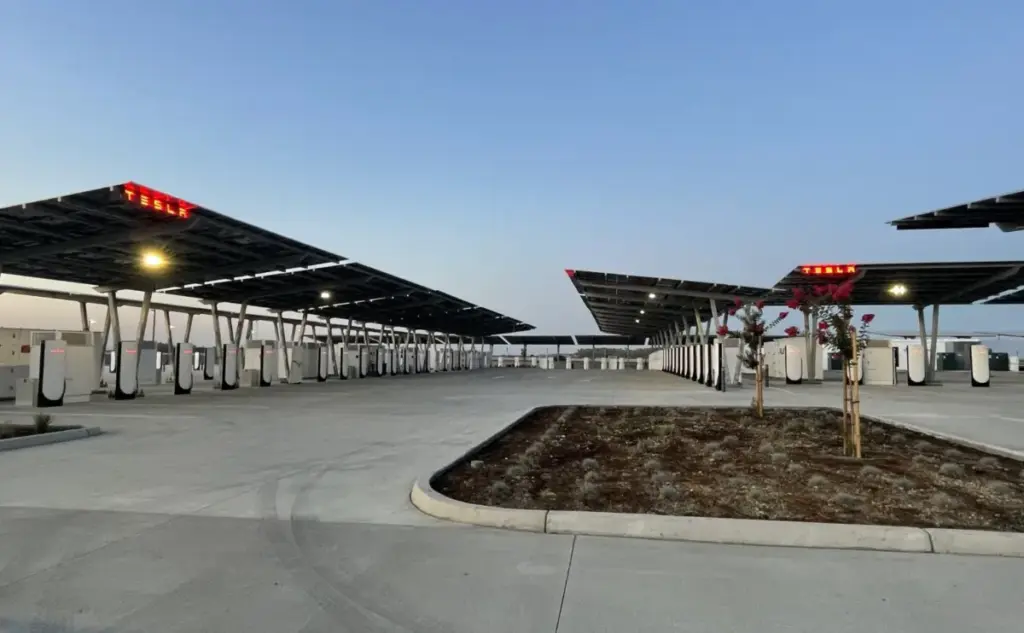
California is doubling down on its aggressive electric vehicle (EV) adoption targets with a major new infusion of capital into its public charging network. The state has committed at least $28 million through the Fast Charge California Project to drastically expand the availability of public direct-current (DC) fast chargers. Administered via the California Electric Vehicle Infrastructure Project (CALeVIP), the program offers unprecedented incentives—as high as $100,000 per charging port—to significantly offset, or in some cases entirely cover, the steep upfront costs of installation for eligible businesses, nonprofits, public agencies, and tribal governments.
By targeting projects that are already "ready to build"—meaning planning, engineering, permitting, and utility coordination are largely complete—the state aims to bypass the bureaucratic bottlenecks that have historically slowed infrastructure deployment. With applications officially opening, this latest funding round marks a critical step forward in California’s transition to zero-emission transportation, focusing heavily on equitable access for low-income, disadvantaged, and tribal communities.
Detailed Chronology: The Evolution of CALeVIP and the Fast Charge California Project
The launch of the latest funding round under the Fast Charge California Project represents the continued evolution of a statewide incentive framework that has been maturing for nearly a decade.
The Foundation: 2017–2025
Since its inception in 2017, CALeVIP has served as the backbone for California’s decentralized EV infrastructure growth. Funded collectively by the California Energy Commission’s (CEC) Clean Transportation Program and the state’s Greenhouse Gas Reduction Fund, the initiative has successfully facilitated the installation of more than 10,200 charging ports across the state. Managed operationally by the Center for Sustainable Energy (CSE), CALeVIP has continuously refined its approach to maximize the efficiency of taxpayer and cap-and-trade dollars.
The Spring 2026 Milestone
The momentum leading into the current $28 million injection builds directly upon a massive funding distribution earlier in the year. In the spring of 2026, CALeVIP awarded $56.9 million to support the construction of more than 1,266 ready-to-build DC fast-charging ports. Those projects successfully blanketed all 58 of California’s counties, demonstrating a statewide reach. Crucially, over 67% of those previously funded chargers were earmarked for installation in disadvantaged, low-income, and tribal communities, setting a strong precedent for environmental equity that the current round intends to maintain and expand.
Current Deadlines and Future Windows
Applications for the current Fast Charge California Project round opened on October 7, and will remain open until January 14, 2027. Once the application window closes, submissions will be evaluated and funded on a rolling, first-come, first-served basis, with explicit priority given to qualifying projects located within disadvantaged, low-income, and tribal communities.
For property owners who miss the initial window or require more time to prepare their sites, the state has already slated a secondary application window from February 24 through May 27, 2027. However, applicants during that subsequent window should note that maximum incentive caps will drop to $55,000 per port.
Supporting Context & Metrics: How the Funding Works
To understand the mechanics of the Fast Charge California Project, one must examine the precise tiering of incentives, eligibility criteria, and technical mandates governing the grants.
Incentive Tiers and Power Output
The financial backing provided by the state is directly correlated to the charging speeds a site can deliver to EV operators. Recognizing that ultra-fast charging is essential for long-distance travel and commercial fleets, the program establishes two primary tiers:
- Mid-Tier Fast Chargers (150 kW to <275 kW): Ports that guarantee an output within this range qualify for up to $55,000 per port.
- Ultra-Fast Chargers (275 kW and above): Ports delivering at least 275 kW qualify for the maximum incentive of up to $100,000 per port.
Importantly, these grants are structured to cover up to 100% of approved project costs—including the physical charging hardware, installation labor, civil engineering, and preliminary planning. While the grants can cover the entire bill, the per-port funding caps remain strictly enforced, meaning exceptionally complex or expensive projects may still require supplementary private capital.

Strict Site Readiness and Compliance Rules
To prevent the capital logjams that plagued earlier generations of EV infrastructure programs—where awarded funds sat idle for years due to permitting or utility delays—CALeVIP enforces a "ready-to-build" prerequisite. Applicants must possess a final utility service design (or an official letter from the local utility confirming that no grid upgrades are required) alongside all necessary local permits before applying.
Furthermore, the program rules have tightened regarding eligible locations. Charging hubs, hotels, and general business districts are no longer designated as eligible site types for this specific round, refocusing efforts elsewhere. Additionally, to ensure hardware interoperability and accommodate the vast majority of non-Tesla electric vehicles on the road, at least 50% of all connectors installed at each funded site must support the Combined Charging System (CCS) standard.
Property owners looking to evaluate their real estate holdings can utilize CALeVIP’s interactive EV Charging Opportunity Finder. This digital tool layers existing charger density, local EV registration data, and demographic metrics to help stakeholders identify high-need, high-opportunity corridors.
Official Statements and Industry Perspectives
The strategy behind prioritizing "shovel-ready" projects is rooted in hard-earned lessons from past infrastructure rollouts.
"We’ve learned through CALeVIP that the fastest way to get chargers in the ground is to fund projects that are truly ready to build," explained Scott Shepard, Senior Director of Transportation Programs at the Center for Sustainable Energy. "When permitting and utility coordination are already underway, incentive dollars can turn into working chargers much faster."

This sentiment is echoed by policy analysts and energy regulators across California, who view fast-charging infrastructure as the ultimate catalyst for consumer conversion. Without a dense, reliable, and high-speed public charging grid, range anxiety remains a primary barrier for prospective EV buyers—particularly renters and residents of multi-unit dwellings who lack access to home charging.
By removing the financial barrier to entry for commercial property owners and community organizations, California is effectively subsidizing the foundational network required to support the state’s aggressive mandate to phase out new internal combustion engine vehicle sales.
Future Outlook: The Road Ahead for California’s EV Landscape
As California marches toward its zero-emission vehicle goals, the integration of high-powered charging infrastructure will continue to evolve alongside rapid advancements in automotive technology. The rollout of the Fast Charge California Project aligns closely with private sector innovations on the horizon, such as EVgo’s planned deployment of ultra-powerful 750 kW charging systems slated for 2027.
The convergence of massive public subsidies and next-generation ultra-fast hardware signals a maturing market. No longer is the primary challenge simply convincing stakeholders that EVs are the future; the challenge is now engineering a robust, equitable, and lightning-fast energy delivery system capable of supporting millions of electric vehicles on the road.
With $28 million now flowing into ready-to-build sites—and a secondary application window guaranteed for early 2027—California continues to cement its status as the national laboratory for transportation electrification. For businesses and tribal communities positioned to act, the state’s willingness to pick up the installation tab offers a rare, highly lucrative opportunity to shape the future of clean mobility while future-proofing their commercial real estate.



