

Executive Overview
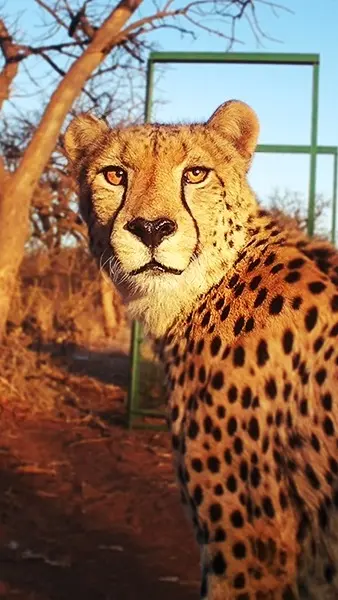
In the sprawling, sun-baked borderlands of southern Africa, a silent crisis has been brought into sharp focus by one of the most ambitious wildlife surveys ever undertaken in the region. The Free-Roaming Cheetah Census, a monumental scientific effort mapping nearly 100,000 square kilometers (approximately 40,000 square miles) of South African territory, has yielded a staggering and deeply concerning discovery: researchers located a mere 83 mature adult cheetahs across this vast expanse.
This startling figure underscores a perilous reality for Acinonyx jubatus. While conservation efforts inside fenced national parks and formal reserves often capture public attention, the plight of free-roaming cheetahs navigating unprotected farmlands and community lands has largely remained obscured by the sheer scale of the landscape. These nomadic predators operate on an international canvas, moving fluidly across porous borders connecting South Africa with Botswana, Namibia, and Zimbabwe. Yet, this traditional freedom of movement is being systematically choked out by human enterprise.
The implications of the census extend far beyond regional ecology. Currently classified globally and nationally as a "Vulnerable" species by the International Union for Conservation of Nature (IUCN), the empirical data gathered during this census strongly suggests that South Africa’s free-roaming populations warrant an immediate reclassification to "Endangered."
The threats are multifaceted and compounding. Rapid agricultural expansion, linear infrastructure development, and an ever-increasing grid of game and livestock fences are fracturing once-contiguous ecosystems. This habitat fragmentation threatens not only individual survival but the long-term viability of the species through genetic isolation. Furthermore, persistent human-wildlife conflict—driven largely by the misperception that cheetahs are primary predators of domestic livestock—continues to result in retaliatory killings.
This investigative report examines the methodology and fallout of the Free-Roaming Cheetah Census, unpacking the ecological necessities of the world’s fastest land mammal, analyzing the socio-economic friction with local farmers, and assessing the urgent policy shifts required to prevent the silent extinction of South Africa’s nomadic cheetahs.
Detailed Chronology: Mapping the Unseen Population
For decades, wildlife biologists understood that a significant portion of South Africa’s cheetah population existed outside the safety bubbles of Kruger National Park, Phinda Private Game Reserve, or Shamwari. However, quantifying these elusive, low-density populations across vast tracts of private and communal land remained an elusive goal.
Phase I: Conceptualization and Methodology
The genesis of the Free-Roaming Cheetah Census lay in the recognition that traditional monitoring techniques—such as aerial surveys or simple spoor counts—were inadequate for a species that exists at such low densities over massive home ranges. Cheetahs do not congregate in large prides; they are solitary, highly mobile, and notoriously difficult to spot against the arid background of the southern African interior.
Researchers mobilized a multi-tiered methodological approach combining state-of-the-art camera trapping, molecular scatology (analyzing DNA extracted from cheetah scat), and community-based sighting networks. The goal was not merely to count heads, but to establish a rigorous, repeatable baseline of population health, demographic structure, and movement corridors across a sprawling 100,000-square-kilometer study area.
Phase II: The Fieldwork and the Count
Over months of grueling fieldwork, teams deployed hundreds of motion-activated camera traps along potential travel routes, watering holes, and fence lines. Field biologists combed through thousands of images, identifying individual cheetahs by their unique spot patterns—a natural fingerprint that allows for precise population modeling.
When the final data was collated and analyzed, the results stunned the scientific community. Across nearly 40,000 square miles of territory, the confirmed count of mature, independent adult cheetahs stood at just 83. This revelation translated to an exceptionally low density of cats per square kilometer, highlighting how thinly spread these populations truly are.
Phase III: The Realization of Isolation
As the mapping data was overlaid with human development indices, the chronological timeline of the cheetah’s decline became glaringly apparent. The maps showed a mosaic of fragmentation. Where historical records indicated seamless movement between the Kalahari basins and neighboring countries, contemporary data revealed pinch points—narrow corridors where cheetahs were forced to run a gauntlet of highways, agricultural plots, and electrified fences. The census did not just count cats; it mapped the tightening noose of human civilization around one of Africa’s most iconic carnivores.
Supporting Context & Metrics: Biology, Borders, and Ballistics
To fully grasp the gravity of the Free-Roaming Cheetah Census findings, one must examine the biological imperatives of the cheetah and the socio-ecological landscape it inhabits.
The Ecological Blueprint of a Nomad
Cheetahs are fundamentally different from other large African carnivores like lions or leopards. They require vast, uninterrupted landscapes to thrive. A single male cheetah can maintain a home range spanning hundreds of square kilometers, patrolling his territory incessantly in search of mates and prey.
Crucially, cheetahs depend on genetic mixing across regional populations to maintain vigor and disease resistance. When landscapes are fractured by human development, populations become isolated. Inbreeding depression sets in, leading to reduced litter sizes, structural deformities, and heightened vulnerability to epizootic diseases. The 83 mature adults found in the census are not a single, cohesive population; rather, they represent a fragile archipelago of isolated sub-groups, many of which may already be caught in an extinction vortex.
[Unfragmented Landscape] ---> Seamless Migration & Genetic Flow ---> Stable Populations
[Fenced & Fragmented Land] ---> Isolated Sub-groups & Inbreeding ---> Extinction Vortex
The Farming Conflict: Perception vs. Reality
One of the most critical contributions of the census and its surrounding research is the direct confrontation of the narrative surrounding livestock depredation.
In the rural and agricultural districts overlapping the cheetah’s range, livestock farming is the economic lifeblood. Cattle, sheep, and goat farmers operate on thin margins, and the loss of a single animal to a predator represents a tangible financial blow. Historically, when livestock has been lost, blame has frequently fallen on cheetahs, leading to legal and illegal culling, trapping, and shooting.
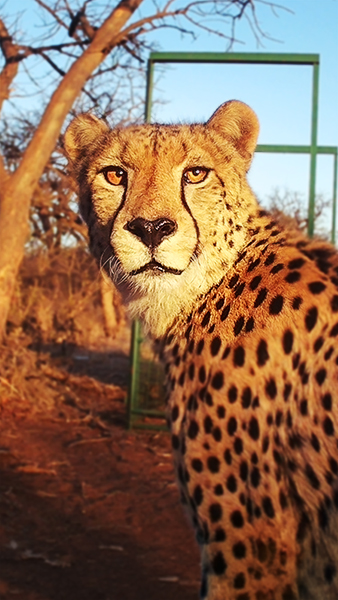
However, dietary analyses conducted alongside the census reveal a starkly different reality: cheetahs hunt mostly wild prey.
- Preferred Diets: Free-roaming cheetahs overwhelmingly target medium-sized ungulates such as springbok, steenbok, duiker, and impala.
- Opportunistic Events: While a desperate or inexperienced cheetah may occasionally target small livestock, the vast majority of livestock losses in these regions are attributable to other predators, such as jackals, leopards, or domestic dogs, or to disease and husbandry issues.
Despite this scientific evidence, the cultural stigma persists. The legacy of treating cheetahs as unmitigated agricultural pests remains a primary driver of anthropogenic mortality in unprotected zones.
The Call for Reclassification
Globally, the IUCN lists Acinonyx jubatus as Vulnerable. In South Africa specifically, the national status has historically reflected a stable or managed population due to intensive breeding and introduction programs in enclosed reserves. However, the new census data forces a critical re-evaluation.
When a territory spanning 100,000 square kilometers yields only 83 mature adults outside of secure, fenced reserves, the species is functionally endangered in those working landscapes. Conservationists argue that maintaining a "Vulnerable" status masks the acute, localized emergency unfolding on private lands, delaying the deployment of targeted emergency conservation funding and protective policy frameworks.
Official Statements & Expert Perspectives
The release of the Free-Roaming Cheetah Census has galvanized the conservation community, prompting urgent commentary from leading scientists, wildlife managers, and environmental policymakers.
Dr. Linus van Der Merwe, lead conservation ecologist on the project, emphasized the urgency of shifting from localized management to landscape-level connectivity:
"We spent years looking at cheetahs in pristine, fenced environments where populations are heavily managed, almost like wildlife theme parks. But the true test of this species’ resilience lies in the open systems—the places where they share space with cattle ranches, mining operations, and human settlements. Finding only 83 mature adults across nearly 100,000 square kilometers is a wake-up call. These animals are living on the edge of a razor."
Environmental sociologists working with the project highlighted the human element of the equation, noting that conservation in these regions cannot succeed without the buy-in of the agricultural community.
Mpho Khumalo, a rural development and human-wildlife coexistence specialist, noted:
"You cannot simply tell a farmer who is struggling to make ends meet that his livestock losses don’t matter or that the predator eating his profit margins is innocent. We have to bridge the gap between empirical science and rural economics. That means investing in predator-proof kraals, incentivizing non-lethal deterrents, and proving that living alongside a cheetah can be a source of regional pride rather than financial ruin."
Policy advisors have similarly pointed to the need for cross-border cooperation. Because these cheetahs treat international borders as invisible lines on a map, conservation strategies devised solely within Pretoria cannot succeed without synchronized frameworks in Gaborone, Windhoek, and Harare.
Future Outlook: A Race Against Time
The path forward for South Africa’s free-roaming cheetahs is narrow, steep, and fraught with systemic challenges. Yet, conservationists maintain that the species’ fate is not yet sealed—provided there is an immediate and coordinated shift in strategy.
1. Establishing Ecological Corridors
The foremost priority identified by researchers is the creation and protection of ecological corridors. Rather than expecting vast tracts of land to be entirely cleared of human development, conservation planners are advocating for "permeable landscapes." This involves working with private landowners, agricultural unions, and government bodies to establish un-fenced or wildlife-friendly corridors that allow cheetahs to transit safely between protected nodes and neighboring countries.
2. Revolutionizing Farmer Relations
Mitigating human-wildlife conflict requires a transition from reactive culling to proactive coexistence. Programs that provide financial compensation for verified losses, subsidized predator-deterrent fencing, and the deployment of livestock guard dogs (such as Anatolian shepherds) have shown immense promise in similar landscapes. By reframing the cheetah from an economic liability to an indicator of a healthy, functioning ecosystem, local attitudes can begin to shift.
3. Policy and Legislative Reform
The findings of the census provide the empirical foundation necessary to lobby for the reclassification of the cheetah from Vulnerable to Endangered within South Africa’s national Red List assessments. Such a regulatory upgrade would trigger stricter penalties for illegal hunting, mandate more rigorous environmental impact assessments for large-scale infrastructure projects cutting through known cheetah ranges, and unlock critical government and international conservation funding.
Conclusion
The Free-Roaming Cheetah Census has stripped away the illusion that South Africa’s cheetahs are safe simply because the species persists on paper. Behind the iconic spots and blistering speeds of the world’s fastest mammal lies a demographic bottleneck of staggering proportions. With only 83 mature adults guarding the ecological health of 100,000 square kilometers, the margin for error has evaporated. Whether this census becomes a post-mortem for a vanishing nomad or the catalyst for its salvation depends entirely on the willingness of governments, scientists, and landowners to forge a shared landscape where humanity and the cheetah can co-exist.



