Executive Overview
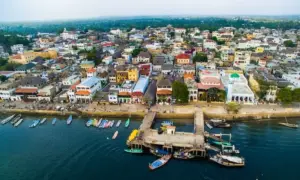
Along the wind-swept shores of Saldanha Bay, a fine, pervasive coat of rust-red dust blankets whitewashed buildings and coastal infrastructure—a lingering legacy of the more than one billion tonnes of iron ore shipped through its deepwater port since the mid-1970s. Once a quiet fishing village reliant on the rich marine ecology of the Atlantic seaboard, Saldanha Bay was radically transformed five decades ago into an industrial heavy-export corridor. Today, the South African government envisions an even more dramatic metamorphosis: turning this natural harbor into the premier oil and gas logistics hub of the nation.
This ambition is the cornerstone of Operation Phakisa, a sweeping government initiative launched in 2014 to fast-track the commercial exploitation of South Africa’s ocean economy. Under this blueprint, the state has mapped over 95 percent of the country’s nearly 3,000-kilometer coastline for offshore oil and gas exploration, granting expansive concessions to global energy conglomerates such as Shell and TotalEnergies.
However, the vision of converting Saldanha Bay into a fossil fuel nexus is encountering unprecedented resistance. Coastal communities, small-scale fisherfolk, indigenous groups, and an alliance of environmental legal organizations have mounted aggressive legal and social challenges against the state and corporate energy giants. Arguing that these offshore projects jeopardize fragile marine ecosystems, disregard local livelihoods, and systematically fail to conduct meaningful public consultations, these grassroots coalitions have secured landmark court victories. As litigation halts exploration permits and challenges the government’s extractivist development model, Saldanha Bay has emerged as the frontline in a crucial legal and socio-ecological battle over the future of South Africa’s coastal waters and its national energy transition.
Detailed Chronology: From Industrial Outpost to Offshore Hydrocarbon Frontier
+-----------------------------------------------------------------------------------+
| CHRONOLOGY OF EXPLOITATION & RESISTANCE                                          |
+-----------------------------------------------------------------------------------+
| 1970s        | Port of Saldanha Bay constructed; Sishen-Saldanha rail line opens |
|              | transforming a quiet fishing town into a bulk iron ore export hub.|
|              |                                                                    |
| Oct 2014     | Government launches Operation Phakisa ("Hurry Up") to unlock the   |
|              | ocean economy, prioritizing offshore oil and gas exploration.    |
|              |                                                                    |
| 2014–2020    | Over 95% of South Africa's Exclusive Economic Zone is mapped and   |
|              | partitioned into exploration blocks allocated to global majors.    |
|              |                                                                    |
| Late 2021    | Shell attempts to begin 3D seismic testing off the Wild Coast;     |
|              | massive public protests erupt nationwide.                         |
|              |                                                                    |
| Dec 2021     | High Court grants an urgent interdict halting Shell's seismic work|
|              | due to lack of meaningful community consultation.                 |
|              |                                                                    |
| Sep 2022     | Makhanda High Court sets aside Shell’s exploration right; sets     |
|              | a historic precedent for customary rights and marine protection.  |
|              |                                                                    |
| 2023–Present | Legal actions extend to TotalEnergies and West Coast concessions; |
|              | Saldanha Bay community challenges oil & gas infrastructure plans.  |
+-----------------------------------------------------------------------------------+
The 1970s Industrial Pivot
The industrialization of Saldanha Bay began in earnest during the early 1970s when the state electricity and infrastructure apparatus constructed a 861-kilometer dedicated railway line connecting the iron ore mines of Sishen in the Northern Cape to the deep waters of Saldanha. The subsequent construction of the bulk export harbor altered the local geography, introducing heavy industrial shipping traffic to an ecosystem that had supported generations of artisanal and commercial fishing.
2014: The Launch of Operation Phakisa
In October 2014, the South African government formally launched Operation Phakisa (meaning "Hurry Up" in Sesotho), an adaptation of Malaysia’s Big Fast Results methodology designed to rapidly unlock economic potential in targeted sectors. The offshore oil and gas lab set aggressive goals to accelerate marine exploration, identifying the ocean economy as an untapped driver of Gross Domestic Product (GDP) growth and job creation.
2014–2020: Mapping and Block Allocation
Over six years, state petroleum agencies and international survey companies systematically mapped more than 95 percent of South Africa’s ocean space. Multi-national energy companies, including Shell, TotalEnergies, and various independent explorers, acquired rights to vast marine blocks spanning the Atlantic West Coast, the southern Agulhas Bank, and the Indian Ocean East Coast. Saldanha Bay was formally designated as the primary offshore support and vessel repair hub for incoming exploration rigs.
2021–2022: The Legal Watershed
Grassroots friction erupted into full-scale legal battles in late 2021 when Shell announced plans to initiate three-dimensional seismic surveys off the environmentally sensitive Wild Coast. In December 2021, coastal communities and civil society organizations secured an urgent interdict in the Makhanda High Court, halting the vessel Amazon Warrior.
In September 2022, the court officially set aside Shell’s exploration right, ruling that the legal process was procedurally unfair because affected communities holding customary rights were not properly consulted, and the potential impact on livelihoods and spiritual connections to the sea was ignored.
2023–Present: Expansion to the West Coast and Saldanha
Building on the precedent set on the East Coast, legal actions expanded to challenge concessions granted off the West Coast, directly impacting projects routed through Saldanha Bay. Non-profit organizations such as Natural Justice, the Green Connection, and local fisher associations initiated multiple court challenges against environmental authorizations granted to TotalEnergies and other exploration permit holders, effectively freezing offshore development schedules along the Atlantic seaboard.
Supporting Context & Metrics: Unpacking the Blue Economy Strategy
The strategic rationale behind Operation Phakisa rests on ambitious economic projections, yet these figures stand in stark contrast to environmental vulnerabilities and the lingering socio-economic realities of Saldanha Bay.
+-----------------------------------------------------------------------------------+
| OPERATION PHAKISA: TARGET METRICS VS. REAL-WORLD IMPACTS                           |
+-----------------------------------------------------------------------------------+
| METRIC / IMPACT           | TARGET / STATUS                                       |
+---------------------------+-------------------------------------------------------+
| EEZ Mapping Coverage      | >95% of South Africa's ocean space mapped             |
| Exploration Targets       | 30 deepwater exploration wells in 10 years            |
| Projected Production      | ~370,000 barrels of oil and gas equivalent per day    |
| Projected Production Horizon| 20-year estimated operational lifecycle              |
| Historical Commodity Flow | >1 Billion Tonnes of iron ore exported via Saldanha    |
| Major Corporate Players   | Shell, TotalEnergies, Impact Oil & Gas, PetroSA       |
+-----------------------------------------------------------------------------------+
The Economic Model
Under Operation Phakisa’s Offshore Oil and Gas Lab, state planners estimated that the development of domestic hydrocarbon reserves could generate an average production output of 370,000 barrels of oil and gas equivalent per day over a 20-year operational lifecycle. To achieve this, the initiative set a target to drill 30 exploration wells within a decade.
Saldanha Bay’s existing deepwater port, repair quays, and proximity to proposed offshore blocks made it the crucial land-based logistics base for this industrial vision, promising thousands of downstream jobs in marine engineering, supply chain management, and fuel storage.
                   OPERATION PHAKISA TARGET METRICS

   [30 Exploration Wells]  ------>  [370,000 Barrels/Day Target]
            |                                  |
            v                                  v
   [95%+ Coastline Mapped]          [20-Year Production Horizon]
The Ecological Context
The oceanic area targeted along the West Coast falls within the highly productive Benguela Upwelling System. Cold, nutrient-rich waters support extensive marine biodiversity, serving as crucial nursery grounds for commercial fish species, including Cape hake, pilchards, and rock lobster.
Seismic exploration involves firing high-decibel airgun arrays into the ocean floor every few seconds for months at a time. Marine biologists and climate scientists contend that these acoustic pulses disrupt marine fauna—from microscopic zooplankton at the base of the food web to endangered marine mammals—risking irreversible damage to commercial fisheries and local eco-tourism.
                           BENGUELA UPWELLING ECOSYSTEM
                                        |
       +--------------------------------+--------------------------------+
       |                                |                                |
       v                                v                                v
[Nutrient-Rich Currents]      [Key Commercial Fisheries]      [Marine Mammal Habitats]
       |                                |                                |
       +--------------------------------+--------------------------------+
                                        |
                      [THREATENED BY SEISMIC TESTING & DRILLING]
The Industrial Legacy
The reality of industrial growth in Saldanha Bay is visually encapsulated by the persistent layer of red dust generated by the bulk iron ore terminal. For decades, residents have raised concerns regarding air quality, respiratory health, and the fouling of residential property.
The prospect of layering a heavy offshore petroleum hub onto an already environmentally stressed bay has intensified local skepticism. Community members view the historical iron ore operations as an example of top-down development that enriched state entities and multinational mining houses while leaving local populations with health risks and minimal long-term economic prosperity.
Official Statements and Stakeholder Perspectives
The debate over the future of Saldanha Bay and South Africa’s offshore energy assets highlights a fundamental division between state-led economic development and community-driven environmental advocacy.
+-----------------------------------------------------------------------------------+
| STAKEHOLDER PERSPECTIVES                                                          |
+-----------------------------------------------------------------------------------+
| ENTITY                 | CORE POSITION                                            |
+------------------------+----------------------------------------------------------+
| DMRE / DFFE            | Hydrocarbons are essential for energy security, economic |
| (South African Govt)   | growth, and financing a gradual transition.              |
|                        |                                                          |
| Energy Multinationals  | Operations adhere strictly to legal frameworks and       |
| (Shell, TotalEnergies) | international environmental standards.                   |
|                        |                                                          |
| Civil Society / Legal  | Extraction threatens marine biodiversity, livelihoods,   |
| (Natural Justice)      | and lacks constitutional public consultation.            |
|                        |                                                          |
| Artisanal Fisherfolk   | Marine destruction undermines generation-spanning        |
|                        | economic security and cultural identity.                 |
+-----------------------------------------------------------------------------------+
The Government Stance: Energy Security and Economic Sovereignty
The Department of Mineral Resources and Energy (DMRE), supported by elements of the Department of Forestry, Fisheries and the Environment (DFFE), maintains that domestic offshore oil and gas reserves are vital to securing South Africa’s energy independence. Facing severe domestic electricity supply challenges and a reliance on aging coal-fired infrastructure, state officials argue that natural gas serves as a crucial transition fuel.
In public briefings, government representatives have reiterated that Operation Phakisa is designed to strike a balance between resource exploitation and environmental regulation. Officials emphasize that the strategy includes plans to develop complementary, sustainable blue economy sectors, such as aquaculture, marine transport, and ocean tourism, alongside hydrocarbon extraction.
Corporate Position: Compliance and Economic Development
Energy multinationals, including Shell and TotalEnergies, have consistently stated that their exploration programs comply with South Africa’s legislative and regulatory frameworks, including the National Environmental Management Act (NEMA).
In legal filings and public statements, corporate representatives have argued that deepwater exploration is conducted under strict environmental management plans aimed at minimizing marine disturbance. They contend that offshore gas discoveries could reduce the nation’s carbon intensity by displacing coal, while injecting billions of dollars of foreign direct investment into regional supply chains, directly benefiting ports like Saldanha Bay.
Civil Society and Community Opposition: Precedent and Human Rights
Environmental law organizations and community representatives counter that the government’s extractivist framework violates constitutional rights to a clean environment, procedural fairness, and the protection of customary marine rights.
Melissa Groenink-Groves, Programme Manager at the legal non-profit Natural Justice, emphasized the regional importance of the ongoing legal challenges:
"When communities win in the courts, the successes serve as inspiration for other communities to advocate for their rights in their own contexts. The decisions coming out of South African courts are not just domestic victories—they establish a powerful legal framework across Southern Africa. They demonstrate that state authorities and multinational corporations cannot bypass the fundamental right of coastal communities to be meaningfully consulted on projects that directly impact their ancestral waters, livelihoods, and environment."
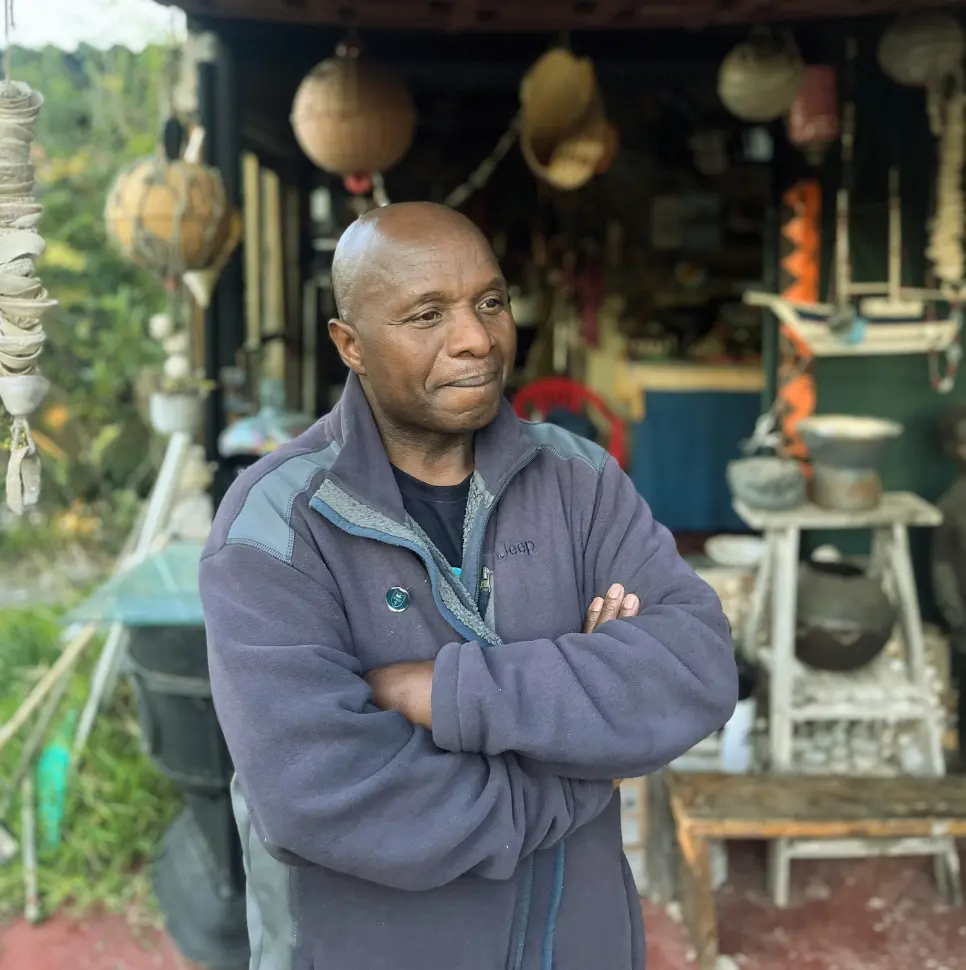
Small-scale fisherfolk in Saldanha Bay have voiced similar concerns, pointing out that an industrial oil spill or long-term operational degradation in the bay would decimate the local fishing industry. Community leaders stress that true economic development must prioritize sustainable marine use over short-term fossil fuel extraction.
Future Outlook: Legal Precedents and the Energy Transition
The convergence of community-led legal resistance, stringent judicial oversight, and shifting global energy markets has placed South Africa’s offshore oil and gas strategy at a critical junction.
                      SOUTH AFRICA'S COASTAL ENERGY FORK
                                       |
       +-------------------------------+-------------------------------+
       |                                                               |
       v                                                               v
[STATUS QUO EXTRACTIVISM]                                  [JUST ENERGY TRANSITION]
 * Offshore Gas & Oil Exploitation                          * Expanded Renewable Infrastructure
 * Saldanha as Hydrocarbon Hub                             * Eco-Tourism & Sustainable Fisheries
 * Ongoing Legal & Community Friction                       * Green Hydrogen / Clean Tech Exports
Jurisprudential Impact Across Southern Africa
The rulings issued by South African High Courts have established rigorous legal standards for Free, Prior, and Informed Consent (FPIC) and environmental impact assessments. By explicitly recognizing the customary rights of coastal inhabitants and requiring decision-makers to evaluate the cumulative climate impacts of fossil fuel extraction, these cases have created a landmark precedent. Legal analysts anticipate that environmental advocacy groups in neighboring coastal nations, including Namibia and Mozambique—where offshore exploration is rapidly accelerating—will increasingly adopt these legal strategies to challenge unmitigated development.
Reassessing Operation Phakisa
As legal challenges create delays, the operational timeline for Operation Phakisa’s oil and gas goals faces growing uncertainty. The prolonged interdicts have raised the risk profile for foreign investors, prompting major energy players to reevaluate their capital allocations in South African waters. The government faces mounting pressure to align its marine space management plans with its international climate commitments under the Paris Agreement and its national Just Energy Transition Investment Plan (JET-IP).
Saldanha Bay at a Strategic Crossroads
Saldanha Bay stands at a pivotal juncture in its socio-economic history. The town can either double down on its heavy industrial heritage by expanding into a regional offshore fossil fuel hub, or it can pivot toward green industrialization.
Regional economic planners are increasingly pointing to alternative investment pathways for the port, including:
- Green Hydrogen: Utilizing the region’s strong wind and solar resources to position Saldanha Bay as an export hub for green hydrogen and green ammonia.
- Sustainable Mariculture: Expanding low-impact aquaculture infrastructure within the sheltered waters of the bay to support local employment without damaging marine ecosystems.
- Modernized Port Services: Transitioning port infrastructure to support offshore wind deployment, green shipping fuel bunkering, and sustainable ocean tourism.
Whether Saldanha Bay remains defined by the lingering red dust of bulk mineral exports and offshore oil drilling, or transforms into a modern model for a sustainable, community-inclusive ocean economy, will depend on the outcome of the ongoing courtroom battles and policy negotiations unfolding across South Africa.