Executive Overview
Earlier this summer, the United States confronted the largest recorded outbreak of cyclosporiasis in its history. Triggered by Cyclospora cayetanensis—a microscopic parasite transmitted exclusively through food or water contaminated with human fecal matter—the outbreak unleashed widespread abdominal distress, severe fatigue, and prolonged illness across multiple states. As the public health crisis escalated, a familiar and deeply concerning narrative quickly took root online and in public discourse: speculation that agricultural workers were the source of the contamination.
Commentators and internet sleuths pointed fingers at the vulnerable labor force powering America’s agricultural sector. Theories blamed poor field sanitation, a lack of restrooms, or even the geopolitical fallout of mass deportations. Yet, according to leading food safety experts, these assumptions are not only profoundly misguided; they deflect attention away from the systemic vulnerabilities inherent in our highly industrialized, globalized food supply chain.
Rather than pinning contamination on the individuals harvesting our crops, food safety scientists argue that the sheer scale of this summer’s outbreak points to widespread, systemic vectors—most notably, contaminated agricultural irrigation water. Compounding this environmental challenge is a turbulent socio-political landscape. Vulnerable farmworkers now navigate an unstable public health infrastructure, aggressive immigration enforcement policies, and intensifying climate change pressures, including legislative rollbacks on workplace heat protections.
This report examines the root causes of the historic cyclosporiasis outbreak, deconstructs the harmful myths surrounding agricultural labor, and features an exclusive interview with Amy Liebman, Chief Program Officer at the Migrant Clinicians Network. Ultimately, this crisis reveals a stark reality: protecting the health and safety of farmworkers is not merely an ethical imperative; it is a fundamental pillar of public health and food security for the entire nation.
Detailed Chronology: Unfolding of the 2026 Cyclosporiasis Crisis
The trajectory of this historic public health event illustrates the complex mechanisms through which modern foodborne pathogens travel from international production hubs to domestic dining tables.
- Late Spring: Public health surveillance networks begin detecting an unusual, accelerated spike in laboratory-confirmed cases of cyclosporiasis across multiple U.S. states. The geographical dispersion of the cases signals that this is not a localized restaurant cluster, but a widespread, systemic contamination event.
- Early Summer: As case numbers climb, public health agencies—including the Centers for Disease Control and Prevention (CDC) and the Food and Drug Administration (FDA)—intensify tracing efforts. Media reports and social media forums amplify unverified theories pointing toward farmworker hygiene and field conditions, prompting immediate pushback from advocacy groups warning of xenophobic stigmatization.
- Mid-Summer: Epidemiological tracking narrows the focus on specific fresh produce distributors. Investigators note that multiple state-level cases intersect with products handled by Taylor Farms, a major international fresh-food processor. Public health authorities reveal that tracing complex, multi-state agricultural supply chains requires weeks of painstaking reverse-engineering.
- August: The FDA formally announces the initiation of an intensive on-site inspection at a key Taylor Farms processing and growing facility located in central Mexico. Concurrently, public health experts begin publishing warnings about the broader structural vulnerabilities of the food supply, emphasizing that industrialized irrigation systems and climate-driven water scarcity are the most probable vectors for widespread Cyclospora distribution.
Supporting Context & Metrics: The Mechanics of Contamination and Agricultural Realities
To understand how Cyclospora infects thousands of consumers simultaneously, one must examine the biological nature of the parasite and the operational realities of modern agriculture.
The Biology of Cyclospora and Waterborne Pathways
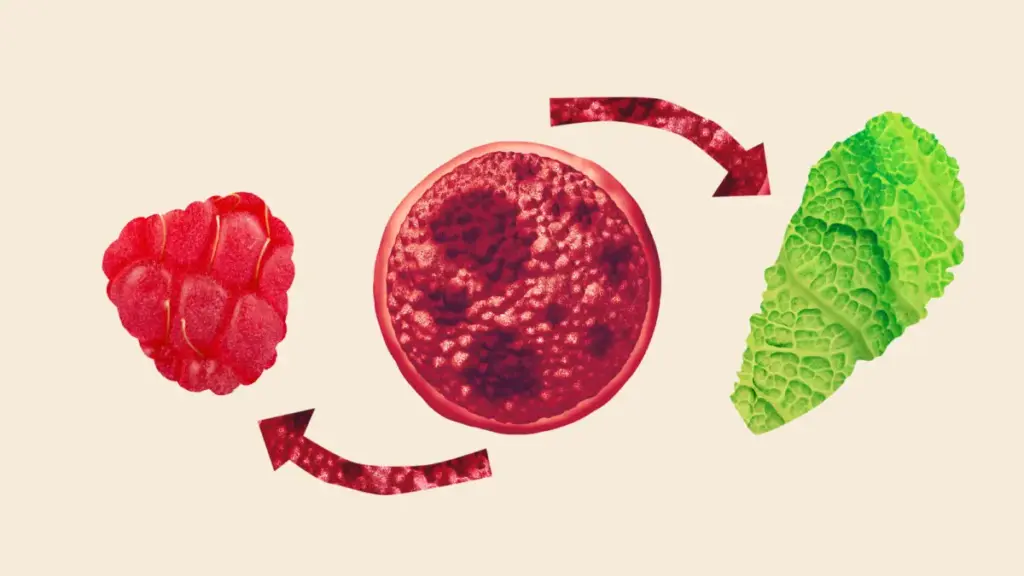
Cyclospora cayetanensis is distinct from many common foodborne bacteria like E. coli or Salmonella because it requires a human host to complete its life cycle and is not typically passed directly from animals to humans. When shed in human feces, the parasite is not immediately infectious; it requires days or weeks in warm environmental conditions to sporulate and become dangerous. Once sporulated, it can survive for long periods in soil and water.
Because fresh fruits and vegetables—particularly delicate produce like berries, basil, and leafy greens—are frequently consumed raw and often washed in large volumes of water during commercial processing, any upstream water contamination leads directly to widespread exposure.
The Irrigation Dilemma
In many major agricultural regions spanning both the United States and international partner nations, climate change and prolonged droughts have severely strained freshwater aquifers. To maintain crop yields, agricultural producers increasingly rely on treated municipal wastewater (reclaimed sewage water) for irrigation.
- Legal Landscape: The practice of reusing treated wastewater for crop irrigation is legally permitted in nearly half of U.S. states and is common in arid international growing regions.
- The Risk Factor: While municipal treatment plants strive to purify wastewater, tertiary treatments do not always eliminate resilient parasitic oocysts like Cyclospora. When treatment systems fail or operate under substandard protocols, the consequences are catastrophic, introducing human pathogens directly to edible crops on an industrial scale.
The Human Toll on the Frontlines
While consumers focus on food safety, the individuals laboring in the fields face intersecting crises:
- Climate Extremes: Rising global temperatures expose agricultural workers to life-threatening heat stress. Recent legislative battles in Congress have sought to block the Occupational Safety and Health Administration (OSHA) from enacting federal standards mandating water, rest, and shade breaks.
- Systemic Marginalization: Aggressive immigration enforcement and a degraded public health infrastructure have driven farmworker communities deep into the shadows. Fear of deportation or job loss deters sick workers from seeking medical care, compounding diagnostic delays during outbreaks.
Expert Perspectives: An Interview with Amy Liebman
To explore the human dimensions of the food safety crisis, we spoke with Amy Liebman, Chief Program Officer at the Migrant Clinicians Network. In this edited and expanded transcript, Liebman addresses the dangers of stigmatization, the fragility of the public health safety net, and the intersection of worker welfare and climate change.
Q: There is a clear risk of stigmatizing immigrant farmworkers when outbreaks of infectious diseases tied to human waste hit the headlines. What should the public understand about this issue, and how can we discuss it responsibly?
Amy Liebman: Essentially, we face a fundamental disconnect between what we demand as consumers—an inexpensive, abundant, and flawless food supply—and how we actually achieve that safety in practice. I am deeply concerned that farmworkers are far more vulnerable to contracting these illnesses themselves than they are to being the source of the outbreak.

Whenever an infectious disease outbreak occurs, public health officials worry about populations living and working in close quarters. For farmworkers, housing and working conditions are often intertwined, presenting unique vulnerabilities. Issues like access to adequate sanitation facilities, the safety of well water near labor camps, and crowded living conditions all play a role.
However, tracing the source of Cyclospora is immensely difficult because of the lag time between infection, symptom onset, and reporting. Given the scale of this outbreak, it points strongly toward large-scale environmental contamination, such as irrigation water. We must look at the entire continuum where food is grown, harvested, processed, shipped, and sold. Every single step in that long supply chain introduces opportunities for contamination.
Q: What has your organization been hearing from frontline clinicians? When migrant farmworkers contract cyclosporiasis or other illnesses, are they able to seek care?
Amy Liebman: Multiple systemic pressures are colliding right now. First, we have witnessed the systematic dismantling and underfunding of our public health infrastructure. Local health departments, operating with severely restricted resources and minimal guidance from federal agencies like the CDC in the early stages, have had to bear the brunt of tracking these crises.
Layered on top of that is a draconian shift in immigration enforcement policy. This hardline approach has pushed the farmworker community further into the shadows, breeding pervasive fear.
When a worker falls ill under these conditions, accessing care becomes an obstacle course. They must navigate geographic isolation, a lack of transportation, language barriers with health care providers, and institutional distrust. These traditional barriers are now exacerbated by a political climate designed to disenfranchise and marginalize immigrant communities.
Q: This crisis also intersects with how the United States approaches extreme heat and worker safety. For example, Congress recently advanced legislation attempting to block OSHA from implementing federal standards to protect workers from heat illness. How does this fit into the broader picture?
Amy Liebman: That legislative push is a prime example of the short-sighted mentality we are fighting. We have an active infectious disease outbreak affecting vulnerable workers, and simultaneously, we are rolling back basic protections against extreme weather driven by climate change.
I mentioned earlier the disconnect between our expectations of food safety and how we treat the workers who put food on our tables. Ironically, studies and operational data clearly demonstrate that when agricultural employers provide workers with adequate water, rest breaks, and shade during high-heat days, overall crop productivity actually increases. Passing laws that restrict basic human protections is not only inhumane; it is counterproductive from an economic standpoint.
The bottom line is simple: worker health and safety is public health. Whether we are addressing parasitic waterborne outbreaks or occupational exposure to extreme heat, protecting the worker ultimately protects the broader community.
Future Outlook: Rebuilding Food Safety and Protecting Agricultural Labor
As public health investigators continue their on-site inspections at international processing plants and federal agencies review environmental contamination vectors, the 2026 cyclosporiasis crisis serves as an urgent wake-up call. Ensuring the future integrity of the U.S. food supply requires structural reforms across multiple fronts:
- Modernizing Agricultural Water Infrastructure: Federal and state regulators must update water safety standards, particularly regarding the use of reclaimed wastewater in agricultural irrigation. Investment in advanced filtration and pathogen-reduction technologies is essential to safeguard crops against resilient parasites like Cyclospora.
- Strengthening Public Health Networks: Local health departments and federal agencies must be adequately funded and insulated from political pressures to ensure rapid detection, transparent tracing, and equitable healthcare access during outbreaks.
- Humanizing Agricultural Labor Policy: True food security is impossible without recognizing that the health of the consumer and the health of the farmworker are inextricably linked. Providing mandatory workplace protections—including clean sanitation facilities, fair wages, heat stress safeguards, and healthcare access regardless of immigration status—is a prerequisite for a safe and resilient food system.
Until systemic reforms bridge the gap between industrial food production and worker welfare, outbreaks like the one witnessed this summer will remain a recurring hazard of a vulnerable, globalized world.