Executive Overview
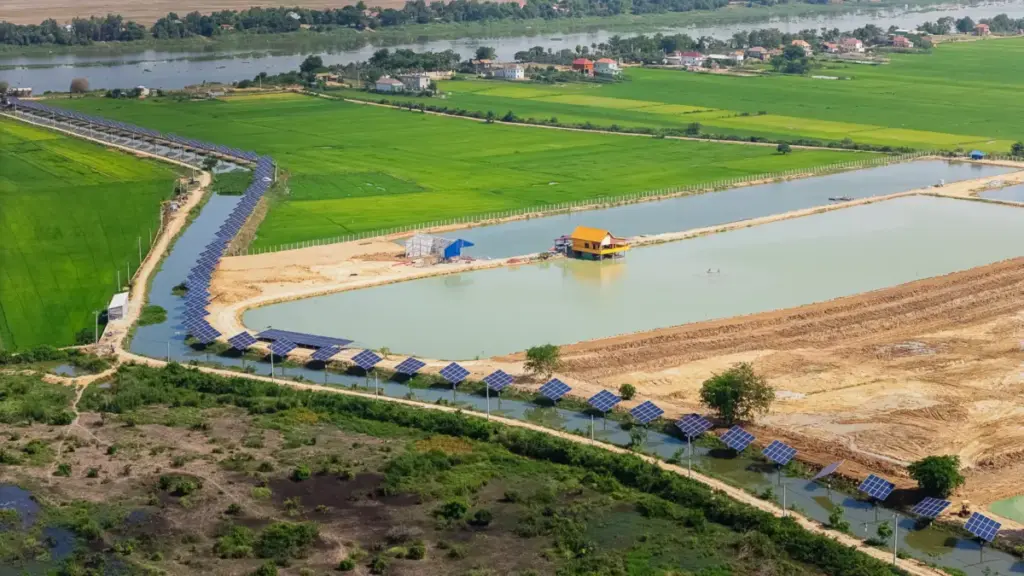
Over the past decade, the Kingdom of Cambodia has transformed its energy landscape from a power-deficit country heavily reliant on imported fossil fuels into one of Southeast Asia’s most proactive champions of clean energy adoption. Today, homegrown renewable energy accounts for nearly half of Cambodia’s total domestic electricity mix—a milestone driven by rapid solar integration and extensive hydropower capacity. Building on this momentum, the Cambodian government has established a target to source 70% of its total domestic power capacity from renewable resources by 2030.
This clean energy shift is not merely an environmental policy; it is an economic and national security imperative. Recent global geopolitical supply chain disruptions and fossil fuel price volatility have demonstrated the vulnerabilities faced by developing economies that rely on imported coal, gas, and refined oil. While inflation and fuel shocks have severely burdened households across Southeast Asia, Cambodia’s early investments in indigenous renewables have helped insulate its grid and macroeconomy from the worst consequences of these global energy shocks.
However, bridging the gap between Cambodia’s current renewable output and its 70% target by 2030 will require significant international capital, technical assistance, and structured multilateral support. As global climate leadership shifts toward operationalizing mechanisms like the Transitioning Away From Fossil Fuels (TAFF) framework—championed by international climate leadership leading up to the COP30 presidency in Brazil—Cambodia stands out as a prime candidate for a managed, just, and financially backed energy transition.
Detailed Chronology: The Evolution of Cambodia’s Energy Grid
       2000–2010                  2011–2019                  2020–2021                   2022–2023                  2024–2030 (Target)
+-----------------------+  +-----------------------+  +-----------------------+  +-----------------------+  +-----------------------+
|  Grid Fragility       |  |  Hydropower Dominance |  |  Solar Breakout &     |  |  Strategic Pivot &    |  |  70% Clean Capacity   |
|  * Rural rate <25%    |  |  * Hydro dams scaled  |  |  Policy Shift         |  |  PDP 2022-2040        |  |  * 70% Renewables     |
|  * Heavy dependency   |  |  * Electrification    |  |  * First major solar  |  |  * Coal expansion     |  |  * BESS Integration   |
|    on foreign diesel/ |  |    surges past 80%     |  |    farms operational  |  |    canceled/curbed    |  |  * Cross-border clean |
|    power imports      |  |  * Coal expansion     |  |  * Mekong mainstream  |  |  * Energy transition  |  |    energy trading     |
|                       |  |    commences          |  |    dams moratorium    |  |    targets codified   |  |    via ASEAN grid     |
+-----------------------+  +-----------------------+  +-----------------------+  +-----------------------+  +-----------------------+
The Era of Scarcity and Foreign Dependency (2000–2010)
At the turn of the century, Cambodia possessed one of the lowest national electrification rates in Asia. In 2008, less than 25% of rural households had direct access to electricity. The national grid consisted of fragmented, isolated regional networks powered primarily by expensive imported diesel generators and power purchase agreements from neighboring Vietnam and Thailand. Electricity tariffs were among the highest in the region, acting as a structural constraint on industrial development and economic diversification.
The Hydropower and Grid Expansion Phase (2011–2019)
To meet booming industrial demand and achieve universal energy access, the Cambodian government embarked on a massive infrastructure buildout. The primary focus was placed on large-scale hydro project development across domestic river basins, supplemented by coal-fired generation plants to serve as baseload support during the dry season.
By 2019, state utility Electricité du Cambodge (EDC) had expanded energy access to over 85% of villages nationwide. However, this period also underscored seasonal vulnerabilities: prolonged dry spells diminished hydro reservoir capacities, leading to rolling blackouts during the hot summer months of 2019 and exposing the limits of over-relying on seasonal river flows without complementary renewable sources.
The Solar Breakout and Coal Reassessment (2020–2021)
Recognizing the rapid cost decline of utility-scale solar Photovoltaics (PV), Cambodia began integrating solar into its generation planning. The country’s inaugural National Solar Park program, developed in partnership with the Asian Development Bank (ADB), yielded record-low solar power tariffs for Southeast Asia at the time (under $0.039 per kilowatt-hour).
Concurrently, growing international climate finance commitments and shifting global capital sentiment prompted Cambodian leadership to rethink its long-term power generation mix. In a key policy pivot, Cambodia pledged in late 2021 to halt the approval of new coal-fired power plants on domestic soil, choosing instead to prioritize clean energy assets.
Strategic Consolidation: The Power Development Plan 2022–2040 (2022–2023)
In late 2022, the Royal Government of Cambodia formally adopted its updated Power Development Plan (PDP 2022–2040). The document formally aligned energy expansion with national climate commitments, emphasizing clean energy integration, grid stabilization, energy efficiency, and variable renewable energy (VRE) management. The plan laid the groundwork to boost domestic renewable capacity, establishing the roadmap toward the 70% renewable capacity threshold by 2030.
Supporting Context & Metrics: Decoupling from Global Fossil Volatility
Cambodia’s renewable expansion is happening within a complex regional economic environment. Over the past decade, Southeast Asia has experienced two major energy price shocks: the post-pandemic supply chain crunch and the market dislocations following geopolitical conflicts in Eastern Europe and the Middle East.
Comparative Generation and Tariff Dynamics
Countries heavily dependent on imported Liquefied Natural Gas (LNG) and thermal coal saw national utility production costs surge, forcing governments across the region to choose between fiscal subsidies or passing sharp price increases directly to consumers.
In contrast, Cambodia’s energy composition has helped cushion domestic consumers and business operations against foreign price shocks.
       Comparative National Generation Profile (2024 Estimates)

  100% +-------------------------------------------------------+
       | [ Clean / Hydro / Solar ]   [ Imported / Coal / Oil ] |
   80% | ###########################                           |
       | ###########################                           |
   60% | ########################### *****************######## |
       | ########################### *****************######## |
   40% | ########################### *****************######## |
       | ########################### *****************######## |
   20% | ########################### *****************######## |
       | ########################### *****************######## |
    0% +-------------------------------------------------------+
                Cambodia                     Regional Avg.
(Southeast Asia)| Metric / Indicator | Historical Value (2010) | Current Value (2024) | Target Value (2030) |
|---|---|---|---|
| National Electrification Rate | ~30% | >98% | 100% |
| Share of Renewables in Capacity Mix | <10% | ~47% | 70% |
| Installed Solar PV Capacity | <10 MW | >450 MW | >1,500 MW (Projected) |
| Imported Electricity Dependency | >35% | <15% | Single Digits |
Macroeconomic and Household Impacts
For lower- and middle-income households across Southeast Asia, fuel price spikes translate directly into higher expenses across basic economic sectors:
- Transport & Distribution Costs: Fluctuations in crude oil imports lead directly to higher retail fuel costs, raising logistical overheads for agricultural produce and manufactured goods.
- Utility Bills: In fossil-heavy grids, variable energy adjustment charges disproportionately impact poorer households, forcing trade-offs between household cooling, health expenses, and nutritional needs.
- Industrial Competitiveness: Unpredictable commercial electricity prices penalize heavy employers, such as garment, textile, and light manufacturing industries, which rely on fixed production overheads to stay competitive globally.
By anchoring its long-term generation trajectory in fixed-cost domestic assets—specifically solar and run-of-river hydro—Cambodia stabilizes its long-term Levelized Cost of Electricity (LCOE). This insulates the national fiscal balance sheet from unpredictable movements in foreign commodities trading.
Official Statements & Expert Insights
Analyzing Cambodia’s operational progress requires examining perspectives from policy experts, international advisors, and government leaders driving regional energy reform.
Speaking on the alignment between national development objectives and international climate finance mechanisms, Phalkun Out, Manager of Energy Policy and Government Relations at EnergyLab Asia, highlighted the structural necessity of global cooperation:
"Cambodia has made impressive strides in transitioning from dirty coal and imported electricity to homegrown renewable energy that now accounts for nearly half of the electricity mix. The kingdom has a target to source 70% of its total power capacity from renewables by 2030. This is achievable, but requires global support and cooperation. The recent momentum on developing a formal process to assist countries in transitioning away from fossil fuels is very encouraging."
Out emphasized that national climate initiative strategies must be supported by accessible international financial architecture. Pointing to momentum spearheaded by the COP30 Brazil Presidency and foundational agreements laid out during the Santa Marta Conference in Colombia, experts note that middle- and lower-income nations need direct capital access to accelerate fossil fuel phase-outs without compromising domestic industrial growth.
From a regulatory standpoint, Cambodian officials have framed the clean energy transition as a driver of economic security rather than just a compliance cost. Keo Rottanak, Minister of Mines and Energy and former head of state utility EDC, has repeatedly pointed out that domestic clean power serves as a critical economic buffer.
Commenting on the macro benefits of renewable expansion during recent global fuel spikes, senior energy officials noted that early investments in solar and hydropower assets effectively shielded Cambodia’s domestic market from severe oil shocks that hurt fossil-dependent economies across Southeast Asia.
Experts note that achieving the 2030 goals will require moving beyond initial project deployment toward structural system management. Key technical imperatives include:
- Grid Flexibility and Storage: Integrating higher shares of Variable Renewable Energy (VRE) like solar requires deployment of utility-scale Battery Energy Storage Systems (BESS) to prevent grid frequency instability.
- Capital Mobilization: Transitioning off legacy agreements and scaling grid transmission lines requires concessional loans, blended finance, and green bond mechanisms to avoid escalating sovereign debt ratios.
- Policy Harmonization: Ensuring third-party power purchase agreements (PPAs) and rooftop solar regulations balance distributed energy growth with utility cost recovery.
Future Outlook & Strategic Imperatives
Cambodia’s trajectory through 2030 serves as an important case study for emerging economies seeking to balance rapid industrial development with low-carbon expansion. However, fulfilling the 70% renewable capacity objective by 2030 will require targeted action across three core strategic pillars:
+-----------------------------------------------------------------------------------+
|                         CAMBODIA'S 2030 STRATEGIC PILLARS                         |
+-----------------------------------------------------------------------------------+
| 1. Grid Modernization  | Substantial deployment of Battery Energy Storage          |
|    & Storage           | Systems (BESS) to balance variable solar output.         |
+------------------------+----------------------------------------------------------+
| 2. Multilateral        | Unlocking concessional finance & blended capital via     |
|    Capital Access      | international initiatives (TAFF, COP30 commitments).     |
+------------------------+----------------------------------------------------------+
| 3. Regional Energy     | Integrating into the ASEAN Power Grid (APG) to export    |
|    Integration         | surplus green power to high-demand regional hubs.        |
+-----------------------------------------------------------------------------------+
1. Modernizing Transmission Networks and Utility-Scale Storage
As solar PV capacity grows, grid management becomes increasingly complex. Solar production peaks during midday, while national demand peaks in the late afternoon and early evening. To prevent curtailment of solar assets and maintain grid stability, Cambodia must deploy significant Battery Energy Storage Systems (BESS). Concessional financing structures provided by multilateral development finance institutions will be essential to make BESS deployments economically viable for state utility EDC.
2. Capital Mobilization through Global Mechanisms
Global frameworks like the Transitioning Away From Fossil Fuels (TAFF) initiative must progress beyond policy statements into actionable finance frameworks. Cambodia has established the necessary domestic policy environment; international financial institutions now need to provide targeted de-risking mechanisms, political risk guarantees, and low-interest capital loans. This financial support will allow the Kingdom to upgrade its high-voltage transmission backbones and purchase early retirements for existing thermal agreements.
3. Integrating with the ASEAN Power Grid (APG)
Cambodia’s geographic position makes it a strategic player in cross-border clean energy trading across Southeast Asia. Under regional initiatives, Cambodia is working to connect its abundant solar and hydro capacity into cross-border subsea and overland interconnections. By linking its clean generation assets with high-demand neighbors like Singapore and Malaysia via the ASEAN Power Grid (APG) framework, Cambodia can convert its clean energy resources into a long-term economic export driver.
Conclusion
Cambodia’s journey from energy poverty and foreign import dependency to a regional leader in domestic clean energy generation highlights the value of long-term strategic policy planning. By aiming for a 70% renewable capacity target by 2030, the Kingdom offers a practical example of how clean energy investment can build structural resilience against global fossil fuel shocks.
With sustained international cooperation, access to modern financing frameworks, and continued investments in grid modernization, Cambodia can achieve its target and establish a scalable model for a just energy transition across the developing world.