Executive Overview
Crushed under the dual pressures of volatile global fossil fuel prices and an compounding ocean warming crisis, Pacific Island nations are executing a strategic shift in their approach to global climate finance. Leaders across the 18-member Pacific Islands Forum (PIF) are converging in Palau to consolidate global financial support for the newly established Pacific Resilience Facility (PRF). Designed as a first-of-its-kind, region-led, non-debt-creating financial vehicle, the PRF aims to bypass cumbersome international bureaucracy and deliver targeted capital directly to vulnerable frontline communities.
The initiative emerges at a critical juncture for Small Island Developing States (SIDS). The South Pacific faces unprecedented sea-surface temperature anomalies that threaten marine ecosystems and coastal infrastructure, alongside severe macroeconomic strain driven by reliance on imported refined petroleum.
While international mechanisms such as the Green Climate Fund (GCF) and the UN Loss and Damage Fund continue to face operational and distributive hurdles, the PRF represents a self-determined alternative. Formally launched following key treaty ratifications earlier this year, the facility is being positioned as a centerpiece of regional diplomacy ahead of COP31—where Australia, in partnership with Pacific Island nations, is actively bidding to host a landmark "Pacific COP."
+---------------------------------------------------------------------------------+
|                       PACIFIC RESILIENCE FACILITY (PRF)                         |
|                                                                                 |
|   INNOVATION           OPERATIONAL MODEL              TARGET OUTCOMES           |
|  +------------+       +-------------------+       +-----------------------+     |
|  | Region-Led | ----> | Capital Endowment | ----> | Rapid Grant Delivery  |     |
|  | Governance |       | Yield Financing   |       | Local Infrastructure  |     |
|  +------------+       +-------------------+       +-----------------------+     |
|         |                       |                             |                 |
|         v                       v                             v                 |
|  Bypasses Global      Prevents Debt Accumulation   Strengthens Community        |
|  Bureaucratic Delay   for Island Economies          Coastal Resilience          |
+---------------------------------------------------------------------------------+
Detailed Chronology
[ August 2019 ] ------------------------------------------------------------------+
PIF Leaders endorse the concept of a sovereign regional financing facility       |
at the 50th Pacific Islands Forum Leaders Meeting in Tuvalu.                     |
                                                                                  |
[ 2020 – 2023 ] ------------------------------------------------------------------+
Technical design, risk assessments, and consultations establish the PRF          |
as an endowment fund structured to yield grant money without raising public debt. |
                                                                                  |
[ December 2023 ] ----------------------------------------------------------------+
Global donor pledge drive opens ahead of COP28; regional partners commit initial   |
seed capital framework.                                                           |
                                                                                  |
[ May 2024 ] ---------------------------------------------------------------------+
MARKET MILESTONE: Australia and Fiji formally ratify the treaty establishing     |
the PRF, legally triggering its entry into force.                                 |
                                                                                  |
[ Upcoming Summit ] --------------------------------------------------------------+
High-Level PIF Gathering in Palau: Leaders assemble to present a unified          |
pledging framework to prospective international donor states ahead of COP31.      v
The Evolution of the Pacific Resilience Facility
The origin of the Pacific Resilience Facility traces back to a systemic realization among Pacific leaders: existing international climate architecture was failing to deliver capital where it was needed most.
During the 50th Pacific Islands Forum Leaders Meeting in Tuvalu in 2019, heads of state formally commissioned the development of a localized financial model designed to overcome the structural barriers of global climate finance institutions. Between 2020 and 2023, extensive regional consultations produced a framework aimed at establishing a self-sustaining financial endowment.
The key structural turning point occurred in May 2024, when Australia and Fiji officially signed and ratified the treaty establishing the PRF. This dual ratification triggered the legal entry into force of the facility’s governing charter, establishing it as a legally recognized, multilateral entity headquartered within the Pacific.
The upcoming high-level gathering in Palau serves as the primary launching pad to convert international goodwill into firm capital commitments ahead of the COP31 summit.
Supporting Context & Macroeconomic Metrics
The Twin Crises: Thermal Dynamics and Energy Vulnerability
Pacific nations operate on the frontlines of interconnected climate and economic shocks. The region is battling a severe marine environmental crisis characterized by multi-year sea-surface temperature spikes, accelerating sea-level rise, and intensified tropical cyclones. These environmental disruptions severely impact coastal ecosystems, destroy arable land via saltwater intrusion, and degrade coral reef networks vital for natural wave attenuation and local fisheries.
       Global Price Fluctuations in Refined Petroleum
                             │
                             ▼
            Higher Import & Freight Costs
                             │
                             ▼
   Diverting 10%–15% of Island GDPs to Fuel Imports
                             │
                             ▼
Depleted Foreign Reserves & Severe Fiscal Strain
                             │
                             ▼
 Reductions in Domestic Budgeting for Climate Adaptation
Concurrently, Pacific SIDS suffer from high vulnerability to global energy market volatility. Lacking domestic fossil fuel reserves and industrial-scale refining capacity, the majority of Pacific island economies rely on imported refined diesel for electricity generation and transport.
- Fiscal Burden: In several small island states, fuel imports consume 10% to 15% of gross domestic product (GDP), draining foreign exchange reserves and exposing local economies to international oil price shocks.
- Compounded Strain: Inflationary surges post-2022 severely weakened domestic fiscal balance sheets across the Pacific, reducing their capacity to self-fund essential adaptation projects.
Structural Deficiencies of International Climate Finance
The establishment of the PRF is a direct response to the structural flaws of global climate finance mechanisms. Historically, multilateral institutions such as the Green Climate Fund (GCF) and the Adaptation Fund have faced criticism from developing nations for complex application procedures, high transaction costs, and multi-year approval timelines.
+-----------------------------------------------------------------------------------+
|                       COMPARATIVE FINANCE ARCHITECTURE                            |
+----------------------------------+------------------------------------------------+
| Traditional Global Multilaterals | Pacific Resilience Facility (PRF)              |
+----------------------------------+------------------------------------------------+
| High administrative overhead     | Streamlined regional governance                |
| Multi-year approval lifecycles   | Rapid-disbursement project cycles              |
| Predominantly loan-based debt    | Purely grant-based non-debt capital            |
| Top-down institutional focus     | Direct community-level accessibility           |
+----------------------------------+------------------------------------------------+
Furthermore, international climate funding frequently takes the form of concessional loans rather than non-repayable grants. For Pacific nations already facing debt distress from rebuilding after recurring extreme weather events, taking on additional debt to finance climate adaptation is fiscally unsustainable.
Financial Architecture of the PRF
The Pacific Resilience Facility is structured to address these systemic imbalances through a distinct financial architecture:
- Capital Endowment Model: Rather than operating as a pass-through fund reliant on unpredictable annual donations, the PRF aims to build a initial capital endowment. The returns generated from investing this core capital are used to fund local projects continuously.
- Grant-Based Disbursements: All funding distributed by the PRF is structured entirely as grants, preventing capital accumulation from increasing sovereign debt burdens across member states.
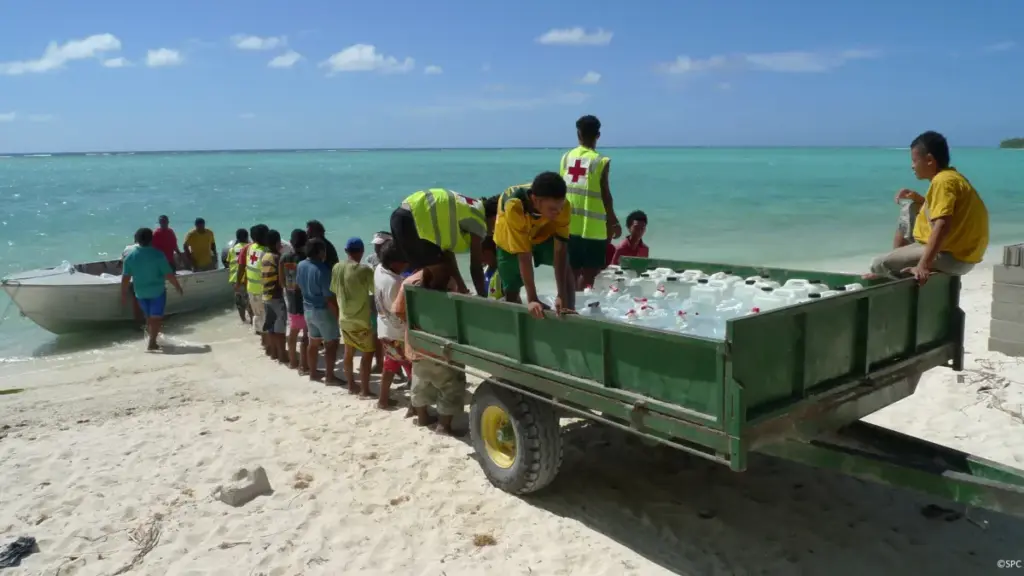
- Grassroots Accessibility: The fund removes traditional institutional intermediary layers, allowing small-scale community projects—such as localized seawalls, village solar micro-grids, and rainwater catchment systems—to access funding without complex accreditation hurdles.
Official Statements and Regional Perspectives
Pacific leadership has voiced a clear demand for regional self-determination backed by direct international capital support.
During the formal proceedings surrounding the facility’s establishment, Fiji’s Assistant Minister for Foreign Affairs, Lenora Qereqeretabua, underscored the grassroots intent of the vehicle, noting that the fund was designed specifically to:
"Serve communities at a community level, swiftly channelling investments for their projects on the ground, bypassing bureaucratic bottlenecks that have historically delayed critical adaptation initiatives."
The diplomacy surrounding the Palau summit reflects a unified front among the 18 members of the Pacific Islands Forum. Leaders maintain that while external climate support is vital, operational control over resource distribution must remain in regional hands.
           PACIFIC RESILIENCE FACILITY GOVERNANCE
                             │
       ┌─────────────────────┴─────────────────────┐
       ▼                                           ▼
Pacific Island Forum                       Donor Nations & MDBs
(Operational & Strategic Oversight)        (Capital Pledges & Technical Support)
       │                                           │
       └─────────────────────┬─────────────────────┘
                             ▼
           Grassroots Resilience Projects
           • Micro-Grids  • Seawalls  • Fresh Water
Representatives from the Pacific Islands Forum Secretariat have repeatedly noted that the PRF serves as proof of concept for Pacific-led solutions. By securing direct contributions from long-standing regional partners—including Australia and New Zealand—the forum aims to leverage this regional foundation to secure matching commitments from European, North American, and Asian donor states.
Australia and New Zealand occupy a strategic role within this framework. As developed nations within the PIF, their early treaty ratifications and capital commitments provide foundational support. However, regional leaders continue to emphasize that prospective donor engagement must align strictly with the fund’s non-debt, community-centered mandate.
Future Outlook and Strategic Diplomacy
The COP31 Landscape and Regional Geopolitics
The drive to capitalize the Pacific Resilience Facility in Palau is directly connected to the strategic buildup toward COP31. Australia is actively campaigning to host the UN climate summit, framing its candidacy around a shared "Pacific COP" narrative that elevates Small Island Developing States to co-hosts of the global climate negotiations.
Palau Summit (Mobilize Pledges)
       │
       ▼
Capital Endowment Mobilization (Target Capital Baseline)
       │
       ▼
Deployment of Localized Resilience Grants
       │
       ▼
COP31 Platform ("Pacific COP" Model for Global Adaptation)
By supporting and funding the PRF ahead of COP31, Australia and international partners have an opportunity to demonstrate concrete support for Pacific priorities. If fully funded, the PRF could serve as a model for regional climate finance institutions globally, illustrating how vulnerable regions can manage sovereign climate adaptation funds efficiently.
Operational Challenges and Long-Term Viability
Despite significant political momentum, the long-term success of the Pacific Resilience Facility depends on navigating several key financial and operational challenges:
- Capital Mobilization: Meeting initial capitalization targets requires securing long-term funding commitments from donor nations operating under tight domestic fiscal conditions.
- Portfolio Risk Management: Managing an endowment portfolio to generate predictable, sustainable annual yields requires sound risk management, particularly during periods of global financial volatility.
- Monitoring and Governance: Scaling small-scale community disbursements across isolated island geographies demands transparent monitoring and evaluation to maintain donor confidence without introducing excessive administrative burden.
A New Model for Global Adaptation Finance
As Pacific leaders gather in Palau, the establishment of the Pacific Resilience Facility marks a major shift in climate finance diplomacy. By moving from reactive crisis relief toward proactive capital endowment, the Pacific Islands Forum is creating a viable alternative for climate adaptation funding.
If the PRF successfully secures the international capital commitments sought ahead of COP31, it will provide much-needed financial relief to frontline communities and offer a blueprint for regional climate finance across vulnerable nations worldwide.