

Executive Overview
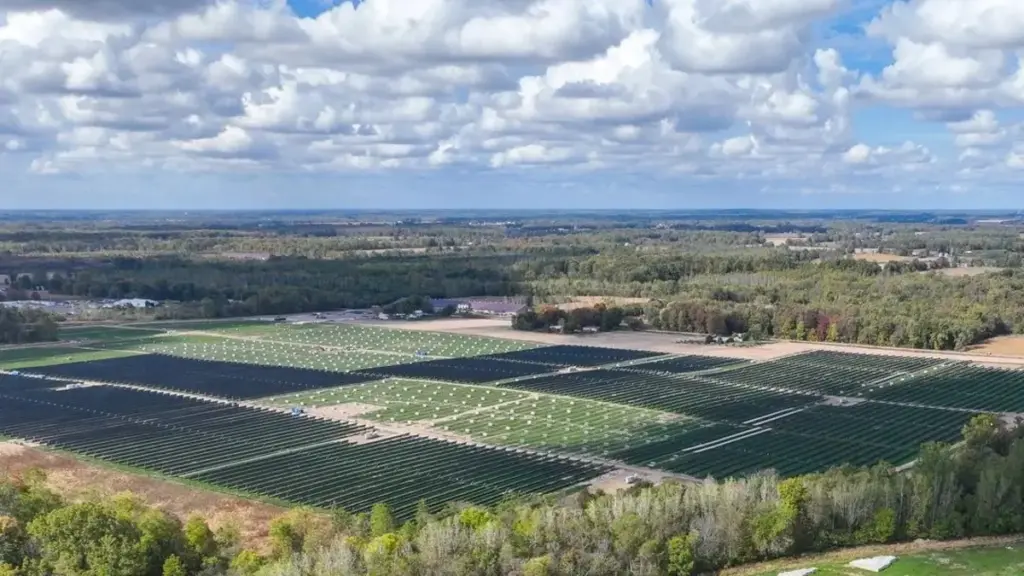
The transition of the American automotive industry toward sustainable energy took a significant leap forward in late 2026 as Detroit-based utility giant DTE Energy announced the official completion of the Cold Creek Solar Park. Situated near Coldwater, Michigan, this sprawling 100-megawatt (MW) utility-scale solar facility represents a critical cornerstone in a multi-million-dollar strategic alliance between DTE and the Ford Motor Company. Funded primarily by Ford through its active participation in DTE’s voluntary renewable energy program, CleanVision MIGreenPower, the $194 million project is engineered to feed massive volumes of clean electricity directly into the local grid to power Ford’s home-state manufacturing footprint.
Covering vast acreage in southern Michigan, the Cold Creek facility is designed to generate enough electricity annually to power the equivalent of 23,000 to 25,000 typical American households. More importantly, it serves as the physical realization of a broader, highly ambitious commitment made by the automaker to decarbonize its operations. While the solar farm stands as a triumph of modern engineering and corporate sustainability, its unveiling also illuminates the complexities, timeline shifts, and long-term economic impacts associated with overhauling legacy industrial supply chains.
As corporate America faces mounting pressure to address climate change head-on, the Cold Creek Solar Park offers a compelling case study in how large-scale utility partnerships can accelerate regional decarbonization. Yet, it also underscores the sobering realities of heavy industrial green transitions—specifically, why even the most proactive corporate climate targets face shifting completion horizons in the face of complex infrastructure demands.
Detailed Chronology: From Blueprint to Plug-In
The realization of the Cold Creek Solar Park is the result of years of strategic planning, regulatory alignment, and intensive logistical execution. To understand the magnitude of the project, one must trace the timeline of commitments that transformed a vision of corporate renewable sourcing into rows of photovoltaic panels spanning the Michigan landscape.
The 2022 Agreement: Setting the Stage
The genesis of the Cold Creek project dates back to August 2022, when Ford and DTE Energy made headlines by announcing a landmark clean energy procurement agreement. Under the terms of the deal, Ford agreed to purchase up to 650 megawatts of renewable energy through DTE’s CleanVision MIGreenPower program. At the time, this pact was hailed as the largest corporate renewable energy purchase ever finalized from a utility provider in the United States.
The agreement was structured to allow Ford to match its electricity consumption across multiple Michigan-based assembly and manufacturing facilities with newly built wind and solar assets. For DTE, the massive influx of corporate demand provided the financial certainty required to greenlight an unprecedented expansion of its renewable generation portfolio, paving the way for projects like Cold Creek to leave the drawing board.
Breaking Ground in Spring 2025
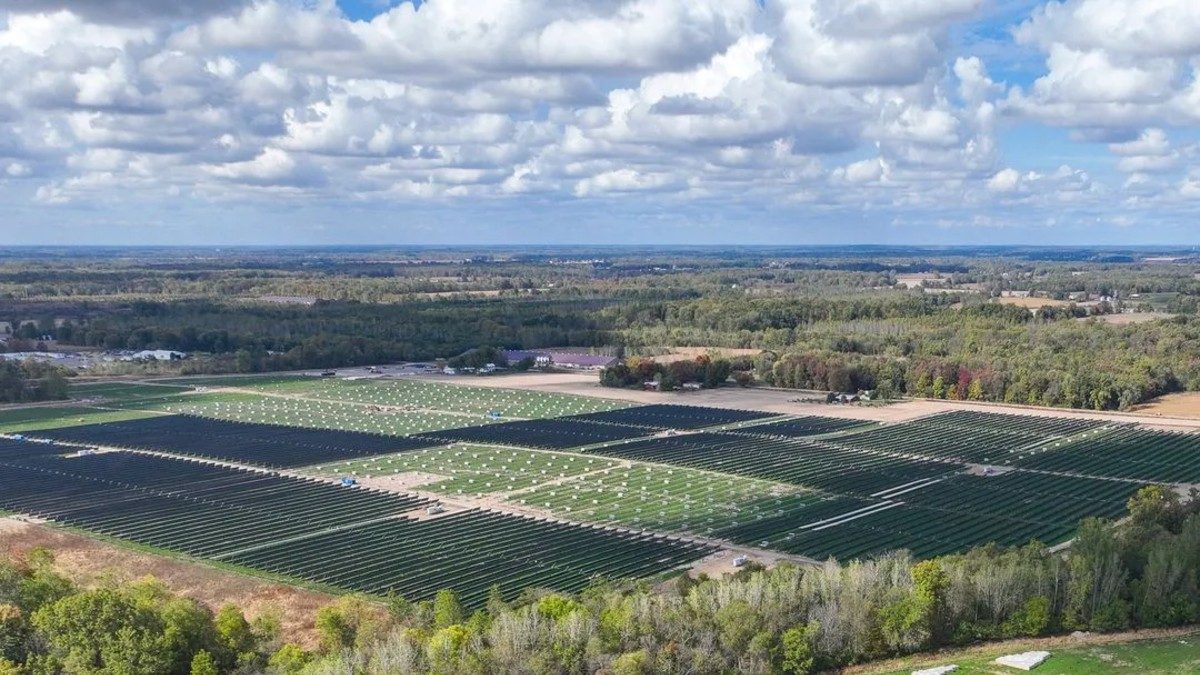
Following years of site selection, environmental impact assessments, land acquisition, and engineering design, physical work on the Cold Creek site commenced in April 2025. Construction mobilized quickly, with contractors bringing in heavy machinery, pile-driving equipment, and thousands of high-efficiency photovoltaic panels designed to track the sun and maximize energy capture throughout the day.
Despite supply chain headwinds that have historically plagued large-scale infrastructure projects, the construction phase proceeded at a steady clip under the management of specialized regional contractors. The project quickly transformed raw land near Coldwater into a high-tech energy generation hub.
Late 2026: Commissioning and Grid Integration
By late 2026, construction crews officially wrapped up assembly and testing phases, bringing the 100-MW facility online. Cold Creek immediately began dispatching clean electrons into DTE’s distribution network. As the premier asset completed under the broader 650-MW agreement, Cold Creek established a operational blueprint for subsequent renewable energy projects slated to support Ford’s manufacturing ambitions in the Great Lakes State.
Supporting Context & Metrics: Breaking Down the Numbers
To fully grasp the scope of the Cold Creek Solar Park, it is necessary to examine the hard data, financial commitments, and regional implications that define the project.
Financial and Generation Metrics
- Total Investment: $194 million, funded by Ford Motor Company via the CleanVision MIGreenPower framework.
- Generation Capacity: 100 megawatts (MW) of peak solar energy.
- Household Equivalency: Generates enough electricity to power roughly 23,000 to 25,000 average Michigan homes annually.
- Broader Procurement Context: Represents a significant down payment on Ford’s 2022 commitment to purchase up to 650 MW of clean energy from DTE Energy.
The Mechanics of CleanVision MIGreenPower
DTE’s CleanVision MIGreenPower program acts as a bridge between corporate buyers, residential subscribers, and utility-scale renewable development. By enrolling in the program, corporations like Ford do not merely purchase existing green energy credits; they actively fund the development of new regional wind and solar projects. This additionality is critical: it ensures that the program directly expands the total volume of renewable generation capacity on the grid rather than simply redistributing existing clean energy sources.
For Ford, this model provides a localized, scalable mechanism to green its operations without needing to directly own, operate, or maintain massive renewable energy installations on its own factory grounds. Instead, the power is fed directly into the shared grid, and Ford receives the corresponding environmental attributes to offset its manufacturing footprint.
Target Adjustments and Timeline Shifts
A notable nuance accompanying the completion of Cold Creek is the subtle shift in Ford’s overarching timeline. When the landmark 650-MW agreement was initially publicized in August 2022, corporate leadership set a target to assemble every vehicle manufactured in Michigan using the equivalent of 100% carbon-free electricity by the end of 2025.
However, in the latest announcements surrounding the completion of Cold Creek, that deadline has been officially adjusted to the end of 2027. Neither DTE Energy nor Ford provided an explicit, detailed explanation for the two-year delay in the recent press releases. Industry analysts suggest that such adjustments are reflective of the complex realities inherent in scaling industrial manufacturing transitions, managing localized grid interconnection queues, and synchronizing the delivery dates of massive, multi-phase renewable portfolios with active factory demands.
Official Statements and Stakeholder Perspectives
While corporate press releases often lean heavily on polished talking points, the rhetoric surrounding the Cold Creek completion highlights a shared strategic vision between heavy industry and regional utility providers.
Executives from DTE Energy have repeatedly emphasized the transformative nature of voluntary renewable energy programs. Utility leadership views corporate partnerships as the ultimate catalyst for regional economic growth and decarbonization. By partnering with major corporate anchors like Ford, DTE can secure the long-term capital necessary to modernize Michigan’s grid, retire aging fossil-fuel infrastructure, and scale up intermittent renewable resources safely and reliably.
From Ford’s perspective, the investment in Cold Creek aligns directly with its broader corporate citizenship framework. Automotive manufacturing is inherently energy-intensive, requiring vast amounts of electricity and thermal energy to power stamping plants, paint shops, assembly lines, and supplier networks. By locking in long-term renewable power purchase agreements in its home state, Ford is insulating its core manufacturing operations against future fossil-fuel price volatility while actively courting environmentally conscious consumers and institutional investors.
Furthermore, local community stakeholders have voiced cautious optimism regarding the secondary impacts of the solar buildout. While DTE’s broader 650-MW initiative was originally projected to inject significant economic vitality into host communities—estimated at approximately 250 temporary construction jobs and 10 permanent operational roles, alongside crucial tax revenues—local municipalities stand to benefit from diversified tax bases. Municipal leaders have noted that these tax revenues can be directed toward essential public services, including road maintenance, public schools, library funding, and first-responder equipment, thereby anchoring the clean energy transition in tangible community benefits.

Future Outlook: The Road to 2035 and Beyond
The completion of the Cold Creek Solar Park is far from an isolated finish line; rather, it serves as a critical mile marker in a much longer, multi-decade decarbonization journey for both Ford Motor Company and the broader industrial Midwest.
Ford’s Global and Regional Roadmap
For Ford, the immediate priority following Cold Creek is clear: scale up remaining renewable energy allocations under the 650-MW DTE portfolio to ensure that every vehicle produced in Michigan is assembled using the equivalent of 100% carbon-free electricity by the updated target of 2027.
However, the company’s environmental ambitions extend far beyond state lines. Ford’s long-term sustainability strategy is anchored by two aggressive milestones:
- 2035: Achieve 100% carbon-free electricity across all global manufacturing facilities worldwide.
- 2050: Reach complete carbon neutrality across its entire global footprint, encompassing vehicle tailpipe emissions, direct manufacturing operations, and the vast, complex web of its upstream supply chain.
Meeting these targets will require replicating the success of the Cold Creek partnership across Ford’s manufacturing hubs in other states and international markets, while also driving deep decarbonization into steel, aluminum, and battery supply chains.
The Evolving Role of Utilities in Industrial Decarbonization
For utilities like DTE Energy, projects like Cold Creek signal a permanent shift in business models. Meeting the sophisticated, high-volume decarbonization demands of Fortune 500 industrial clients requires aggressive capital investment in solar, wind, and advanced energy storage systems. As more corporations commit to science-based climate targets, regional utilities that can successfully deliver tailored, large-scale renewable programs like CleanVision MIGreenPower will position themselves as indispensable partners in the new green economy.
Ultimately, the Cold Creek Solar Park stands as proof that the heavy lifting of climate action is underway. By transforming Michigan farmland into a clean energy powerhouse, Ford and DTE Energy have demonstrated how traditional industrial strongholds can successfully reinvent themselves for a low-carbon future—one solar panel at a time.



