

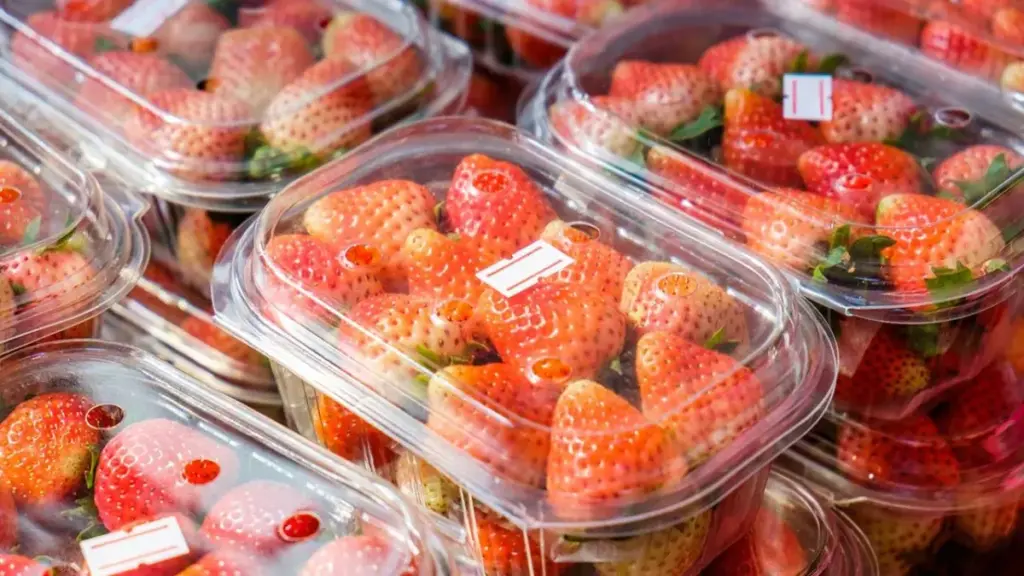
By 2028, the average American grocery run will undergo a quiet but radical transformation. The familiar, brittle plastic clamshells holding strawberries will give way to ventilated cardboard and molded fiber punnets. Takeout salads, once encased in clear petroleum-based plastic, will be cradled in plant-fiber bowls. Microwaveable meals will sit in clear or white trays, having entirely purged the ubiquitous, non-recyclable black plastic of the past.
These seemingly subtle shifts are the opening salvos of California’s landmark packaging law, Senate Bill 54 (SB 54)—the Plastic Pollution Prevention and Packaging Producer Responsibility Act. With its finalized regulations having taken effect in May 2026, the law is systematically dismantling the economics of single-use plastics.
Because of California’s immense economic footprint, the reach of SB 54 extends far beyond its state borders. Major multinational consumer brands are choosing to redesign their packaging nationwide rather than maintain bifurcated supply chains. However, as the state pivots toward a circular economy, a fierce battle is raging between environmental advocates, state regulators, and industry titans over loopholes, chemical recycling, and the true definition of sustainability.
Executive Overview
Passed in 2022 and codified through finalized administrative regulations in May 2026, SB 54 represents the most ambitious regulatory assault on plastic pollution in United States history. At its core, the law shifts the financial and operational burden of waste management from municipalities and taxpayers directly onto the corporations that manufacture and utilize packaging. This regulatory mechanism, known as Extended Producer Responsibility (EPR), forces companies to internalize the end-of-life costs of their products.
The mandate is uncompromising: by 2032, California requires a 25% absolute reduction in single-use plastic packaging by weight and unit count, a 65% actual recycling rate for all remaining single-use plastics, and a complete transition of all single-use packaging to fully recyclable or compostable materials.
To enforce this, the law establishes a Producer Responsibility Organization (PRO)—currently led by the industry-backed Circular Action Alliance—which must collect $5 billion over ten years from packaging producers. These funds are earmarked for environmental mitigation, local government waste infrastructure, and advanced recycling technology.
Yet, as the program transitions from legislative text to market reality, it faces significant turbulence. On June 2, 2026, a coalition of major environmental organizations filed a high-profile lawsuit against the state, alleging that regulators watered down the final rules to benefit petrochemical interests. The outcome of this legal battle will determine whether SB 54 serves as a genuine blueprint for a zero-waste future or a cautionary tale of regulatory capture.
Detailed Chronology: The Road to 2032
The implementation of SB 54 is structured as a multi-year regulatory ramp-up, giving producers a structured but tight window to redesign their portfolios. The timeline below outlines the key regulatory milestones and the corresponding shifts consumers will observe on retail shelves.
+-----------------------------------------------------------------------------+
|                           SB 54 COMPLIANCE TIMELINE                         |
+-----------------------------------------------------------------------------+
| May 1, 2026      | Permanent regulations take effect. Producers must        |
|                  | register with the Producer Responsibility Organization.  |
+------------------+----------------------------------------------------------+
| January 1, 2027  | Full program implementation. Single-use plastic          |
|                  | packaging must fall 10% below the 2023 baseline.         |
+------------------+----------------------------------------------------------+
| January 1, 2028  | 30% of covered single-use plastic packaging and food     |
|                  | service ware must be actively recycled, not just         |
|                  | theoretically recyclable.                                |
+------------------+----------------------------------------------------------+
| January 1, 2030  | Recycling target rises to 40%. Source reduction must     |
|                  | reach 20%. Refill and concentrate models scale up.       |
+------------------+----------------------------------------------------------+
| January 1, 2032  | Final targets: 25% source reduction, 65% recycling rate, |
|                  | and 100% of covered packaging must be fully recyclable   |
|                  | or compostable.                                          |
+------------------+----------------------------------------------------------+
Milestone 1: May 1, 2026 – The Regulatory Foundation
The California Department of Resources Recycling and Recovery (CalRecycle) officially enacted the permanent regulations governing SB 54. By June 1 of that year, all covered manufacturers were required to align with the state-approved PRO (the Circular Action Alliance) or establish an independent, state-approved compliance plan.
Milestone 2: January 1, 2027 – The Baseline Shift
Full enforcement begins. Producers who fail to participate in an approved compliance plan are barred from selling their products in California. Simultaneously, the state initiates its $500 million annual environmental mitigation collections from producers. Consumers will begin to see immediate "source-reduction" designs, such as significantly thinner plastic water bottles, the elimination of secondary plastic sleeves, and the removal of plastic windows from cardboard pasta boxes.
Milestone 3: January 1, 2028 – The Recyclability Reality Check
Under SB 54, a package cannot simply bear the chasing-arrows recycling symbol to be deemed "recyclable." It must achieve a verified 30% actual recycling rate across the state. This milestone will trigger the rapid phase-out of mixed-material plastics and hard-to-sort resins, shifting the market toward highly valuable, easily sorted polymers like clear polyethylene terephthalate (PET) and high-density polyethylene (HDPE).
Milestone 4: January 1, 2030 – The Scale-Up of Alternative Systems
The recycling target rises to 40%, and source reduction must hit 20%. By this point, packaging redesign is no longer sufficient; companies must invest in alternative delivery systems. Retailers will transition pilot programs for refillable containers and concentrated product pods into mainstream, high-volume offerings.
Milestone 5: January 1, 2032 – The Circular Economy Deadline
All three pillars of the law become fully enforceable: a 25% source reduction of plastic packaging, a 65% verified recycling rate for all remaining single-use plastics, and a strict mandate that 100% of packaging sold in the state be fully recyclable or compostable. Non-compliant packaging will face severe civil penalties of up to $50,000 per day per violation.
Supporting Context & Metrics: The Mechanics of Reform
The Scale of the Crisis
To understand why California resorted to such drastic legislative measures, consider the historical trajectory of municipal solid waste. According to data from the U.S. Environmental Protection Agency (EPA), plastic waste accounted for a mere 0.4% of the American municipal waste stream in 1960. By 2018, that figure had skyrocketed to 12.2%, driven by the rise of cheap, disposable consumer goods.
U.S. Municipal Waste Stream: Plastic Share (1960 vs. 2018)
  1960: [0.4%]
  2018: [============= 12.2%]
Single-use packaging is the primary driver of this crisis. Data compiled by Greenprint indicates that approximately 36% of all manufactured plastic globally is designated for packaging. Most alarming of all, an estimated 85% of that packaging bypasses recycling systems entirely, ending up directly in landfills or escaping into terrestrial and marine ecosystems.
The Red-Listed Materials
SB 54 systematically targets four highly problematic packaging categories that have historically crippled municipal recycling systems.
+------------------------------------------------------------------------------------+
|                             TARGETED PACKAGING MATERIALS                           |
+------------------------------------------------------------------------------------+
| Material Category         | Primary Use             | The Technical Failure        |
+---------------------------+-------------------------+------------------------------+
| Expanded Polystyrene      | Takeout containers,     | Economically unviable to     |
| (EPS / Styrofoam)         | protective transport    | transport; highly prone to   |
|                           | packaging               | environmental fragmentation. |
+---------------------------+-------------------------+------------------------------+
| Black & Dark-Colored      | Microwave trays,        | Absorbs Near-Infrared (NIR)  |
| Plastics                  | sushi trays             | light; optical sorters       |
|                           |                         | mistake it for waste.        |
+---------------------------+-------------------------+------------------------------+
| Polyvinyl Chloride        | Clamshells, blister     | Destroys PET recycling       |
| (PVC / Vinyl)             | packaging               | batches; releases toxic      |
|                           |                         | phthalates.                  |
+---------------------------+-------------------------+------------------------------+
| Oxo-Degradable            | "Eco-friendly" bags,    | Fragments into microplastics |
| Plastics                  | films                   | instead of breaking down     |
|                           |                         | molecularly.                 |
+---------------------------+-------------------------+------------------------------+- Expanded Polystyrene (EPS): Commonly referred to as Styrofoam, EPS has been effectively banned for food service ware in California since January 1, 2025, after the plastics industry failed to prove a 25% recycling rate. EPS is 95% air, making it prohibitively expensive to transport to recycling hubs. When discarded, it fragments into toxic micro-beads. Furthermore, the National Institutes of Health links styrene exposure to elevated risks of lymphoma and leukemia.
- Black and Dark-Colored Plastics: Modern Material Recovery Facilities (MRFs) rely on Near-Infrared (NIR) optical sorting technology to identify and categorize plastics. Because black plastic is colored using carbon black pigments, it absorbs the infrared light rather than reflecting it. Consequently, sorting machines cannot detect the polymer type, and these containers are automatically diverted to landfills. SB 54 is forcing a shift to clear, light-colored PET, or aluminum trays.
- Polyvinyl Chloride (PVC): Widely used in retail blister packs and clear berry clamshells, PVC is a major contaminant in the PET recycling stream. Even a miniscule concentration of PVC in a recycling melt can degrade an entire batch of PET, rendering it brittle and yellow. PVC also contains endocrine-disrupting phthalates, which have been clinically linked to chronic health issues, including diabetes and reproductive disorders.
- Oxo-Degradable Plastics: Often marketed under greenwashed labels like "degradable" or "eco-friendly," these conventional plastics contain transition-metal additives that accelerate fragmentation under exposure to heat and UV light. Rather than biodegrading at a molecular level, they break down into invisible, toxic microplastics, compounding marine and soil contamination.
Aisle-by-Aisle Transformation
The retail experience of 2028 and beyond will look vastly different as stores adapt to SB 54’s mandates:
1. The Fresh Produce Section
The era of the clear plastic clamshell is coming to an end. Retailers are shifting to molded fiber pulp trays, ventilated cardboard cartons, and home-compostable paper bags. While plastic film wrap will remain for select moisture-sensitive items, it must meet stringent reduction targets and incorporate high percentages of post-consumer recycled (PCR) resins.
2. Prepared Foods and the Deli Counter
Deli cases are transitioning from rigid polypropylene tubs to unlined, commercially compostable fiber bowls. To prevent leakage from hot liquids and oils, these fiber containers are increasingly utilizing thin, plant-based polylactic acid (PLA) barriers. Consumers should note that these natural barriers have shorter structural lifespans than traditional petroleum plastics; prepared meals left in fiber containers will need to be transferred to durable home storage containers to preserve freshness.
3. Personal Care and Cosmetics
Shampoo, lotion, and soap bottles are undergoing a material overhaul. Brands are increasingly utilizing heavy-gauge, 100% recycled PET (rPET) or aluminum bottles designed for multiple reuse cycles. In tandem, major national brands are introducing in-store refill kiosks and ultra-concentrated product pods sold in water-soluble polyvinyl alcohol (PVA) membranes, allowing consumers to reconstitute products at home using their own reusable containers.
4. E-Commerce and Shipping
The days of receiving a small consumer item swimming in a sea of plastic air pillows, bubble wrap, and expanded polystyrene peanuts are numbered. Online retailers shipping to or within California are legally required to eliminate plastic "void fill." E-commerce giants like Amazon have already begun a systemic shift toward curbside-recyclable paper mailers and die-cut expandable cardboard wraps.
Official Statements & Institutional Friction
The implementation of SB 54 has exposed deep ideological and economic rifts between environmental watchdogs, state regulators, and corporate lobbies. While the law was celebrated as a bipartisan triumph upon its passage, its translation into administrative code has triggered intense litigation.
The Environmentalist Revolt: The San Francisco Lawsuit
On June 2, 2026, a coalition of powerful environmental advocacy groups—including Oceana, the Natural Resources Defense Council (NRDC), and the Californians Against Waste Foundation—filed a major lawsuit against CalRecycle in San Francisco Superior Court.
The plaintiffs allege that during the final rulemaking process in early 2026, CalRecycle yielded to intense chemical industry lobbying, introducing loopholes that threaten to undermine the entire spirit of the legislation.
An official statement from the NRDC legal team outlines the core grievances:
"The final regulations enacted by CalRecycle represent a dangerous departure from the statutory text of SB 54. By creating broad, unjustified exclusions for massive categories of single-use plastic packaging and allowing producers to claim indefinite compliance exemptions, the state is actively undermining its own environmental goals. Furthermore, the regulations fail to establish guardrails against highly polluting ‘chemical recycling’ technologies—such as pyrolysis and gasification—which the legislature explicitly intended to restrict. We are asking the court to compel CalRecycle to rewrite these regulations in accordance with the law."
Environmentalists are particularly alarmed by the inclusion of chemical recycling under the umbrella of "recycling." Pyrolysis, which heats plastic waste in the absence of oxygen to turn it back into synthetic crude oil, is highly energy-intensive and releases significant greenhouse gases and toxic air pollutants, disproportionately impacting frontline communities located near these processing plants.
The Regulatory Defense
In response to the litigation, representatives from CalRecycle defended the regulations, arguing that the administrative rules represent a pragmatic, scientifically sound compromise necessary to prevent supply chain collapse. A spokesperson for CalRecycle stated:
"CalRecycle is fully committed to the rigorous implementation of SB 54 and the transition to a circular economy. The final regulations represent years of exhaustive stakeholder engagement, scientific analysis, and economic modeling. To build a functioning recycling infrastructure from scratch, we must balance environmental ambition with technical feasibility. The exemptions and category definitions in the regulations are designed to prevent supply chain disruptions for critical goods, such as medical packaging and food safety materials, while still holding producers financially accountable for their waste."
Corporate and Producer Responses
Under the law, the Circular Action Alliance (CAA)—the sole state-approved Producer Responsibility Organization—is tasked with managing compliance for thousands of brands. Corporate responses to the new reality vary from aggressive adaptation to defensive posturing.
Consumer goods giant Unilever, which has faced sustained pressure over its global plastic footprint, has publically embraced the transition, framing its compliance around a tri-part strategy of absolute reduction, circular design, and infrastructure collaboration. A spokesperson for Unilever noted:
"California’s SB 54 has fundamentally altered the economics of packaging in North America. We are no longer designing packaging solely for consumer convenience; we are designing for systemic circularity. Unilever is actively working to eliminate virgin plastics from our portfolio, transitioning to high-content PCR resins, and investing in refillable product models. While the transition is capital-intensive, a single, harmonized regulatory framework is far preferable to a patchwork of disparate state laws."
Similarly, packaging manufacturers are racing to commercialize compliant materials. Danish-based packaging firm Faerch recently launched a line of crystalline polyethylene terephthalate (CPET) food trays containing a minimum of 40% post-consumer recycled content, explicitly targeting the microwaveable meal market that is abandoning black plastic.
Future Outlook: The Circular Economy of 2035
If SB 54 successfully navigates its current legal challenges and meets its 2032 targets, it will serve as the foundation for a fully realized circular economy by the mid-2030s. This transition will redefine industrial design, municipal infrastructure, and consumer behavior.
Rebuilding the Sorting Infrastructure
The hundreds of millions of dollars collected annually from producer fees under SB 54 will fund a massive technological overhaul of municipal waste management.
Today’s Material Recovery Facilities are plagued by high contamination rates and outdated machinery. The EPR fund will finance the deployment of next-generation sorting systems, including artificial intelligence-driven robotic arms, advanced optical sorters capable of identifying complex polymer blends, and expanded commercial composting facilities.
This localized composting infrastructure is particularly critical; without high-temperature industrial composting facilities, compostable bioplastics will simply fail to decompose, ending up in landfills where they produce methane gas.
+-----------------------------------------------------------------------------+
|                        THE CIRCULAR LIFECYCLE OF PACKAGING                  |
+-----------------------------------------------------------------------------+
|                                                                             |
|     +---> [1. DESIGN] ------------------> [2. CONSUMPTION] -------------+   |
|     |     - Mono-materials only           - Refill & concentrate pods   |   |
|     |     - Clear/light PET & fiber       - Reusable transport systems  |   |
|     |                                                                   |   |
|     |                                                                   v   |
|  [4. RE-MANUFACTURE]                                               [3. SORTING] |
|  - High-value rPET pellets                                         - AI & advanced |
|  - Clean organic compost                                           - Optical sorters|
|     ^                                                                   |   |
|     +-------------------------------------------------------------------+   |
|                                                                             |
+-----------------------------------------------------------------------------+
The "California Effect" and National Harmonization
In political science, the "California Effect" describes the phenomenon where a single populous state sets such stringent environmental or safety standards that national and multinational corporations choose to adopt those standards across their entire operations to maintain economies of scale.
We are already seeing this occur with SB 54. Rather than designing, manufacturing, warehousing, and distributing separate packaging suites for California and the rest of the United States, major brands are applying California-compliant packaging to their entire North American distribution networks.
Furthermore, California’s legislative model is rapidly spreading. Several states have already enacted similar EPR laws for packaging, creating a powerful regulatory bloc:
- Oregon: The Recycling Modernization Act (taking effect progressively through 2026–2027) forces producers to finance recycling system upgrades.
- Colorado, Maine, and Vermont: Have all passed framework EPR legislation targeting single-use packaging.
- New York: Is actively debating the Packaging Reduction and Recycling Infrastructure Act, which closely mirrors California’s aggressive source-reduction mandates.
As these states coordinate their standards, national consumer brands are facing an irresistible mandate to phase out single-use plastics entirely.
Navigating the Bioplastic and Greenwashing Pitfalls
As companies scramble to replace petroleum plastics, consumers must maintain a highly critical eye. The market is flooded with alternative materials, many of which carry significant environmental trade-offs.
A notable study published in Science of the Total Environment revealed that certain certified compostable plastic bags actually contain higher concentrations of toxic chemical additives than conventional polyethylene bags. When these bags degrade in aquatic environments, they can exhibit moderate to high toxicity to marine organisms, demonstrating that "plant-based" does not automatically equate to "environmentally safe."
      PETROLEUM PLASTICS                    BIOPLASTICS / PLA
   [ Fossil-fuel extraction ]            [ Intensive monoculture farming ]
   [ Decades to decompose   ]            [ Requires industrial composters ]
   [ High physical pollution]            [ Hidden chemical additives      ]
To cut through this marketing noise, consumers and regulators must demand rigorous, third-party scientific verification:
- Look for ASTM D6400 Certification: This standard, verified by organizations like the Biodegradable Products Institute (BPI), guarantees that a material will break down completely and safely within a municipal composting facility without leaving toxic residues.
- Utilize the How2Recycle Label: This standardized labeling system provides clear, localized instructions on whether a package is widely recyclable, requires store drop-off, or must be discarded in the trash.
- Skepticism of Vague Language: Terms like "ocean-bound plastic," "earth-friendly," "biodegradable," and "natural" have no legal or scientific definition under SB 54 and are frequently indicators of greenwashing.
Ultimately, the long-term success of SB 54 will not be measured by how many plastic containers we successfully recycle, but by how many we eliminate entirely. By forcing corporations to pay for the waste they create, California is finally aligning economic incentives with ecological survival. On the store shelves of 2032, the most sustainable package will be the one that was never manufactured in the first place.



