Executive Overview
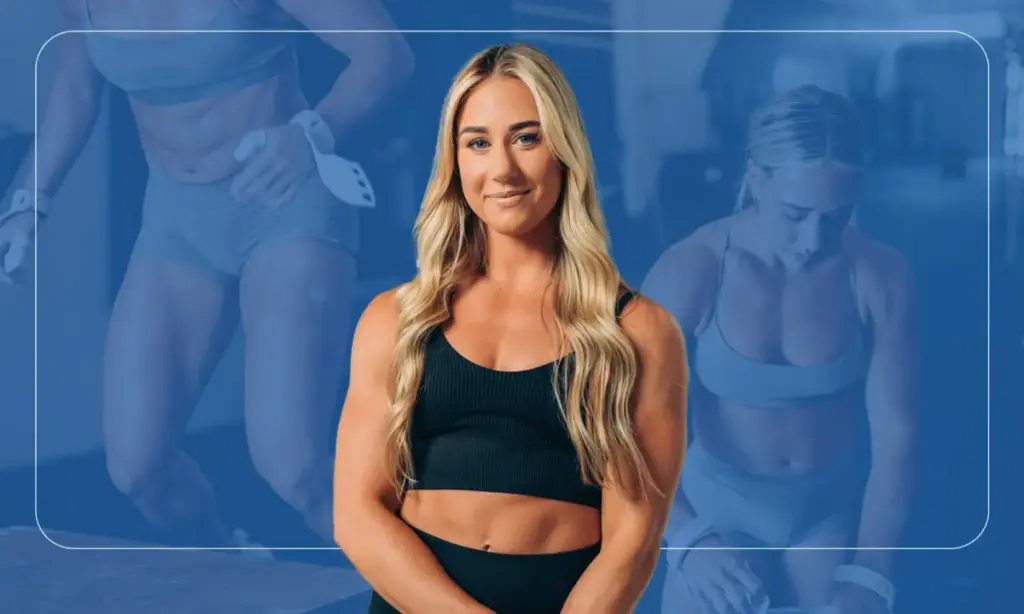
For over a decade, the name Brooke Wells was synonymous with the absolute pinnacle of functional strength. Having qualified for her first CrossFit Games in 2015 at the age of 19, Wells spent her formative years engineering a physique capable of executing high-volume Olympic lifts, brutal gymnastic sequences, and crushing metcons under the global spotlight. By the time she announced her retirement from competitive CrossFit in 2025, she had amassed an extraordinary ten consecutive years at the elite level of the sport—a feat of durability and athletic dominance matched by very few.
Yet, for elite competitors, the competitive fire rarely dissipates with a retirement press release. Just nine weeks after stepping away from the CrossFit competition floor, Wells shocked the fitness world by transitioning to HYROX, the rapidly growing global fitness race.
This transition is far more than a casual shift in hobbies; it represents a profound physiological and psychological recalibration. While CrossFit demands short, explosive, glycolytic bursts of power distributed across multiple events over a grueling weekend, HYROX demands a sustained, highly aerobic, hour-long continuous effort that pairs heavy running volume with functional work stations.
This investigative look explores how one of the world’s most celebrated strength athletes dismantled her decade-long training philosophy, overhauled her metabolic conditioning, overcame deep-seated aesthetic pressures, and redefined her identity to conquer a new frontier in endurance sports.
Detailed Chronology: From Gymnastics Prodigy to Hybrid Athlete
[Youth - High School]  -->  [2015]                  -->  [2015 - 2025]            -->  [2025]               -->  [Late 2025 - Present]
Gymnastics & Track          CrossFit Games Debut         Decade of CrossFit Elite       CrossFit Retirement       HYROX Transition
(Foundational Volume)       (Age 19 - Youngest Competitor)  (10 Games Appearances)        (Pivoting Goals)          (Aerobic Overhaul)
The Foundational Years: Gymnastics and Track
Brooke Wells’ athletic journey began in the highly disciplined world of competitive gymnastics. Training upwards of four hours a day as a child, she developed an elite baseline of spatial awareness, core stability, and a high tolerance for sheer physical volume.
When she transitioned to track and field in high school, she experienced a profound sense of under-stimulation. The standard one-hour track practices felt like a fraction of the physical workload her body was conditioned to endure. Seeking to fill the void, Wells requested a traditional gym membership from her father.
Concerned that a standard commercial gym would serve merely as a social distraction rather than a training ground, her father refused. Instead, he offered an alternative: if she wanted to build genuine, functional strength, she had to sign up for CrossFit.
Though initially skeptical, Wells attended her first session and experienced an immediate shift in perspective. The empowerment of lifting heavy weights and mastering complex, high-skill movements captured her competitive drive. What began as a supplementary program to improve her sprinting speed quickly became her primary athletic pursuit.
The CrossFit Era (2015–2025)
By 2015, at just 19 years old, Wells qualified for the CrossFit Games, marking her arrival as one of the youngest individual competitors in the history of the sport. Over the next decade, she cemented her status as a consistent top-tier threat. Her training during this era was characterized by heavy barbell work—snatches, clean-and-jerks, and heavy deadlifts—coupled with high-intensity interval training (HIIT) designed to maximize power output.
For ten years, Wells navigated the grueling demands of the CrossFit Games, which typically feature 10 to 15 distinct events spread across three to four days. The sport demanded that she maintain a highly muscular, power-dense physique capable of moving massive loads at high heart rates.
The Pivot to HYROX
In 2025, Wells made the decision to retire from competitive CrossFit. However, the sedentary life of a retired athlete proved incompatible with her psychology. Within nine weeks of her official retirement, she entered her first HYROX competition.
Unlike the multi-day, multi-event structure of CrossFit, HYROX presents a singular, uninterrupted challenge: an 8-kilometer run interspersed with eight specific functional fitness stations (including sled pushes, sled pulls, burpee broad jumps, and wall balls). This structural shift forced Wells to immediately abandon her old training splits and embark on a rapid endurance-based physiological transformation.
Supporting Context & Metrics: Recalibrating the Human Machine
The physiological differences between CrossFit and HYROX are profound, requiring completely different energy systems, recovery protocols, and training distributions.
The Metabolic and Training Shift
To transition from a power-dominant CrossFit athlete to an endurance-focused HYROX competitor, Wells had to fundamentally restructure her weekly training volume. The table below illustrates the stark contrast between her training modalities:
| Metric / Variable | CrossFit Training Profile (Pre-2025) | HYROX Training Profile (Post-2025) |
|---|---|---|
| Primary Energy System | Phosphagen & Glycolytic (Anaerobic Power) | Oxidative (Aerobic Endurance & Lactate Threshold) |
| Weekly Strength Sessions | 5 to 6 days per week (Heavy Olympic/Powerlifting) | 2 to 3 days per week (Maintenance & Functional Strength) |
| Weekly Running Volume | Minimal / Sprint-focused intervals | 3 to 4 days per week (Including 70-minute Zone 2 runs) |
| Event Structure | 10–15 distinct events over 3–4 days | 1 continuous, uninterrupted ~60-minute race |
| Pacing Strategy | High-intensity redlining (10–20 minute durations) | Sustained aerobic pacing at lactate threshold |
The Running Overhaul
In CrossFit, running is occasionally featured as a single modality within a larger event, but it is rarely the dominant factor determining success. In HYROX, running constitutes roughly 50% of the total race time.
To adapt, Wells had to significantly increase her weekly mileage. Her current program splits running into two distinct categories:
- Aerobic Base Building: One or two sustained, 70-minute runs per week designed to improve cardiovascular efficiency, capillary density, and mitochondrial capacity.
- Interval and Threshold Training: High-intensity running intervals designed to raise her VO2 max and train her body to clear lactate while running under pre-fatigued conditions.
                  [Weekly HYROX Training Distribution]

         ┌──────────────────────────────────────────────────┐
         │  Running (3-4 Days)                              │ ──► 70-Min Zone 2 Runs
         │  ██████████████████████████████████████ 55%      │     & High-Intensity Intervals
         └──────────────────────────────────────────────────┘
         ┌──────────────────────────────────────┐
         │  Functional Strength (2-3 Days)      │ ──► Maintenance Lifting
         │  ██████████████████████████ 35%      │     & HYROX Station Prep
         └──────────────────────────────────────┘
         ┌──────────┐
         │  Recovery│ ──► Sleep, Nutrition,
         │  █ 10%   │     & Strategic Mobility
         └──────────┘
The Science of Recovery and Pacing
One of the most immediate shocks for Wells was the difference in post-event recovery. In CrossFit, the window between events is a frantic race against the clock involving ice baths, targeted nutrition, massage, and hyperbaric therapy to prepare the body for another event in three hours. In HYROX, the race is a singular, grueling effort.
"I remember doing my first HYROX and I was like, ‘Oh my gosh, we’re done for the weekend. This is so weird,’" Wells noted, reflecting on the psychological adjustment of not needing to immediately rush back to a hotel room for intensive physical triage.
However, this requires a much more disciplined approach to pacing. While CrossFit athletes are trained to "redline"—pushing their heart rates to near-maximum capacity for 10 to 20 minutes—doing so in HYROX is catastrophic. Wells had to learn to operate precisely at her aerobic threshold, understanding the exact boundaries of her physical output to prevent premature muscle failure or cardiovascular collapse before the final stations.

Official Statements: Mindset, Identity, and Redefining Strength
Throughout her career, Wells has been vocal about the mental and societal hurdles of being an elite female strength athlete. Her transition to HYROX has brought these challenges, and her strategies for overcoming them, back into focus.
Overcoming Aesthetic Judgments and the Dressing Room Struggle
In a culture that often promotes a narrow standard of female beauty, building a highly muscular, powerful physique brought societal pressure, particularly during Wells’ teenage years.
"I remember in high school a lot of people were commenting on the fact that I was really interested in a sport that was all weightlifting," Wells recalls.
Fortunately, she had an invaluable support system in her twin sister, Sydney Wells, who also pursued elite fitness. The sisters leaned on each other, choosing to ignore external criticism in pursuit of physical excellence.
Even as an established professional, Wells admits that body image struggles can occasionally surface:
"There have of course been times where I’m trying on clothes in a dressing room and I wish I was a little bit smaller. But then I remember what my muscles can do for me. That’s what I love about the way I look. It’s all about what your body can do."
By shifting the focus from aesthetic evaluation to functional capability, Wells reframed her muscles not as aesthetic abnormalities, but as tangible evidence of dedication and hard work.
       [Old Paradigm]                             [New Paradigm]
   Aesthetic Evaluation                     Functional Capability
┌────────────────────────┐               ┌────────────────────────┐
│ Focus: Body Size       │               │ Focus: Physical Output │
│ Metric: Dressing Room  │  ───────────► │ Metric: Power, Speed,  │
│ External Validation    │               │ Endurance & Durability │
└────────────────────────┘               └────────────────────────┘
The "This Is When It Counts" Mantra
When competing at the absolute limit of human endurance, Wells relies on a simple, powerful cognitive tool to push through intense fatigue.
"When a workout gets really hard, you’re starting to hurt, your lungs are bleeding, that’s when I think: this is when it counts," Wells explains.
Rather than fearing or trying to avoid physical pain during a race, Wells actively leans into it. This cognitive reframing allows her to view extreme discomfort as the exact moment where progress is made and races are won.
A Pragmatic Approach to Recovery
Despite the rise of complex wellness trends and biohacking technologies, Wells attributes her longevity to a highly practical, no-nonsense recovery protocol:
"The best way to recover is just so basic. I’m sure people hate hearing it, but it’s literally just nutrition and sleep."
While she utilizes advanced recovery tools—including saunas, red light therapy, cold plunges, and foam rolling—she treats them as supplements to, rather than replacements for, quality sleep and balanced nutrition.
Furthermore, Wells emphasizes the importance of timing. After realizing that post-workout sauna sessions were over-activating her sympathetic nervous system and causing afternoon energy crashes, she adjusted her routine. She now schedules relaxing recovery practices exclusively for the evening, allowing her body to naturally wind down.
Her daily routine includes:
- A Sacred Morning Ritual: Waking up a full two hours before training, brewing coffee, and committing to a strict 30-minute digital detox to start the day with focus rather than stress.
- An Evening Wind-Down: Utilizing magnesium mixed into a warm chocolate drink as a natural sleep aid and evening ritual.
Future Outlook: The New Frontier of Functional Fitness
Brooke Wells’ transition from CrossFit to HYROX is emblematic of a broader, structural shift occurring within the global fitness landscape. As the first generation of elite CrossFit athletes reach competitive maturity, many are looking for sustainable, longevity-focused alternatives that challenge their fitness without the extreme joint wear-and-tear associated with maximal Olympic lifting.
                    [The Hybrid Athlete Lifecycle]

   ┌──────────────────────┐      ┌──────────────────────┐
   │   High-Impact Era    │ ───► │  Sustained Endurance │
   │  Max Olympic Lifts   │      │   Functional Pace    │
   │  Multi-Day Redlining │      │   Aerobic Longevity  │
   │   (e.g., CrossFit)   │      │    (e.g., HYROX)     │
   └──────────────────────┘      └──────────────────────┘
HYROX, with its standardized, predictable course and lower barrier to entry for weightlifting, offers a natural second act for these elite competitors. Wells is helping lead this movement, showing how elite strength can be adapted into elite endurance.
Wells’ Advice for Aspiring Athletes
For women looking to build their own functional strength but who feel intimidated by the gym environment, Wells offers practical advice:
- Relinquish the Pressure of Immediate Perfection: Every athlete, regardless of their current level, started as a beginner.
- Focus on Scale and Technique: Do not hesitate to start with an empty barbell or a PVC pipe. Mastery of movement mechanics must always precede the addition of weight.
- Measure Progress Internally: Define success by what your body can accomplish, rather than how it compares to others or how it looks in a mirror.
Conclusion
Ultimately, Brooke Wells’ career demonstrates that athletic identity does not have to remain static. By embracing the challenge of starting over as a beginner in an endurance-dominated sport, she has shown that true strength is not just about the weight on a barbell. Instead, it is found in the willingness to adapt, to step outside of one’s comfort zone, and to consistently measure progress by the extraordinary capabilities of the human body.