

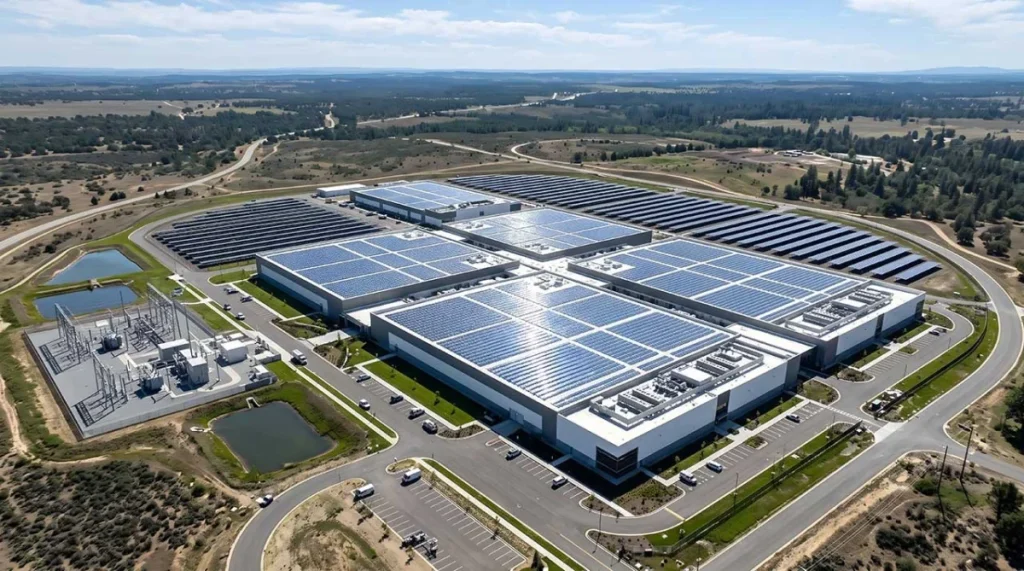
Executive Overview
The global conversation surrounding artificial intelligence has long been dominated by a clean, virtual narrative: an ethereal cloud of algorithms quietly solving humanity’s most complex problems. However, beneath this digital curtain lies an increasingly unsustainable physical reality. Asking a commercial large language model (LLM) a single, straightforward question consumes roughly the same amount of electricity as running a household microwave for one second. But as the tech industry pivots from simple query-and-response chatbots to autonomous, multi-step systems known as "agents," this ecological math is undergoing a terrifying transformation.
An AI agent does not merely answer a prompt; it strategizes, conducts web searches, executes code, troubleshoots its own failures, and runs in continuous operational loops until it deems its task complete. A single complex task assigned to an autonomous agent can consume as much electricity as running a personal laptop for nearly six hours. This dramatic spike in energy consumption represents a profound paradigm shift, presenting communities, regulators, and consumers with an entirely new set of environmental and economic trade-offs.
Beyond the carbon footprint of the server racks, a quiet but intense civil conflict is unfolding across the United States. The true costs of the AI revolution are landing directly on local municipal infrastructure: in depleted municipal water tables, on residential utility bills, and in bitter zoning battles at town halls. Far from being a localized issue for Silicon Valley, the expansion of data centers has triggered a national populist backlash that cuts across traditional political divisions. From the deserts of Arizona to the farmlands of Michigan, local communities are increasingly demanding to know who will pay the ultimate price for the physical infrastructure of artificial intelligence.
Detailed Chronology
The transition of artificial intelligence from a novel digital convenience to a highly controversial infrastructure sector has occurred with breathtaking speed over the last two years.
[Feb 2024] ------------------ [Jun-Aug 2025] ------------------ [Sep-Nov 2025] ------------------ [Q1 2026] ------------------ [Jul 2026]
Nature Study claims           Tucson "Project Blue"           Saline, MI Sued over             Data Center Watch             New York State
AI is 130-1500x more          Rejection & Jurisdictional      $16B Site; Settles &             reports 75 projects           enacts historic
carbon-efficient than         End-Run by Developer            Sparks 19 Local Freezes          blocked ($130B value)         construction pause
human writers
February 2024: The Carbon Efficiency Illusion
A study published in the peer-reviewed journal Scientific Reports by researchers from three prominent universities set off a wave of techno-optimistic headlines. The researchers claimed that an AI model writing a single page of text emitted between 130 and 1,500 times less carbon dioxide than a human writer producing the same page.
The study calculated that a single AI query produces roughly 2 grams of $CO_2$ (including its amortized share of training energy), compared to 1,400 grams produced by a human writer working for 48 minutes. However, peer reviewers and public commentators quickly identified a fundamental methodology flaw: the study attributed a human’s entire average yearly carbon footprint (roughly 15 tons) to their writing hours. Because the human writer still lives, heats their home, and drives a car regardless of whether they are replaced by an AI, the actual net carbon change of choosing a human over an AI is merely the electricity consumed by the writer’s laptop—amounting to roughly 2 kilograms of $CO_2$ over a multi-day project, rather than the 36 kilograms implied by the study’s model.
June – August 2025: The Tucson "Project Blue" Backlash
In Pima County, Arizona, Amazon attempted to quietly secure approval for a massive 290-acre data center campus under a strict non-disclosure agreement signed in 2023. Dubbed "Project Blue," the development slipped through initial county approval in June 2025 without public knowledge of Amazon’s involvement.
When the true scale of the project—and its massive projected water draw in the arid desert—became public, a fierce community backlash erupted. In August 2025, following a packed public hearing featuring more than 1,000 residents, the Tucson City Council voted unanimously to deny the project annexation and refuse city water services. Undeterred, the developer purchased the land under a different corporate pseudonym and moved the project just outside the city’s municipal borders, highlighting the limits of local regulatory authority.
September – November 2025: The Forced Settlement of Saline Township
In September 2025, the planning commission and township board of Saline Township, Michigan, voted overwhelmingly against rezoning 575 acres of agricultural land to accommodate a massive $16 billion data center project backed by OpenAI and Oracle. Just two days later, the developer filed a sweeping federal lawsuit against the township, arguing that the municipality’s lack of industrially zoned land constituted an illegal, exclusionary ban on a legitimate commercial use.
Lacking the financial resources to wage a protracted legal battle against multi-billion-dollar tech giants, the town of 2,900 residents settled within weeks. Construction officially began in November 2025, with residents securing $14 million in community concessions. The aggressive legal strategy shocked rural America, prompting at least 19 neighboring Michigan townships to pass immediate building freezes on data centers.
November 2025: The Graded Accuracy Rematch
In direct response to the controversial February 2024 study, researcher Nolan Woo published a follow-up study in Scientific Reports that introduced a crucial variable: work quality. Testing four different AI models against programming challenges from a national high school computing contest, Woo programmed the systems to iteratively correct their errors up to 100 times.
The study demonstrated that carbon emissions were not driven by the raw size of the model, but by the sheer volume of iterations required to produce a correct, passing answer. While Stanford University’s subsequent 2026 AI Index Report noted that cutting-edge models have achieved above 95% accuracy on coding tasks over the past year, the energy penalty of achieving that accuracy via iterative loops remains extraordinarily high.
First Quarter 2026: The Rise of National Resistance and the Super PACs
By early 2026, localized skirmishes converged into a coordinated national movement. The advocacy group Data Center Watch reported that during the first three months of 2026, at least 75 data center projects valued at $130 billion were successfully blocked or delayed by local opposition—a figure that matched the total for the entirety of 2025. The number of active anti-data-center community groups swelled to 833 across 49 states, while state legislators introduced more than 300 bills in the first six weeks of the year to curb data center expansion.
In response, the tech sector launched "Leading the Future," a political action committee armed with $140 million—including $50 million contributions from OpenAI’s president and a prominent venture capital firm—to back pro-data-center candidates. Tech employees countered by establishing their own grassroots organization, the "Guardrails Alliance," to fund opposition to unbridled data center expansion.
July 2026: New York State Enacts a Historic Pause
Recognizing the escalating strain on the state’s electrical grid and water systems, New York became the first state in the nation to pass a formal moratorium on the construction of new large-scale data centers, pending a comprehensive statewide environmental and economic impact study.
Supporting Context & Metrics
Understanding the systemic impact of the AI transition requires looking past corporate public relations to analyze the core physics of data processing, water consumption, and electrical grid economics.
The Thermodynamics of Agentic AI
The fundamental shift in AI architecture from "single-turn" prompts to "agentic workflows" has shattered previous energy consumption estimates. When a user asks an LLM a single question, the server processes the input and generates a response in a linear, predictable burst.
In contrast, an autonomous agent operates in a continuous, multi-layered loop. A study conducted by researchers at KAIST, South Korea’s premier engineering institution, quantified this "hidden energy" cost.
AI Energy Consumption Comparison (Watt-Hours)
----------------------------------------------------------------------
[Simple Query]  | 2.56 Wh (Baseline)
[Agentic Job]   | 348 Wh   [========================================] (136x increase)
----------------------------------------------------------------------
*Source: KAIST (South Korea) Engineering Research Report, 2026*
The KAIST team discovered that the agentic workflow consumed an average of 348 watt-hours per task—roughly 136 times the energy required for a single query. This massive energy gap is driven by two primary factors:
- Prolonged Task Durations: Agentic processes run up to 154 times longer than simple queries as they coordinate multiple sub-models.
- Hardware Inefficiency: Because these agents must wait for external web searches, API responses, and local code executions, the underlying graphics processing units (GPUs) sit idle for more than 50% of the run time. Despite being idle, these chips continue to draw significant baseline power, resulting in massive energy waste.
The Break-Even Calculus
To understand when AI ceases to be the environmentally superior choice compared to human labor, researchers have modeled a standard 20-hour academic or corporate research project. A human researcher utilizing a standard laptop and external monitor over 20 hours produces approximately 2 kilograms of carbon dioxide, accounting for direct energy use and a fraction of the hardware’s manufacturing footprint.
The number of autonomous AI agent requests required to exceed this 2-kilogram threshold depends entirely on the energy mix of the regional grid supplying the data center:
| Data Center Power Grid Profile | Number of Agent Requests to Equal 2kg of $CO_2$ |
|---|---|
| Cleanest Case (Dedicated, zero-carbon PPAs) | ~46 requests |
| Average U.S. Grid (Standard national energy mix) | ~15 requests |
| Actual Data Center Locations (High-emission regional grids) | ~11 requests |
This disparity highlights a stark reality: data center developers routinely build their facilities in regions where electricity is cheap and readily available, which often correlates with dirtier energy grids. A 2026 study revealed that the electricity grids directly serving active U.S. data centers run, on average, 48% dirtier than the national average. Because a standard agentic research project routinely requires dozens of iterative requests, using an AI agent quickly becomes far more carbon-intensive than relying on a human researcher.
Carbon Footprint Break-Even Point (20-Hour Research Project)
================================================================================
Human Researcher (Laptop + Monitor):  [2.0 kg CO2]
--------------------------------------------------------------------------------
AI Agent equivalent emissions:
- Clean Power Grid:                  [|||||||||||||||||||||||||||||| 46 Requests]
- Average U.S. Grid:                  [||||||||||| 15 Requests]
- Typical Data Center Grid (Dirty):   [||||||| 11 Requests]
================================================================================
Jevons’ Paradox and the Workforce Reality
A common argument in defense of AI is that task-level efficiency gains will ultimately reduce overall energy demand. In an April 2026 report, the International Energy Agency (IEA) observed that "measured per individual task, the energy efficiency of AI is improving at a rate unprecedented in energy history."
However, this efficiency gain is directly countered by Jevons’ Paradox. First observed by economist William Stanley Jevons in 1865, the paradox states that as technological progress increases the efficiency with which a resource is used, the total consumption of that resource often rises because it becomes cheaper and more widely adopted.
Jevons' Paradox in the AI Era
+-----------------------+     +-----------------------+     +-----------------------+
|  AI Task Efficiency   | --> | Cost per AI Task      | --> | Demand for AI Tasks   |
|  Improves             |     | Plummets              |     | Skyrockets            |
+-----------------------+     +-----------------------+     +-----------------------+
                                                                        |
                                                                        v
                                                            +-----------------------+
                                                            | Total Energy & Water  |
                                                            | Consumption Surges    |
                                                            +-----------------------+
Data from the National Bureau of Economic Research (NBER) supports this theory. An NBER study under review found that employees heavily exposed to AI tools in their daily workflows did not work fewer hours; instead, they put in an average of 3.5 additional hours per week. Furthermore, corporate surveys conducted by staffing and consulting firms revealed that only 25% of employees converted AI-driven time savings into personal leisure time. The remaining 75% used those savings to take on more work, creating a self-reinforcing cycle of escalating computational demand.
The Hidden Water Bill
While the public focus remains on carbon emissions, water consumption has emerged as the primary flashpoint for local community resistance. Data centers require vast amounts of water to keep their high-density server racks from overheating.
According to the Lawrence Berkeley National Laboratory, U.S. data centers consumed approximately 17.4 billion gallons of water for direct, on-site evaporative cooling in 2023. While this is less than a single day’s irrigation for the nation’s corn crops, analysts at Orennia project that this direct water consumption could double or even quadruple by 2028.
However, the direct cooling figure represents only a small fraction of the industry’s total water impact. The thermoelectric power plants that generate the electricity to run these data centers are the largest consumers of fresh water in the country.
U.S. Data Center Water Footprint (Billions of Gallons)
---------------------------------------------------------------------------
Direct Cooling (On-Site)   | 17.4 B gal  [===]
Indirect Power Generation  | 211.0 B gal [====================================] (12x)
---------------------------------------------------------------------------
*Source: Lawrence Berkeley National Laboratory / Orennia Research, 2026*
Generating the electricity consumed by U.S. data centers required an estimated 211 billion gallons of water—more than 12 times the amount used for direct on-site cooling. This allows data centers to switch to dry, air-cooled systems and claim "near-zero water use" on-site, while their actual, systemic water footprint remains entirely unchanged at the regional power plant.
Transparency regarding this water footprint remains highly inconsistent:
- Google: Reported consuming 7.7 billion gallons of water globally in 2024, with its Council Bluffs, Iowa, facility alone accounting for roughly 1 billion gallons.
- Texas: An industry survey revealed that 83% of the state’s 341 operational data centers had failed to file legally mandated water consumption reports with state authorities.
Ratepayer Contamination
The rapid expansion of data centers is also directly impacting residential utility bills. The primary driver of this increase is the capacity auction system managed by regional transmission organizations like PJM Interconnection, which coordinates the electrical grid for 65 million people across 13 states and Washington, D.C.
To ensure grid reliability during peak summer and winter demand, PJM holds annual auctions to pay power plants to guarantee their availability. Due to the massive influx of projected data center demand, PJM’s capacity auction clearing price skyrocketed from $29 per unit for the 2024-2025 period to $329 per unit for 2026-2027.
PJM Grid Capacity Auction Prices (Per Unit)
================================================================================
2024-2025:  [$29]
2026-2027:  [$329]  [==========================================================]
================================================================================
*Note: Data centers were found to be responsible for 63% of this capacity price jump.*
An independent market monitor concluded that data centers were responsible for 63% of this price jump, which translates to $9.3 billion in added costs that utilities pass directly to their customers. The Natural Resources Defense Council (NRDC) projects that the average household in the PJM territory will see their monthly electricity bill rise by $70 by 2028 solely to pay for these grid capacity upgrades.
This trend is already visible across the country:
- Washington, D.C.: Pepco customers saw an average of $21 per month added to their residential bills over the past year.
- Ohio & Pennsylvania: Average residential electricity rates rose by 9% and 14% respectively over the last twelve months, driven largely by local data center grid integration costs.
Official Statements
The battle over the physical infrastructure of artificial intelligence has drawn sharp battle lines, with starkly different perspectives from industry leaders, regulators, and grassroots advocates.
The Tech Industry and Infrastructure Developers
Data center developers and technology conglomerates argue that their massive capital investments are essential to national competitiveness and offer long-term economic benefits. A spokesperson for the Data Center Coalition highlighted the broader economic impact, citing a landmark study by Virginia’s Joint Legislative Audit and Review Commission (JLARC):
"Data centers are the bedrock of the modern digital economy. In Virginia alone, the industry supports over 74,000 high-paying jobs and injects $9.1 billion annually into the state’s economy. Furthermore, by acting as massive, stable anchor customers, data centers allow utility companies to distribute the fixed capital costs of grid modernization across a larger base, which can ultimately lower baseline rates for all consumers if structured correctly."
However, critics point out that the JLARC report itself contains a crucial caveat: the vast majority of these 74,000 jobs are temporary construction roles, with operational data centers requiring very few permanent, on-site employees once completed.
Municipal Leaders and Local Regulators
For local officials, the reality on the ground is often far more complicated than broad economic projections suggest. Reflecting on the legal battle that forced Saline Township to allow a $16 billion data center development, a local township supervisor expressed the frustration of small communities facing massive tech developers:
"We are a small agricultural community of less than three thousand people. We don’t have the legal budgets or the staff to fight multi-billion-dollar corporations in federal court for years. They used exclusionary zoning laws as a cudgel to force their way into our town. While the fourteen-million-dollar community benefit package will help fund our volunteer fire department and preserve some farmland, we were essentially forced to sign away our community’s rural character at gunpoint."
State Regulators and Grid Operators
State utility regulators are scrambling to shield residential consumers from bearing the costs of the tech sector’s massive energy demands. In Ohio, where data center demand has threatened grid stability, a state utility commissioner explained their aggressive new regulatory approach:
"We cannot allow ordinary residential ratepayers to subsidize the immense energy needs of multinational tech companies. That is why we approved new rules requiring data centers to sign minimum twelve-year power contracts and commit to upfront infrastructure payments. If a developer wants to add gigawatts of demand to our grid, they must pay for the physical power plants and transmission lines required to support them."
Grassroots Advocates and Employee Coalitions
The rapid expansion of the industry has also sparked internal resistance from tech workers themselves. A representative for the Guardrails Alliance, a grassroots coalition of tech employees supporting local community opposition, warned of the long-term consequences of unchecked growth:
"Many of us entered this industry to build tools that would improve human lives, not to deplete municipal aquifers and drive up electricity bills for working-class families. We are raising small-dollar donations from within the tech sector to support local opposition groups because we believe that the communities where these data centers are built deserve to have a real say. The current model of using non-disclosure agreements and aggressive lawsuits to bypass local democracy is entirely unsustainable."
Future Outlook
As the physical footprint of artificial intelligence collides with the realities of ecological and infrastructure limits, the industry is headed toward a major regulatory and operational reckoning. The era of unchecked data center expansion, characterized by quiet local zoning approvals and subsidized utility rates, is rapidly coming to an end.
Grid & Resource Limits
  ├── State Regulations (e.g., NY Moratorium, OH 12-Year Contracts)
  ├── Local Populist Resistance (833+ active groups in 49 states)
  └── Physical Constraints (Water scarcity & high capacity auction prices)
The future of AI will likely be shaped by three major structural shifts:
1. The End of Bipartisan Consensus on Tech Expansion
The opposition to data centers is one of the few issues in modern American politics that cuts across traditional party lines, albeit for different reasons. Republican officials are increasingly targeting the industry over generous tax breaks and the strain on grid reliability, while Democrats focus on carbon emissions, water conservation, and localized pollution.
This bipartisan alignment is driving a wave of state-level legislation. Following New York’s historic construction pause, at least a dozen states are considering similar moratoriums, signaling a shift toward much tighter regulation of digital infrastructure.
2. Mandatory Structural Separation of Utility Rates
The practice of spreading the costs of data center grid integration across all residential ratepayers is facing intense political backlash. Over the next several years, expect to see the widespread adoption of "segregated rate structures."
Following Virginia’s lead, utility commissions will likely isolate data center electricity demand into a separate, higher-tariff commercial class. This will force tech companies to directly



