

Executive Overview
As global temperatures climb and heatwaves become an increasingly dominant feature of the summer season, the sartorial search for relief intensifies. Amidst synthetic-heavy fast fashion alternatives that trap heat and contribute to microplastic pollution, one natural textile stands head and shoulders above the rest: linen. Prized for millennia for its breathability, durability, and low-impact cultivation, linen has cemented its status as the ultimate warm-weather fabric.
However, not all linen is created equal. While the flax plant itself is inherently resilient, requiring significantly less water and fewer pesticides than conventional cotton, the industrial processes of retting, spinning, dyeing, and finishing can introduce heavy chemicals into the supply chain. In response to greenwashing and rising consumer demand for true accountability, ethical curators and sustainability watchdogs—such as the conscious fashion rating platform Good On You—are shifting the narrative. By rigorously assessing fashion houses on their impact on people, the planet, and animals, industry experts are guiding consumers toward transparent brands that prioritize organic certification, closed-loop processing, and fair labor practices.
This comprehensive guide explores the resurgence of sustainable linen dresses, the agronomic and chemical realities of linen production, how to shop consciously for the upcoming season, and an exclusive curation of 12 ethically rated linen dresses from pioneering brands like PANGAIA, LA Relaxed, Artknit Studios, and JAN N JUNE.
Detailed Chronology: The Evolution of Linen from Ancient Staple to Modern Eco-Luxury
To fully appreciate the modern linen dress, it is essential to understand the long, evolutionary arc of the textile and its recent reclamation by sustainable fashion advocates.
Antiquity to Industrialization
Linen is one of the oldest textiles known to human civilization. Archaeological evidence dates flax cultivation back more than 30,000 years, with sophisticated linen production flourishing in Ancient Egypt, where it was valued not only for its cooling properties in the desert climate but also as a symbol of light, purity, and wealth. For centuries, the production process was decentralized, labor-intensive, and entirely organic, relying on natural dew-retting and botanical dyes.
The Industrial Revolution mechanized linen production, shifting output from localized cottage industries to large-scale textile mills. While this increased accessibility, it also introduced synthetic treatments, chemical bleaching agents, and heavy metal-based dyes to accelerate production speeds and satisfy shifting consumer preferences for wrinkle-free, brightly colored garments.
The Fast Fashion Era and the Synthetic Shift
By the late 20th century, cheap petroleum-derived synthetics—such as polyester, nylon, and acrylic—overshadowed natural fibers. These materials could be produced at a fraction of the cost, appealing to a fast-fashion market addicted to rapid trend cycles. However, this shift came at a devastating cost to the environment, resulting in carbon-heavy manufacturing processes, chemical waterways pollution, and billions of non-biodegradable garments ending up in landfills.
The Contemporary Sustainable Awakening (2010s–Present)
In response to the ecological crisis of fast fashion, the 2010s and 2020s witnessed a major consumer and industry pivot back to natural, biodegradable fibers. Linen experienced a dramatic renaissance. Independent designers, ethical marketplaces, and transparent rating agencies began championing the fabric not merely as a seasonal holiday trend, but as a cornerstone of circular, slow fashion. Modern eco-conscious brands began reviving traditional, low-impact manufacturing methods, partnering with certified organic farms, and ensuring that every stage of production—from the flax field to the final stitch—meets rigorous social and environmental standards.
Supporting Context & Metrics: The Science and Sustainability of Flax
To make informed purchasing decisions, consumers must look beyond marketing buzzwords like "eco-friendly" and understand the objective environmental metrics of linen.
[Flax Cultivation] ---> [Natural Retting] ---> [Mechanical/Organic Processing] ---> [Biodegradable Garment]
       |                      |                               |                               |
 Low Water Usage      Minimal Pesticides            GOTS / OEKO-TEX Certified         Zero Microplastics
The Agronomic Advantages of Flax
Linen is derived from the inner stalk fibers of the Linum usitatissimum (flax) plant. Compared to conventional cotton—which is famously water-intensive and relies heavily on chemical pesticides—flax is remarkably hardy:
- Water Efficiency: Flax plants typically rely on rainwater, requiring a fraction of the artificial irrigation demanded by cotton crops.
- Soil Regeneration: Flax can thrive in poor, marginal soils that are unsuited for food production, and its cultivation can actually improve soil health and structure.
- Pesticide Independence: Because the plant is naturally resistant to many common pests, the need for synthetic chemical pesticides and fertilizers is drastically minimized during the growing phase.
The Hidden Environmental Pitfalls: Processing and Dyeing
While the agricultural phase of linen is undeniably low-impact, the post-harvest processing requires scrutiny:
- Retting: The process of separating the flax fibers from the woody stalk (retting) can be done via dew (natural) or water (chemical/tank retting). Water retting, if improperly managed, can release organic pollutants into local waterways.
- Chemical Dyes and Bleaches: Conventional linen manufacturing frequently employs synthetic dyes, heavy metal mordants, and chlorine bleaching agents to achieve pristine white or vibrant colored fabrics. These processes can undermine the fabric’s natural biodegradability and pollute ecosystems.
- The Certification Solution: To guarantee that a linen garment has been processed without toxic chemicals, consumers should look for independent verifications such as the Global Organic Textile Standard (GOTS) or OEKO-TEX Standard 100.
The Blending Dilemma: Pure vs. Blended Linen
Pure, 100% linen is completely biodegradable in its natural, un-dyed state. However, linen is notorious for wrinkling easily—a characteristic that many mainstream consumers find frustrating. To combat this, manufacturers frequently blend linen with synthetic fibers like polyester or elastane, or with other plant fibers like cotton.
While blends can reduce wrinkling or alter the drape of the garment, they create a major circularity roadblock. Fabric blends are notoriously difficult, and often impossible, to recycle using current technological infrastructure. Consequently, sustainability experts strongly advise opting for 100% pure linen garments whenever possible to ensure end-of-life recyclability and compostability.
Official Statements and Industry Insights
Ethical fashion watchdogs and sustainable designers emphasize that investing in linen requires a holistic mindset that balances material integrity with mindful consumption.
The Perspective from Good On You
Editorial teams at Good On You—the world’s leading authority on fashion brand sustainability ratings—highlight that linen serves as a prime example of a historical material meeting modern ethical demands. However, they caution shoppers against greenwashing:
"Linen is not only a lower-impact material, it also makes for excellent summer and holiday clothing… But remember that the retting and dyeing processes in linen manufacturing can often be chemical-heavy. It’s best to seek out organic linen that is certified to a credible standard, like GOTS."
Furthermore, experts emphasize durability as a core pillar of sustainability. Because high-quality linen is exceptionally durable and stands up to years of wear and tear, the onus is on the consumer to choose timeless silhouettes over fleeting micro-trends. As the editorial team notes:
"One other major perk of linen is that it stands up to loads of wear and tear, meaning you’ll be able to wear a linen dress for years to come if it’s cared for properly. Keep that in mind when you’re shopping for trend-driven styles, and consider whether you’ll still want to wear that cut or fit in a few seasons’ time."
12 Ethical Linen Dresses You’ll Love
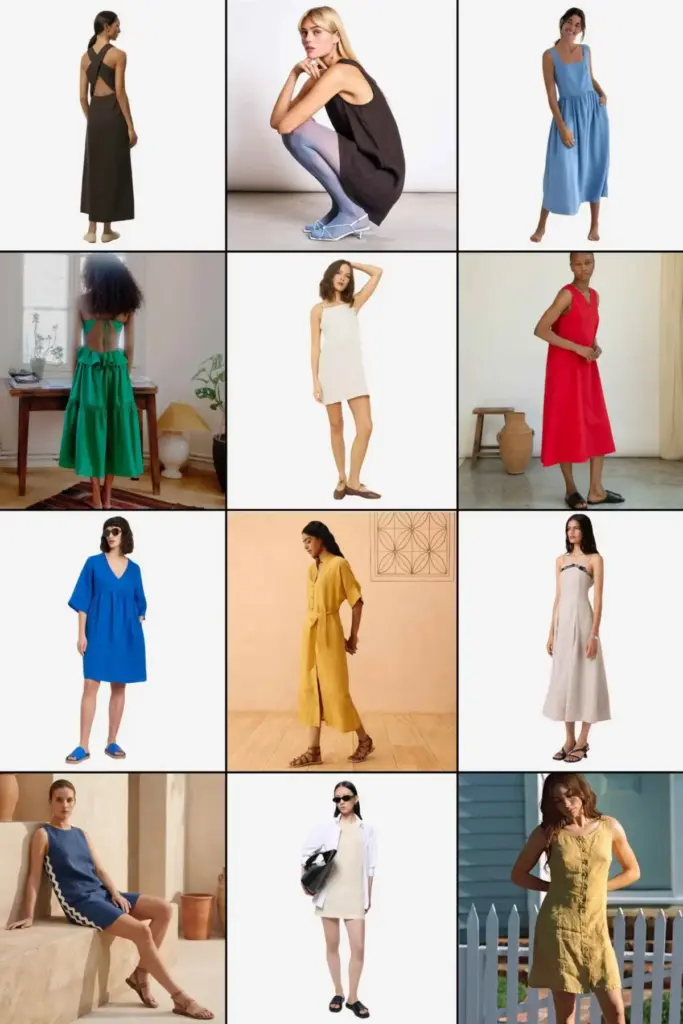
To help you navigate your warm-weather wardrobe updates, independent ratings platforms have curated a selection of 12 exceptional linen dresses from brands that score highly for their impact on people, the planet, and animals. Ranging from airy maxi lengths to structured mini dresses, loose shift cuts, and sophisticated shirt styles, these options prioritize ethical production and superior craftsmanship.
+-----------------------------------------------------------------------------------+
|                           TOP ETHICAL LINEN BRANDS                                |
+---------------------------+---------------------------+---------------------------+
| 1. Artknit Studios        | 5. Whimsy + Row           | 9. The Summer House       |
| 2. JAN N JUNE             | 6. Beaumont Organic       | 10. SeamsFriendly         |
| 3. TWOTHIRDS              | 7. Lanius                 | 11. Pangaia               |
| 4. OhSevenDays            | 8. Sui                    | 12. LA Relaxed            |
+---------------------------+---------------------------+---------------------------+- Artknit Studios – The Linen Twill Special Back Dress (Café Noir): Combining Italian craftsmanship with traceable supply chains, this sophisticated dress offers a tailored silhouette with a unique back detail, perfect for seamless transitions from day to evening wear.
- JAN N JUNE – Linen Mini Dress (Salvia Mud): A minimalist, contemporary mini dress crafted from sustainable European flax, embodying the brand’s commitment to radical transparency and eco-friendly design.
- TWOTHIRDS – Formentera Linen Dress (Denim Blue): Inspired by ocean preservation, TWOTHIRDS crafts versatile, coastal-ready linen pieces using eco-conscious materials that minimize micro-shedding and water waste.
- OhSevenDays – Holly Linen Dress: Utilizing deadstock and lower-impact surplus fabrics, this brand champions circular fashion with timeless, small-batch linen designs tailored for the modern minimalist.
- Whimsy + Row – Lainey Striped Linen Mini Dress: A charming, locally made piece featuring classic stripes, produced in limited quantities to eliminate overproduction and waste.
- Beaumont Organic – Imogen Cotton and Linen-Blend Dress (Scarlet): A vibrant, breathable option that blends organic cotton with premium linen, ensuring maximum comfort and ethical labor standards throughout production.
- Lanius – Organic Linen Dress: Certified by GOTS, Lanius delivers exquisitely tailored garments that honor animal welfare, fair wages, and strict organic agricultural guidelines.
- Sui – Golden Palm Linen Maxi Shirt Dress: An elegant, flowing shirt dress that merges utility with grace, crafted by artisans working under fair-trade conditions.
- The Summer House – Suhjan Embroidered Linen Dress: Featuring delicate artisanal embroidery, this brand supports traditional craftsmanship and slow-fashion principles using natural, non-toxic textiles.
- SeamsFriendly – Contrast-detailed Linen Shift Dress: Offering inclusive sizing and conscious production models, this shift dress combines durability with striking graphic contrast details.
- Pangaia – A-line Linen Dress (Bone White): A pioneer in materials science, Pangaia utilizes innovative bio-based fibers and chemical-reducing processing techniques to create effortless, modern essentials.
- LA Relaxed – The Linen Pinafore: Designed and manufactured locally in Los Angeles using sustainable fibers, this versatile pinafore offers relaxed, effortless layering for warmer climates.
Future Outlook: The Road Ahead for Sustainable Flax and Fashion
As the fashion industry faces mounting pressure from international regulators and increasingly discerning consumers, the future of linen looks both promising and transformative.
Technological Innovations in Processing
Researchers and textile engineers are actively developing closed-loop processing techniques for linen manufacturing. Innovations in enzymatic retting and water recycling are drastically reducing the environmental footprint of turning flax stalks into wearable yarn. Furthermore, advancements in mechanical softening are eliminating the need for harsh chemical treatments, ensuring that 100% pure linen remains completely biodegradable without compromising on softness or drape.
The Shift Toward Circularity
In the coming decade, regulatory shifts—such as extended producer responsibility (EPR) laws and mandatory digital product passports—will require fashion brands to account for the entire lifecycle of their garments. Because pure linen is naturally biodegradable and easily compostable (provided non-toxic dyes are used), it is uniquely positioned to thrive in a circular economy. Brands that embrace radical transparency, organic certifications, and end-of-takeback schemes will lead the market.
Conclusion: Making Mindful Choices
The next time a heatwave strikes, your wardrobe choices can make a powerful statement. By investing in certified organic, 100% pure linen dresses from transparent, ethically rated brands, consumers can stay cool while actively supporting a regenerative, lower-impact fashion future. Remember to look beyond momentary trends, prioritize timeless cuts that stand up to years of wear, and consult trusted directories like Good On You to ensure your purchases align with your core values.



