
Executive Overview
As consumers increasingly pivot away from refined sugar in pursuit of better metabolic health and weight management, non-nutritive, artificial sweeteners have saturated the global market. Among these, sucralose—widely recognized by its most famous household moniker, Splenda—stands out as one of the most heavily consumed sugar substitutes on earth. Found everywhere from diet sodas and protein powders to sugar-free baked goods and flavored waters, sucralose promises the sweetness of sugar without a single calorie.
Yet, as public consumption has soared, so has public skepticism. Internet forums, wellness blogs, and social media feeds are flooded with alarming warnings. Consumers are repeatedly forced to ask a pressing question: Is sucralose bad for you?
To answer this comprehensively, this deep dive explores the biochemical makeup of sucralose, safety standards established by global regulatory bodies, and recent landmark scientific studies analyzing its effects on gut microbiota, glycemic control, and metabolic health. Furthermore, we will examine the critical distinctions between pure sucralose and commercial tabletop blends containing bulking agents, the hidden caveats of high-temperature baking, and how sucralose stacks up against alternative sweeteners like stevia. Ultimately, this report aims to arm you with evidence-based insights to help you determine which sweetener options align best with your long-term health goals.
What Is Sucralose, Exactly?
To understand the health implications of sucralose, one must first look at its chemical architecture. Sucralose is a high-intensity, non-nutritive sweetener that is roughly 600 times sweeter than regular table sugar (sucrose). Despite its intense sweetness, it contributes zero calories to the human diet. This unique characteristic is largely due to how the human body processes—or rather, fails to process—the molecule: it passes through the gastrointestinal tract largely unmetabolized.
The Chemical Structure of Sucralose
While the commercial manufacturing process begins with ordinary sucrose, the final product is chemically distinct. During synthesis, manufacturers selectively replace three specific hydroxyl (-OH) groups on the sucrose molecule with three chlorine atoms.

This seemingly small structural alteration changes everything. Because human digestive enzymes do not recognize this modified molecular configuration, the body cannot break it down for energy. Consequently, the vast majority of ingested sucralose is excreted unchanged through the body, which explains its zero-calorie profile.
Why Some People Think Sucralose Is Bad for You
Despite regulatory assurances, public concern persists. A web search for "sucralose side effects" reveals a labyrinth of conflicting claims. Some fears center on long-term cancer risks, while others focus on gastrointestinal distress and disruptions to the gut microbiome. Additionally, a pervasive fearmongering narrative online targets sucralose simply because it is a "chemical"—ignoring the scientific reality that water and table sugar are also chemical compounds.
To separate fact from fiction, researchers continue to subject sucralose to rigorous toxicological and clinical evaluations.
Detailed Chronology: Regulatory Approvals and Evolving Science
The journey of sucralose from a laboratory discovery in 1976 to a ubiquitous global food additive has been punctuated by decades of toxicological safety evaluations, landmark human trials, and shifting public health guidelines.
- 1976: Researchers discover sucralose serendipitously during chlorinated carbohydrate research aimed at developing new insecticides. During testing, a researcher misheard an instruction to "test" the compound as "taste" it, discovering its intense sweetness.
- 1998: Following extensive safety assessments involving more than 100 animal and human clinical trials, the U.S. Food and Drug Administration (FDA) officially approves sucralose as a general-purpose sweetener for foods and beverages.
- 2016: A controversial rodent study conducted by the Ramazzini Institute in Italy suggests a link between lifetime sucralose consumption and increased rates of leukemia and related cancers in mice, igniting widespread public fear and subsequent methodological criticism from international safety authorities.
- 2022: A landmark clinical trial published in the journal Cell demonstrates that non-nutritive sweeteners, including sucralose, can significantly alter the gut microbiome and impair glycemic responses in healthy human adults.
- 2023: The World Health Organization (WHO) issues a definitive public guideline advising against the use of non-sugar sweeteners for long-term weight control or reduction of non-communicable disease risk.
- 2025–2026: Emerging clinical research continues to scrutinize the micro-dosing effects of sucralose on insulin sensitivity, highlighting subtle yet measurable metabolic shifts in non-diabetic and diabetic populations alike.
Supporting Context & Metrics: Safety Limits and Consumption Thresholds
Before examining potential health risks, it is vital to understand how health agencies quantify safe exposure levels. Regulatory bodies establish an Acceptable Daily Intake (ADI), which represents the amount of a food additive that can safely be consumed on a daily basis over a lifetime without appreciable health risk.

Comparing Global Safety Standards
- U.S. Food and Drug Administration (FDA): The FDA sets the ADI for sucralose at 5 milligrams per kilogram (mg/kg) of body weight per day.
- European Food Safety Authority (EFSA): Following its own exhaustive re-evaluations, the EFSA sets a higher ADI at 15 mg/kg of body weight per day.
To put these numbers into perspective, commercial tabletop sweeteners (such as Splenda) are not pure sucralose; they consist of roughly 1% high-intensity sucralose and 99% carbohydrate fillers (dextrose and maltodextrin).
Sweetener Packet Equivalency Chart
| Body Weight Benchmark | Packets to Reach FDA ADI (5 mg/kg) | Packets to Reach EFSA ADI (15 mg/kg) |
|---|---|---|
| FDA Standard Adult: 132 lbs. (60 kg) | ~22.5 packets | ~67.6 packets |
| Average American Adult: 185.4 lbs. (84.1 kg) | ~31.6 packets | ~94.8 packets |
As the metrics illustrate, an individual would need to consume an exceptionally high volume of sweetener packets daily—far beyond typical dietary habits—to mathematically breach official regulatory safety thresholds. However, regulatory safety (freedom from acute toxicity) is not synonymous with optimal metabolic health, which brings us to modern clinical findings.
Deep Dive: Research on Health Effects and Metabolic Impacts
Gut Microbiota and Glycemic Response
For decades, scientists operated under the assumption that because sucralose passes through the digestive tract unmetabolized, it must be entirely inert. Recent clinical research has challenged this dogma.
A landmark 2022 study published in Cell evaluated the systemic effects of various non-nutritive sweeteners—including sucralose and saccharin—on healthy human volunteers over a two-week period. Participants consumed doses well below the FDA ADI (roughly equivalent to 25% of the daily limit). The results revealed that both sucralose and saccharin significantly altered the composition of both the gut and oral microbiomes and noticeably impaired glycemic responses (blood sugar tolerance) in specific study participants.
Subsequent clinical investigations published in 2025 reinforced these concerns. Healthy, lean individuals tracked over 30 days while consuming 30% of the FDA ADI of sucralose exhibited a 20.3% decrease in insulin sensitivity compared to a placebo control group. Furthermore, biomarkers including circulating glucose, insulin, GLP-1, and systemic inflammatory markers showed upward shifts alongside a documented reduction in gut bacterial diversity.
Another 12-week trial observed that individuals with type 2 diabetes who substituted table sugar with sucralose experienced distinct alterations in gut microbial community structures. While researchers emphasize that more targeted studies are needed to isolate how different cohorts react, the emerging consensus is that sucralose is not entirely biologically inert.
Evaluating the Cancer Risk Controversy
The persistent rumor that sucralose causes cancer largely stems from the aforementioned 2016 rodent study by the Ramazzini Institute. However, this study faced severe pushback and formal invalidation from major regulatory bodies worldwide, including the FDA and the EFSA.
Independent toxicologists noted critical flaws in the study’s design, including animal husbandry issues and misinterpretation of pathological data. More contemporary oncological reviews confirm that while heavy or poorly managed microbiome alterations can theoretically interfere with certain cancer therapies, sucralose itself does not directly initiate carcinogenesis in humans when consumed at or below established ADI levels.
Official Statements and Public Health Guidelines
The divergence between government regulatory bodies and global health organizations highlights the complexity of nutritional science:
- The Regulatory Stance (FDA & EFSA): Regulators evaluate food additives primarily through a toxicological lens—asking whether a substance causes acute toxicity, organ damage, or genetic mutations at established consumption levels. By these metrics, sucralose is officially classified as safe.
- The Public Health Stance (World Health Organization): In 2023, the WHO took a holistic health perspective, issuing formal guidelines advising against the long-term use of non-sugar sweeteners for weight management. The WHO emphasizes that replacing sugar with artificial alternatives does not address the root behavioral drivers of metabolic disease, recommending instead a shift toward whole foods, fresh fruits, and unsweetened beverages.
The Splenda Paradox: Pure Sucralose vs. Tabletop Fillers
When consumers ask whether "Splenda is bad for you," they are often conflating pure sucralose with commercial delivery systems.
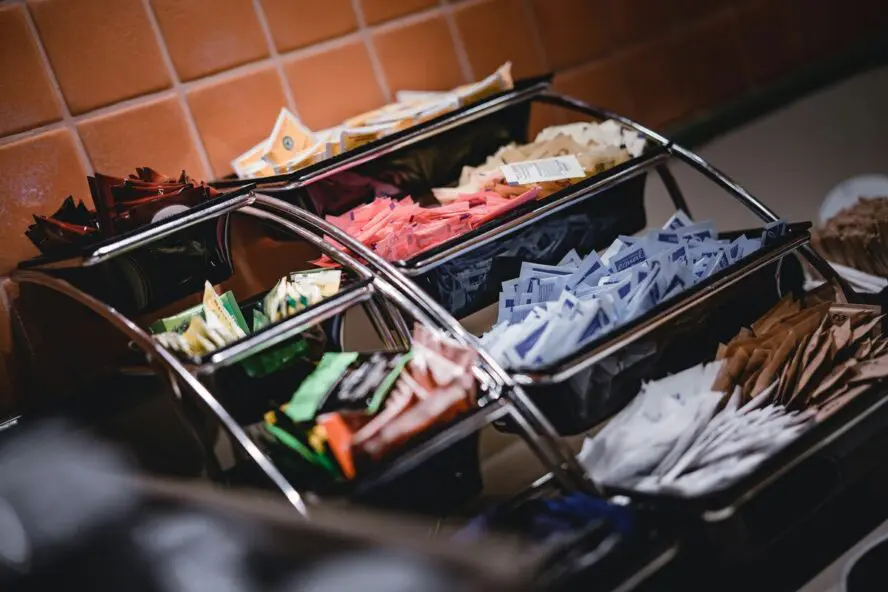
Because pure sucralose is intensely sweet—requiring microscopic quantities to sweeten a single cup of coffee—manufacturers must add bulking agents to make the product measurable for home baking and beverage use. Standard yellow packets of Splenda consist of roughly 99% dextrose and maltodextrin, with sucralose making up the remaining 1%.
This distinction carries important health implications:
- Glycemic Impact: While sucralose has no calories, dextrose and maltodextrin are rapid-digesting carbohydrates that can trigger minor blood sugar and insulin spikes in sensitive individuals if consumed in large quantities.
- Gut Health Effects: While sucralose may suppress certain beneficial bacterial strains in the gut, the heavy carbohydrate fillers in commercial tabletop packets can simultaneously act as a food source for less desirable gut microbes, potentially contributing to bloating, gas, and digestive discomfort.
Culinary Considerations: The Heat Caveat in Baking
Many home cooks utilize sucralose-based sweeteners to slash calories in baked goods. However, culinary science reveals a distinct limitation: heat stability.
When exposed to high baking temperatures (exceeding approximately 248°F or 120°C for extended periods), the sucralose molecule can begin to thermally degrade, potentially producing chlorinated organic byproducts. Furthermore, replacing sugar entirely with non-nutritive sweeteners in baking destroys the structural integrity of recipes. Sugar does more than provide sweetness; it contributes moisture, browning (via Maillard reactions), structural volume, and tender crumb texture.
Best Practice for Baking: If you choose to bake with sucralose, experts recommend utilizing a 50/50 blend of sugar and sweetener, or specialized baking blends, to preserve food texture, moisture, and minimize thermal breakdown risks.
Sweetener Alternatives, Ranked
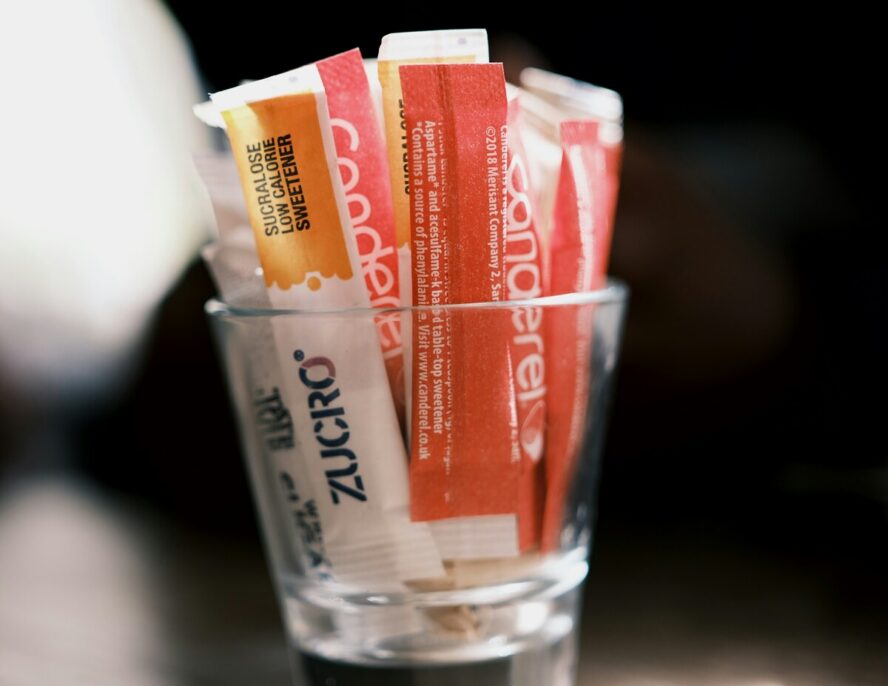
For consumers hesitant to incorporate sucralose into their daily routines, several natural and artificial alternatives exist on the market:
- Stevia (Leaf Extract / Reb M): A natural, zero-calorie plant-derived sweetener. High-purity Reb M extracts offer a cleaner, less bitter aftertaste than traditional stevia, making it a favorite among clean-label advocates.
- Monk Fruit (Luo Han Guo): Derived from a small Asian melon, monk fruit provides intense zero-calorie sweetness without the chemical processing associated with artificial options, and it generally has minimal impact on blood glucose.
- Allulose: A rare, naturally occurring sugar found in figs and raisins. Allulose provides roughly 70% of the sweetness of sugar, behaves just like sugar in baking, but provides almost zero net calories and minimal glycemic impact.
- Erythritol & Xylitol (Sugar Alcohols): Popular low-calorie sweeteners, though high doses can cause laxative effects or gastrointestinal distress in sensitive individuals.
Future Outlook
The debate over sucralose is emblematic of modern nutritional science: as analytical techniques become more sophisticated, we discover that the human body interacts with food additives in subtle, highly individualized ways.
Moving forward, nutrition science is shifting away from generalized blanket recommendations toward personalized nutrition. Future clinical guidelines will likely recognize that while a healthy, metabolically robust individual may clear sucralose with zero noticeable impact, someone with prediabetes, insulin resistance, or compromised gut health may experience measurable metabolic and microbial shifts.
Frequently Asked Questions
Why is sucralose considered bad for you by some experts?
Concerns are primarily driven by recent clinical trials demonstrating subtle shifts in gut microbiome composition and impaired glycemic responses, alongside frustration over the hidden carbohydrate fillers found in commercial tabletop packets.
Is sucralose carcinogenic?
No current, peer-reviewed human evidence supports the idea that sucralose causes cancer. Concerns stem entirely from flawed high-dose rodent studies that have been formally dismissed by international food safety agencies.

Is Splenda the same thing as sucralose?
Chemically, yes, but commercially, no. Splenda contains roughly 99% carbohydrate fillers (dextrose and maltodextrin) and only 1% pure sucralose.
Can sucralose cause weight gain?
Directly, no, because it contains zero calories. However, research suggests that artificial sweeteners may not reliably support long-term weight loss and can occasionally trigger appetite stimulation or compensatory eating behaviors in certain individuals.
What are the most common side effects of sucralose?
When consumed in excess—or by individuals sensitive to sugar alcohols and maltodextrin fillers—reported side effects include mild gastrointestinal distress, bloating, gas, and headaches.
Disclaimer: When making any significant lifestyle, dietary, or health changes, always consult your primary care physician or a registered dietitian. The views expressed in this article are those of the author and do not necessarily represent the official stances of regulatory bodies or affiliated organizations.