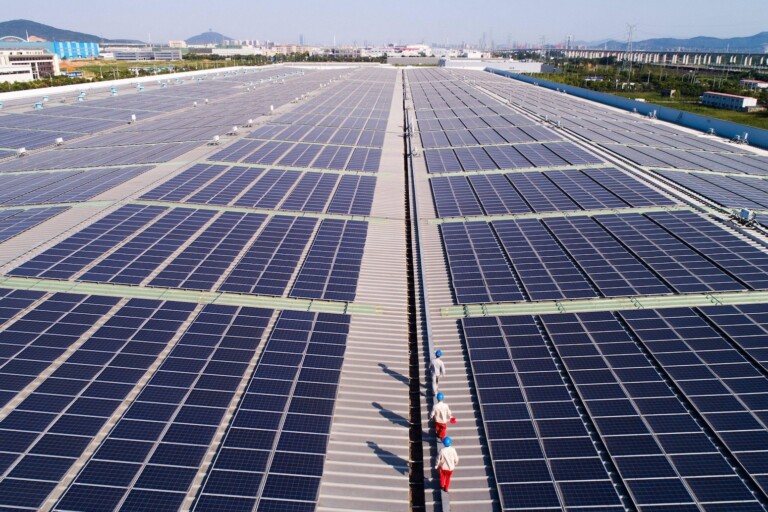
On August 10, 2026, China’s top economic planning body, the National Development and Reform Commission (NDRC), alongside the National Energy Administration (NEA), officially published the 15th Five-Year Plan for the Development of the Coal Industry (2026–2030). Arriving at a critical juncture in Beijing’s decarbonization timeline, the policy blueprint establishes the strategic framework for the country’s coal sector during the pivotal final years leading up to its pledged goal to peak carbon dioxide ($CO_2$) emissions before 2030.
Rather than outlining an aggressive, top-down phase-out of fossil fuels, the document reinforces coal’s role as China’s foundational "bottom-line guarantee" for national energy security. Driven by heightened geopolitical instability and global energy market volatility—most notably exacerbated by lingering conflict in the Middle East—policymakers have prioritized supply resilience, grid flexibility, and structural modernization over hard production caps.
While the blueprint reiterates Beijing’s commitment to ensure that coal consumption reaches its structural peak within the 2026–2030 period, it deliberately omits a specific, government-mandated year for that peak, departing from earlier speculation by state-affiliated research institutes that had floated 2027 as a definitive turning point. Instead, the plan charts a dual strategy: optimizing and consolidating upstream extraction within ultra-efficient northern mega-hubs while systematically diversifying state-owned coal enterprises into clean energy, coalbed methane extraction, and low-carbon petrochemical feedstocks.
+-----------------------------------------------------------------------------------+
|                        CHINA'S COAL SECTOR ROADMAP (2026-2030)                    |
+-----------------------------------------------------------------------------------+
|  PRIMARY GOAL           | Secure energy supply while peaking coal consumption     |
|                         | during the 15th Five-Year Plan period.                  |
+-------------------------+---------------------------------------------------------+
|  REGIONAL CONCENTRATION | >80% of national supply from 4 northern provinces       |
|                         | (Shanxi, Inner Mongolia, Shaanxi, Xinjiang).            |
+-------------------------+---------------------------------------------------------+
|  RESERVE CAPACITY       | Establish 100 Mt/year reserve production capacity by    |
|                         | 2030 (scaled back from previous 300 Mt estimates).      |
+-------------------------+---------------------------------------------------------+
|  UNVENTED METHANE TARGET| Achieve 26 bcm of coalbed methane production and        |
|                         | 6.5 bcm of mine-gas utilization by 2030.                |
+-------------------------+---------------------------------------------------------+
|  APPROVAL GOVERNANCE    | Enforce a "Single Ledger" system requiring central      |
|                         | government authorization for all new capacity additions. |
+-----------------------------------------------------------------------------------+
Detailed Chronology and Key Policy Directives
China’s five-year plans serve as the master directives governing social and economic development across the national economy. The newly released coal plan operates subordinate to the overarching 15th Five-Year Plan framework, aligning with parallel sector-specific plans covering climate change mitigation, renewable energy expansion, and the development of a "new-type energy system."
                    CHRONOLOGY OF CHINA'S FOSSIL FUEL CONTROL

   April 2026            June 2026             July 2026            August 2026
+---------------+     +---------------+     +---------------+     +---------------+
| Policy issued |     | "New-Type     |     | Ordos Basin   |     | 15th FYP for  |
| calling for   | --> | Energy        | --> | Action Plan   | --> | Coal Industry |
| "strict       |     | System" Plan  |     | targeting CBM |     | published by  |
| control" of   |     | sets 100 Mt   |     | expansion     |     | NDRC & NEA    |
| fossil fuels. |     | reserve goal. |     | published.    |     | framework.    |
+---------------+     +---------------+     +---------------+     +---------------+
The release of the coal sector blueprint follows a series of regulatory interventions designed to reconcile rapid clean energy deployment with baseload reliability:
April 2026: Policy directives established strict regional consumption frameworks, introducing a grading mechanism to evaluate local government performance on fossil fuel management.
June 2026: The NDRC released the 15th Five-Year Plan for the New-Type Energy System, outlining the structural transformation of the electric grid and establishing the baseline requirement for standby coal reserve capacity.
July 2026: The NEA published a targeted action plan for the Ordos Basin, mandating the expansion of coalbed methane (CBM) as a dual strategic reserve for natural gas supply and emissions reduction.
August 10, 2026: Formal release of the 15th Five-Year Plan for the Development of the Coal Industry, detailing operational directives for extraction, approvals, methane control, and enterprise transformation through 2030.
Major Policy Directives within the Plan:
Flexible Peaking Timeline: Reaffirmation that coal consumption will peak during the 2026–2030 window, explicitly framed around the condition of "guaranteeing the secure supply of energy."
Centralized "Single Ledger" Approvals: To prevent provincial authorities from rushing to approve unnecessary mining capacity ahead of anticipated demand plateaus, all prospective projects must be registered in a centralized national ledger maintained directly by Beijing.
Production Concentration Metrics: Future mine construction will be restricted almost exclusively to key northern energy bases. Except in southern Xinjiang, all new or expanded mines in these designated zones must maintain a minimum annual production capacity of 1.2 million metric tonnes.
Recalibrated Reserve Capacity Target: The plan mandates the creation of a 100-million-tonne annual "reserve production capacity" by 2030—a strategy designed to keep dispatchable mine capacity on standby to offset severe weather events or renewable generation drops.
Supporting Context and Energy System Metrics
The execution of the 15th Five-Year Plan occurs against a background of structural shifts within China’s broader power sector. Historically responsible for roughly 80% of the country’s carbon emissions, coal’s dominance over primary power generation is facing unprecedented pressure from non-fossil sources.
Data from the National Bureau of Statistics (NBS) and the NEA illustrate this energy transition:
Power Mix Shift: In 2025, non-fossil capacity expanded to represent over 50% of China’s installed power generation capacity. By the first half of 2026, coal’s contribution to total electric power generation dropped below the 50% mark for the first time in modern industrial history.
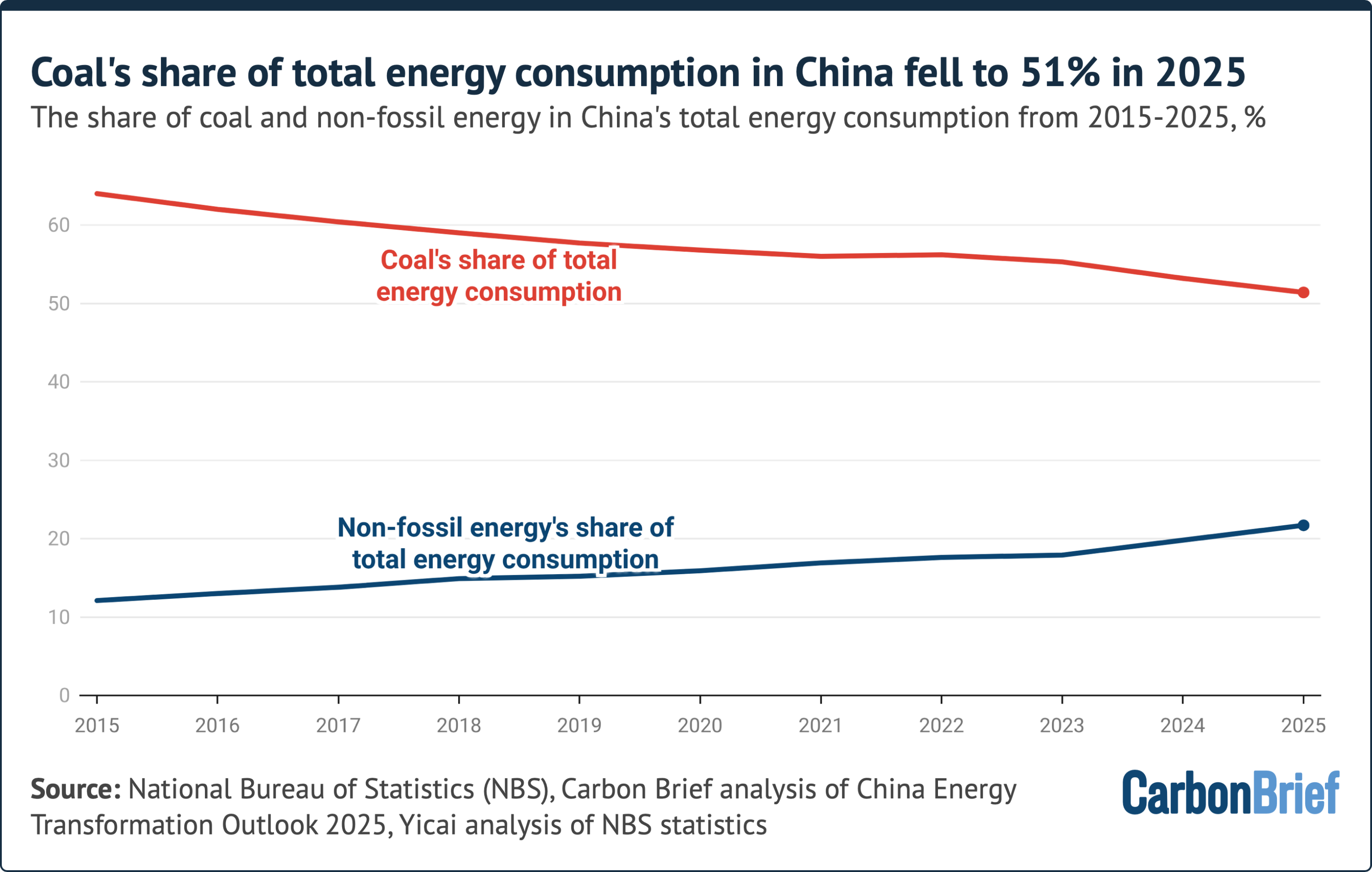
Primary Energy Consumption: Coal’s total share of China’s primary energy consumption dropped to 51.4% in mid-2026, down from over 65% a decade prior.
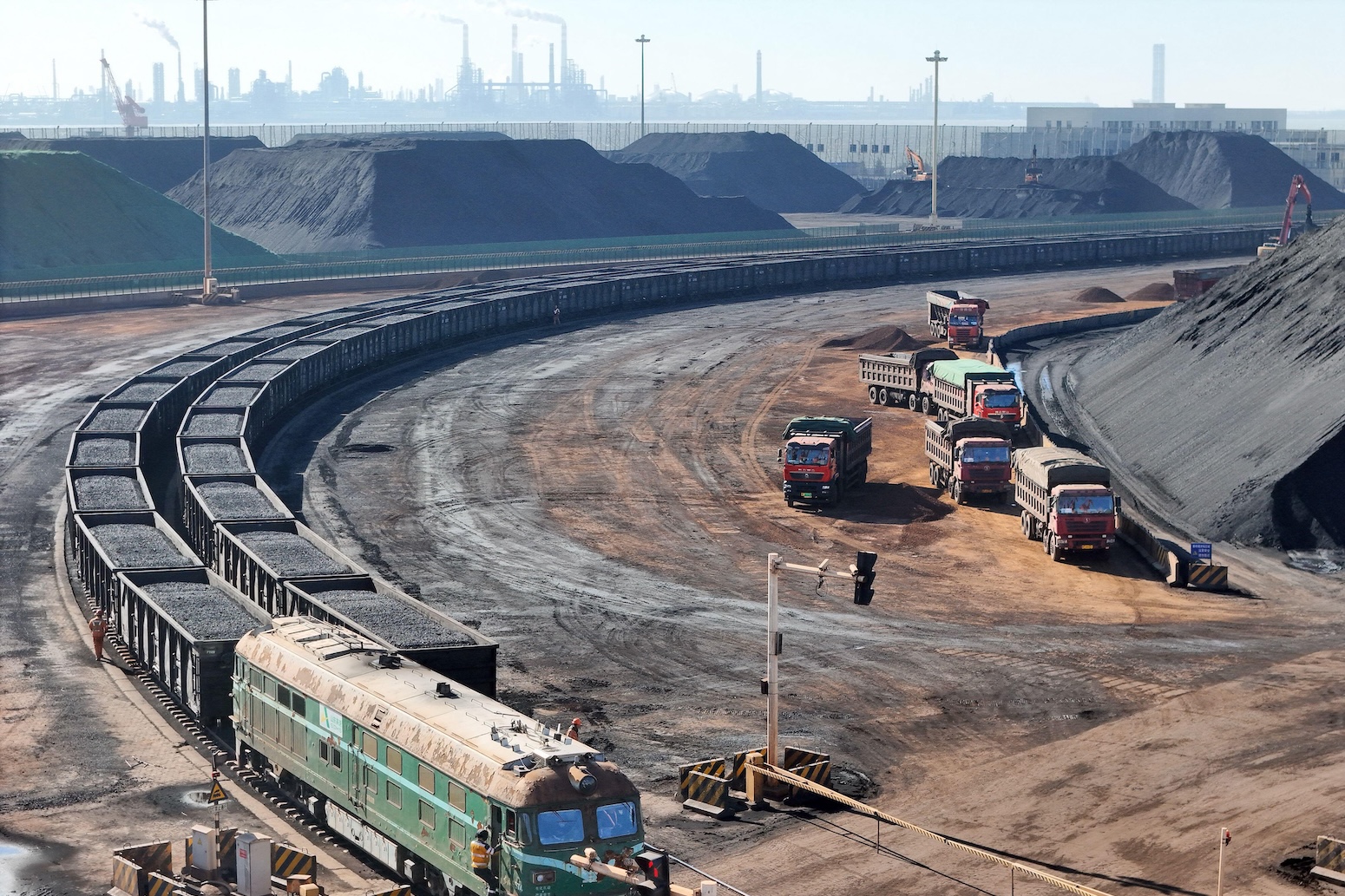
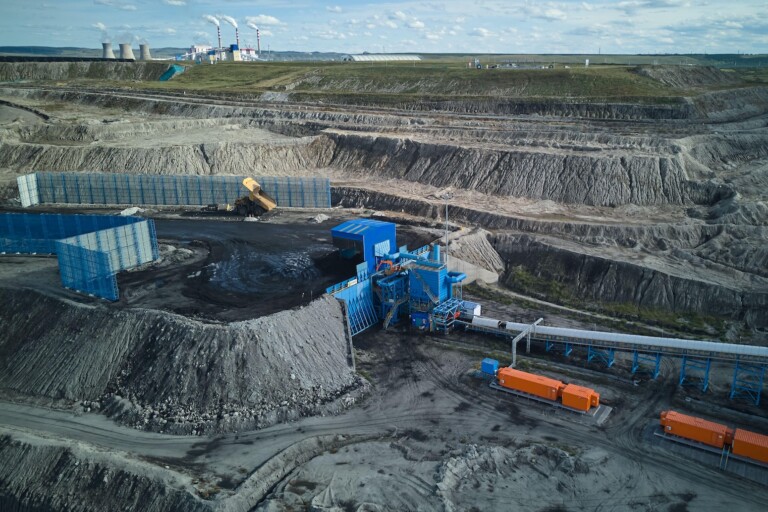
Geographic Mining Consolidation: Mining activity has consolidated rapidly into four primary northern regions: Shanxi, Inner Mongolia, Shaanxi, and Xinjiang. In 2025, these four provinces generated 82% of China’s total domestic coal output. The new five-year plan mandates that this geographic block maintain an output share above 80% through 2030.
       GEOGRAPHIC CONCENTRATION OF COAL PRODUCTION (BY 2030 TARGET)

              +-------------------------------------------------+
              |  Shanxi, Inner Mongolia, Shaanxi, Xinjiang      |
              |  =======================================> 80%+  |
              |  (Targeted National Supply Hubs)                |
              +-------------------------------------------------+
              |  Rest of China                                  |
              |  =========> <20%                                |
              +-------------------------------------------------+
Despite the declining market share of coal in electricity generation, geopolitical volatility in external oil and gas supply chains has led Chinese planners to recalibrate coal’s role. Rather than acting primarily as a continuous baseload power source, coal is being transitioned into a system-balancing backup fuel and a direct domestic substitute for petrochemical feedstocks.
Official Statements and Expert Analysis
The policy document reflects an ongoing compromise between energy security imperatives and long-term decarbonization goals. State leadership and industry analysts highlight the pragmatic approach taken by Beijing:
The Government’s Perspective
Writing in state-backed media following energy security reviews, Wang Hongzhi, head of the National Energy Administration, stressed the foundational role of domestic coal supplies amid global market uncertainty:
"Coal is [China’s] greatest source of confidence in ensuring a stable energy supply. The energy system has withstood external shocks, proving that coal remains vital to the national economy, people’s livelihoods, and national energy security."
Independent Industry Analysts
Energy experts note that the plan focuses on modernizing industry operations rather than enforcing abrupt reductions in usage:
Kevin Tu, Non-Resident Fellow at Columbia University’s Center on Global Energy Policy, emphasized that the absence of a explicit peaking year offers Beijing tactical flexibility:
"This is clearly neither a coal phase-out nor phase-down plan. The absence of a strict 2027 deadline is significant, as it grants China considerable flexibility over the pace of the transition. China’s coal transition is not simply about reducing the quantity consumed, but about creating a more concentrated, efficient, flexible, and resilient coal system."
Li Shuo, Director of the China Climate Hub at the Asia Society Policy Institute, noted that international geopolitical factors continue to influence domestic energy planning:
"The conflict in the Middle East will reinforce coal’s role in China’s energy system, both as a source of energy and as a feedstock for strategic commodities. Market dynamics and technological progress, rather than pure state directives, will ultimately dictate when consumption peaks. Beijing’s regulatory interventions will focus on ensuring peaking timelines do not blow past 2030."
Yang Biqing, Senior Energy Analyst at Ember, highlighted the administrative controls designed to prevent market flooding:
"Overall, this five-year plan is targeted at the coal industry itself, not the broader energy transition. Requiring all new production capacity to be registered in a ‘single ledger’ indicates the central government is seeking to prevent local rush-approvals of projects as peak consumption approaches."
Tom Wang, Executive Director of People of Asia for Climate Solutions, offered a critical perspective regarding the document’s environmental scope:
"This is more of a coal exploration and modernization plan rather than a coal transition plan. While several policies call for ‘green’ or ‘smart’ extraction, the plan lacks binding mechanisms to address the absolute volume of greenhouse gas emissions generated across extraction, processing, and combustion."
Future Outlook: Industry Modernization and Methane Strategy
As China moves through the 15th Five-Year Plan period, the coal industry faces a dual mandate: supporting power grid reliability while restructuring its corporate asset base.
                     STRATEGIC PILLARS OF INDUSTRY TRANSFORMATION

       +------------------------------------------------------------------+
       |                  COAL INDUSTRY MODERNIZATION                     |
       +------------------------------------------------------------------+
                                        |
        +-------------------------------+-------------------------------+
        |                               |                               |
        v                               v                               v
+---------------+               +---------------+               +---------------+
| BASELOAD TO   |               | COAL-TO-      |               | METHANE       |
| FLEXIBILITY   |               | CHEMICALS     |               | CAPTURE       |
| Coal plants   |               | Shift to      |               | 26 bcm CBM    |
| modified for  |               | feedstocks;   |               | extraction;   |
| fast peaking  |               | integrate     |               | Ordos Basin   |
| support.      |               | CCUS & H2.    |               | focus.        |
+---------------+               +---------------+               +---------------+
1. The Coal-to-Chemicals Transition
One of the most consequential directives in the 15th Five-Year Plan is the push to shift coal usage from a combustion fuel to a raw material feedstock. Beijing is encouraging state-owned coal enterprises to construct strategic coal-to-oil and coal-to-gas industrial bases. To address the heavy emissions profile of the petrochemical sector, the plan directs coal-chemical facilities to lower their carbon footprints by integrating green hydrogen, electrification, and Carbon Capture, Utilization, and Storage (CCUS).
2. Coalbed Methane (CBM) Targets
Addressing non-$CO_2$ greenhouse gas emissions, the document includes a dedicated appendix outlining goals for coalbed methane recovery. By 2030, China aims to achieve:
26 billion cubic meters (bcm) of annual coalbed methane production.
6.5 billion cubic meters of mine-gas utilization.
18 bcm sourced directly from deep-bed operations in the Ordos Basin.
While Sun Xiaopu, Senior China Counsel at the Institute for Governance & Sustainable Development (IGSD), points out that the plan "does not establish an absolute methane emissions reduction target," the infrastructure utilization metrics aim to capture fugitives for industrial gas consumption, enhancing both energy self-sufficiency and safety.
3. Mine Retirement and Just Transition Controls
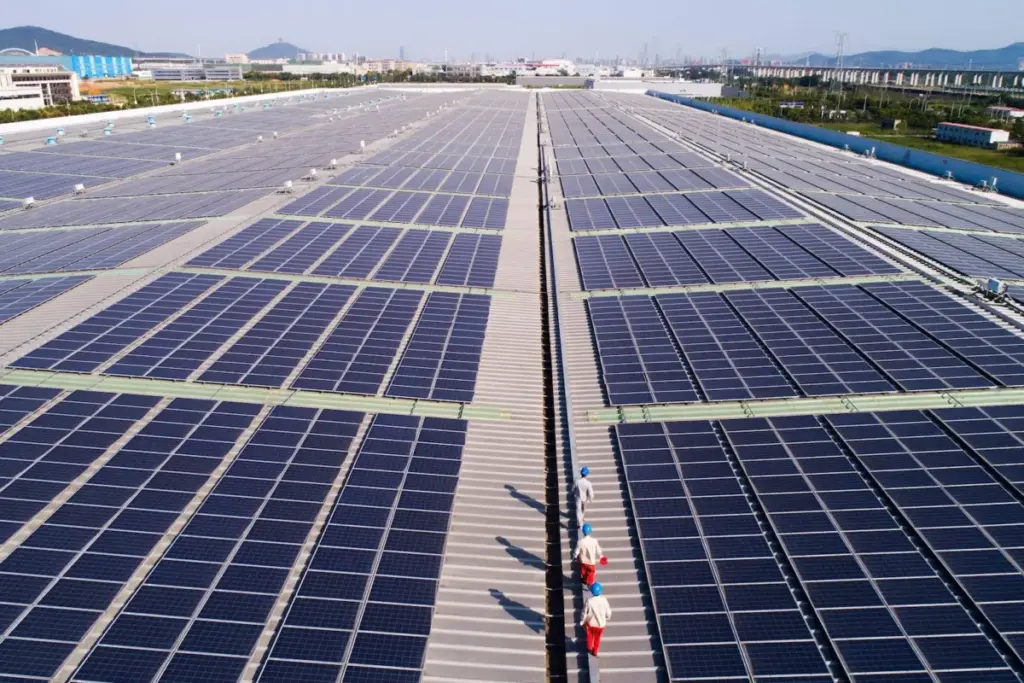
To manage aging, inefficient asset closures, the plan mandates that coal companies establish proactive exit frameworks. Enterprise management must develop plans addressing workforce relocation, corporate debt resolution, and land reclamation for legacy mine sites. Furthermore, coal operators are encouraged to build distributed solar installations and waste-heat recovery projects across converted mining land to support regional clean energy goals.
Summary Strategy Matrix
+------------------------------------------------------------------------------------+
|               KEY STRUCTURAL TARGETS IN CHINA'S 15TH FYP FOR COAL                  |
+----------------------+-------------------------------------------------------------+
| TARGET METRIC        | 15TH FIVE-YEAR PLAN OBJECTIVE (BY 2030)                     |
+----------------------+-------------------------------------------------------------+
| Consumption Peak     | Reached flexibly within the 2026–2030 window.               |
| Geographic Sourcing  | >80% total supply from Shanxi, Inner Mongolia,              |
|                      | Shaanxi, and Xinjiang.                                      |
| Mine Scale Standard  | Minimum 1.2 Mt/yr capacity for new/expanded builds.         |
| Strategic Reserves   | 100 Mt/yr standby reserve production capability.            |
| Approval Governance  | Mandatory central authorization via "Single Ledger".        |
| Methane Capture      | 26 bcm CBM production; 6.5 bcm mine-gas utilization.        |
| Enterprise Scope     | Diversification into clean power, CCUS, and coal-chemicals. |
+----------------------+-------------------------------------------------------------+
By prioritizing energy security, regional consolidation, central governance, and industrial diversification, China’s 15th Five-Year Plan for coal outlines a strategy focused on flexibility and resilience. The plan provides Beijing with the room needed to navigate economic and geopolitical volatility while keeping the country on track to reach its peak emissions targets before the end of the decade.