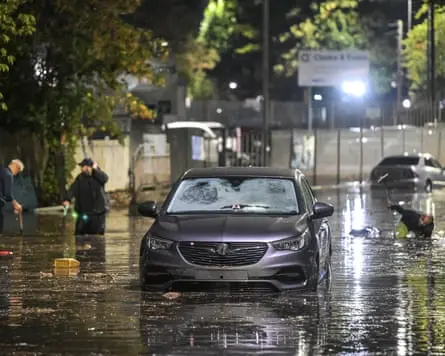
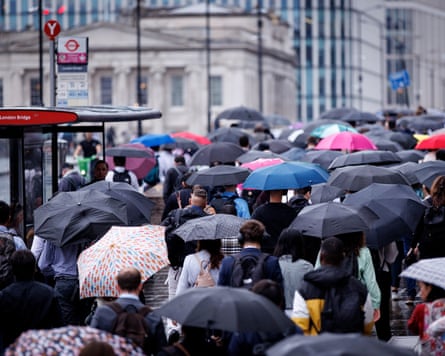
The United Kingdom has entered a volatile and paradoxical climate reality, vividly illustrated as torrential downpours and violent thunderstorms abruptly punctured a historic summer of extreme aridity. Following months of exceptional heatwaves that parched the landscape—leaving the entirety of Wales and the vast majority of England officially declared in drought—sudden, localized cloudbursts have triggered severe urban flash flooding. Dozens of homes have been inundated, major transport arteries disrupted, and emergency services stretched thin.
Meteorological authorities report that parts of the country experienced up to 75mm of rainfall in a compressed 12-hour window, overwhelming urban drainage systems that had been baked hard by weeks of relentless sun. The Environment Agency issued tens of flood alerts and warnings across the Midlands, Yorkshire, and the south-east of England as rivers surged and surface water transformed suburban streets into raging torrents.
This extreme meteorological whiplash underscores a growing climate crisis. Environmental scientists and regulatory bodies emphasize that short-term, high-intensity downpours cannot reverse the structural deficits of a prolonged drought. Instead, baked, impermeable soils exacerbate the peril, accelerating runoff and setting the stage for concurrent crises of water scarcity and sudden inundation.
Detailed Chronology of the Storms
The Escalation on Wednesday Evening
The transformation from drought to deluge accelerated rapidly on Wednesday evening, catching residents and local authorities largely off-guard. As convective storms brewed over the Midlands, Birmingham bore the brunt of the initial atmospheric instability. The Environment Agency issued an urgent flood warning for the Perry Barr district as the River Tame, portions of which run culverted beneath local roadways, violently breached its banks.
West Midlands Fire Service was inundated with emergency calls starting late Wednesday afternoon. By early evening, fire control had dispatched seven fire engines to tackle widespread property inundation near the Tame Valley canal network. In total, emergency responders were alerted to flooding at 32 separate properties in the immediate vicinity.
Residents reported an astonishingly rapid transition from minor puddling to catastrophic inundation. Ryan Goodwin, a resident living near the M6 motorway, described returning home with his children at approximately 7:30 p.m.
"I thought I don’t want to get out yet, there’s too many puddles here," Goodwin recalled. "Then in a matter of about half an hour, it was just a river coming round the corner, all the way down the road."
The velocity of the water caught many unprepared. The deluge surged past doorways, breached conservatory walls with up to three feet of water, and compromised household electrical systems. Debris, dried leaves, and road runoff—aggravated by months of dry weather—clogged storm drains, transforming local topography into a network of fast-flowing chutes.
Thursday’s Expanding Threat and Met Office Warnings
By Thursday morning, the meteorological hazard had expanded significantly across the country. The Met Office maintained a yellow thunderstorm warning encompassing vast swathes of the Midlands, the east and south of England, the north-west, Yorkshire and the Humber, and Wales, remaining in effect until 10 p.m.
Concurrently, the Environment Agency (EA) established roughly 40 active flood alerts—signifying that flooding was possible rather than imminent—stretching from Yorkshire down to the south-east. In Nottinghamshire, a specific flood alert was activated for the River Maun at Edwinstowe and Ollerton. Environment Agency monitoring stations indicated that river levels at Mansfield’s The Dykes gauging station were rising at an alarming rate, placing Old Rufford Road under severe threat.
Recognizing the relentless nature of the weather system, the Met Office issued a secondary yellow thunderstorm warning. Scheduled to run from 5 p.m. Thursday until 7 a.m. Friday, this subsequent alert targeted Lincolnshire, pockets of the east of England, parts of Yorkshire, Kent, and Medway, ensuring that emergency responders remained on high alert through the night.
Supporting Context & Metrics: The Summer of Extremes
To fully appreciate the severity of Thursday’s floods, one must examine the climatic backdrop against which they occurred. The UK’s summer weather was defined by historic extremes, marked notably by five distinct heatwaves that baked the British Isles.
According to data released by the National Drought Group following their Thursday morning briefing, an astonishing 71.3% of England remained classified as being in a state of drought. Across the summer season, cumulative precipitation figures plummeted; regions received a mere 34% of the rainfall typically expected during the month of August.
This prolonged moisture deficit fundamentally altered the physical composition of the British landscape. Extended periods of high temperatures and zero rainfall caused soils across England and Wales to dry out completely, turning agricultural lands, parks, and suburban lawns into hardened, hydrophobic surfaces.
When torrential summer storms finally broke, the parched ground lost its capacity to absorb water. Instead of infiltrating the water table, heavy rainfall sheeted across the surface, funneled rapidly into municipal drainage systems, and overwhelmed local watercourses. The resulting flash floods exposed a dangerous vulnerability in modern infrastructure: drainage networks designed for steady, moderate rainfall are entirely unequipped to manage the concentrated fury of contemporary cloudbursts.
Official Statements and Regulatory Analysis
The unprecedented convergence of widespread drought and localized flash flooding prompted urgent warnings from key environmental authorities and scientific institutions.
Philip Duffy, Chief Executive of the Environment Agency, addressed the crisis following the National Drought Group’s emergency meeting:
"A few days or even weeks of wetter weather cannot reverse the impacts of several months of exceptionally dry conditions," Duffy stated. "Today’s yellow thunderstorm warnings show it’s possible to experience simultaneous drought and flood as heavy rain falls on compacted soils."
Duffy’s assessment highlights a complex hydrological challenge. While heavy downpours provide visual evidence of water returning to the environment, they do little to replenish deep groundwater aquifers or restore baseline river flows depleted over months of aridity. Instead, rapid runoff frequently results in environmental degradation, washing pollutants, road oils, and accumulated debris directly into river systems.
Climate scientists point to these cascading events as textbook indicators of accelerated global heating. Researchers note that a warmer atmosphere holds significantly more moisture—roughly 7% more per degree Celsius of warming—which supercharges convective storm systems. Consequently, the UK is increasingly trapped in a meteorological binary: prolonged, parched heatwaves punctuated by violent, destructive downpours.
Future Outlook and Preparedness
As the immediate emergency response transitions into a phase of structural assessment and insurance claims, communities across England and Wales are forced to confront an uncomfortable new normal.
Insurance assessors in Birmingham and Nottinghamshire are bracing for a surge in claims as homeowners like Ryan Goodwin clear out ruined laminate flooring, water-logged furniture, and damaged electrical appliances. Beyond individual property repairs, local authorities face pressing questions regarding municipal infrastructure resilience. Urban planners must reevaluate drainage maintenance schedules, particularly the clearance of storm drains choked by seasonal debris following dry spells.
Furthermore, water utility companies remain under intense public and regulatory scrutiny. Despite the sudden influx of surface water, hosepipe bans and water-use restrictions remain active across large parts of the country to preserve depleted reservoir storage and protect vulnerable aquatic ecosystems.
Ultimately, the meteorological events of this week serve as a stark warning. As global climate patterns continue to destabilize, the UK can no longer rely on historical weather norms. Mitigating future disasters will require substantial investment in climate-resilient urban design, enhanced early-warning systems, and a fundamental shift in how the nation manages water resources—balancing the desperate need to capture scarce water during dry periods with the urgent imperative to defend against sudden, violent deluges.