
WASHINGTON — Congressional Democrats have officially opened a high-stakes congressional investigation into Denver-based mining giant Energy Fuels Inc. and its top executives. The probe centers on explosive allegations of potential insider trading, following a massive stock acquisition by company leadership just days before President Donald Trump slashed the boundaries of the neighboring Bears Ears National Monument in southeastern Utah by 90 percent.
The inquiry, spearheaded by senior Democratic lawmakers on the House Natural Resources Committee, marks a dramatic escalation in the ongoing political and legal battles over public lands, critical mineral extraction, and corporate ethics. At the heart of the controversy is the White Mesa Mill—operated by Energy Fuels and recognized as the nation’s last conventional uranium processing facility—and its proximity to millions of acres of newly opened public lands rich in uranium, vanadium, and rare earth elements.
Executive Overview
In July 2026, President Trump enacted a sweeping executive order stripping 1.24 million acres from the Bears Ears National Monument, rolling back protections established by the Obama administration and restored by the Biden administration in 2021. The reduction effectively reopened vast tracts of land to mining claims, development, and resource extraction.
Days before this announcement, Energy Fuels CEO and Chairman Ross Bhappu executed the largest insider stock purchase in the company’s history, acquiring 74,000 shares on July 7, 2026, which elevated his ownership stake to 41 percent. Board Chair Bruce Hansen followed suit the next day, purchasing an additional 4,000 shares.
Citing the suspicious timing of these transactions, Representative Jared Huffman (D-Calif.), ranking member of the House Natural Resources Committee, and Representative Maxine Dexter (D-Ore.), ranking Democrat on the Oversight and Investigations Subcommittee, launched a formal congressional inquiry. Lawmakers are demanding internal communications, lobbying records, and correspondence between Energy Fuels executives and federal officials to determine whether leadership traded on non-public government actions.
While Energy Fuels has forcefully denied any wrongdoing or improper conduct, the investigation pulls back the curtain on the lucrative intersection of federal land policy, national security-driven critical mineral subsidies, and corporate self-enrichment.
Detailed Chronology of Events
To understand the scope of the congressional investigation, investigators and financial analysts are tracing a rapid sequence of events that unfolded across late June and July 2026.
- June 18, 2026: The federal government signals robust financial backing for the company’s mineral ambitions. The Department of Defense’s Office of Strategic Capital signs a substantial $725 million conditional loan agreement with Energy Fuels to support the development of domestic rare earth element supply chains.
- Early July 2026: Rumors and internal policy discussions regarding a drastic downsizing of the Bears Ears National Monument reach critical phases within the administration.
- July 7, 2026: Energy Fuels CEO Ross Bhappu purchases 74,000 shares of company stock. This transaction shatters previous records for insider purchasing within the corporation, instantly boosting Bhappu’s controlling stake to 41 percent.
- July 8, 2026: Board Chair Bruce Hansen acquires an additional 4,000 shares of Energy Fuels stock, doubling down on insider accumulation just 48 hours before the monument’s fate is sealed publicly.
- Mid-July 2026: President Trump officially signs an executive order removing 1.24 million acres from the Bears Ears National Monument. The decision shrinks the monument by 90 percent, transforming previously protected cultural and ecological sanctuaries into open territory for commercial mining operations.
- July 14, 2026: Energy Fuels files an investor presentation with the U.S. Securities and Exchange Commission (SEC), explicitly highlighting "strong government support" as a core competitive advantage for its ongoing market capitalization.
- Late July 2026: Energy Fuels breaks ground on a major expansion of its White Mesa Mill facility to refine heavy rare earth elements used in high-tech data centers, the automotive sector, robotics, and advanced energy applications.
- August 10, 2026: House Democrats Huffman and Dexter formally announce the opening of a congressional investigation, dispatching a comprehensive oversight letter to CEO Ross Bhappu demanding transparency on all communications with the executive branch.
Supporting Context & Metrics
The controversy surrounding Energy Fuels and the Bears Ears reduction is not an isolated incident, but rather the latest chapter in a multi-decade battle over mineral wealth in the American West.
The Corporate Footprint and Financial Stakes
Energy Fuels’ White Mesa Mill sits roughly a mile east of the original Bears Ears National Monument boundaries. While company representatives maintain that the facility itself was never physically located inside the monument, critics and environmental watchdogs emphasize that the mill stands to gain immensely from nearby resource extraction. The sandstone deposits woven throughout the region contain rich concentrations of uranium and vanadium—elements vital to both nuclear power production and emerging green technology supply chains.
Financial disclosures reveal the immense scale of the company’s capitalization strategy. Beyond the Department of Defense’s $725 million conditional loan issued in June, the federal government has doubled down on domestic mining initiatives. President Trump recently announced an expansive $3 billion federal investment strategy targeting critical mineral extraction and battery manufacturing infrastructure nationwide.
Historical Precedent: The 2017 Lobbying Campaign
This is not the first time Energy Fuels has been accused of leveraging political influence to alter the boundaries of Bears Ears. Public records from late 2017 demonstrate that the uranium mill heavily lobbied Trump administration officials to downsize the original monument—which had been designated by President Barack Obama in December 2016. Just months after those lobbying efforts, President Trump reduced the monument for the first time, sparking years of litigation and Indigenous-led resistance before President Joe Biden restored the boundaries in October 2021.
Indigenous Opposition and Environmental Concerns
The swift dismantling of monument protections has drawn swift, unified condemnation from local Indigenous communities. The Bears Ears Commission—representing a coalition of five Tribal Nations (the Hopi Tribe, Navajo Nation, Ute Mountain Ute Tribe, Ute Indian Tribe, and Pueblo of Zuni)—issued a scathing joint statement following the July executive order:
"The decision weakens protections for a living cultural landscape and sacred ancestral homeland that has been cared for by Indigenous peoples since time immemorial and is a major setback to one of the nation’s most extraordinary models of collaborative management of public lands between Tribal Nations and federal agencies."
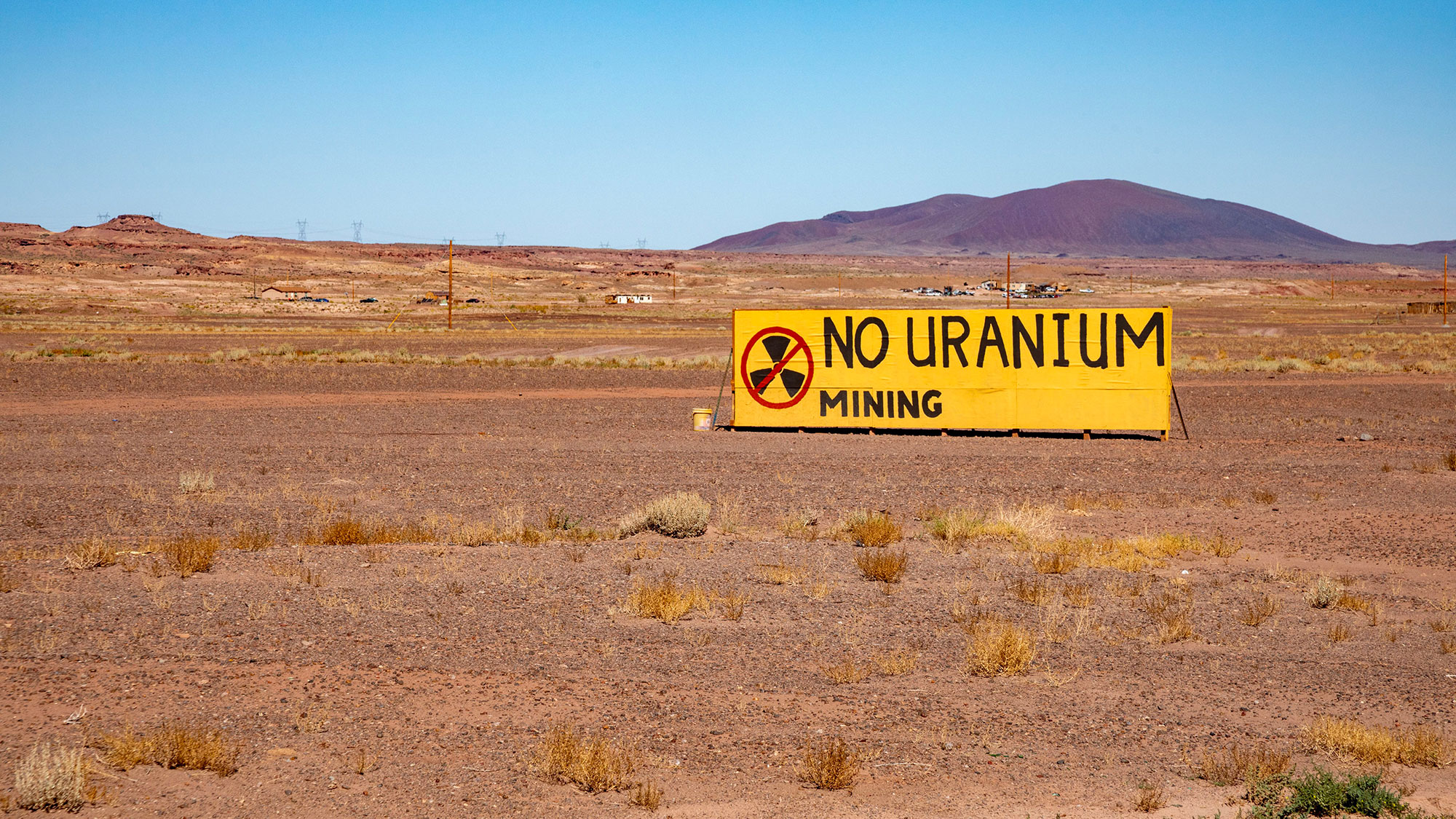
Beyond cultural desecration, tribal leaders and environmental advocacy groups have long raised alarms regarding the operational practices of the White Mesa Mill. The facility has faced intense scrutiny and regulatory challenges over accusations that it secretly transported radioactive materials across tribal lands. Furthermore, communities in water-constrained southeastern Utah have expressed profound anxiety regarding the long-term storage of imported radioactive-bearing materials—such as waste shipments originating from Japan—posing what critics describe as an unacceptable threat to regional water tables and public health.
Official Statements and Corporate Defense
Faced with a congressional inquiry that could trigger deeper federal probes or SEC scrutiny, Energy Fuels leadership has launched a robust defense, flatly rejecting any allegations of impropriety, insider trading, or unethical political maneuvering.
In an official statement released on Wednesday, a company spokesperson addressed the congressional letter directly:
"The Company is unaware of any evidence supporting claims of wrongdoing in the referenced letter and strongly rejects any suggestion that the Company or its executives engaged in any improper conduct. The White Mesa Mill has never been located in the Bears Ears National Monument, Energy Fuels holds no properties, mining claims, or economic interests in the monument, and we have not actively advocated for any changes to the monument with the current Administration."
The corporate spokesperson emphasized that the White Mesa Mill operates under some of the strictest regulatory frameworks in the United States, pointing to state, local, and federal compliance measures designed to safeguard surrounding communities and local ecosystems:
"The White Mesa Mill is one of the most highly regulated mineral processing facilities in the United States, and plays a critical role in strengthening domestic supply chains."
Despite these assurances, congressional investigators remain deeply skeptical. In their letter to CEO Ross Bhappu, lawmakers did not mince words regarding the ethical optics of the timing:
"Energy Fuels cannot credibly claim to be a responsible operator while the nation’s last uranium mill functions like an unregulated, bargain-bin waste dump on the doorstep of an Indigenous community. Instead of respecting the Tribes for whom Bears Ears is sacred, you appear to be enriching yourself from their devastation."
Future Outlook: What Lies Ahead
As the congressional investigation gathers momentum, the inquiry is expected to enter a critical evidence-gathering phase.
- Subpoenas and Document Production: Representatives Huffman and Dexter have demanded that Energy Fuels turn over all internal communications, calendar entries, email correspondence between executives and federal agency officials, and detailed records of third-party lobbying contracts executed between January and July 2026. Failure to voluntarily comply could result in formal congressional subpoenas.
- Potential SEC Involvement: While the House Natural Resources Committee does not possess criminal prosecution powers, findings from congressional oversight investigations are frequently handed over to the Department of Justice (DOJ) and the Securities and Exchange Commission (SEC) to evaluate whether insider trading or securities fraud statutes were violated.
- Legal and Tribal Challenges: The broader fight over the future of Bears Ears National Monument is destined for federal court. The coalition of five Tribal Nations, alongside prominent environmental organizations, is preparing multi-pronged lawsuits challenging the constitutionality and legality of the administration’s 90 percent monument reduction.
- The Critical Minerals Crossroads: The investigation highlights a broader, systemic tension at the heart of modern American economic policy: the aggressive, national security-driven push to secure domestic supply chains for green-energy minerals, rare earth elements, and nuclear fuels versus the profound human, ecological, and cultural costs borne by Indigenous communities and public lands.
For Energy Fuels, the stakes could not be higher. Even as the company secures hundreds of millions of dollars in federal defense loans and expands its manufacturing footprint to service America’s high-tech future, the shadow of a congressional insider trading probe threatens to stain its corporate reputation and draw intense federal oversight for months to come.