By the Investigative Desk
Published by Special Arrangement with Environmental Journalism Services
Executive Overview
In an era defined by mounting environmental crises and a growing global consensus regarding the dangers of synthetic materials, a troubling new battleground has emerged: the American K-12 classroom. According to a landmark special report released today by the Plastic Pollution Coalition (PPC), major players within the chemical, fossil fuel, and plastics sectors have systematically operationalized a calculated propaganda playbook. Their objective? To secure long-term market survival by shaping the minds of the nation’s youngest learners.
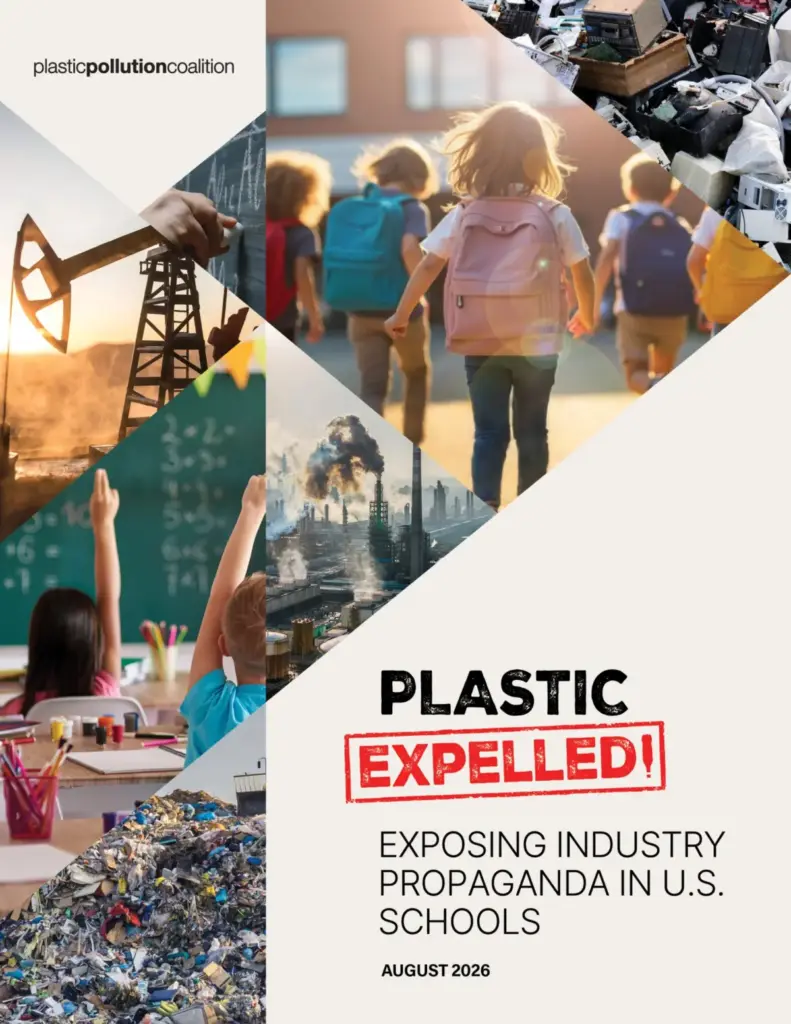
The report, titled Plastic Expelled: Exposing Industry Propaganda in U.S. Schools, pulls back the curtain on how multi-billion-dollar corporations exploit the financial vulnerabilities of public education systems. By infiltrating classrooms with corporate-funded lesson plans, specialized educational programs, and badly needed school supplies, these entities bypass traditional advertising channels to reach a captive, impressionable audience.
Rather than receiving objective, peer-reviewed scientific frameworks regarding waste management, chemical exposure, and planetary health, students across the United States are routinely fed carefully curated messaging that normalizes single-use plastics, downplays environmental devastation, and positions petrochemical corporations as benevolent environmental stewards.
The strategy is twofold: cultivate a reliable base of future consumers who view plastic as an irreplaceable daily utility, and groom a compliant workforce that will perpetuate the industry’s economic interests well into the twenty-first century. As advocacy groups, educators, and public health experts sound the alarm, Plastic Expelled serves as both an urgent exposé and a comprehensive blueprint for reclaiming the independence of American public education.
Detailed Chronology: The Evolution of Corporate Influence in Education
The corporate infiltration of American schools is not an overnight phenomenon; rather, it represents the evolution of a playbook perfected by some of the twentieth century’s most controversial industries. Understanding how the plastics lobby established a foothold in K-12 education requires examining the historical trajectory of corporate public relations campaigns targeting children.
The Historical Precedent: Borrowing from Tobacco and Fossil Fuels
Throughout the mid-to-late twentieth century, industries facing existential threats from scientific consensus routinely turned to public education as a sanctuary for rehabilitation. The tobacco industry famously funded curriculum modules that framed smoking as an issue of personal choice while obfuscating addictive properties and lethal health outcomes. Similarly, legacy energy companies—particularly coal and oil conglomerates—distributed classroom materials that emphasized the economic indispensability of fossil fuels while omitting discussions of greenhouse gas emissions and climate change.
As the environmental movement gained momentum in the late 1990s and early 2000s, plastic emerged as a miracle material of modern consumerism. However, as photographic evidence of oceanic garbage patches, microplastic pollution in human bloodstreams, and overflowing landfills began to dominate public discourse, the plastics industry found itself facing a public relations crisis. To counter the rising tide of skepticism, chemical manufacturers and fossil fuel giants adapted the tobacco and oil playbook, shifting their marketing focus away from traditional television and print media and directly into school districts.
Exploiting Underfunded Infrastructure
The modern pipeline of plastic propaganda relies heavily on the structural vulnerabilities plaguing contemporary public education. Decades of chronic underfunding, legislative budget cuts, and a persistent scarcity of basic instructional resources have left school districts scrambling for financial relief. State Departments of Education and local school boards, desperate to provide students with modern science kits, field trips, and updated textbooks, have increasingly welcomed corporate partnerships.
The PPC report details how petrochemical corporations and industry front groups capitalize on this desperation. By offering "free" educational kits, teacher grants, and interactive science modules, these companies position themselves as philanthropic saviors of public education. In exchange, they gain unrestricted access to curricular design, ensuring that lessons on recycling, material science, and ecology are framed through a pro-industry lens.
Decentralized Curriculums and the Lack of Oversight
compounding the vulnerability of underfunded schools is the highly decentralized nature of American education policy. Curriculum decisions are rarely made at a single federal level; instead, they are fragmented across thousands of individual school districts, local boards of trustees, and independent classrooms.
This decentralization creates regulatory loopholes that corporate actors exploit with surgical precision. Without centralized vetting processes to screen educational materials for commercial bias or scientific accuracy, individual teachers—often overwhelmed and lacking advanced resources in specialized scientific subfields—frequently rely on turnkey curriculum packages provided by external entities. When a corporate-sponsored packet arrives bearing polished graphics, aligned state-standard checkboxes, and zero upfront costs, it often bypasses the scrutiny it desperately requires.
Supporting Context & Metrics: The Anatomy of Plastic Miseducation
To fully grasp the scope of the issue, one must examine the specific mechanics of how plastic propaganda infiltrates daily classroom instruction. The curriculum packages identified in Plastic Expelled rarely read like traditional advertisements. Instead, they wear the sophisticated disguise of objective, inquiry-based science education.
The "Recyclability" Myth and Circular Economy Spin
A core pillar of the industry’s educational strategy centers around the promotion of advanced recycling technologies and the concept of a "circular economy." While municipal recycling rates for plastics have historically hovered below 10% in the United States—with the vast majority of plastic waste ending up in landfills, incinerators, or natural ecosystems—classroom materials frequently present recycling as a closed-loop, infallible solution.
Students are taught to focus heavily on individual consumer sorting behaviors—placing items in the correct bin—while structural issues, such as the chemical impossibility of infinitely recycling most polymer chains, are completely omitted. By emphasizing personal responsibility over corporate accountability, these lesson plans effectively shift the blame for environmental degradation from the producers of single-use plastics onto the shoulders of school-aged children.
Greenwashing Under the Guise of STEM
Science, Technology, Engineering, and Math (STEM) education has become the primary vehicle for corporate messaging. Specialized lesson plans funded by chemical consortia invite students to design packaging solutions, explore the "chemistry of polymers," or evaluate the cost-effectiveness of various manufacturing materials.

While these exercises promote critical thinking on the surface, their foundational premises are deliberately skewed. The safety, economic necessity, and irreplaceability of plastics are treated as axiomatic truths, while alternative materials—such as glass, metal, paper, or reusable systems—are sidelined as economically unviable or environmentally impractical. Through subtle framing, students are conditioned to view a plastic-dependent future not as an ecological hazard, but as an engineering challenge to be solved with more plastic.
The Public Health Blind Spot
Perhaps the most alarming aspect of the industry’s educational outreach is the complete erasure of public health warnings associated with petrochemical lifecycles. Modern toxicological research has linked exposure to plastics and their associated chemical additives—such as bisphenols (BPs), phthalates, and per- and polyfluoroalkyl substances (PFAS)—to severe endocrine disruption, reproductive abnormalities, neurological developmental delays, and increased cancer risks.
Yet, classrooms equipped with industry-sponsored supplies, plastic storage containers, and synthetic learning tools remain entirely silent on these hazards. Children, whose developing organ systems make them disproportionately vulnerable to environmental toxins, are encouraged to interact daily with materials that independent public health experts argue pose severe, long-term physiological threats.
Official Statements and Expert Analysis
The release of Plastic Expelled has drawn sharp condemnation from educational advocates, environmental scientists, and policy experts who argue that corporate intrusion into public schools represents a fundamental betrayal of trust.
"Following the coal, fossil fuel, and tobacco industries’ playbook, the plastics industry is simultaneously polluting our children’s communities and their education," stated Madison Dennis, Senior Policy & Advocacy Manager at the Plastic Pollution Coalition. "Schools cannot be billboards for disinformation from trillion-dollar industries that threaten students’ health and the livability of their futures. It’s beyond time to get plastic propaganda out of the classroom."
Educational ethicists point out that public schools occupy a unique space in civil society—one designed to foster critical inquiry, evidence-based reasoning, and civic responsibility free from commercial manipulation. When corporations turn classrooms into brand loyalty incubators, they undermine the foundational mission of public education.
Furthermore, public health advocates emphasize the absurdity of teaching children about environmental stewardship while surrounding them with the very materials driving planetary collapse.
“You cannot teach children to care for the Earth while allowing the architects of its destruction to write the textbook,” noted an independent environmental health researcher who contributed advisory insights to the PPC report. “The psychological conditioning that occurs when a child is told that a toxic, single-use polymer is a marvel of modern science is profound. It takes years to unlearn.”
Future Outlook: A Blueprint for Action
Plastic Expelled does not merely diagnose the pathology of corporate influence in education; it provides a clear, actionable roadmap for eradicating it. The report outlines specific interventions designed to empower school districts, educators, and parents to take back control of their learning environments.
1. Implementation of Strict Corporate Sponsorship Bans
State Departments of Education and local school boards must enact rigorous conflict-of-interest policies that explicitly bar fossil fuel, chemical, and plastics conglomerates from funding, designing, or distributing K-12 educational materials. Just as tobacco companies were rightly barred from sponsoring youth programs and school athletics, the peddlers of petrochemical pollution must be kept away from curriculum development.
2. Comprehensive Curriculum Audits
School districts must immediately undertake thorough reviews of existing science, health, and environmental curriculums. Any educational resources provided by external corporate entities, industry front groups, or trade associations should be subjected to rigorous vetting by independent, peer-reviewed scientific bodies to ensure objective, bias-free instruction.
3. Increased Federal and State Funding for Education
To eliminate the economic desperation that makes schools susceptible to corporate infiltration, federal and state legislatures must drastically increase baseline funding for public education. Providing schools with adequate public resources for science kits, modern textbooks, and operational expenses ensures that educators never have to rely on corporate handouts to stock their classrooms.
4. Empowerment of Educators and Parents
Parent-teacher associations (PTAs) and educator unions must be equipped with the tools to identify greenwashing and corporate bias in lesson plans. By fostering greater transparency and encouraging community oversight, schools can ensure that classrooms remain safe havens for genuine, uncompromised learning.
Conclusion
The release of Plastic Expelled: Exposing Industry Propaganda in U.S. Schools marks a critical turning point in the broader movement for environmental justice and educational integrity. As the plastics industry intensifies its efforts to secure a pipeline of future consumers and employees, the defense of America’s classrooms has become an environmental imperative.
Public schools must be protected as spaces of truth, scientific rigor, and critical inquiry—not utilized as corporate billboards for industries that threaten the health of children and the livability of the planet. The roadmap is clear; the responsibility now rests with policymakers, educators, and communities to expel corporate propaganda and restore the integrity of public education.