Executive Overview
For decades, the cultural legacy of large-scale music festivals has been marred by a recurring environmental ghost: sprawling acres of discarded single-use plastics, abandoned tents, and mountains of trash left in the wake of unforgettable weekend performances. From the iconic mud-and-wrapper-soaked fields of Woodstock in 1969 to modern-day electronic dance music marathons, the live entertainment industry has historically struggled to balance mass human gatherings with ecological stewardship.
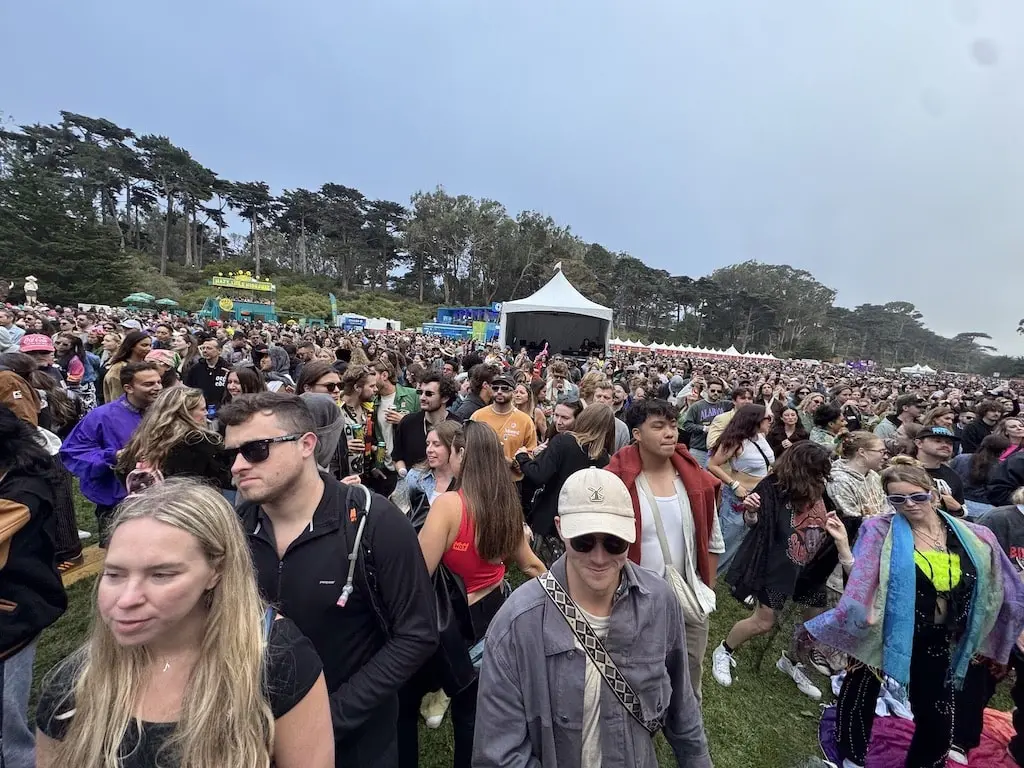
However, a quiet revolution is taking root in San Francisco’s historic Golden Gate Park. The annual Outside Lands (OSL) Music and Arts Festival—which recently welcomed 225,000 music fans over a vibrant, three-day weekend—is successfully shattering expectations of what a mega-festival’s environmental footprint looks like. Featuring top-tier musical acts such as Charli XCX, The Strokes, Rüfüs Du Sol, and Death Cab for Cutie, the festival offered more than just world-class music, gourmet food, and stunning visual art. It served as a masterclass in large-scale waste diversion and environmental innovation.
In recent years, Outside Lands achieved an unprecedented 89% waste diversion rate, successfully keeping roughly 330,000 pounds of material out of landfills in a single year. By combining long-term strategic planning, strict material-sourcing guidelines, and a deeply ingrained culture of reuse, the festival has established itself as the gold standard for sustainability within the live entertainment industry. Far from being a localized success story, Outside Lands stands as undeniable proof that large-scale events can prioritize the planet without sacrificing the fan experience, offering a scalable blueprint for festivals worldwide.
Detailed Chronology: The Evolution of a Green Giant
To understand the magnitude of Outside Lands’ current sustainability achievements, it is essential to trace the deliberate, multi-year evolution of the festival’s operations. Transforming a massive public park into a temporary metropolis that houses tens of thousands of daily attendees requires years of trial, error, collaboration, and infrastructural adaptation.
Laying the Groundwork (Early Years to 2014)
When Outside Lands was first established, the festival organizers recognized that hosting an event of this scale within a cherished civic green space like Golden Gate Park demanded extraordinary responsibility. Early efforts focused heavily on basic recycling and partnership with local waste management authorities. However, organizers quickly realized that traditional recycling programs were insufficient to address the sheer volume of single-use items generated by modern festival crowds.
A major turning point arrived in 2014, when the festival initiated a long-standing partnership with sustainable drinkware pioneer Steelys Drinkware. This collaboration marked the beginning of a systematic effort to phase out disposable items at the point of sale, introducing custom-branded steel cups and water bottles designed to replace thousands of single-use plastic containers.
Scaling Up Infrastructure (2015–2022)
Over the next several years, OSL systematically expanded its waste infrastructure. Recognizing that simply providing recycling bins does not prevent contamination, the festival implemented a comprehensive, multi-stream waste-sorting system. Volunteers and specialized green teams were deployed across the festival grounds to guide attendees on how to properly separate compostables, recyclables, and landfill waste.
Concurrently, the festival cemented its commitment to hydration access by introducing free filtered water refill stations. This initiative marked a crucial philosophical shift: rather than selling bottled water as a primary profit center, the festival positioned clean, accessible water as a fundamental right, directly undercutting the demand for single-use plastic bottles. Over the course of a decade, this initiative scaled to the point where the festival has served the equivalent of two million bottles’ worth of free water refills to fans.

Setting New Industry Benchmarks (2023–Present)
By the time the festival reached its landmark milestones in recent years, its sustainability program had matured into a finely tuned, highly synchronized operation. Achieving an 89% waste diversion rate across a three-day, multi-stage event required sorting waste into more than twelve distinct streams. Materials are meticulously categorized, separated, and routed to facilities where they can be genuinely reused, recycled, or composted, rather than simply being swept into a generalized recycling stream that often ends up in landfills.
Today, the festival’s greening efforts are planned months—sometimes a full year—before the first soundcheck echoes through the eucalyptus trees of Golden Gate Park, proving that zero-waste ambitions can scale alongside massive audience growth.
Supporting Context & Metrics: The Mechanics of Zero Waste
The success of Outside Lands is not the result of luck or happenstance; it is engineered through rigorous operational metrics, purposeful supply chain partnerships, and innovative material management.
The Mathematics of Waste Diversion
Landfill diversion at a major festival is a complex logistical puzzle. When 225,000 people gather over three days, they consume vast quantities of food, beverages, and merchandise packaging. At OSL, this challenge is met through a hyper-localized, highly sophisticated sorting infrastructure.
Instead of relying on a rudimentary "trash vs. recycling" dichotomy, the festival’s waste management protocol breaks down refuse into over twelve specialized waste streams. This granular level of sorting ensures that compostable food scraps and food-serviceware do not contaminate recyclables, and vice versa. As a result, the festival successfully diverted approximately 330,000 pounds of material from landfills during its peak tracking periods—a benchmark unmatched by any other comparable U.S. mega-festival.
Strategic Sourcing and the Power of Reusables
A cornerstone of OSL’s waste reduction strategy is its aggressive push to eliminate single-use plastics at the source. This is achieved through deliberate vendor guidelines and innovative product offerings:
- Commemorative Steel Drinkware: For prices ranging from $6 to $8, attendees can purchase colorfully decorated, custom-designed steel cups for beer, cocktails, and wine. These cups are sturdy enough to be used throughout the weekend and serve as treasured, functional souvenirs that fans take home.
- Massive Volume of Reusables and Compostables: During recent festival runs, partners like Steelys Drinkware have produced more than 14,500 reusable steel cups and bottles alongside over 125,000 compostable paper cocktail cups.
- The Hydration Station Network: Celebrating its 10th consecutive year of operation, the festival’s network of self-serve filtered water stations allows attendees to continually refill personal reusable water bottles, effectively neutralizing one of the single greatest sources of festival pollution: discarded plastic water bottles.
Official Statements and Industry Perspectives
The pioneering environmental efforts of Outside Lands have garnered widespread acclaim from environmental advocates, festival leadership, and manufacturing partners alike.
Annie Farman, a Plastic Pollution Coalition Board Member and Director of Sustainability for Outside Lands, emphasizes that cutting waste is embedded in the festival’s foundational ethos:

"Cutting waste has always been a core part of our operations, and offering reusables as an alternative to single-use plastics is a major priority for us. We strive to source the most responsible materials for food and beverage service. It’s inspiring to see our team sort it into more than twelve different waste streams to be reused or repurposed, rather than just going to landfill."
Reflecting on the cumulative impact of the festival’s hydration initiatives, Farman adds:
"We’re proud to have served the equivalent of 2 million bottles worth of free water refills to fans over the years."
Aidan Maguire, Business Partnerships Manager at the Plastic Pollution Coalition, highlights the replicability and cultural impact of the OSL model:
"Outside Lands is proof that we can put on large-scale events without the inevitability of creating mountains of waste sent to landfills. Annie Farman and the OSL team have done an excellent job of providing zero waste options and building a culture of reuse and refill, which creates a better experience for festivalgoers and better outcomes for our planet. OSL has something good going here."
Dianna Cohen, Co-Founder and Chief Vision Officer of the Plastic Pollution Coalition, shares a broader vision for the live events industry:
"One of my dreams for music festivals and outdoor events is to go to one that is actually zero waste, and Outside Lands (OSL) is in the process of moving us towards that goal by phasing out single-use plastic bottles and cups. It can be done. OSL is doing it."
Echoing these sentiments, John Borg, Founder and CEO of Steelys Drinkware, points out the educational and exponential impact the festival has on consumer behavior:

"Outside Lands has been leading the path towards plastic-free events for years. If an event of this scale can divert so much trash from landfills, then it shows that any festival can rethink wasteful systems and get there, too. The impact is exponential. For music fans, Outside Lands educates and inspires folks to rock their reusables and cut waste at home and in their daily lives."
Future Outlook: The Ripple Effect on the Global Event Industry
As Outside Lands looks toward future installments, the festival’s trajectory points toward an even more ambitious horizon: the realization of a truly zero-waste mega-event. While diverting 89% of waste and keeping hundreds of thousands of pounds of material out of landfills is an extraordinary achievement, festival organizers and their environmental partners are continuously exploring new frontiers to close the remaining gap.
The implications of OSL’s success extend far beyond the borders of Golden Gate Park. For decades, festival organizers across the globe viewed massive waste generation as an unavoidable byproduct of live entertainment. Outside Lands has fundamentally dismantled that assumption. By demonstrating that sustainable operations can be seamlessly integrated into high-capacity commercial events without diminishing the fan experience, OSL provides a scalable, repeatable blueprint for event planners worldwide.
Furthermore, the cultural ripple effect among attendees cannot be overstated. When hundreds of thousands of music fans spend a weekend utilizing steel cups, refilling reusable water bottles, and witnessing meticulous waste sorting firsthand, that experience shifts consumer consciousness. Attendees leave the festival not only with memories of incredible live performances, but with a renewed awareness of how to reduce waste in their everyday lives at home, school, and work.
Ultimately, Outside Lands has proven that the future of live music does not have to come at the expense of the natural world. Through visionary leadership, steadfast corporate partnerships, and an unwavering commitment to ecological responsibility, the festival is lighting the way toward a cleaner, greener, and entirely sustainable future for the global entertainment industry.