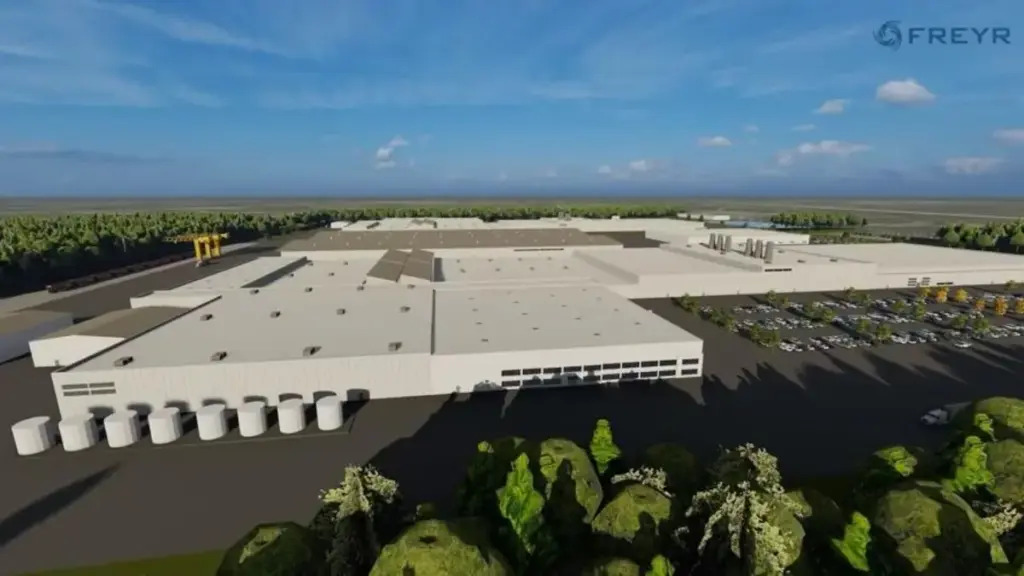
The sweeping policy shifts enacted by the Trump administration targeting the American renewable energy sector have delivered a profound blow to the nation’s economic and industrial landscape. According to a comprehensive new report released today by the nonpartisan business group E2 (Environmental Entrepreneurs) and analyzed by BW Research, federal rollbacks of clean energy incentives have derailed 216 large-scale manufacturing and power projects nationwide.
The human and financial toll of these administrative road-blocks is staggering. The report calculates that the targeted dismantling of green energy policies has already sacrificed nearly 470,000 jobs and wiped out $68.2 billion in private capital investments. Far from merely impacting boutique environmental initiatives, these policy reversals have stunted a generational economic boom at the exact moment surging power demand—driven by the rapid expansion of artificial intelligence data centers, domestic manufacturing, and widespread electrification—requires an unprecedented expansion of the nation’s electrical grid.
By systematically slowing, defunding, or outright blocking solar, wind, battery storage, and electric vehicle (EV) manufacturing projects, federal actions have triggered a negative economic ripple effect. Local communities, regional suppliers, municipal tax bases, and everyday consumers are now absorbing the collateral damage of a federal policy agenda that prioritizes legacy fossil fuels over modern, forward-looking energy infrastructure.
Detailed Chronology: The Accelerated Unraveling of America’s Green Transition
The contraction of the US clean energy sector did not happen in a vacuum. It represents the culmination of a deliberate, accelerated pivot in federal regulatory and fiscal policy that began immediately following the transition of power in January 2025.
Phase 1: The Regulatory Freeze (Early 2025)
Within weeks of taking office, the Trump administration initiated a multi-pronged assault on federal clean energy programs established under previous legislative packages. Executive orders directed federal agencies to immediately freeze the distribution of billions of dollars in clean energy grants, loan guarantees, and infrastructure subsidies.
During this initial phase, developers and manufacturers who had broken ground or secured preliminary financing found themselves in regulatory limbo. Environmental reviews for large-scale offshore wind farms and massive transmission corridors were abruptly halted, while the Environmental Protection Agency (EPA) and the Department of the Interior began reevaluating permitting approvals.
Phase 2: Legislative Rollbacks and Tax Incentive Cuts (Mid-to-Late 2025)
The administrative slowdown quickly hardened into legislative reality. Working alongside congressional allies, the administration championed major legislative packages designed to systematically strip away the tax incentives that had made the United States a magnet for global green tech investment.
The targeted credits—spanning advanced manufacturing production credits under Section 45X, consumer and commercial EV tax credits, and investment tax credits for solar and storage installations—were scaled back, restricted with punitive domestic-sourcing hurdles, or outright repealed.
Phase 3: Project Cancellations and Capital Flight (2026 and Beyond)
By 2026, the cumulative pressure of regulatory hostility and financial uncertainty forced corporations’ hands. Boardrooms across the country began conducting risk assessments that concluded long-term investments in US renewable infrastructure were no longer viable under the current regulatory climate.
The E2 report focuses specifically on this tipping point, examining 216 major projects that have been officially canceled, indefinitely shelved, or significantly scaled back since January 2025. What began as a trickle of delayed permits transformed into a wave of strategic cancellations, resulting in billions of dollars in capital fleeing the US market for more stable regulatory jurisdictions overseas.
Supporting Context & Metrics: Unpacking the Macroeconomic Damage
To understand the true cost of these policy reversals, one must look beyond headline-grabbing political rhetoric and examine the hard data compiled by BW Research for E2. The numbers illustrate an economy robbed of immense potential growth.
Gross Domestic Product (GDP) and Capital Losses
The 216 canceled or downsized projects represented more than just individual factories or solar farms; they were anchors of regional economic development.
Construction-Phase GDP Impact: These projects would have contributed over $90 billion directly to US GDP during their construction phases alone.
Annual Economic Output: Once fully operational, they would have generated an estimated $55 billion in economic activity every single year.
Private Capital Investment: A staggering $68.2 billion in private capital investment has been officially scrapped.
Operational Spending: Local economies are missing out on $48.4 billion in annual operational spending (including supply chain procurement, maintenance contracts, and local services) that these facilities would have sustained.
The Human Cost: Lost Wages and Employment
The job losses documented in the report are divided into two distinct categories: immediate construction jobs lost and long-term, high-paying operational careers that will never materialize.
Construction Phase: The cancellation of these projects wiped out an estimated $53 billion in construction wages. Battery storage projects bore the brunt of immediate job losses (over 42,000 lost construction jobs), followed closely by solar projects (~33,000 lost construction jobs) and EV manufacturing (~28,000 lost construction jobs).
Operational Phase: Over their lifespans, these facilities would have generated $31 billion in annual wages. The long-term loss is heavily concentrated in the EV manufacturing sector, which accounts for nearly 255,000 permanent jobs that are no longer expected to materialize. Battery storage projects account for almost 64,000 permanent jobs lost, while solar projects account for roughly 19,000.
Municipal and Government Revenue Deficits
Taxpayers and local governments are also paying a heavy price for federal obstructionism.
Federal, state, and local governments will forfeit nearly $20 billion in tax revenue during the construction phase alone.
Moving forward, public coffers will miss out on an additional $12 billion in annual tax revenue—funds that would have traditionally supported public schools, fire departments, road maintenance, and local emergency services.
Grid Capacity and the Surrounding Energy Crisis
Perhaps most alarmingly, these economic losses are occurring concurrently with a historic spike in American electricity demand. Driven by the exponential growth of energy-hungry AI data centers, widespread industrial electrification, and residential expansion, the US power grid is facing unprecedented strain.
Despite this surging demand, the federal rollback has successfully blocked roughly:
10 gigawatts (GW) of solar generation capacity
3.75 GW of wind generation capacity
9 GW of battery storage capacity
Combined, this lost capacity is equivalent to roughly 10 gigawatts of reliable power generation—enough electricity to power approximately 3 million American homes, roughly equivalent to every household in the entire state of Massachusetts.
Official Statements and Industry Perspectives
The release of the E2 report has sent shockwaves through the American business and energy communities, prompting sharp rebukes from industry leaders and economic analysts alike.
Bob Keefe, Executive Director of E2, did not mince words when addressing the broader implications of the findings.
"The numbers tell the story. Making it harder to build clean energy projects means lost jobs, lost investments, lost electricity supplies, and lost local tax revenues," Keefe stated during a press briefing. "Add it all up, and it’s clear that federal actions to stop clean energy are costing all of us—consumers, businesses, and our national economy—big time."
Phil Jordan, CEO of the BW Research Partnership, emphasized the foundational role clean energy had played in modern American labor markets prior to the policy shifts.
"Clean energy has been a major economic driver over the past decade, creating hundreds of thousands of jobs across a wide range of roles in manufacturing, construction, and professional services," Jordan noted. "Accurate, current information on jobs in the energy sector has never been more important as we document this historic pivot."
Highlighting the multiplier effect that ripples through local communities, Michael Timberlake, E2 Director of Research and Publications, explained that the damage extends far beyond the corporations that originally announced the projects.
"The losses go far beyond the direct jobs announced by companies," Timberlake explained. "Every canceled factory or power project means fewer construction workers on site, fewer suppliers filling orders, fewer dollars flowing through local economies, and fewer tax revenues for schools, fire departments, roads, and public services."
Future Outlook: Navigating an Uncertain Energy Landscape
As the United States moves deeper into the late 2020s, the divergence between federal policy and market realities is becoming increasingly stark. While global competitors in Europe and Asia aggressively subsidize and scale up their clean energy manufacturing capabilities to capture market share in the trillion-dollar green economy, the US finds itself artificially throttling its own industrial capacity.
The paradox of the current moment is hard to ignore. Even as federal policies actively suppress renewable energy development, fundamental economic forces—such as the bottom-line cost-effectiveness of utility-scale solar and the insatiable power demands of the tech sector—continue to drive renewable energy to record milestones. Recent data from the Energy Information Administration (EIA) indicates that renewables have successfully crossed the threshold to account for roughly 30% of total US electricity generation.
However, industry experts warn that this baseline resilience should not be mistaken for health. By sacrificing hundreds of thousands of high-wage manufacturing jobs, forfeiting tens of billions in private investment, and leaving local communities high and dry, the Trump administration’s clean energy rollbacks have inflicted self-inflicted wounds on America’s economic competitiveness.
Unless federal policymakers pivot to recognize that modern energy dominance requires an all-of-the-above approach that embraces—rather than penalizes—next-generation technologies, the true cost of these rollbacks will continue to compound, echoing through local economies, utility bills, and labor markets for decades to come.