As the global population surges past the eight-billion mark, traditional agricultural systems face unprecedented stress. While regenerative organic agriculture has long championed healthy soil as the bedrock of a sustainable food supply, arable land covers less than one-third of our blue planet. The remaining vast majority is water—a realm that has historically provided vital nourishment and economic livelihoods, but one that has also suffered grievously from overexploitation.
In response to these converging ecological crises, a groundbreaking research partnership has formed between the Rodale Institute—the global pioneer of regenerative soil science—and GreenWave, an innovative organization dedicated to regenerative ocean farming. This strategic alliance aims to connect land and ocean farmers, leveraging the immense restorative power of marine ecosystems to enrich agricultural soils on land.
By evaluating ocean-derived kelp as a natural "biostimulant," researchers are testing whether restorative aquaculture can supply the vital trace minerals and microbe-activating properties needed to boost crop yields and enhance soil health without relying on fossil-fuel-derived synthetic fertilizers. This collaboration signals a vital paradigm shift: recognizing that the future of global food security depends not on separating land and sea, but on harmonizing them through regenerative practices.
Detailed Chronology: From Wild Overfishing to Regenerative Aquaculture
To understand the necessity of this modern land-sea alliance, one must trace the evolution of how humanity harvests its food—a trajectory marked by centuries of extraction, subsequent depletion, and the recent quest for ecological redemption.
The Historical Shift to the Sea
Long before human societies cleared forests and plowed the earth to cultivate staple crops, early coastal populations gathered sustenance from the water. Seafood has remained a dietary cornerstone for millennia. According to data from the USDA Economic Research Service, modern American consumers eat an average of approximately 20 pounds of fish and shellfish annually.
While seafood cultivation is far from new, it has scaled up dramatically over the past few decades. The National Oceanic and Atmospheric Administration (NOAA) reports that more than 50 percent of the global seafood supply is now raised on water-based farms. As land-based resources strain under population growth and climate volatility, humanity’s food systems are increasingly being pushed out to sea.
The Pitfalls of Industrial Aquaculture
This expansion, however, did not automatically translate to sustainability. Bren Smith, co-founder and co-executive director of GreenWave, experienced this firsthand. Growing up in Newfoundland, Canada, Smith began fishing the treacherous Georges Bank and Grand Banks for tuna and lobster at the tender age of 14.
By the 1990s, decades of overfishing, habitat loss, and climate change had drastically depleted wild fish stocks, rendering commercial fishing an unsustainable way of life. Seeking an alternative, Smith transitioned into finfish aquaculture, believing that "blue jobs" would offer a viable economic future. Instead, he made a disheartening realization.
"I soon saw that all the mistakes that have been made in farming on land were being repeated in the sea," Smith reflects.
Commercial finfish aquaculture had largely mirrored the resource-intensive, environmentally damaging practices of industrial land agriculture. It relied on the excessive application of artificial nutrients, pesticides, and antibiotics; caused severe water degradation; and disrupted delicate marine ecosystems.
Pioneering Vertical Underwater Farming
Determined to find a better way, Smith envisioned a farming model that did not require feeding captive fish or confining creatures that could escape.
"I thought we should grow seaweed and shellfish—crops that don’t swim away and that can feed on the nutrients that already exist in the water," he explains.
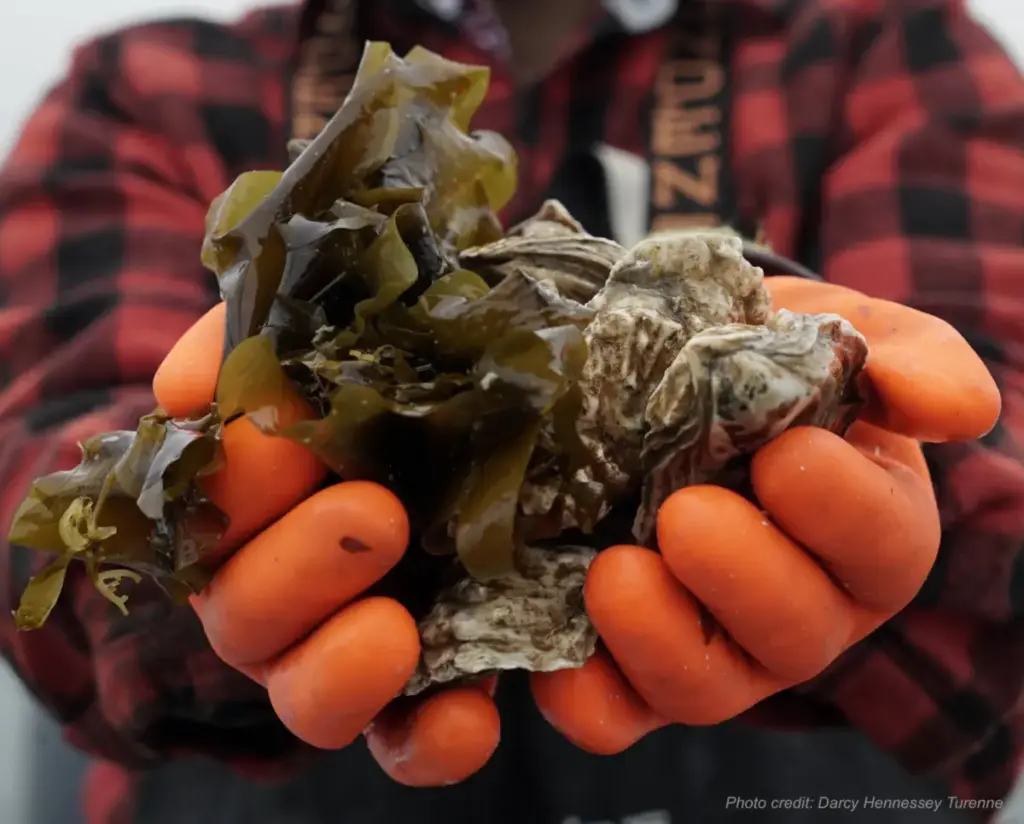
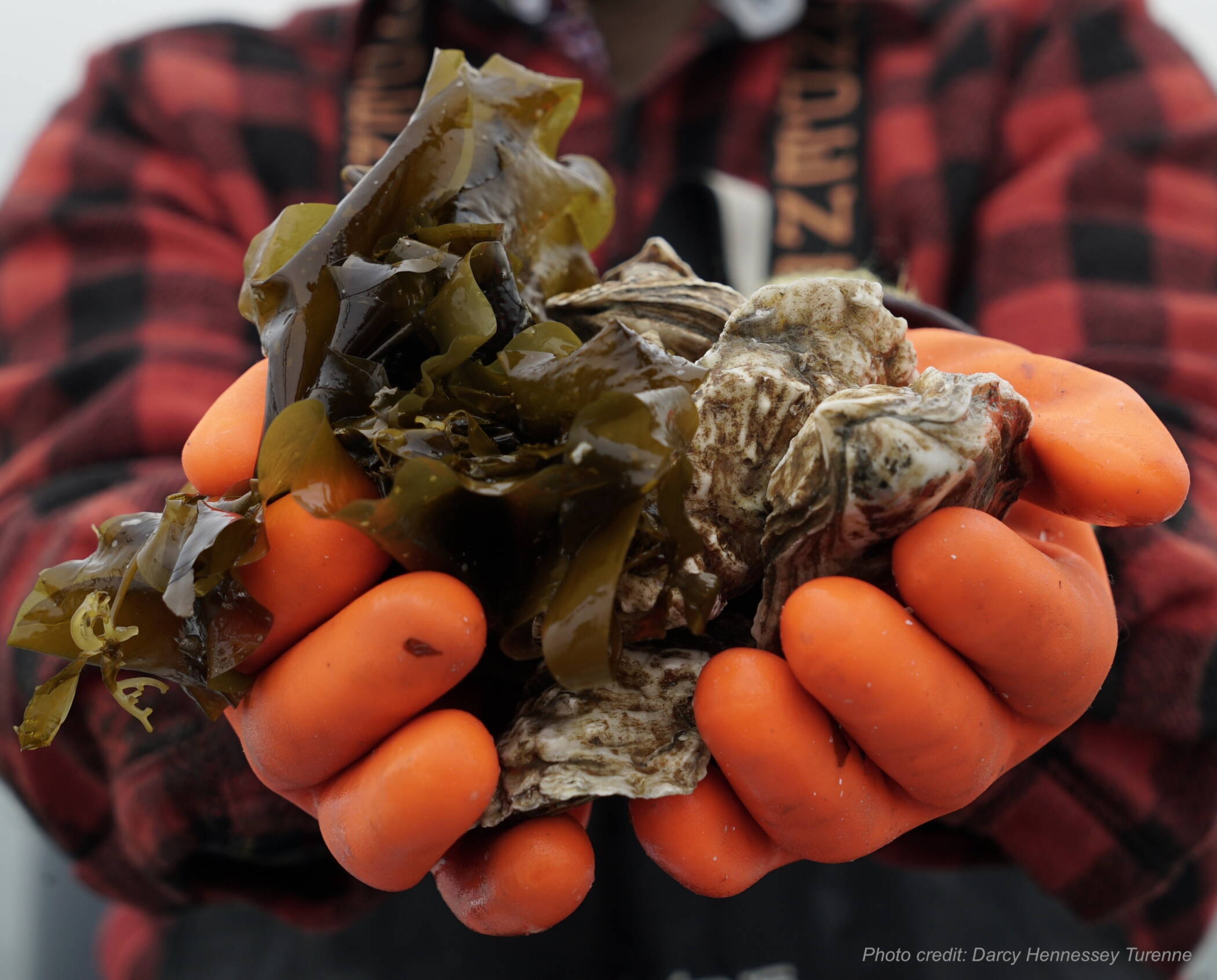
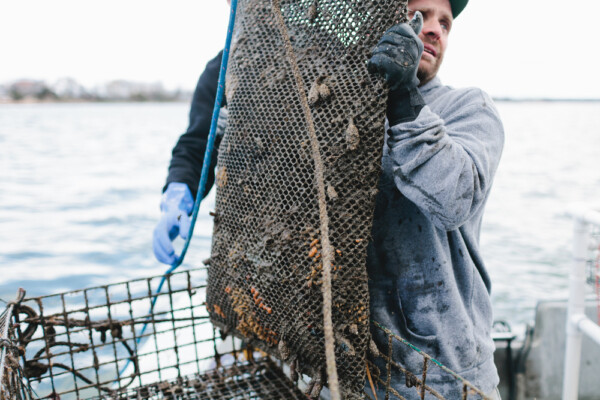
This vision birthed GreenWave’s unique vertical ocean farm design. Engineered with hurricane-proof anchors and floating horizontal ropes, these farms have virtually invisible footprints from the shore. Beneath the surface, a multi-tiered ecosystem thrives:
Kelp and seaweeds grow downward from the surface ropes.
Scallops hang in suspended nets.
Mussels are held in mesh socks.
Oysters occupy cages and clams burrow into the sand at the base.
These bivalves are all filter feeders, consuming naturally abundant microorganisms such as phytoplankton and algae. The result is a high-yield, zero-input agricultural model that requires no freshwater, no artificial fertilizers, no supplementary feed, and no arable land.
Supporting Context & Metrics: The Science of Land-Sea Synergy
The collaboration between Rodale Institute and GreenWave is rooted in hard metrics and ecological symbiosis. Understanding the mechanics of these farms—and their historical connection to land agriculture—illuminates why this partnership has captured the attention of the scientific community.
Metrics of Productivity and Environmental Restoration
GreenWave’s vertical ocean farming model achieves astonishing output within a remarkably small physical footprint. According to operational metrics:
Yield per Acre: A single acre of vertical ocean farm can produce up to 250,000 shellfish and 25 tons of kelp and sea greens every five months.
Ecosystem Services: Seaweeds like kelp actively absorb carbon dioxide from the water column while releasing life-giving oxygen. This biophysical process helps mitigate local ocean acidification—a direct consequence of rising global temperatures—which in turn allows bivalves to build thick, healthy, protective shells.
The Nutrient Loop: As shellfish filter the water, turbidity decreases, allowing more sunlight to penetrate and stimulate deeper kelp growth.
The Historical and Agronomic Tie to Soil Health
For generations, coastal farming communities understood the intrinsic value of marine resources. Long before the advent of fossil-fuel-based synthetic fertilizers, farmers frequently hauled seaweed inland to amend their soils.
"Whenever coastal communities needed nutrients for their crops, they’ve gone to the sea—that is, until fossil-fuel fertilizers came along," notes Smith.
Modern organic agriculture rejects synthetic nitrogen and phosphorus inputs because they degrade soil biology, leach into waterways, and fail to build long-term organic matter. Instead, organic growers look to biological amendments.
Kelp, in particular, functions as a powerful agricultural "biostimulant." It contains a rich array of trace minerals, plant hormones, and complex carbohydrates that activate dormant soil microbes, enhance a plant’s ability to take up native soil nutrients, and build resilience against environmental stressors like drought.
Current Field Trials and Research Methodology
To quantify these benefits under rigorous scientific conditions, scientists at the Rodale Institute launched a comprehensive, multi-year research initiative. Led by soil scientist Dr. Dinesh Panday, the study features a two-year field trial and a one-year greenhouse experiment.
The primary objectives of this research include:
Evaluating Kelp Biostimulants: Testing how GreenWave’s kelp-derived amendments impact the nutritional content and overall yield of specialty crops such as lettuce and bell peppers.
Soil Health Assessment: Measuring how kelp applications stimulate microbial biomass and soil carbon stabilization.
Comparative Analysis: Benchmarking kelp performance directly against biochar—a widely accepted organic soil amendment—both independently and in combined application plots.
Dr. Panday and his team anticipate releasing the formal peer-reviewed results of this study in 2027, providing the agricultural sector with definitive data on how marine inputs can optimize regenerative organic cropping systems.
Official Statements and Leadership Perspectives
The partnership bridges two visionary non-profit sectors: marine conservation/aquaculture training and soil-based regenerative science. Leaders from both institutions emphasize that this alliance is built on shared philosophies and mutual respect.
Bren Smith on the Evolution of Climate Farming
Bren Smith views the partnership with Rodale Institute as a crucial step in professionalizing and scaling the regenerative ocean movement. Through GreenWave’s open-source training programs—which have educated more than 8,500 ocean farmers, nursery operators, and entrepreneurs since 2017—anyone with a boat, 20 acres of water leases, and roughly $30,000 can establish a farmer-owned co-op.
"We’re no longer pillagers hunting the last fish," Smith declares. "We are a new generation of climate farmers who have joined the fight to restore our planet."
Commenting on the alignment with Rodale, Smith adds:
"We need credible science to evaluate kelp’s benefits and find out how to get the most from it. We knew we had to have a technically sophisticated partner to dig deep into this. When we were meeting with the research team at Rodale Institute, I knew we were talking farmer to farmer, that we are working toward the same goals."
Dr. Andrew Smith on Biological Innovation
Dr. Andrew Smith, Chief Scientific Officer at the Rodale Institute, underscores the historical precedent and modern necessity of utilizing marine biostimulants in organic systems.
"We have long known that products harvested from the sea have the power to promote plant growth and plant health," Dr. Smith notes. By integrating kelp into soil trials, the institute aims to validate natural mechanisms that boost plant vigor without compromising environmental integrity.
Institutional Synergy
Reflecting on the broader mission of the collaboration, leadership from the Rodale Institute emphasizes that whether producers are working in tilled topsoil or offshore marine lease tracts, their ultimate objectives converge. In a truly regenerative food system, land and sea stewards share an ethical imperative to protect the natural resources upon which all life depends.
Future Outlook: A Unified Food System for a Blue Planet
As the Rodale Institute and GreenWave partnership progresses toward its 2027 research milestones, the implications extend far beyond academic curiosity. The success of this initiative could fundamentally reshape how local food economies operate, especially in coastal regions where fishing communities face economic displacement.
Empowering Coastal Communities
GreenWave’s open-source toolkit and cooperative model offer a lifeline to regions transitioning away from industrial fishing. By lowering the barriers to entry for regenerative ocean farming, coastal workers can transition into well-paying, climate-smart jobs that actively heal local marine environments rather than depleting them.
Consumer Choices and the "Super Green List"
Transformation is also occurring at the consumer level. For individuals seeking healthy, sustainable dietary options, choosing seafood that aligns with ecological restoration is increasingly accessible.
The Monterey Bay Aquarium’s Seafood Watch program features a "Super Green List" highlighting nutrient-dense, low-impact seafood varieties. Prominently featured among the top ten items are products harvested directly from the GreenWave farming model: mussels, clams, oysters, and kelp. These foods provide exceptional protein profiles while remaining exceptionally low in saturated fats, calories, and environmental footprints.
Conclusion
The partnership between the Rodale Institute and GreenWave marks the dawn of an integrated agricultural era. By closing the loop between land and sea—utilizing the regenerative harvest of the oceans to fortify the living soils of the earth—these organizations are charting a resilient course for the future. As science continues to validate what indigenous and coastal communities long understood, the bridge between our blue planet’s waters and its fertile lands grows stronger, offering a beacon of hope for global food security in the 21st century and beyond.