Executive Overview
California is currently navigating what energy experts affectionately call a "good problem." As the Golden State aggressively accelerates its deployment of solar panels and wind turbines, it is simultaneously slashing greenhouse gas emissions, mitigating urban smog, and drastically improving regional air quality. Yet, this rapid green energy transition brings an inherent engineering hurdle: intermittency. The sun inevitably sets, and the wind unpredictably dies down, creating critical windows when renewable generation plummets.
To bridge these generation gaps and keep the lights on during dark or calm hours, California has embarked on an unprecedented infrastructure building boom. Between 2019 and 2025, the state’s grid-scale battery storage capacity skyrocketed by an astonishing 2,100 percent. Massive lithium-ion battery farms now dot the landscape, storing excess daytime solar energy to feed back into the grid after sunset.
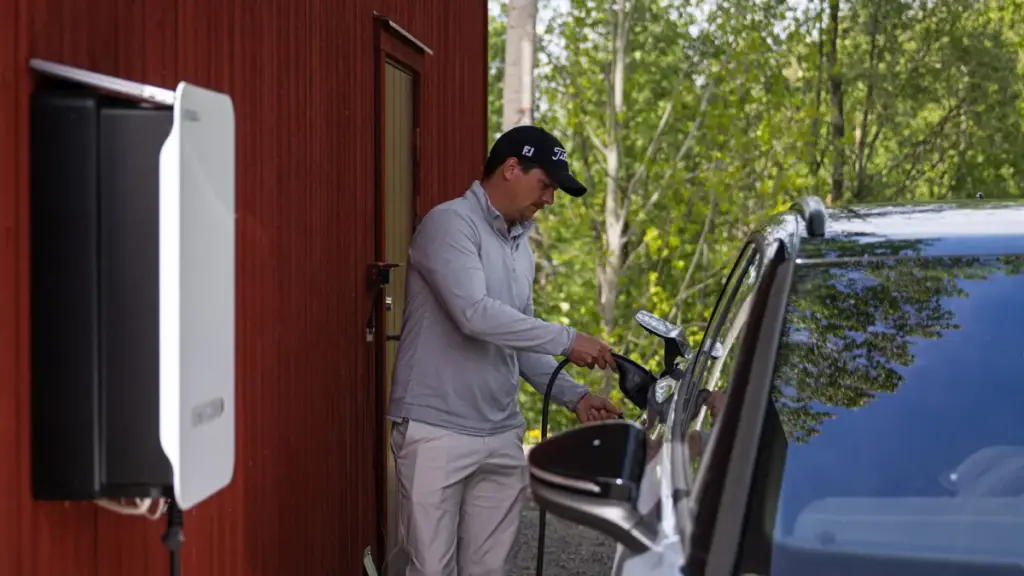
However, a monumental, untapped energy reservoir is already sitting quietly in residential driveways and commercial parking garages across the state: millions of electric vehicles (EVs). Modern EV battery packs are massive, highly mobile stores of electrical energy. Through emerging vehicle-to-grid (V2G) technology, these vehicles can safely discharge their stored electricity back into the local power grid during periods of peak demand.
A groundbreaking blueprint published by energy consulting firms GridLab and E3, alongside grid software company Kevala, reveals that if just 10 percent of California’s projected EV owners enrolled in V2G programs by 2036, they could provide a staggering one-third of the state’s targeted long-duration energy storage needs. Paired with other "flexible load" strategies—such as automated smart thermostats and dynamic industrial pricing—V2G promises to supercharge the renewable energy transition, stabilize electrical infrastructure, and lower electricity bills for all ratepayers, whether they own an EV or not.
Detailed Chronology of California’s Energy Evolution
To understand how California arrived at this technological crossroad, it is necessary to examine the evolutionary timeline of its modern electrical grid.
The Solar Boom and the Birth of the "Duck Curve" (2010–2018)
Throughout the early 2010s, California’s aggressive push for rooftop and utility-scale solar photovoltaics flooded the grid with cheap, clean energy during midday hours. While this successfully displaced fossil fuel generation, it exposed a severe operational paradox known to grid operators as the "duck curve."
As midday solar production peaked, net demand on the grid plummeted to near-zero. But as the sun set in the late afternoon—precisely when millions of commuters returned home, turned on their air conditioning, fired up kitchen appliances, and plugged in electronics—solar generation dropped off a cliff. Grid operators were forced to ramp up natural gas-fired peaker plants with terrifying speed to match the sudden surge in demand, partially undermining the carbon-reduction benefits of the solar boom.
The Lithium-Ion Battery Revolution (2019–2025)
Recognizing that traditional fossil-fuel peaking plants were unsustainable, California pivoted decisively toward battery storage. Between 2019 and 2025, regulatory mandates from the California Public Utilities Commission (CPUC) and financial incentives from the California Energy Commission (CEC) catalyzed a historic expansion of grid-scale battery infrastructure.
Storage capacity surged by 2,100 percent over this six-year window. These multi-megawatt battery facilities successfully absorbed midday solar overproduction and discharged it during evening peak hours, saving the state from rolling blackouts during severe climate-induced heat waves. However, building these massive facilities requires billions of dollars in capital expenditure, extensive land use approvals, and years of environmental review, prompting energy planners to look for alternative solutions.
The Rise of Decentralized Flexibility (2026 and Beyond)
Today, California is entering a new era of decentralized energy management. Rather than relying solely on centralized, utility-owned battery installations, the state is shifting its focus toward the edge of the grid. By leveraging the millions of distributed batteries already purchased by consumers—specifically, electric vehicle fleets and smart home appliances—the grid is transforming into an interactive, two-way ecosystem.
Supporting Context & Metrics: The Mounting Pressures on America’s Grid
California’s grid challenges are not isolated; they represent a microcosm of a national electrical crisis. Across the United States, utility grids face a historic convergence of rising demand, extreme weather events, and structural transformation.
1. Electrification and Industrial Expansion
The nationwide push to decarbonize the economy has accelerated electricity demand after decades of flat consumption growth. Homeowners and commercial developers are rapidly replacing fossil-fueled natural gas furnaces, water heaters, and stoves with high-efficiency electric heat pumps and induction cooktops. Simultaneously, the proliferation of artificial intelligence, cloud computing, and sprawling data centers has created massive, uninterrupted baseload energy demands that strain local distribution lines.
2. Climate Change and Extreme Heat
Global temperature increases have intensified summer heat waves, driving sustained spikes in residential and commercial air conditioning use. These heat waves often coincide with stagnant atmospheric conditions that lower wind generation, forcing power grids to operate near maximum capacity precisely when components are thermally stressed.
3. The Economics of Scale and Infrastructure Costs
Building and maintaining utility-scale battery installations and high-voltage transmission lines requires immense financial capital. These infrastructure costs are traditionally recovered by utilities through retail rate hikes passed directly onto consumers, fueling concerns about energy affordability and equity.
V2G technology offers a direct economic counterweight to these rising costs. Because EV owners have already financed the purchase of large onboard battery packs for transportation, utilities do not need to pay the full capital expenditure of manufacturing, transporting, and siting equivalent stationary storage. Instead, they can utilize an existing asset.
Official Statements and Expert Analysis
Industry leaders and energy analysts emphasize that the integration of V2G technology is no longer a futuristic concept, but an urgent necessity for modern grid management.
"It won’t take a huge amount of participation to make a meaningful dent in what would otherwise be very expensive grid-scale storage purchases."
— Pete Skala, Vice President of Professional and Advisory Services, Kevala
Skala, whose grid software firm co-authored the seminal flexibility report alongside GridLab and E3, notes that the mathematics of V2G heavily favor utility operators. Because the aggregate storage capacity of modern EV batteries dwarfs standard grid installations, even modest participation rates yield exponential stability benefits.
"If we can get this right, to take advantage of that resource in particular, [it] will reduce the amount of that grid-scale storage that we’d otherwise need to procure."
— Pete Skala
Addressing consumer apprehension regarding battery degradation and range anxiety, Skala stresses that V2G systems are designed with failsafes. Vehicle owners retain total control over their charging parameters through smartphone applications. Drivers can establish a minimum state-of-charge threshold—for instance, guaranteeing that the car is 80 percent charged by 7:00 AM every weekday—and allow the utility to draw power only from the safety margin above that threshold during high-stress grid events.
Furthermore, economists point out that fair compensation structures are the linchpin of widespread adoption.
"We need to make sure that we set these incentives at levels in which everybody wins."
— Pete Skala
If utilities undercompensate EV owners, participation rates will languish. Conversely, if compensation is set too high, the administrative and payout costs could eclipse the savings achieved by avoiding grid-scale storage construction. Striking this economic equilibrium requires sophisticated software platforms capable of real-time market clearing and automated dispatch—capabilities that firms like Kevala are actively developing.
Future Outlook: The Prosumer Revolution
The convergence of electric mobility, automated demand response, and advanced grid software marks the dawn of the "prosumer" era. In the near future, everyday electricity consumers will no longer act as passive buyers at the end of a unidirectional transmission pipeline. Instead, citizens will actively participate in localized energy markets.
The Synergy of V2G and Smart Home Ecosystems
The deployment of V2G will not occur in a vacuum; it will operate in tandem with other flexible load management tools. For example, utilities are already expanding smart thermostat programs during peak summer heat waves. Through voluntary, opt-in agreements, utilities can remotely adjust participating residential thermostats by two to three degrees. While virtually imperceptible to human occupants inside the home, this minor adjustment—multiplied across hundreds of thousands of households—shaves off dangerous peak-load spikes.
When combined with smart EV charging and discharging, these demand-response measures create a resilient, multi-layered defense against grid instability. An EV parked at an office building can feed power back into the commercial grid during the mid-afternoon cooling peak, while the owner’s home smart thermostat pre-cools the residence ahead of the evening rush.
A Blueprint for the Nation
As California charts its course toward 100 percent clean electricity by 2045, its strategies are closely monitored by utility regulators across the United States and around the world. The successful integration of vehicle-to-grid technology will serve as a global proving ground.
If California can successfully incentivize millions of motorists to share their vehicular battery storage while keeping electricity affordable and reliable, it will validate a new paradigm for the energy transition. The cars parked in our garages are no longer just vehicles for personal transit; they are the kinetic building blocks of a cleaner, more flexible, and more democratic electrical grid.