Executive Overview
In the modern corporate and environmental landscape, the "incremental trap" is a quiet, comfortable killer. Institutions across the globe routinely celebrate marginal 2% gains in efficiency, emission reductions, or resource protection, even as the broader ecological systems they attempt to safeguard hurtle toward collapse at unprecedented speeds. Nowhere is this paradox more glaring than in marine conservation, where decades of gentle corporate engagement, voluntary guidelines, and polite policy lobbying have failed to halt the industrial degradation of the world’s oceans.
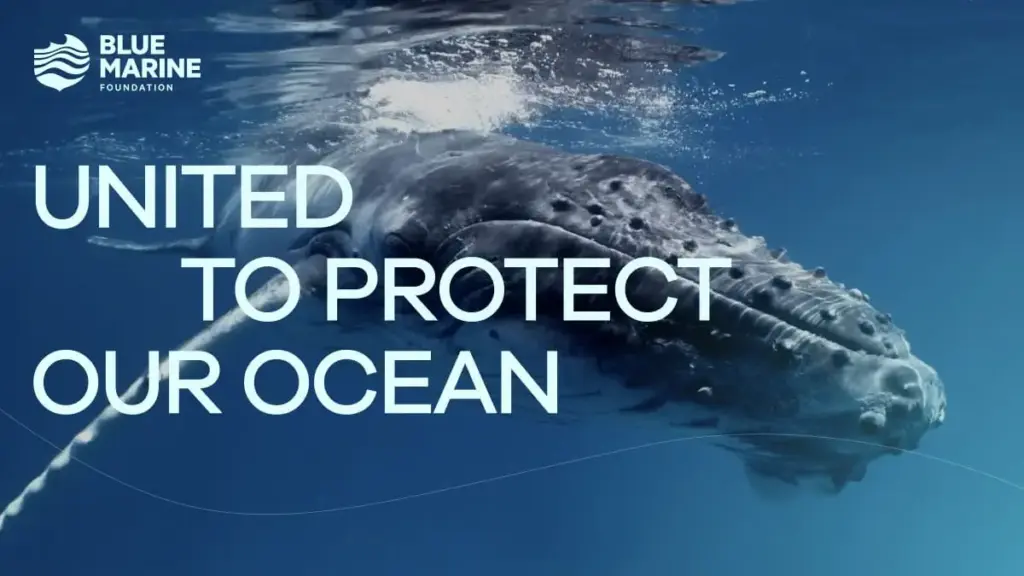
Enter Clare Brook, Chief Executive Officer of the Blue Marine Foundation (BLUE). A veteran of sustainable finance with over two decades of experience—pioneering Environmental, Social, and Governance (ESG) investing long before it became a ubiquitous corporate buzzword—Brook reached a definitive breaking point in 2014. Having witnessed firsthand the sluggish pace of traditional financial mechanisms, she realized that attempting to move the environmental dial "gradually" through standard investor engagement was not just dangerously slow; it was running out of time in a collapsing biosphere.
Rather than continuing to nudge the needle within a broken paradigm, Brook chose to change the instrument entirely. Today, she leads one of Europe’s most dynamic, uncompromising, and ambitious marine conservation charities, driving high-impact interventions that challenge the status quo. In a recent appearance on the Ocean Collaborations podcast, Brook unpacks what it truly means to spearhead transformational, systemic change in our waters rather than settling for comfortable, cosmetic victories. Her message to the global conservation community is as stark as it is necessary: "We have to stay the course, fixed on the horizon and not be put off by the noise."
Detailed Chronology: From Sustainable Finance Pioneer to Marine Revolutionary
To understand the tenacity and strategic clarity that Clare Brook brings to the Blue Marine Foundation, one must examine the trajectory of her career—a decades-long immersion in the mechanics of global capital, corporate governance, and ecological economics.
The Early Years: Planting the Seeds of ESG (1990s–2000s)
Long before sustainability reports were mandatory glossy attachments to corporate earnings statements, Brook was operating at the ragged edge of ethical finance. During the 1990s and early 2000s, the financial sector viewed environmental concerns primarily as external externalities—costs to be absorbed by society rather than risks to be managed by investors.
As a practitioner and pioneer in sustainable finance, Brook spent years attempting to reform corporate behavior from the inside. Her work involved sitting across boardroom tables from executives, pushing for better environmental disclosure, carbon accounting, and responsible resource management. She operated under the prevailing theory of change at the time: that if capital markets could be educated to see the long-term financial risks of environmental degradation, they would naturally reallocate resources toward sustainable outcomes.
The Breaking Point: The Illusion of Gradual Progress (2014)
By 2014, after 24 years in the trenches of sustainable finance, Brook experienced a profound strategic awakening. The math simply did not add up. While sustainable finance portfolios were growing, the physical state of the global environment—and particularly the marine environment—was deteriorating at an exponential rate. Overfishing, industrial pollution, deep-sea mining threats, and the destruction of critical coastal habitats were outpacing the slow, polite reforms of corporate ESG integration.
Brook recognized that the system was fundamentally designed to reward incrementalism—small, tokenistic changes that allowed corporations to market themselves as "green" while continuing business-as-usual extraction. This realization triggered her departure from traditional sustainable finance and her eventual transition to direct, activist-driven marine conservation. She understood that saving the oceans required stepping away from the incremental trap and embracing high-stakes, uncompromising action that could match the urgency of the ecological crisis.
Joining the Blue Marine Foundation and Scaling Up (Present Day)
Taking the helm as CEO of the Blue Marine Foundation, Brook brought her financial acumen and institutional savvy to an organization known for its pragmatic, results-oriented approach. Under her leadership, BLUE shifted from localized conservation projects to large-scale, systemic interventions.
Brook’s strategy combined the rigor of private-sector deal-making with the moral clarity of environmental activism. Rather than relying solely on government grants or public goodwill, BLUE has pioneered innovative financing models for marine protection—such as debt-for-nature swaps, blue bonds, and private philanthropic capital deployment—proving that marine conservation can be scaled rapidly if approached with the discipline of an investment fund and the urgency of an emergency response.
Supporting Context & Metrics: The State of the Global Ocean and the Economics of Protection
To fully appreciate the urgency behind Brook’s philosophy of transformational change, one must confront the stark reality of the modern marine ecosystem. The oceans cover over 70% of the Earth’s surface, produce more than half of the oxygen we breathe, and absorb roughly 25% of all carbon dioxide emissions. Yet, they are under siege from a convergence of industrial pressures.
The Cost of the Incremental Trap
Global fisheries are severely overexploited. According to data from the Food and Agriculture Organization (FAO), over a third of global fish stocks are currently fished at biologically unsustainable levels. Concurrently, vast swathes of vital coastal ecosystems—such as mangroves, seagrass meadows, and salt marshes (collectively known as "blue carbon" habitats)—continue to be destroyed at rates up to four times faster than terrestrial forests.
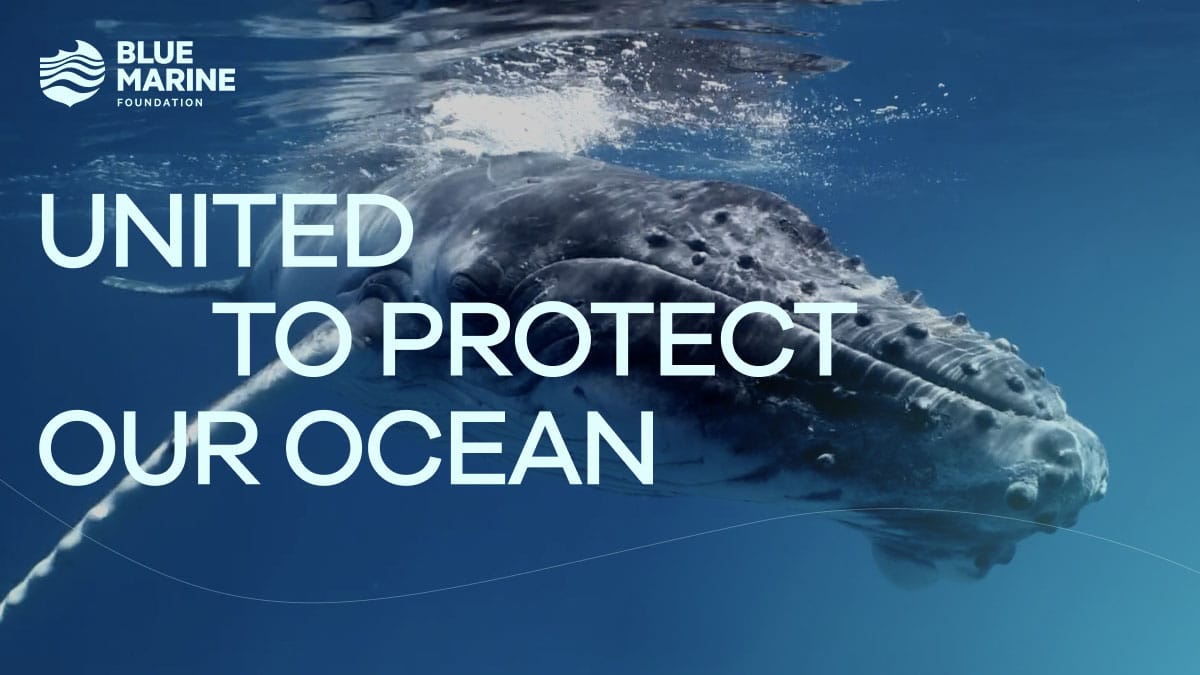
In this context, incremental conservation—such as marginally reducing catch quotas by 1 or 2 percent each year, or establishing weakly protected marine areas (MPAs) that still permit destructive industrial bottom-trawling—is little more than rearranging deck chairs on the Titanic. Brook’s critique of the incremental trap is backed by hard economic and ecological data: ecosystems possess tipping points. Once a coral reef system or a fish stock collapses past a critical threshold, gradual recovery is mathematically impossible without total, aggressive intervention.
Pioneering Transformational Solutions
Under Brook’s leadership, the Blue Marine Foundation has focused on models that bypass sluggish bureaucratic processes to deliver immediate, measurable impact:
- Securing Marine Protected Areas (MPAs): Pushing for highly and fully protected marine reserves where all industrial extraction is strictly banned, allowing fish stocks and biodiversity to rebound exponentially.
- Restoring Marine Habitats: Funding and executing large-scale restoration projects for native oysters, seagrass, and kelp forests, which serve as natural carbon sinks and nurseries for marine life.
- Reforming Fisheries Management: Working directly with local coastal communities, governments, and commercial entities to transition toward low-impact, sustainable fishing practices that secure the livelihoods of artisanal fishers while protecting ocean health.
Official Statements & Insights from the Ocean Collaborations Podcast
In her recent conversation on the Ocean Collaborations podcast, Clare Brook offered deep insights into the psychological, structural, and operational hurdles required to achieve meaningful change in marine conservation.
Reflecting on her journey from sustainable finance to front-line ocean advocacy, Brook emphasized that true leadership in the environmental sector requires thick skin and an unwavering vision:
"We have to stay the course, fixed on the horizon and not be put off by the noise."
This quote encapsulates the core philosophy of her tenure at BLUE. The "noise" refers to the endless cycle of corporate greenwashing, political compromise, industry pushback, and well-meaning critics who urge caution and moderation in the face of ecological collapse. Brook argues that when dealing with planetary life-support systems, compromise with destruction is not pragmatism—it is capitulation.
Furthermore, Brook addressed the cultural inertia within institutional funding and NGOs, where fear of failure often supersedes the courage required for bold innovation. By bringing a financier’s risk-assessment mindset to conservation, she advocates for calculated, high-impact bets that can disrupt harmful industries and create scalable blueprints for global ocean recovery.
Future Outlook: The Horizon of Marine Conservation
As the world looks toward critical international biodiversity and climate targets—such as the global ambition to protect 30% of the planet’s oceans by 2030 (the 30×30 target)—the leadership model championed by Clare Brook and the Blue Marine Foundation offers a vital roadmap.
The Shift from Quantity to Quality in Marine Protection
The coming decade will test whether global commitments to ocean protection are genuine or merely symbolic. Brook’s work underscores that designating "paper parks"—marine reserves that exist only on maps without enforcement or real protection—is a dangerous illusion. The future of marine conservation demands absolute rigor: fully protected areas backed by robust satellite monitoring, community-led enforcement, and sustainable financing models that outlast political electoral cycles.
Mobilizing Private Capital for the Public Good
One of Brook’s most enduring legacies will likely be her bridge-building between the worlds of high finance and ecological preservation. By demonstrating that private capital can be successfully deployed to regenerate marine ecosystems—through innovative blue finance mechanisms and philanthropic investment—she is helping to build a self-sustaining economic engine for conservation.
A Call to Action for the Next Generation of Leaders
Ultimately, Brook’s narrative is an indictment of timid leadership and an invitation to bolder thinking. As climate change and industrial overreach place unprecedented stress on the marine environment, the margin for error has vanished.
For corporations, NGOs, and policymakers alike, the lesson from Clare Brook’s journey is clear: the era of celebrating 2% incremental gains while the system burns is over. True leadership requires looking past the static of short-term political and corporate pushback, keeping eyes fixed firmly on the horizon, and enacting the radical transformations necessary to ensure that our oceans—and the human societies dependent upon them—survive and thrive into the future.