

Executive Overview
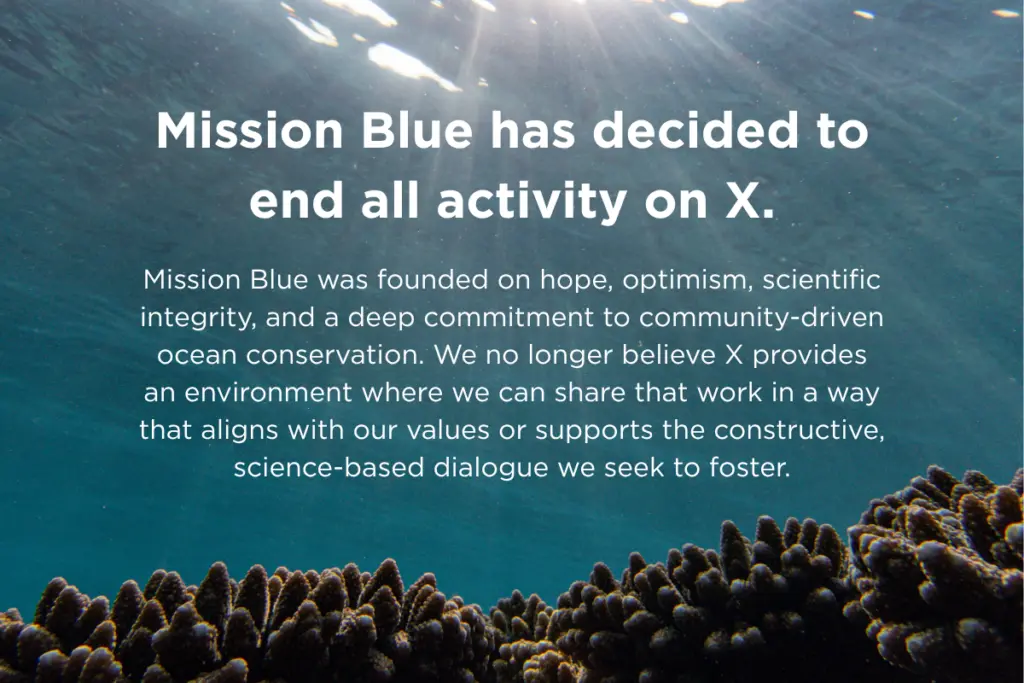
In a decisive move that highlights a growing ideological and cultural rift within the digital public square, ocean conservation non-profit Mission Blue has officially announced the end of its active engagement on X (formerly Twitter). Founded by legendary oceanographer Dr. Sylvia Earle, the organization has built a global reputation over decades by championing hope, scientific rigor, and community-driven action to protect the world’s marine ecosystems. However, the non-profit has determined that the current ecosystem of X—marked by rising levels of hostility, unmitigated misinformation, and a degradation of constructive dialogue—is fundamentally incompatible with its core mission.
This strategic pivot represents more than a simple social media housekeeping measure. It serves as a bellwether for mission-driven scientific organizations navigating an increasingly polarized digital landscape. For years, social media platforms offered environmental advocates unprecedented global reach, bypassing traditional gatekeepers to connect directly with researchers, policymakers, and everyday ocean lovers. Yet, as platform governance evolves and cultural flashpoints intensify, public interest organizations are increasingly forced to weigh the benefits of broad visibility against the reputational and operational costs of participating in toxic digital spaces.
Mission Blue’s departure from X is not an abandonment of digital advocacy, but rather a reallocation of resources toward channels where constructive, solutions-oriented dialogue remains viable. Moving forward, the organization will concentrate its digital footprint on Instagram, Facebook, LinkedIn, and YouTube, alongside its direct-to-subscriber email newsletters. While the legacy X account will remain accessible in an archived state, no new content will be published. This comprehensive report explores the chronology of this decision, the broader sociological and platform-specific contexts driving it, and what it signals for the future of science communication in the digital age.
Detailed Chronology: The Evolution of Mission Blue’s Digital Presence
The Early Days: Building an Ocean Community on Twitter
When Mission Blue first established its presence on the platform then known as Twitter, the digital environment was widely perceived as an intellectual and democratic frontier. For a grassroots yet globally minded initiative like Mission Blue—tasked with championing "Hope Spots" (special marine areas critical to the health of the ocean)—the platform offered a unique value proposition.
In its foundational years on the platform, Twitter allowed Mission Blue to:
- Connect in Real-Time: Bridge geographical divides to link marine scientists in remote field research stations with policy advocates and donors.
- Amplify Expeditions: Provide live updates from oceanographic expeditions led by Dr. Sylvia Earle and her team, transforming complex marine biology into accessible, digestible narratives.
- Foster Global Solidarity: Build an organic community of ocean champions who could rapidly mobilize around conservation alerts, policy petitions, and educational campaigns.
For much of the 2010s, this digital architecture served the organization well. The platform rewarded brevity, rapid information sharing, and global connectivity, aligning neatly with the urgency of the environmental crises facing the world’s seas.
The Turning Point: Shifting Tides on X
Over the past several years, however, structural and cultural transformations at the platform—now rebranded as X—began to erode the foundational benefits that initially attracted conservation groups. As moderation teams were drastically reduced, algorithmic changes rolled out, and verification systems restructured, the platform’s overarching culture underwent a profound shift.
For Mission Blue, the breaking point was not a single isolated incident, but a cumulative deterioration of the digital atmosphere. The organization observed a measurable increase in:
- Hostility and Divisiveness: Conversations surrounding complex global challenges increasingly devolved into polarized shouting matches rather than nuanced exchanges.
- Anti-Science Rhetoric: Content that actively undermines empirical science, ecological data, and peer-reviewed research began to gain unprecedented traction, often amplified by algorithmic incentives favoring high-engagement outrage.
- Erosion of Constructive Dialogue: The fundamental prerequisites for effective advocacy—mutual respect, good-faith debate, and a shared baseline of factual reality—were increasingly sidelined in favor of sensationalism.
The Decision to Step Back
Faced with these mounting challenges, Mission Blue’s leadership undertook a comprehensive internal review of its digital strategy. The core question facing the organization was straightforward: Does maintaining a presence on X advance our mission of spreading ocean hope and driving tangible conservation action, or does it undermine our credibility and drain organizational energy?
The conclusion was unequivocal. Mission Blue realized that continuing to participate in an ecosystem plagued by pervasive misinformation and hostility ran counter to its foundational identity. Grounded in a philosophy of "hope and optimism," the non-profit determined that it could not, in good faith, validate a platform whose architectural incentives reward toxicity. Consequently, leadership made the definitive choice to shutter active operations on X, archiving the historical record of their work while turning their gaze toward greener digital pastures.
Supporting Context & Metrics: The Mass Migration of Science from X
Mission Blue is far from alone in its reassessment of X. Over the last two years, a profound migration has been underway across the scientific, academic, and non-profit sectors. Understanding this shift requires examining the broader metrics of platform transformation and the unique vulnerabilities of science communication in modern digital spaces.
The Amplification of Misinformation
Academic research into platform dynamics has consistently demonstrated that content eliciting high-arousal negative emotions—such as anger, fear, and outrage—spreads significantly faster and wider than constructive or educational content. In the context of environmental science, this manifests as a flood of climate skepticism, denialism regarding marine degradation, and targeted harassment of scientists sharing empirical data on ocean acidification, overfishing, and coral bleaching.
When platforms dismantle trust and verification mechanisms, the playing field tilts heavily in favor of actors who weaponize disinformation for political or ideological ends. For organizations like Mission Blue, whose entire credibility rests upon rigorous scientific accuracy and trust, operating in an environment where facts compete on an uneven, hostile playing field presents an untenable risk to their institutional brand.
The Exodus of Academic and Non-Profit Voices
The departure of Mission Blue mirrors a broader trend observed across global institutions. Universities, public health organizations, major media outlets, and environmental NGOs have steadily dialed back their investments in X.
- The Academic Retreat: Prominent climate scientists, marine biologists, and ecologists who once used the platform as their primary digital hub for peer collaboration have migrated toward alternative networks, such as Mastodon, Bluesky, or specialized professional communities on LinkedIn.
- Institutional Risk Management: Communications departments within major conservation bodies increasingly view X through a risk-management lens. The potential for brand damage resulting from algorithmic association with toxic content or coordinated bot campaigns far outweighs the diminishing returns of organic reach on the platform.
The Economics of Engagement vs. Impact
Historically, digital marketing strategies prioritized raw metrics: impressions, follower counts, and retweet rates. However, organizations are maturing past vanity metrics. Mission Blue’s pivot reflects a growing consensus that depth of engagement and community safety vastly outweigh raw reach.
A post seen by millions in a volatile, hostile environment yields far less actionable conservation impact than a message received by a smaller, highly engaged, and respectful community ready to take real-world action to protect a Hope Spot. By stepping away from X, Mission Blue is consciously trading performative visibility for meaningful, values-aligned community building.
Official Statements and Institutional Philosophy
To fully grasp the gravity of Mission Blue’s transition, one must examine the underlying philosophy that guides the organization. Founded by Dr. Sylvia Earle—often referred to as "Her Deepness" by the marine conservation community—Mission Blue operates on a bedrock principle: Optimism is a strategy.
The Power of Hope-Driven Conservation
Dr. Earle has long maintained that despair is paralyzing, whereas hope inspires action. In a statement reflecting on the organization’s digital evolution, Mission Blue leadership emphasized this ethos:
"Mission Blue was founded with a spirit of hope, optimism, and dedication to community-driven ocean conservation. When we first started our Twitter account, it offered a great way to connect with our Champions, scientists in the field, and an audience of people who love the ocean."
This commitment to positivity creates a specific organizational culture. Conservation is inherently fraught with devastating news—coral reef die-offs, collapsing fisheries, plastic pollution choking marine life. Yet, Mission Blue’s communication strategy has always sought to balance the sobering reality of ecological crises with actionable, inspiring solutions. The toxic, reactive environment of X directly clashed with this nuanced balancing act, turning digital outreach into an uphill battle against ambient cynicism.
A Commitment to Safe, Welcoming Digital Spaces
In its official announcement, the organization articulated a clear boundary regarding its digital ethics:
"We are all connected to the same ocean. Through our digital strategy, we seek to build a curious, welcoming online community. We cannot, in good faith, continue to use the X platform."
This declaration underscores a fundamental truth of modern communications: digital platforms are not neutral utilities; they are cultural ecosystems. Just as a conservationist would not establish a marine sanctuary in a toxic industrial dump, an organization dedicated to fostering respectful, science-based dialogue cannot build a thriving community on a platform structured to reward hostility. By stepping away, Mission Blue is actively curating its digital habitat to reflect the health, clarity, and harmony it seeks to restore to the global ocean.
Future Outlook: Rebuilding and Expanding Beyond X
As Mission Blue closes the chapter on its active X presence, the organization is channeling its considerable digital energy into a dynamic, multi-channel growth strategy. Rather than shrinking its digital footprint, Mission Blue is optimizing it for maximum positive impact.
Diversifying the Digital Portfolio
The non-profit’s updated digital strategy focuses on platforms that better align with its core values of education, visual storytelling, and community engagement:
- Instagram: Serving as the visual anchor for Mission Blue’s global expeditions, Instagram allows the organization to leverage stunning underwater photography, reels, and stories to bring followers face-to-face with the breathtaking biodiversity of marine Hope Spots.
- Facebook: Providing a robust platform for long-form community discussions, event organizing, and grassroots mobilization among ocean lovers and local conservation groups worldwide.
- LinkedIn: Enabling Mission Blue to engage directly with corporate partners, policy makers, academic institutions, and professional marine scientists, fostering high-level dialogue on ocean governance and sustainable blue economies.
- YouTube: Acting as the ultimate repository for deep-dive documentaries, expedition diaries, expert interviews, and educational series that unpack the complexities of marine conservation for a curious public.
- Direct Newsletters: Cultivating an owned media channel—bypassing algorithmic gatekeepers entirely—to deliver Hope Spot updates, conservation victories, and direct calls to action straight to the inboxes of dedicated supporters.
The Road Ahead for Ocean Advocacy
Mission Blue’s departure from X serves as an instructive case study for the broader environmental movement. As the digital public square fractures, organizations are learning that effective advocacy requires agility, moral clarity, and a willingness to walk away from spaces that no longer serve the greater good.
The health of the global ocean depends on clear communication, empirical science, and unified human action. By consciously choosing to invest its time and resources in welcoming, respectful, and solutions-oriented digital communities, Mission Blue is ensuring that its message of ocean hope remains untainted by the noise and hostility of a changing web. For ocean champions worldwide, the message is clear: the work of saving the blue heart of our planet continues, unapologetically, in spaces built for connection, truth, and hope.



