Executive Overview
Coral reefs—often hailed as the rainforests of the sea—are currently declining at an unprecedented and alarming rate across the globe. Driven by a relentless convergence of anthropogenic stressors, including escalating ocean temperatures fueled by climate change, destructive overfishing practices, agricultural and industrial pollution, and aggressive coastal development, these vital marine ecosystems are facing an existential crisis. While decades of rigorous marine biology and ecological research have meticulously documented this systemic collapse, a sobering consensus has emerged among conservation leaders: scientific research alone is no longer enough to halt the devastation.
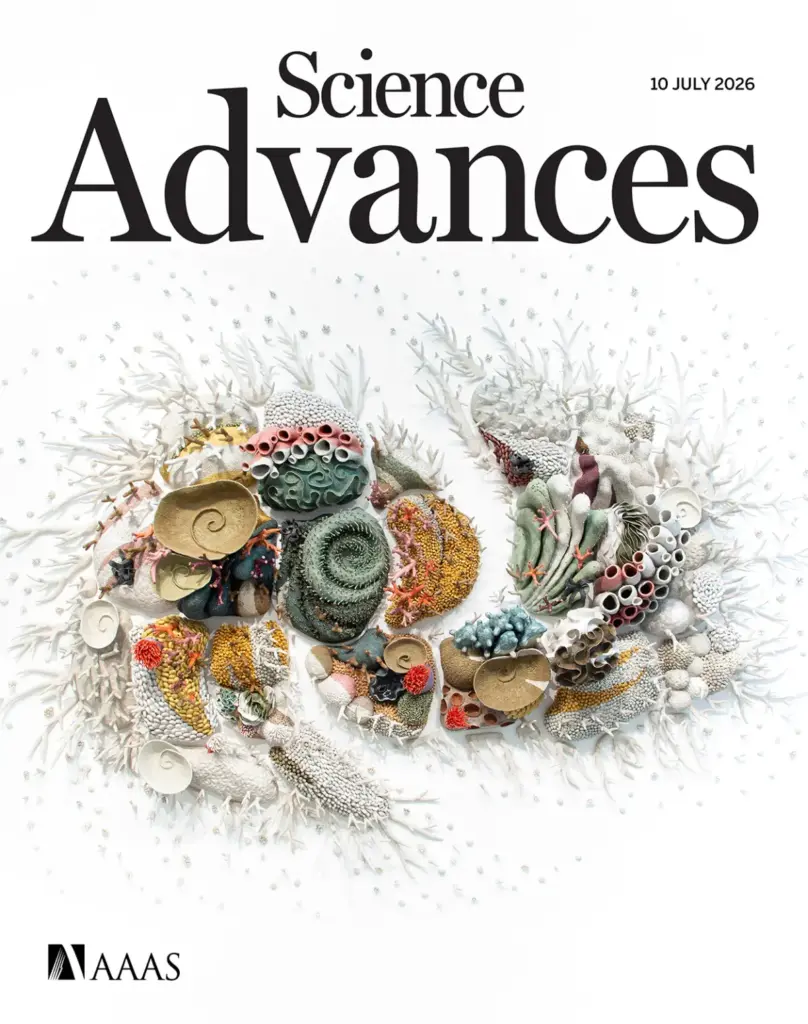
A groundbreaking new article published in the prestigious journal Science Advances argues that saving the world’s coral reefs requires a fundamental paradigm shift. To bridge the widening chasm between empirical data and public apathy, conservationists must enlist unlikely allies: artists, designers, storytellers, and community-led activists. By harnessing the power of creative expression, human emotion, and cultural resonance, this multidisciplinary approach aims to transform abstract scientific metrics into visceral, unforgettable experiences.
Spearheaded by a coalition of prominent voices, including legendary oceanographer Dr. Sylvia Earle, the initiative calls for unprecedented collaboration among marine scientists, creative professionals, policymakers, educators, and Indigenous and coastal communities. At the heart of this movement is the newly established Coral Art-Science Consortium (CASC), a global network designed to connect creative projects, amplify public engagement, and spark a shared cultural movement for reef conservation. This comprehensive report explores the genesis of this movement, the alarming decline of global reefs, the intersection of data and design, and the roadmap for transforming human curiosity into measurable environmental action.
Detailed Chronology: The Evolution of Coral Conservation and Creative Intervention
To understand the urgency of the Science Advances publication, one must trace the timeline of how humanity has perceived, studied, and ultimately neglected its marine environments.
Phase 1: The Era of Silent Degradation (Late 20th Century)
For decades, coral reef research was siloed within the academic community. Marine biologists documented coral bleaching events, ocean acidification, and the loss of biodiversity, publishing their findings in peer-reviewed journals. However, these technical documents largely remained behind paywalls, failing to penetrate the public consciousness. While pioneers like Jacques Cousteau brought the vibrant beauty of the underwater world into living rooms through television, the prevailing cultural narrative viewed the ocean as an infinite, resilient expanse capable of absorbing endless human impact.
Phase 2: The Acceleration of Climate Crises (2010–2020)
As global carbon emissions surged, the frequency and severity of marine heatwaves escalated dramatically. The global mass bleaching events of 2014–2017 devastated iconic locations like the Great Barrier Reef, the Caribbean, and parts of the Indian Ocean. Scientists raised louder alarms, utilizing sophisticated remote sensing and predictive modeling to warn of systemic ecological collapse. Despite these efforts, public policy lagged behind the science. Decision-makers struggled to translate complex statistical models of coral mortality into urgent legislative action, hampered by a lack of emotional and cultural connection between voters and the distant, unseen marine world.
Phase 3: The Interdisciplinary Turning Point (2020–Present)
Recognizing that traditional science communication was falling short, forward-thinking researchers began experimenting with unconventional mediums. Photographers, sculptors, and immersive digital artists started collaborating with marine laboratories to visualize ecological data.
The publication in Science Advances marks a watershed moment in this evolution. It elevates art and storytelling from peripheral "nice-to-have" educational tools to core pillars of conservation strategy. By formalizing this approach through initiatives like the Coral Art-Science Consortium, the movement transitions from isolated creative experiments to a coordinated global strategy, uniting scientists and artists on an international stage.
Supporting Context & Metrics: The Scale of the Crisis and the Power of Perception
The Ecological Emergency
The numbers detailing the decline of coral reefs are staggering and demand immediate attention. According to global environmental assessments:
- The 50% Decline: Over the past three decades, the world has already lost approximately half of its live coral cover.
- The 90% Threat: Climate projections indicate that up to 90% of all coral reefs could be severely degraded by 2050 if greenhouse gas emissions continue on their current trajectory.
- Biodiversity Hotspots: While coral reefs cover less than 0.1% of the ocean floor, they provide a habitat for at least 25% of all marine species, making them irreplaceable anchors of global marine biodiversity.
- Socioeconomic Impacts: Hundreds of millions of people worldwide rely directly on coral reefs for food security, coastal protection against storm surges, and economic sustenance through tourism and fisheries.
The Psychology of Apathy
Why have these catastrophic statistics failed to trigger a global mobilization comparable to terrestrial climate movements? Psychologists and conservation communication experts point to several cognitive barriers:
- Out of Sight, Out of Mind: Unlike deforestation or plastic pollution on beaches, the most severe coral degradation occurs beneath the surface, hidden from the daily view of the average citizen.
- Data Fatigue: Long-term graphs detailing rising sea surface temperatures and dropping pH levels often induce cognitive overload rather than urgency.
- The Empathy Gap: Purely quantitative data appeals to the intellect, but human beings make profound behavioral and political decisions based on emotion, identity, and cultural values.
How Art Fills the Gap
Art, design, and storytelling bypass these cognitive barriers. By translating abstract metrics into visual, tactile, and emotional encounters, creative interventions make the invisible visible. A life-sized sculpture submerged to form an artificial reef, an immersive virtual reality dive into a bleached reef, or an Indigenous oral history performance about changing coastlines does something data cannot: it forces the observer to feel. When people feel connected to an ecosystem, curiosity naturally transforms into empathy, and empathy into advocacy.
Official Statements and Expert Perspectives
The authors of the Science Advances article emphasize that saving coral reefs requires dismantling traditional boundaries between disciplines.
"We can no longer afford to treat art and science as separate languages," notes Dr. Sylvia Earle, legendary oceanographer, National Geographic Explorer-in-Residence, and co-author of the study. "The ocean sustains all life on Earth, yet much of it remains an alien concept to the people whose very survival depends upon it. Artists possess the extraordinary ability to translate the cold facts of science into a language of the heart. When we combine empirical rigor with creative storytelling, we give people a reason to care deeply enough to fight for our blue planet."
Other leading conservationists and researchers involved in the Coral Art-Science Consortium echo this sentiment, stressing the imperative of inclusive collaboration.
"For too long, conservation has been top-down—scientists telling policymakers what is wrong, with little engagement from the communities living closest to the water," states a lead coordinating author of the Science Advances paper. "Our framework demands a radical democratization of conservation. We must weave together cutting-edge marine science, the creative vision of artists and designers, the wisdom of Indigenous and coastal communities who have managed marine resources for generations, and the pragmatism of policymakers."
Cultural theorists within the consortium point out that environmental movements throughout history have always relied on cultural shifts to achieve legislative and societal success. From the landscape paintings that inspired the creation of national parks in the 19th century to modern environmental cinema, culture has consistently paved the way for policy.
Future Outlook: The Roadmap for the Coral Art-Science Consortium
As the Coral Art-Science Consortium launches its global campaign, its strategic vision focuses on several core objectives designed to maximize impact over the coming decade:
1. Expanding Public Engagement and Immersive Exhibits
The consortium plans to deploy global art installations, interactive museum exhibits, and virtual reality experiences that bring the sensory reality of coral reefs into urban centers, landlocked communities, and international policy summits. By meeting the public where they are, these projects aim to engage millions of new advocates who have never set foot on a tropical beach.
2. Strengthening Indigenous and Coastal Partnerships
Recognizing that local and Indigenous communities are the ultimate stewards of many of the world’s remaining healthy reefs, the initiative prioritizes co-created projects. These efforts will blend traditional ecological knowledge with modern marine science and community-led storytelling, ensuring that conservation efforts honor cultural heritage and local sovereignty.
3. Influencing Policy Through Cultural Momentum
Translating public inspiration into tangible political action remains a primary goal. By building a unified cultural movement around reef conservation, the consortium aims to pressure governments and international bodies to enact stronger marine protections, restrict destructive coastal development, enforce sustainable fishing quotas, and accelerate global commitments to carbon neutrality.
4. Fostering Cross-Disciplinary Education
Future generations of scientists and artists must be trained to think across traditional boundaries. The consortium is advocating for academic curricula that integrate creative arts into environmental science programs, and conversely, environmental literacy into art and design schools.
Conclusion
The decline of the world’s coral reefs is not merely an ecological tragedy; it is a profound failure of imagination and communication. While science has accurately diagnosed the disease plaguing our oceans, it requires the transcendent power of art, design, and storytelling to awaken the global conscience. Through the collaborative framework outlined in Science Advances and championed by the Coral Art-Science Consortium, humanity has a vital roadmap to bridge the gap between knowing and doing. By uniting the precision of data with the passion of human creativity, we can move society from curiosity to inspiration—and from inspiration to the urgent, decisive action required to save our coral reefs before it is too late.