Executive Overview
For decades, the romanticism of American rail travel has been quietly undermined by the harsh reality of aging infrastructure. Passengers gazing out the windows at the stunning vistas of the Pacific Northwest, the historic charm of New England, or the bustling corridors of the Mid-Atlantic have frequently done so from rolling stock originally manufactured in the 1970s. While these vintage cars carry a certain nostalgic appeal, they represent an operational bottleneck for a nation desperately seeking faster, cleaner, and more reliable transportation alternatives to congested highways and crowded airports.
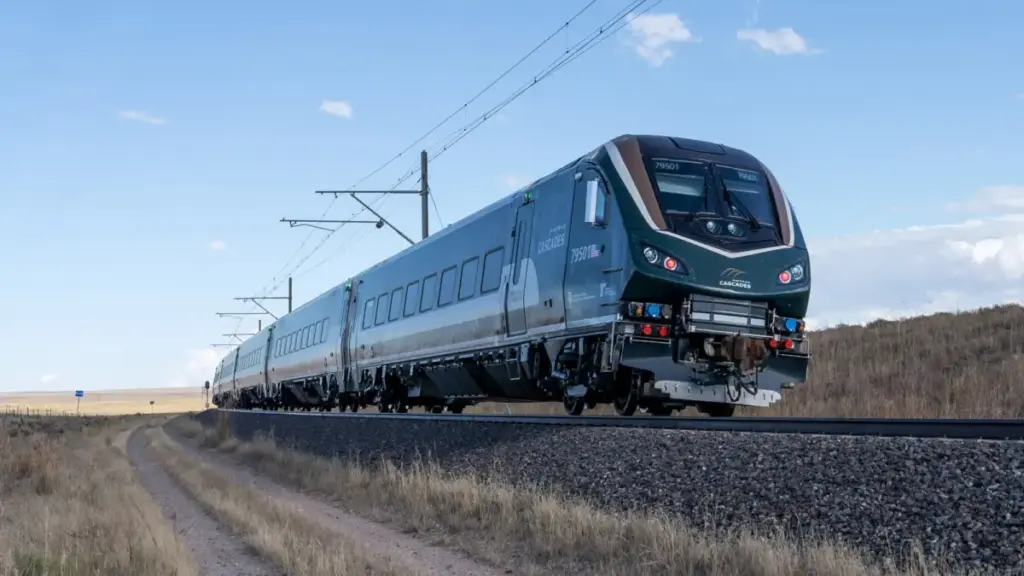
That narrative is finally beginning to shift. This fall, Amtrak is set to officially roll out the first of 83 brand-new, state-of-the-art trainsets known as Airo. Representing a massive $8 billion capital investment, the Airo initiative is designed to fundamentally redefine the passenger rail experience across more than a dozen key routes nationwide. From the Cascades route connecting Seattle, Portland, and Vancouver, to the complex cross-jurisdictional tracks spanning from Virginia through the Northeast Corridor, these new trains promise increased passenger capacity, greater fuel efficiency, higher operating speeds, and a much-needed aesthetic and ergonomic modernization.
Yet, this renaissance in American passenger rail arrives at a remarkably complex and politically fraught crossroads. While the Biden administration injected historic momentum into the sector through a $66 billion infusion via the Infrastructure Investment and Jobs Act—complemented by an additional $3 billion in recent U.S. Department of Transportation (USDOT) grants—the incoming Trump administration has signaled severe proposed cuts to public transit and federal rail subsidies.
Despite these shifting political winds, Amtrak is charging forward on a wave of unprecedented consumer demand, having recently celebrated back-to-back record-breaking ridership years. The debut of the Airo fleet—alongside last summer’s launch of the NextGen Acela trains—signals that the mechanical backbone of America’s train network is finally getting the upgrade it needs to survive and thrive in the 21st century.
Detailed Chronology: The Road to Modernization
The journey toward the Airo fleet is decades in the making, reflecting a long history of underinvestment in U.S. passenger rail infrastructure contrasted with bursts of strategic legislative action and procurement.
The Legacy Era and Decades of Deferred Maintenance
For the latter half of the 20th century and well into the 21st, Amtrak’s rolling stock aged gracefully—too gracefully. By the 2010s, a significant portion of the carrier’s regional fleet relied on locomotives and passenger cars that had been in service since the 1970s and 1980s. Mechanical breakdowns, slow acceleration, and compatibility issues between diesel and electric segments made cross-state journeys unnecessarily prolonged and prone to delays. The physical infrastructure suffered from a lack of federal prioritization, leaving passenger rail playing second fiddle to the massive, multi-billion-dollar highway expansions championed throughout the mid-to-late 1900s.
The Bipartisan Infrastructure Law and a Paradigm Shift
The modern turning point arrived with the passage of the Infrastructure Investment and Jobs Act under the Biden administration. This landmark legislation unlocked a historic $66 billion for passenger and freight rail modernization across the United States. It provided the financial bedrock required for multi-year capital projects, enabling Amtrak to commit to massive equipment orders that had been sidelined for generations.
Procurement, Manufacturing, and Federal Grants
To bring the vision to life, Amtrak partnered with Siemens to manufacture the new Airo trainsets domestically. Designed to be versatile, modular, and environmentally compliant, these trains entered the manufacturing pipeline with high expectations. In August, the federal government underscored its ongoing commitment by awarding nearly $3 billion in USDOT grants directly to Amtrak, allocating $2 billion specifically toward purchasing new trains and upgrading nationwide service reliability.
The Rollout Schedule: Fall 2026 and Beyond
- Fall 2026: The rollout officially commences on the Pacific Northwest’s scenic Cascades route, introducing the first eight Airo trainsets to passengers traveling between Seattle, Portland, and Vancouver, B.C.
- Summer 2027 and Beyond: The expansion continues eastward. Passengers on the heavily trafficked Northeast Regional route—particularly those traveling between Virginia and the Northeast—will experience the new trains firsthand, eliminating historic operational delays and streamlining cross-system journeys. Additional routes across New England, Pennsylvania, and the Mid-Atlantic will follow in subsequent phases.
Supporting Context & Metrics: Efficiency, Emissions, and Economics
To understand why the $8 billion Airo investment matters, one must examine the fundamental physics and environmental economics of mass transit.
Rail Efficiency and Energy Demands
According to data compiled by the International Energy Agency (IEA), rail transport accounts for roughly 8 percent of the world’s passengers, yet it consumes a mere 2 percent of global transportation energy demand. This stark mathematical disparity highlights the inherent efficiency of moving human beings collectively rather than individually.
Dr. Alex Scott, a professor of supply chain management at the University of Tennessee-Knoxville, emphasizes that mass transit maintains a profound environmental advantage over private automobiles, even as the automotive sector transitions toward electrification.
"If you can get a fully well-utilized rail car, be it humans or products, those are still more efficient than everybody going in different cars, even if they’re electric cars," Dr. Scott explains.
While consumer adoption of electric vehicles (EVs) is expanding, individual car ownership still contributes heavily to urban congestion, tire-wear microplastic pollution, parking infrastructure sprawl, and the staggering energy costs associated with manufacturing millions of individual battery packs.
Navigating Dual Propulsion: Hybrid Innovation
A major engineering hurdle in American rail has historically been the fragmented nature of the grid: certain stretches require electrified overhead catenary wires, while others rely entirely on diesel locomotives.
The Siemens-built Airo trainsets solve this complexity through a flexible dual-propulsion design. Capable of operating on both conventional diesel tracks and electrified corridors, these trains can seamlessly transition power sources on the fly.
This capability will have a dramatic operational impact in places like Union Station in Washington, D.C. Currently, northbound trains traveling from Virginia must pause for up to an hour while crews physically swap out the southern diesel locomotive for a northern electric engine to continue toward Boston. The Airo fleet eliminates this cumbersome bottleneck, slashing dwell times and smoothing out inter-state transit corridors.
Environmental Compliance: The Tier 4 Standard
Even when operating on diesel power, the Airo locomotives represent a monumental leap forward in environmental stewardship. These engines meet the strict Tier 4 emissions standards enforced by the U.S. Environmental Protection Agency (EPA)—the most rigorous regulatory benchmark ever applied to locomotive engines. By dramatically reducing particulate matter and nitrogen oxide emissions, the new hardware ensures that even non-electrified routes operate at a fraction of the environmental footprint produced by older, legacy machinery.
Official Statements and Stakeholder Perspectives
The transition to the Airo fleet has garnered enthusiastic support from regional transit authorities, passenger advocacy groups, and supply chain experts alike.
The Passenger Advocacy Perspective: All Aboard Washington
For commuters like Charlie Hamilton, who leads the train advocacy organization All Aboard Washington, the allure of rail travel is twofold: breathtaking natural scenery and the unmistakable psychological satisfaction of gliding past bumper-to-bumper highway traffic.
On regular runs along the Puget Sound coast and through the Skagit Valley—where Mount Rainier looms majestically on clear days—Hamilton notes the profound irony that the most striking visual is often the crawl of traffic on Interstate 5.
"It’s nice to be able to be going along there and going faster than what people on Interstate Five are doing. We kind of like that bit," Hamilton remarks.
Beyond scenic enjoyment, Hamilton views the Airo rollout as an essential catalyst for systemic schedule improvements. Right now, regional service frequency remains constrained by equipment availability.
"Having trains once an hour would be very helpful, and the Airo trainsets would make it possible to do that," he adds.
State-Level Investments: Virginia’s Vision
The excitement is equally palpable on the East Coast, where states are investing heavily in parallel infrastructure to maximize the value of the new rolling stock. The Commonwealth of Virginia, through the Transforming Rail in Virginia initiative, has poured a staggering $6 billion into track upgrades, bridge expansions, and capacity improvements.
Karina Romero, a spokesperson for the Virginia Passenger Rail Authority, stresses that infrastructure alone is insufficient without the modern machinery required to utilize it effectively.
"You can put down fabulous infrastructure and great tracks," Romero notes, "but you’ve definitely got to have the equipment to roll on."
Highlighting the regional impact, Romero emphasizes the dual benefits of the upcoming upgrades: "It’s a win for the environment, it’s a win for the people that are sitting in traffic. We definitely want more trains in Virginia."
Future Outlook: Challenges and Opportunities Ahead
As Amtrak prepares to deploy the Airo fleet, the path forward is marked by a fascinating juxtaposition of record-breaking consumer demand and intense political friction.
The Ridership Boom Versus Political Headwinds
Amtrak enters this new era riding an unprecedented wave of public enthusiasm, having officially set historic ridership records for two consecutive years. American travelers are increasingly seeking alternatives to airport security lines, flight cancellations, and highway gridlock.
However, this momentum faces direct policy challenges. The Trump administration has proposed deep, severe cuts to federal public transit and passenger rail funding. These proposed reductions create a complex budgetary landscape for a public-private transit provider that relies heavily on federal appropriations to maintain capital improvement schedules, bridge repairs, and track maintenance.
Sustaining Momentum Through Strategic Grants
Despite federal budget debates, the long-term structural trajectory of American rail is increasingly tied to regional coalitions and targeted federal grants. The recent distribution of $3 billion in USDOT funds demonstrates that federal recognition of rail’s economic and environmental necessity persists across administrative shifts.
By upgrading to the Airo fleet—which boosts passenger capacity on the Cascades route to 317 seats per train, introduces ergonomic seating, improves Wi-Fi connectivity, and reaches top speeds of 125 mph—Amtrak is working to prove its undeniable value proposition to taxpayers and lawmakers alike.
The Ultimate Destination
Ultimately, the success of the Airo initiative will be measured not just in reduced carbon emissions or shortened transit times, but in its ability to fundamentally alter how Americans conceptualize domestic travel. If Amtrak can deliver on its promise of hourly regional departures, seamless diesel-to-electric transitions, and modern, reliable comfort, the sight of cars inching along the highway while a sleek, high-speed train glides smoothly past may finally transform from a regional anomaly into the standard American commuting experience.