Executive Overview
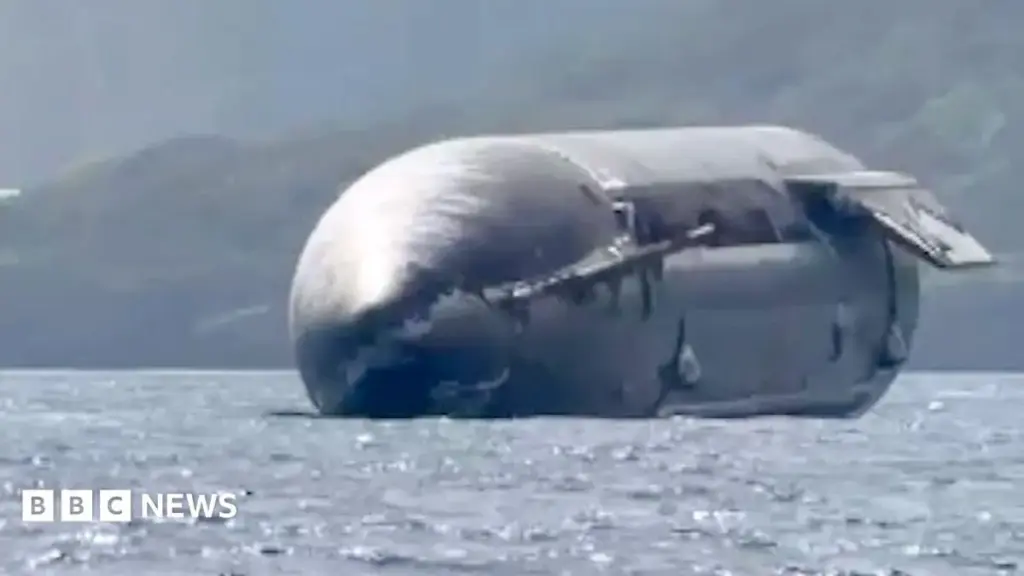
In a stunning convergence of modern aerospace ambition and remote island isolation, a 52-metre-long SpaceX rocket stage has made an unexpected landfall in the territorial waters surrounding Christmas Island. The massive piece of hardware, which completed a trans-hemispheric journey following a high-altitude test flight launched from SpaceX’s Starbase facility in Boca Chica, Texas, touched down in the remote expanses of the Indian Ocean before being spotted by local residents.
The arrival of the charred and battered aerospace debris on July 24 has transformed the tranquil Australian external territory into an impromptu site of intense public curiosity and international interest. For the island’s residents, the surreal sight of a commercial spacecraft being towed through turquoise tropical waters bridges the gap between science-fiction imagination and daily reality. However, beneath the local excitement lies a complex web of regulatory, environmental, and geopolitical questions concerning the disposal of commercial space launch hardware in international and sovereign maritime zones.
This unexpected trans-oceanic transit highlights the rapidly evolving realities of the New Space economy. As private spaceflight operators accelerate their testing schedules and increase launch frequencies, the physical footprint of these operations is increasingly felt far beyond traditional splashdown zones and designated recovery corridors. The incident near Christmas Island serves as a vivid case study in the logistical challenges of suborbital and orbital flight testing, exposing the vulnerabilities and infrastructural deficits facing remote communities situated beneath modern flight trajectories. Through a detailed examination of the chronology, official responses, and broader industry metrics, this report investigates the implications of the Christmas Island recovery and what it signals for the future of commercial space exploration.
Detailed Chronology: From Texas Launchpad to the Indian Ocean
To understand how a piece of advanced aerospace hardware from South Texas ultimately came to rest thousands of miles away in the Indian Ocean, one must trace the timeline of the July 24 test flight and its subsequent descent profile.
Phase One: Ignition and Ascent at Starbase
The sequence began at SpaceX’s state-of-the-art development and manufacturing facility, colloquially known as Starbase, situated on the shores of Boca Chica, Texas. Months of meticulous pre-flight preparations, static fire tests, and regulatory reviews culminated in the ignition sequence on the morning of launch. The vehicle, engineered to test critical aerodynamics, thermal protection systems, and stage-separation mechanics, thundered off the pad, piercing the Texas sky and heading eastward over the Gulf of Mexico.
Throughout the ascent phase, flight controllers in Hawthorne, California, and telemetry stations across the globe monitored the vehicle’s structural integrity and propulsion metrics. The mission objectives demanded rigorous stress-testing of the rocket’s hull under maximum dynamic pressure ($Max-Q$) and extreme thermal loads. While SpaceX has grown accustomed to executing precision vertical landings on land and ocean-going drone ships closer to home for its operational Falcon fleet, experimental prototypes often follow destructive or semi-controlled expendable flight profiles designed to gather maximum empirical data rather than preserve the airframe.
Phase Two: The Trans-Atmospheric Arc and Controlled Descent
Following the completion of its primary test objectives, the vehicle initiated its descent trajectory. Given the nature of suborbital and high-velocity atmospheric re-entry profiles, the upper stages of such test flights are subjected to temperatures exceeding 1,500 degrees Celsius. As the vehicle plummeted back toward Earth, it traversed multiple layers of the atmosphere, shedding non-essential components and enduring intense plasma friction that scorched its stainless-steel exterior into a mosaic of dark hues.
Unlike orbital flights that require precise retro-burns to achieve targeted ocean splashdowns in designated zones like the Gulf of Mexico or the Pacific Ocean off Baja California, this specific test vehicle followed a trajectory that carried it across the globe. Telemetry tracking indicates that the vehicle successfully executed its terminal descent maneuvers, culminating in a high-velocity splashdown in the remote waters of the Indian Ocean.
Phase Three: Maritime Drift and the Christmas Island Discovery
Once in the water, the 52-metre structure—buoyant in sections due to empty internal propellant tanks and sealed compartment geometry—began to drift under the influence of prevailing Indian Ocean currents and trade winds. For days, the massive cylindrical artifact traversed thousands of nautical miles of open ocean, entirely undetected by commercial maritime traffic, until it drifted within sight of Christmas Island.
The morning commute for David Watchorn, chair of the Christmas Island Tourism Association, was disrupted by this maritime anomaly. Initially scanning the horizon and assuming he was looking at conventional shipping vessels or standard maritime infrastructure along his usual route, Watchorn experienced a jarring cognitive shift as the scale and silhouette of the object resolved themselves.
"I initially thought I was looking at ships on my way to work, before realising it was ‘a rocket, a space rocket’ being towed," Watchorn recounted in an interview with the BBC.
The realization quickly spread across the isolated community of roughly 1,500 residents. The 52-metre-long structural remnant—representing a staggering feat of modern engineering rendered docile by the unforgiving forces of atmospheric re-entry—immediately became the focal point of island life.
Supporting Context & Metrics: The Scale of Modern Aerospace Debris
The appearance of the SpaceX hardware off Christmas Island is not an isolated incident, but rather a symptom of an industry undergoing exponential scaling. To contextualize the event, one must examine the physical dimensions of the hardware, the mechanics of modern rocket recovery, and the sheer volume of material currently traversing the stratosphere.
Dimensional Breakdown of the Recovered Hardware
- Total Length: Approximately 52 metres (comparable to the height of a 17-story building).
- Material Composition: Advanced austenitic stainless steel alloys chosen for cryogenic structural integrity and high-temperature thermal resilience.
- Structural State: Heavy thermal scorching, localized buckling from atmospheric compression, and salt-water corrosion indicators consistent with prolonged maritime immersion.
- Mass Estimation: Estimated dry structural weight in the tens of metric tons, requiring specialized heavy-lift marine towing equipment for secure salvage operations.
The Geography of Test Flight Corridors
SpaceX’s operational cadence has surged dramatically over the past half-decade. With Starbase serving as the epicenter for next-generation heavy-lift vehicle development, the Atlantic and Pacific oceans have historically absorbed the vast majority of developmental debris. However, as test parameters expand to evaluate global-scale suborbital hops and orbital insertion profiles, the footprint of splashdown zones has naturally widened.
The Indian Ocean represents a massive, sparsely populated maritime basin that has occasionally served as a receptacle for space debris, including historical satellite bus re-entries and upper-stage rocket bodies from various international space agencies. Yet, the introduction of massive, privately owned commercial rocket stages into these waters signals a new era of maritime governance challenges. Unlike government programs governed by intergovernmental treaties on space debris liability (such as the 1972 Space Liability Convention), private aerospace entities must navigate complex commercial maritime laws, salvage rights, and local sovereign jurisdictions when their hardware makes unannounced visits to foreign shores.
Local Economic and Social Impact
For Christmas Island—an Australian external territory located roughly 350 kilometres south of Java, Indonesia, and 1,550 kilometres northwest of the Australian mainland—the arrival of the rocket provided a surreal disruption to daily routines.
Local workers reportedly "sneaked out" of their professional commitments to catch a glimpse of the aerospace titan moored or towed near the coastline. Recreational boat owners scrambled to prepare their vessels, eager to navigate out for a closer inspection of the charred debris before official salvage teams could secure the perimeter.
- "It’s really incredible to think about what it’s been through," Watchorn observed. Heinrich’s sentiment echoes the broader psychological fascination of the public when confronted with the physical remnants of space exploration.
- "The more and more you look at it, the more fascinating it’s becoming."
This fascination underscores a broader cultural phenomenon: the democratization and physical decentralization of the space race. Space is no longer an abstract concept confined to television screens or distant orbital planes; for the residents of Christmas Island, it literally washed up on their doorstep.
Official Statements and Regulatory Responses
The sudden appearance of foreign aerospace debris in Australian territorial waters has inevitably triggered responses from local authorities, federal agencies, and corporate representatives.
Local Authorities and Community Management
The Christmas Island Tourism Association, while captivated by the novelty, quickly pivoted to managing public safety and maritime logistics. With amateur boaters attempting to approach the drifting debris, local marine safety officials issued informal advisories warning citizens of potential hazards. Structural instability, sharp jagged metal edges resulting from high-speed atmospheric shear forces, and residual toxic composite materials or unspent propellants necessitate strict safety perimeters around unverified space hardware.
David Watchorn emphasized that while the community welcomed the tourism spark and conversational windfall generated by the rocket, the primary concern remains the safe and expeditious resolution of the salvage operation. Local government bodies have been in communication with federal maritime authorities to establish jurisdiction over the floating artifact.
National and International Regulatory Implications
Under international maritime law, specifically the concepts governing derelict property and salvage, the ownership of commercial space hardware remains vested in the launching entity—in this case, SpaceX. However, when such hardware enters the territorial waters of a sovereign nation (within 12 nautical miles of the coastline), national maritime agencies and defense departments hold primary jurisdiction over navigation hazards and environmental protection.
The Australian Maritime Safety Authority (AMSA), alongside the Australian Space Agency, has reportedly initiated inquiries into the trajectory and unannounced maritime drift of the rocket stage. While bilateral agreements and international frameworks govern outer space activities, the terrestrial recovery of space debris within sovereign maritime zones often exposes regulatory gray areas. Questions regarding who bears the financial and logistical burden of marine cleanup, environmental impact assessments, and navigational hazard mitigation are increasingly pressing as commercial launches proliferate.
SpaceX’s Corporate Posture
SpaceX, known for its agile engineering culture and notoriously tight-lipped public relations apparatus, has coordinated quietly with local and international contractors to arrange for the secure retrieval and repatriation of the structural components. While the company routinely recovers boosters and fairings off the coast of Florida and California, recovering unpowered, drifting hardware in the remote Indian Ocean presents a unique logistical hurdle.
Industry analysts note that recovering these structural test articles is vital for SpaceX’s iterative engineering process. Destructive analysis of flown hardware—examining how specific alloy welds held up against plasma heat, how thermal protection tiles degraded, and where structural fatigue concentrated during re-entry—provides irreplaceable empirical data that computer simulations simply cannot replicate.
Future Outlook: The New Frontier of Space Debris Management
The Christmas Island incident is far more than a quirky news item; it is a harbinger of the logistical, environmental, and regulatory challenges that will define the next decade of commercial space exploration.
Scaling Challenges for Private Spaceflight
As launch providers increase their flight rates from dozens to hundreds per year, the volume of suborbital and orbital hardware returning to Earth will expand exponentially. Even with advanced design paradigms aimed at full reusability, early-generation testing models, structural components shed during staging, and off-nominal trajectory outcomes will inevitably result in debris entering marine and terrestrial environments.
The current paradigm relies heavily on statistical probability models that designate remote ocean sectors—such as the "Spacecraft Cemetery" in the South Pacific Ocean—as targeted impact zones. However, as the Christmas Island event demonstrates, atmospheric variables, wind shear, and high-altitude aerodynamic anomalies can cause massive hardware to deviate significantly from projected footprints.
The Need for Enhanced Tracking and Notification Protocols
Moving forward, international aviation and maritime authorities will likely demand more robust tracking and advance notification protocols for suborbital test flights that traverse intercontinental airspace and marine corridors. The ability of a 52-metre rocket stage to drift undetected into populated island shipping lanes highlights a potential vulnerability in global maritime safety systems.
Space agencies and private operators alike will need to invest in enhanced telemetry beacons, active transponders designed to survive re-entry shock, and automated notification systems that alert international maritime traffic control centers the moment an uncontrolled or semi-controlled stage touches down in open water.
Environmental Stewardship in the Oceans
Environmental groups and marine biologists are also raising concerns regarding the long-term ecological impact of aerospace debris entering vulnerable marine ecosystems. The presence of specialized carbon composites, heavy metal alloys, ablative thermal protection coatings, and residual chemical residues in pristine tropical waters necessitates rigorous environmental impact monitoring. Ensuring that private aerospace firms are held legally and financially accountable for the complete retrieval and remediation of their hardware is paramount to preventing the world’s oceans from becoming an unregulated industrial junkyard for the cosmos.
Conclusion
The arrival of the SpaceX rocket off Christmas Island captures the duality of our current technological moment. It is a testament to human ingenuity, audacious engineering, and the relentless drive to push the boundaries of flight. Yet, it is simultaneously a stark reminder of the physical externalities produced by our ascent into the stars. As the debris is secured, towed away, and eventually subjected to forensic analysis back in the laboratory, the ripples of this extraordinary event will continue to resonate through boardrooms, regulatory halls, and island communities alike—forcing a serious reckoning with how we manage the terrestrial footprint of our cosmic ambitions.