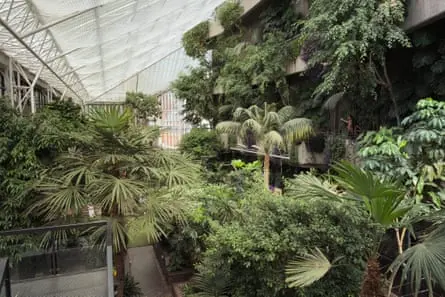
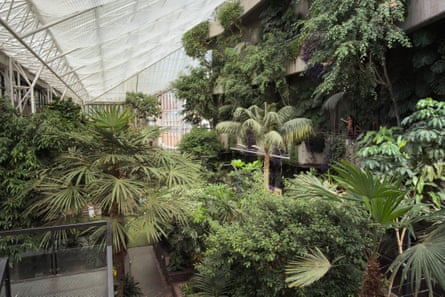
Beneath the towering, brutalist concrete forms of London’s iconic Barbican Estate, a quiet botanical drama is unfolding. Suspended high above waxy Monstera leaves and vibrant pink hibiscus flowers, industrial safety netting now serves as a precarious canopy, deployed to catch aging glass panes at risk of detaching from the greenhouse ceiling. This structural vulnerability has forced the estate to shutter its famed third- and fourth-floor conservatory for an extensive, three-year hiatus as part of a landmark £231 million revitalization programme.
Yet, this temporary closure has birthed an unexpected cultural phenomenon. Rather than allowing the estate’s diverse horticultural collection to languish during the multi-year shutdown, the Barbican launched an imaginative "plant adoption" scheme. The initiative invites members of the public, local residents, and urban botanists to claim cuttings from the conservatory’s historic species.
Complete with tongue-in-cheek "adoption forms" styled after pet-ownership paperwork, the events have sparked an immediate, viral sensation across social media. For the hundreds of participants who secured rare tickets—which vanished online almost instantaneously—the program offers a tangible connection to a cherished Brutalist sanctuary. As the estate prepares for a comprehensive overhaul to fix chronic leaks, modernize failing climate-control systems, and finally make the elevated glasshouse fully accessible, this community-driven lifeline ensures that the spirit of the Barbican conservatory will live on in hundreds of living rooms across London until its grand reopening in 2030.
Detailed Chronology: The Closure and the Cuttings
The path to the conservatory’s temporary closure and subsequent plant-sharing initiative is rooted in decades of environmental wear and tear on a mid-century architectural masterpiece.
The Realization of Structural Necessity
For years, regular visitors to the Barbican conservatory noted its slightly weathered charm. However, behind the lush, jungle-like aesthetic, facility managers grappled with compounding infrastructural failures. Decades of exposure to shifting weather patterns, compounded by London’s increasingly intense summer heatwaves, placed immense thermal stress on the Victorian-style glass and steel framework. Water began leaking persistently through the ceiling panels, threatening not only the botanical collections below but also the lower cultural spaces nestled within the sprawling arts complex.
By late 2025, the situation reached a tipping point. Safety protocols necessitated the installation of overhead containment nets to protect visitors from falling glazing. Estate leadership realized that piecemeal repairs were no longer viable. A holistic intervention was required, prompting the difficult decision to close the conservatory doors for a major multi-year redevelopment.
The Launch of the Adoption Scheme
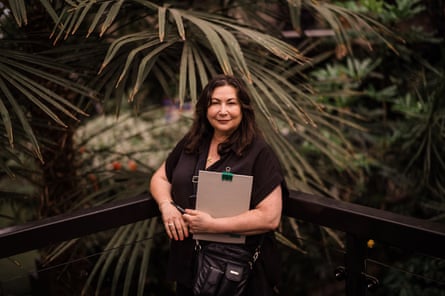
Faced with the logistical challenge of housing, pruning, and preserving thousands of tropical and subtropical plants during a protracted construction phase, head gardener Marta Lowcewicz and her team devised a creative solution. Instead of discarding surplus foliage or over-crowding temporary holding greenhouses, they decided to share the collection with the community.
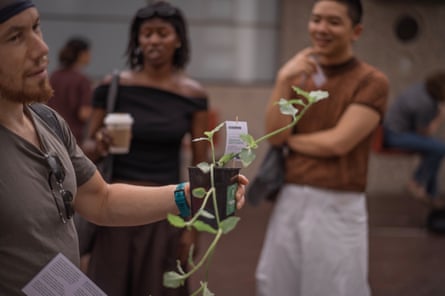
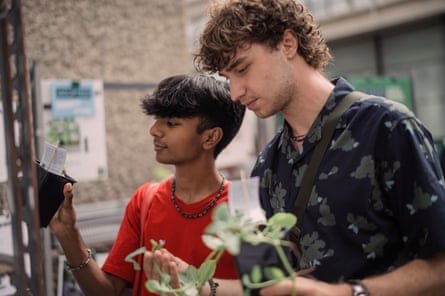
The inaugural adoption event, held on a brisk Wednesday morning, drew 500 eager participants who queued patiently through the brutalist concrete courtyards. Registration tickets released online vanished within minutes, setting off a viral wave of excitement across digital platforms. Attendees were greeted by staff, equipped with clipboards, and guided through a tongue-in-cheek adoption process designed to mirror the legalities and emotional commitment of adopting a domestic pet.
Subsequent events are planned to scale up the distribution, ensuring that a total of 1,500 individual cuttings find new homes across the capital. Far from a routine horticultural clear-out, the event transformed into a celebration of urban resilience, community bonding, and shared architectural heritage.
Supporting Context & Metrics: Architecture, Climate, and Community
To fully understand the gravity of the Barbican conservatory’s closure, one must examine the intersection of its unique architecture, changing environmental pressures, and deep-seated community ties.
The Architectural Context
Opened in 1982, the Barbican Estate stands as a towering monument of Brutalist architecture, designed by Chamberlin, Powell and Bon. The conservatory—housed above the estate’s theatre fly tower—was originally conceived as a lush, tropical oasis to soften the imposing, raw concrete textures of the residential towers and cultural venues.
The botanical collection was curated to complement these monumental lines. Head gardener Marta Lowcewicz notes that future curation will lean heavily into selecting plants with "big, bold leaves" that visually harmonize with the surrounding concrete structures, bridging the gap between organic wilderness and geometric harshness.
Climate Pressures in Modern London
When the conservatory was constructed in the 1960s and 70s, London’s climate was markedly different. In recent years, however, the British capital has experienced unprecedented heatwaves—enduring upwards of five severe heat events in recent summers alone.
The conservatory’s legacy climate-control and irrigation systems have struggled to keep pace with these elevated temperatures, leaving many exotic species "rough around the edges." The upcoming refurbishment includes state-of-the-art environmental management technology that will stabilize internal temperatures, optimize water usage, and ensure the long-term health of the botanical specimens.
Participant Demographics and Botanical Selections
The public response underscored the profound emotional attachment Londoners hold for the space:
Lydia Goldberg (56): A tech worker and resident whose bedroom window overlooks the conservatory, she was among the first to secure a silvery-green Swedish ivy, praising the event as a vital neighborhood gathering.
Geoffrey (36): A spatial designer who selected a white velvet plant reminiscent of his former home in Mexico, celebrating the chance to own a physical piece of his favorite building.
Savannah (33) & Maria (30): Representing a younger demographic of urban professionals, Savannah chose a soft-textured Peperomia, while Maria selected a trailing purple heart plant—her first non-green houseplant—earmarking it for her living room bookshelf.
Stella (88): A long-term Barbican resident who selected a Benghal dayflower featuring "secret blue flowers." Having previously donated her own overgrown Monstera to the conservatory years prior, Stella joked that she hoped estate workers wouldn’t try to return her old plant during the clear-out.
Official Statements: Leadership Perspectives
The transition of the conservatory represents a critical juncture for the Barbican’s overarching institutional strategy. Dr Philippa Simpson, the chief operating officer of the Barbican, addressed the complexities of managing such a beloved public asset during a period of extensive transformation.
"It’s a green lung of the city," Dr Simpson explained, emphasizing the emotional and ecological weight of the restoration project. "We are undertaking a massive restoration of it because it was in urgent need of rescue. We have nets up to deal with falling glazing, massive waterproofing issues. It is leaking into all of our significant spaces."
Dr Simpson acknowledged the bittersweet nature of the closure—acknowledging that while patrons will miss the sanctuary over the coming years, the sacrifice is necessary to secure its future. She highlighted two transformative upgrades slated for the 2030 reopening:
Universal Accessibility: Historically, the multi-tiered layout of the conservatory presented significant physical barriers for visitors with limited mobility. The modernization project will introduce elevators, ramps, and seamless pathways, ensuring that the space is inclusive for all.
Expanded Operating Hours: Once completed, the venue will transition from restricted opening windows to a full seven-day-a-week operating schedule, dramatically increasing public access to the urban sanctuary.
Head gardener Marta Lowcewicz echoed these sentiments, expressing awe at the public enthusiasm generated by the plant adoption drive.
"There has been a social media storm," Lowcewicz remarked while organizing trays of cuttings. "It is amazing how much interest there has been! Some of the plants are a bit rough around the edges after the weather we have had, but when we have new climate control and irrigation systems, the plants will be healthier."
Future Outlook: The Road to 2030
The temporary closure of the Barbican conservatory is not an isolated event; it forms a core component of the broader £231 million Barbican Renewal Programme. This comprehensive regeneration initiative aims to modernize the Grade II-listed arts center, ensuring its facilities meet contemporary environmental, technical, and accessibility standards while fiercely protecting its architectural integrity.
For the next three years, the focus within the glasshouse will be structural remediation: replacing degraded steel frameworks, installing modern, energy-efficient glazing panels, and overhauling subterranean drainage and irrigation networks. Meanwhile, horticulture staff will nurture the retained core collection in off-site botanical nurseries, preparing them for a triumphant return.
In living rooms across London, however, the legacy of the conservatory is already taking root. From tech workers in Barbican apartments to spatial designers and lifelong residents, hundreds of citizens are tending to their newly "adopted" cuttings. These small shoots serve as living ambassadors for the estate—a green archipelago of resilience connecting the public to the heart of Brutalist London while the great glasshouse heals behind the safety nets, quietly preparing for its renaissance in 2030.