Executive Overview
For decades, home bakers have nurtured sourdough starters, experimented with hydration percentages, and fine-tuned fermentation schedules, only to stare longingly at the crust of their finished loaves and wonder why they lack the blistered, crackling exterior of a professional bakery. The disparity does not lie in the quality of the flour or the passion of the baker; rather, it is a matter of thermal physics.
Commercial bakeries rely on heavy-duty, industrial deck ovens equipped with rotating stone shelves that store and distribute immense amounts of radiant heat while injecting high-pressure steam into the baking chamber. For the home baker working with standard wire oven racks and metal baking sheets, replicating this environment has historically been an exercise in frustration.
However, a simple yet transformative upgrade has revolutionized home artisan baking: the heavy cast-iron bread oven. By marrying intense thermal mass with a tightly sealed steam-trapping dome, these specialized vessels bridge the gap between amateur setups and professional kitchens. Following exhaustive testing of the market’s leading options—spanning bare and enameled cast iron across various price points—this review establishes the benchmark for achieving bakery-quality loaves in a residential kitchen. Whether you are an experienced sourdough aficionado or a novice taking your first steps into bread making, the right cast-iron bread oven will permanently alter the structure, crumb, and crust of your homemade bakes.
Detailed Chronology: The Evolution of Home Bread Baking Equipment
To understand why specialized cast-iron bread ovens have become the gold standard for home bakers, one must examine how home baking technology has evolved over the past thirty years.
The Rise of the DIY Sourdough Movement (The 1990s)
In the early 1990s, a vanguard of home bakers began reviving traditional wild-yeast sourdough techniques, moving away from commercial instant yeasts. Recipes were shared via early internet forums, photocopied newsletters, and word-of-mouth. At the time, bakers struggled against the limitations of conventional home ovens, which were designed to vent moisture to ensure roasting meats and browning cookies rather than trapping humidity for bread.
The Cast-Iron Dutch Oven Revelation (2010s)
As the artisan bread movement exploded in the 2010s, home bakers discovered an ingenious workaround: the standard enameled Dutch oven. By preheating a heavy Dutch oven inside a home oven at 500°F, dropping in a proofed loaf of dough, and slamming the lid on, bakers could finally trap the moisture released by the baking bread. This self-contained steam chamber kept the dough pliable, allowing for maximum "oven spring" (the final dramatic expansion of the loaf in the heat), after which removing the lid allowed the crust to brown and blister.
The Era of Purpose-Built Bread Ovens (Present Day)
While the classic Dutch oven was a massive leap forward, its deep, vertical walls and narrow round openings presented challenges for scoring dough safely, removing hot loaves without burning knuckles, and baking non-round shapes like batards or baguettes. Recognizing these functional limitations, artisan makers and heritage cookware brands stepped in. Engineers and passionate bakers designed low-profile, wide-base, heavy-cast-iron vessels specifically engineered for the geometry of artisan bread, giving birth to the dedicated bread ovens available on the market today.
Supporting Context & Metrics: How Cast Iron Transforms Bread
The science of baking artisan bread hinges on two critical environmental factors during the first twenty minutes of the bake: thermal transfer and moisture retention.
1. Thermal Mass and Direct Heat Transfer
Unlike thin aluminum baking sheets or even glass and ceramic dishes, cast iron possesses an extraordinarily high thermal mass. It absorbs heat slowly, holds it uniformly, and releases it with relentless consistency. When cold, proofed bread dough makes direct contact with a piping-hot cast-iron surface, heat instantly transfers to the base of the loaf. This rapid thermal shock triggers aggressive yeast activity and steam generation within the dough, forcing the loaf upward rather than outward, resulting in a lofty, well-aerated crumb structure with an open network of air pockets.
2. The Mechanics of Steam
A home oven’s primary function is to dry out its interior cavity. Bread, conversely, requires a humid environment during its initial rise. When dough bakes, water within the structure evaporates and turns to steam. A well-designed bread oven features a heavy, tightly fitted domed lid that captures this escaping moisture, blanketing the loaf in a steamy microclimate.
This moisture condensation gelatinizes the starches on the exterior of the dough, setting a smooth, extensible skin that permits the loaf to reach its maximum height without splitting prematurely. Once the lid is removed halfway through the bake, the trapped moisture escapes, allowing the Maillard reaction to take over, creating a deep amber-to-mahogony crust punctuated by crisp blisters and a resounding acoustic crunch upon slicing.
Market Comparison: The Top Cast-Iron Bread Ovens Tested
| Oven Model | Best For | Material | Size / Base Dimensions | Steam Trapping | Price (USD) | Overall Rating |
|---|---|---|---|---|---|---|
| Challenger Breadware Bread Pan | Best for Serious Bakers | Bare Black Cast Iron | 15.5 × 10.5-inch base | Excellent | $299.00 | 4.6 / 5 |
| Tramontina Cast Iron Bread Oven | Best Budget Option | Enameled Cast Iron | 9.5-inch round | Very Good | $59.95 | 4.2 / 5 |
| Le Creuset Bread Oven | Best Premium Option | Enameled Cast Iron | 9.5-inch round | Excellent | $324.95 | 4.4 / 5 |
In-Depth Product Analysis & Evaluation
1. Challenger Breadware Bread Pan: The Professional’s Choice
Design and Engineering
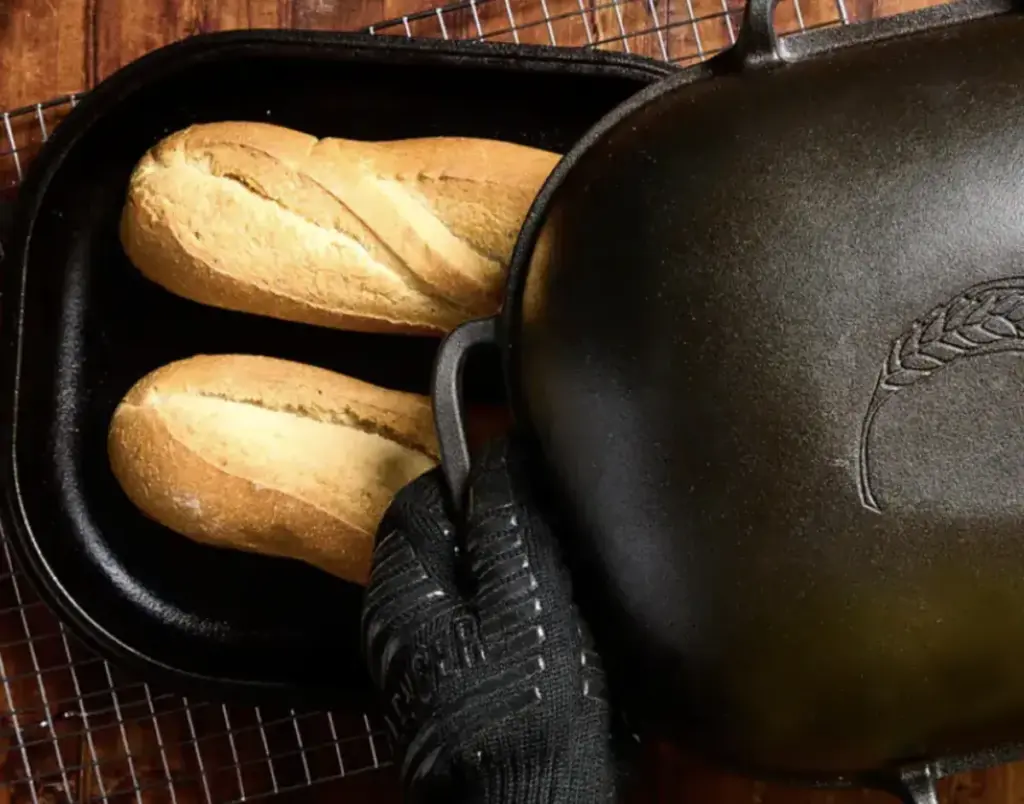
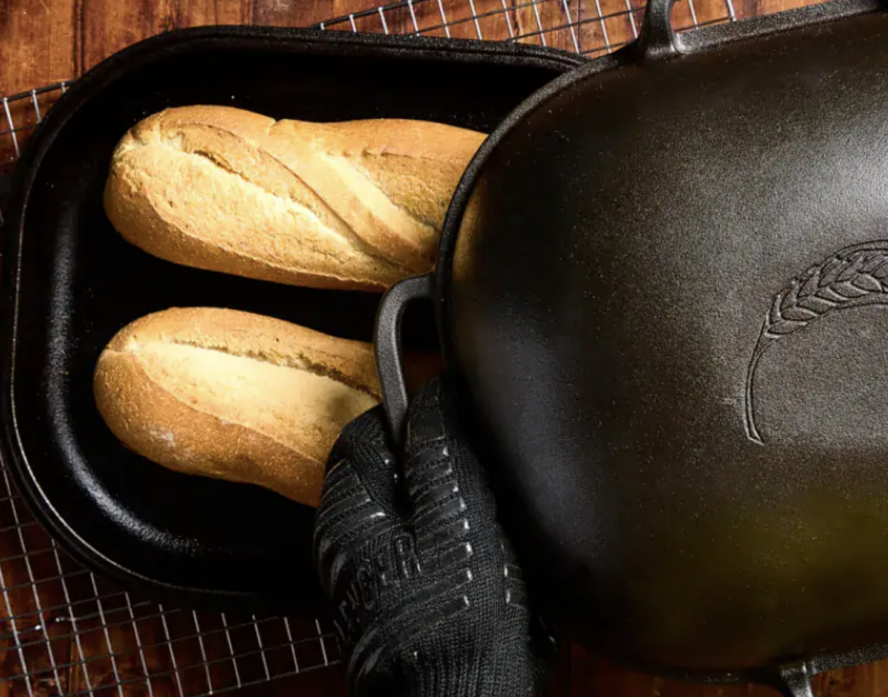
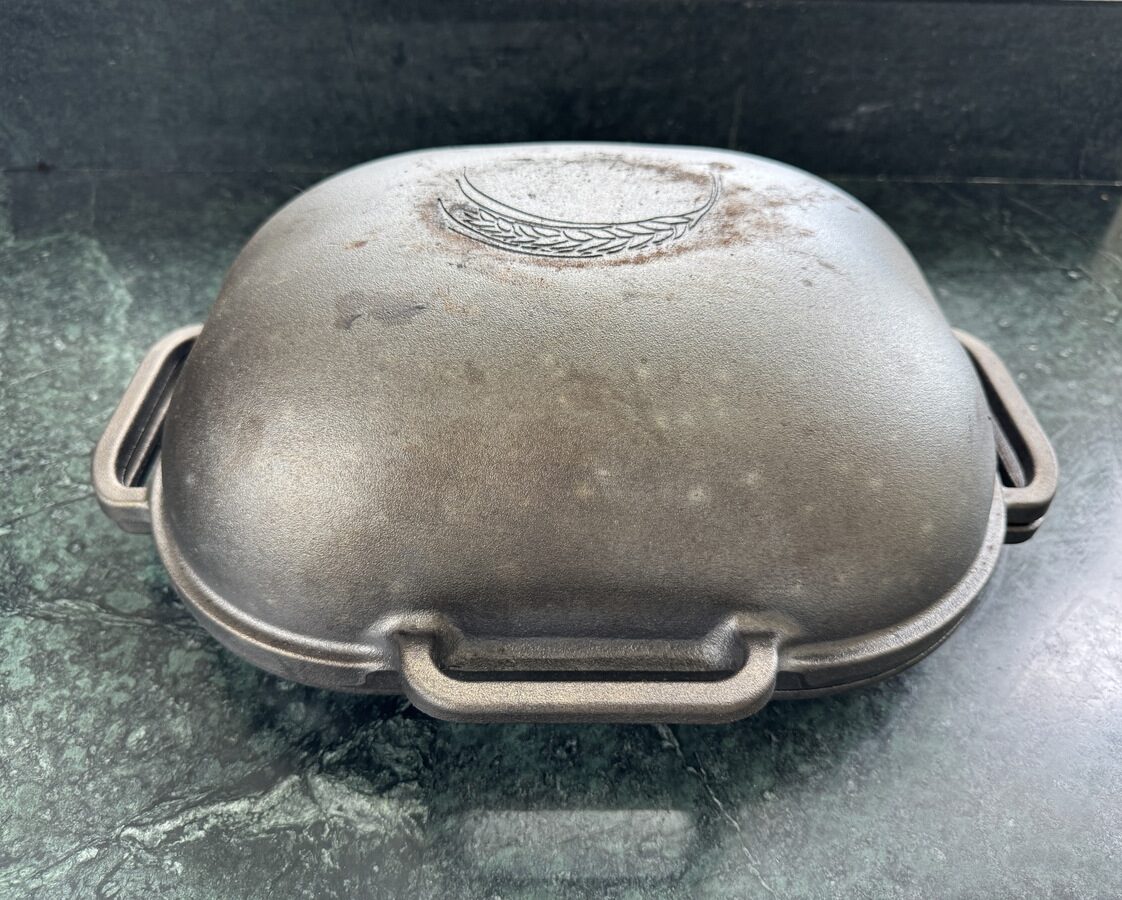
Designed by Jim Challenger—a home baker frustrated by the spatial constraints of traditional cookware—the Challenger Bread Pan is an uncompromising piece of culinary engineering. Built from thick, heavy, bare black cast iron, it boasts a generous, low-profile 15.5 x 10.5-inch base. This expansive footprint accommodates not only round boules but full-sized oval batards, baguettes, and even non-bread applications like roasted meats, focaccia, and deep-dish pizzas.
Performance and Testing Results
During rigorous testing, loaves baked in the Challenger pan consistently outperformed competitors in crust development. The bare cast iron radiates heat directly into the dough without any insulating enamel barrier, yielding a dark, crackling crust and an exceptionally open crumb. The gently domed rectangular lid creates an airtight seal with the base, locking in steam for an optimal oven spring. Furthermore, both the base and the lid feature robustly engineered handles, ensuring a secure grip when maneuvering a 20-pound piece of cookware out of a 500°F oven.
Pros & Cons
- Pros:
- Exceptionally versatile wide base accommodates boules, batards, and baguettes.
- Bare black cast iron delivers maximum thermal transfer for deep, crackling crusts.
- Tight-sealing lid traps steam with surgical precision.
- Pre-seasoned and ready for immediate use.
- Cons:
- Heavy (20 pounds), requiring upper-body strength to maneuver safely.
- Bare cast iron requires routine maintenance to prevent rust.
- Premium price point ($299.00).
2. Tramontina Cast Iron Bread Oven: The Value Champion
Design and Engineering
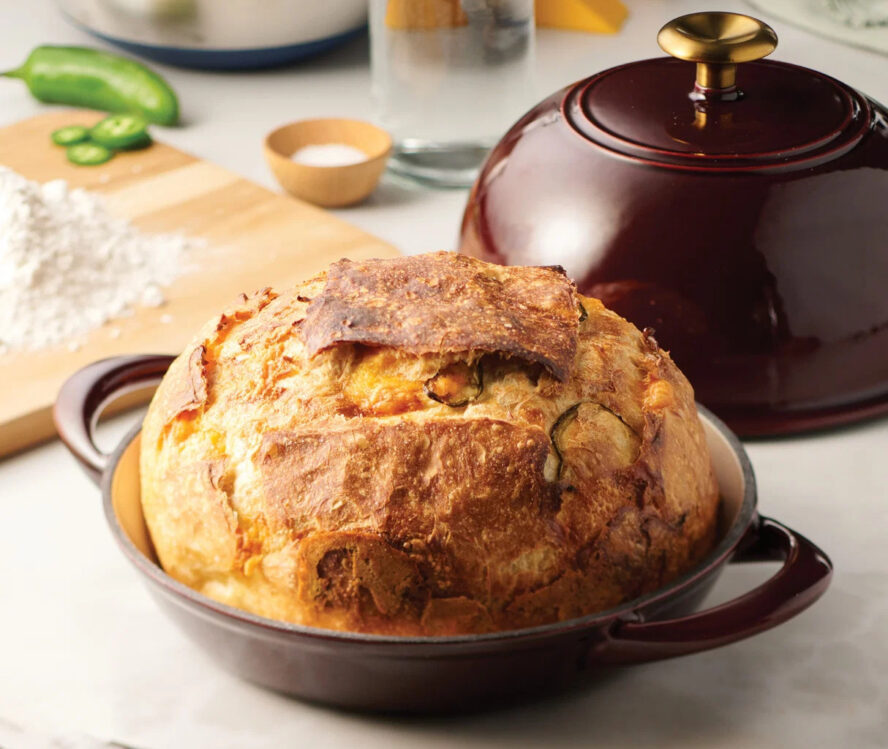
For bakers who want professional-grade performance without a steep investment, the Tramontina Cast Iron Bread Oven delivers remarkable value. Crafted from dense enameled cast iron, this unit mimics the heat retention and steam-trapping mechanics of high-end competitors at a fraction of the cost. The oven features a 9.5-inch round base and a high-domed lid that sits flush against the rim, providing an enclosed humid environment ideal for round boules.
Performance and Testing Results
Available in a spectrum of vibrant, chic exterior colors, the Tramontina features an off-white porcelain enamel interior. This coating acts as an effortless release agent, preventing sticky high-hydration doughs from fusing to the bottom. While the enameled interior diffuses direct thermal energy slightly more than bare cast iron—resulting in a slightly lighter bottom crust—the overall loaf structure, oven spring, and flavor profile remain deeply satisfying.
Pros & Cons
- Pros:
- Unbeatable price-to-performance ratio ($59.95).
- Porcelain enamel interior requires zero seasoning and cleans up effortlessly.
- Backed by a lifetime warranty and offered in multiple aesthetic colorways.
- Cons:
- Limited 9.5-inch circular footprint cannot accommodate oval batards or baguettes.
- Light-colored interior and exterior show smudges and dings easily over time.
3. Le Creuset Bread Oven: The Luxury Standard
Design and Engineering
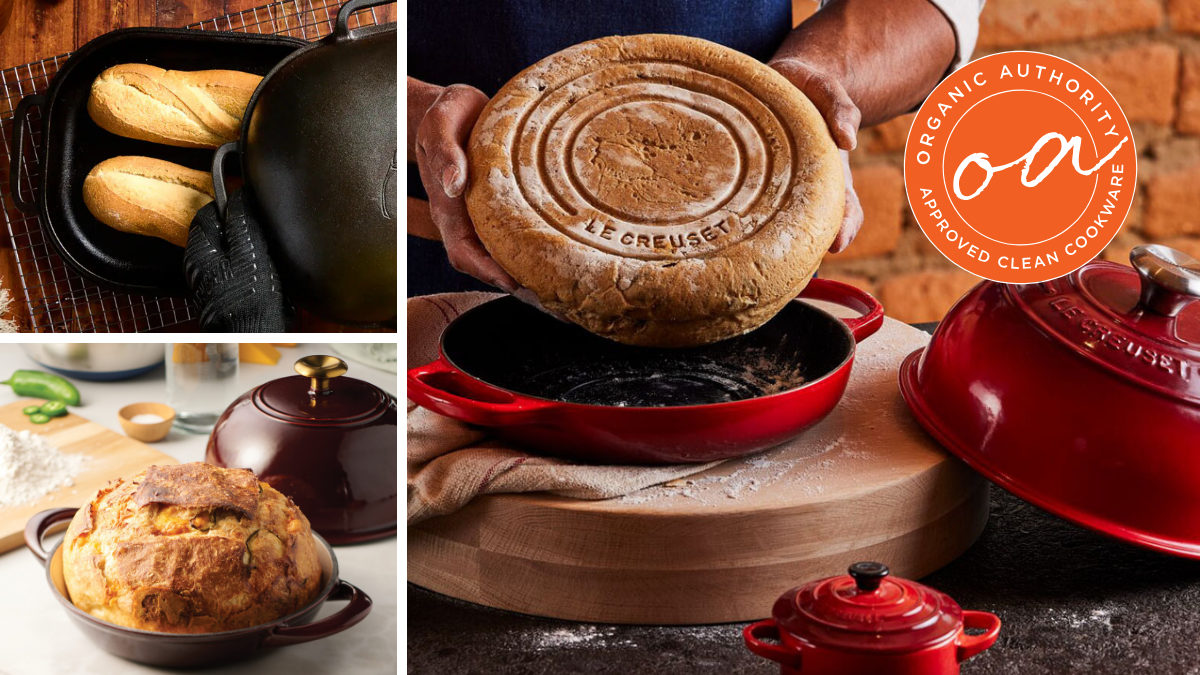
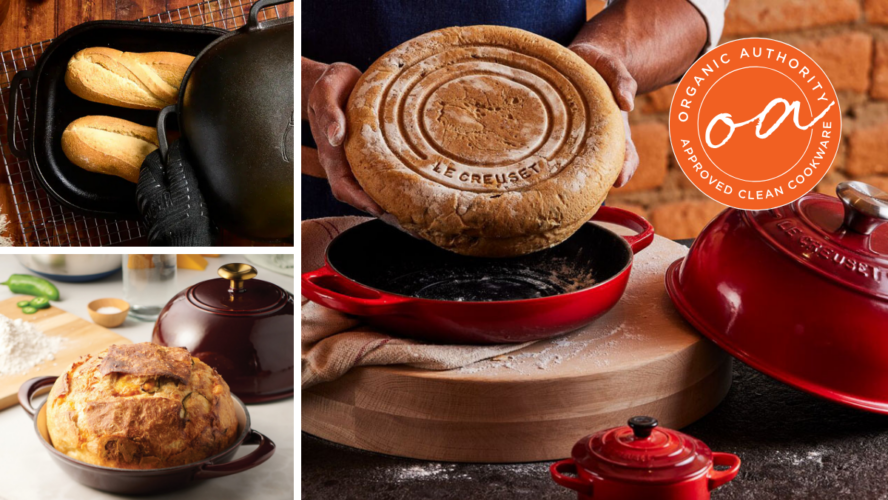
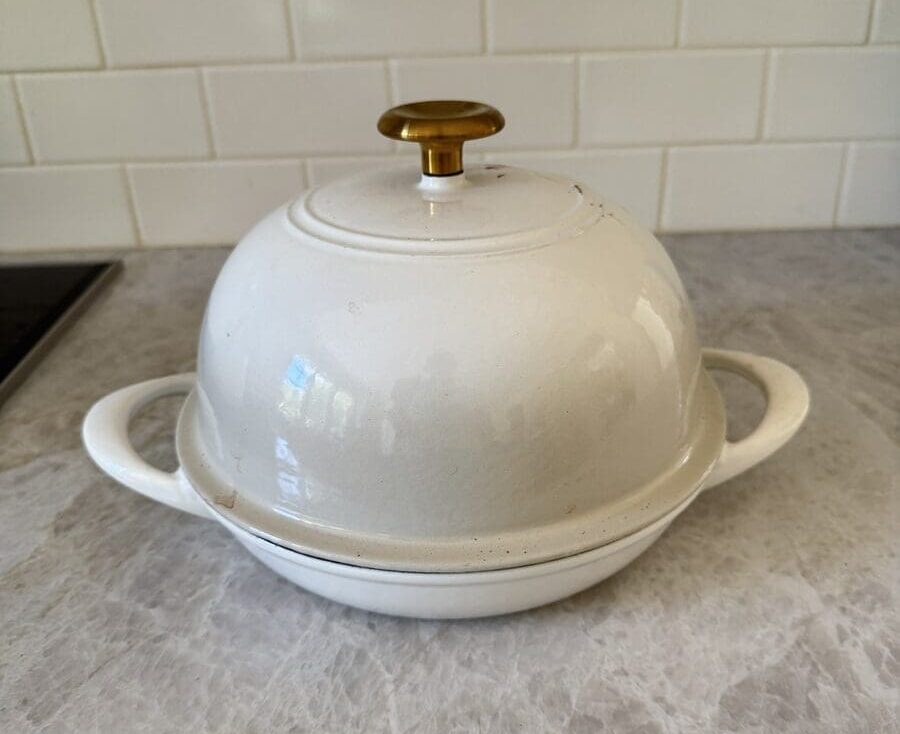
Le Creuset is a titan of enameled cast iron cookware, and their dedicated bread oven is a masterclass in luxury kitchen design. Following an inverted architectural philosophy, the unit features a shallow 9.5-inch round base stamped with three concentric ridge circles designed to promote even heat distribution and imprint a subtle brand hallmark on the base of every loaf. The star of the design is the deep, domed lid, which encapsulates the dough and circulates steam efficiently during the critical first phase of baking.
Performance and Testing Results
In day-to-day testing, the Le Creuset Bread Oven proved to be exceptionally user-friendly. Weighing considerably less than bare cast iron alternatives, it transitions smoothly from pantry to oven. The matte black interior enamel absorbs and transfers radiant heat with impressive efficiency, bridging the gap between the low maintenance of enamel and the aggressive crust development of bare iron. It is the definitive choice for bakers who specialize exclusively in classic round boules and value aesthetic harmony in their kitchenware collections.
Pros & Cons
- Pros:
- Premium enameled cast iron construction backed by legendary brand durability.
- Deep domed lid optimizes steam circulation for superior dome development.
- Lighter and more maneuverable than bare cast iron alternatives.
- Cons:
- The most expensive option in this evaluation ($324.95).
- Circular 9.5-inch design restricts the baking of elongated loaf styles.
Bare Cast Iron vs. Enameled Cast Iron: Making the Right Choice
When selecting a bread oven, deciding between bare cast iron and enameled cast iron is the most critical fork in the road. Each material alters the chemistry and physics of the bake:
- Bare Cast Iron (e.g., Challenger): Because there is no vitreous enamel coating separating the metal from the dough, bare cast iron acts as a direct thermal conduit. It yields the darkest, most aggressively blistered crusts and deepest bottom coloration. However, it demands respect: it must be seasoned with oil, cannot be soaked in water, and requires thorough drying to prevent oxidation.
- Enameled Cast Iron (e.g., Tramontina, Le Creuset): The porcelain enamel glaze creates a permanent, non-reactive barrier that requires zero seasoning and cleans easily with warm, soapy water. While the enamel slightly cushions direct heat transfer—resulting in a slightly softer, lighter crust color—it offers unparalleled convenience and aesthetic longevity.
Future Outlook: The Next Wave of Home Baking Innovation
As the culinary equipment market continues to evolve, the intersection of traditional metallurgy and home baking technology is expanding. Industry analysts predict several emerging trends in the artisan bread space:
- Hybrid Coatings: Manufacturers are currently experimenting with advanced non-stick ceramic-infused enamels that mimic the raw heat transfer of bare cast iron while retaining the effortless cleanup of porcelain.
- Modular Baking Systems: Future iterations of bread ovens are anticipated to feature interchangeable base inserts, allowing a single lid to pair with flat pizza stones, shallow griddles, or deep roasting pans.
- Sustainable Manufacturing: With environmental consciousness shaping consumer habits, cookware brands are increasingly focusing on recycled cast iron sources and zero-waste packaging, ensuring that the tools used to craft wholesome food are manufactured with ecological responsibility.
Conclusion
Upgrading to a dedicated cast-iron bread oven is the single most effective step a home baker can take to eliminate the performance gap between a residential kitchen and a commercial artisan bakery. Whether you choose the unbridled performance and versatility of the Challenger Bread Pan, the economical brilliance of the Tramontina Cast Iron Bread Oven, or the luxurious craftsmanship of the Le Creuset Bread Oven, your baking routine will be fundamentally transformed.
Discard your rusty metal sheets and embrace the power of controlled thermal mass and trapped steam. From rustic sourdough boules and savory focaccias to experimental heritage grains, your new bread oven will unlock professional-grade results right in your own kitchen.