Executive Overview
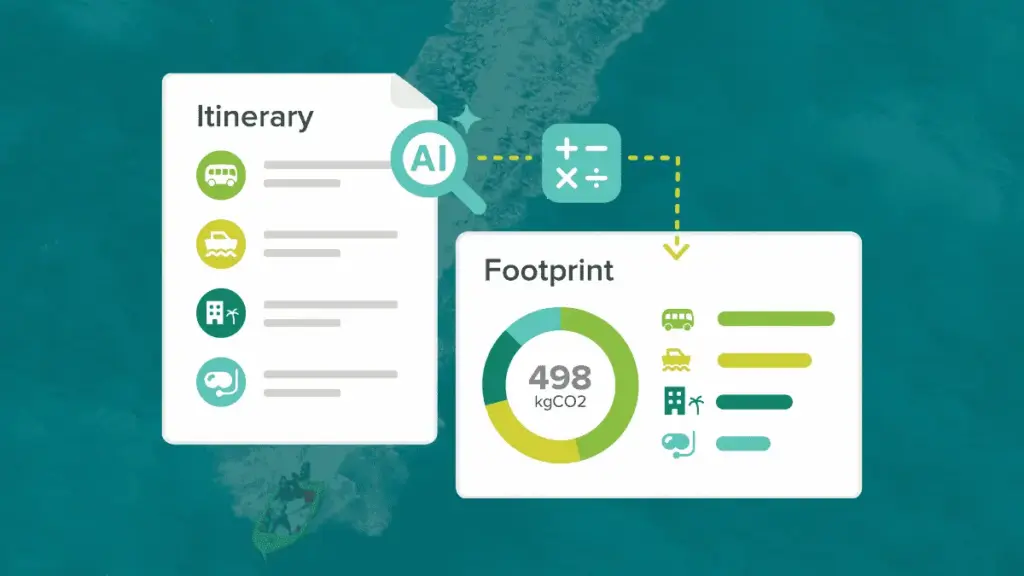
SEATTLE, WA — June 10, 2026 — In an era where the global tourism industry faces unprecedented scrutiny over its environmental footprint, Sustainable Travel International has officially unveiled Humī, a pioneering artificial intelligence-powered carbon footprinting tool tailored specifically for tour operators. Designed to compress what was once a grueling, weeks-long auditing process into mere seconds, Humī transforms existing travel itineraries into precise emissions reports through a streamlined, automated workflow.
By replacing manual data collection, cumbersome spreadsheets, and expensive consulting fees with advanced AI architecture backed by over two decades of specialized tourism metrics, Humī addresses one of the most stubborn bottlenecks in the green transition of travel: data opacity.
As global regulatory frameworks tighten—most notably with the rollout of rigorous anti-greenwashing laws across Europe—and consumer demand for transparent, data-backed sustainability claims reaches an all-time high, tour operators are under mounting pressure to substantiate their environmental assertions. Humī arrives as a timely digital lifeline. The platform is currently available for free for a limited time at sustainabletravel.org/humi, offering the global travel community an accessible entry point into verifiable climate accountability.
Detailed Chronology: The Evolution and Launch of Humī
The Hidden Bottleneck of Tour Carbon Accounting
For years, the sustainable travel movement has preached a fundamental gospel: You cannot manage what you do not measure. Yet, for tour operators managing complex, multi-destination itineraries, the practical execution of carbon accounting has proven exceptionally difficult.
Historically, calculating the emissions profile of a multi-day tour required parsing through disparate supplier data, estimating transport distances, guessing fuel efficiencies, and attempting to categorize diverse accommodation types. It was a manual, error-prone endeavor that routinely took weeks per itinerary. For small-to-medium-sized enterprises (SMEs)—which make up the vast majority of the global tourism sector—hiring specialized carbon consultants or dedicating internal staff to full-time data crunching was financially prohibitive. Consequently, many operators remained paralyzed, unable to take meaningful climate action simply because the baseline measurement tools were too complex and resource-heavy.
The Conception and Engineering of Humī
Recognizing this critical market failure, Sustainable Travel International leveraged its 20-year legacy in tourism impact measurement to conceptualize a technical solution. Rather than forcing operators to adapt to generic carbon accounting software—which often fails to capture the unique nuances of tourism experiences—the organization built Humī from the ground up, infusing it with a tourism-specific emissions methodology.
The user experience was designed to be frictionless. Operators are not required to input raw data into rigid templates. Instead, the workflow is disarmingly simple: users can either paste a direct web link to a tour itinerary page or upload a PDF document.
Once received, Humī’s AI engine swings into action. It automatically extracts, interprets, and translates unstructured itinerary text into the precise data points required for high-level emissions calculations. These include:
- Granular transport distances and distinct vehicle types (e.g., trains, domestic flights, motorcoaches, ferries).
- Accommodation categories and star ratings, accounting for energy use and operational variables.
- Specific excursion intensities, ranging from standard city walking tours to fuel-intensive activities.
Intelligent Estimation and Confidence Scoring
One of Humī’s most innovative features is its ability to handle incomplete data. In the tourism sector, itineraries published online rarely disclose every operational detail—such as the exact make and model of a safari vehicle or the energy grid mix of a remote eco-lodge.
To overcome this, Humī utilizes smart assumptions based on industry benchmarks and regional scenarios. Crucially, the platform does not obscure these automated estimates; instead, it provides transparent confidence scores for every data point. These scores clearly indicate where the AI has bridged information gaps, allowing tour operators to launch baseline measurements immediately with the information they currently have, while progressively refining accuracy as deeper supplier data becomes available over time.
Supporting Context & Metrics: Why Generic AI Falls Short in Tourism
While the market has seen an explosion of generative AI applications in recent years, general-purpose carbon calculators and off-the-shelf AI models are fundamentally unequipped to handle the complexities of the travel industry.
The Complexities of Niche Tourism Experiences
Standard carbon accounting tools are typically optimized for corporate office emissions, standard supply chains, or basic manufacturing outputs. They excel at measuring predictable variables like electricity consumption per square foot or standardized freight shipping.
However, tourism is an experiential economy defined by dynamic, highly heterogeneous activities. Generic models routinely fail when evaluating:
- Safaris: Which involve low-speed, high-emission off-road driving in sensitive ecosystems, often paired with specialized charter bush flights.
- Charter and Regional Flights: Small aircraft operations that have vastly different fuel-burn profiles per passenger-kilometer compared to commercial wide-body jets.
- Expedition Cruises and Water Excursions: Specialized marine operations involving high-powered snorkeling boats, zodiacs, or multi-day coastal vessels where fuel consumption fluctuates wildly based on ocean currents and weather conditions.
Humī’s foundational algorithms are trained specifically on Sustainable Travel International’s proprietary tourism methodology. This ensures that emissions from complex, multi-day, multi-modal itineraries are calculated with a high degree of fidelity, bridging the gap between academic carbon science and commercial tour operations.
Enterprise Scaling and Portfolio Management
For larger tour operators, destination management companies (DMCs), and global travel brands, measuring a single itinerary is only the first step. True corporate decarbonization requires portfolio-wide oversight.
To meet this demand, Sustainable Travel International structured Humī with robust Enterprise Plans. These advanced tiers allow organizations to scale their carbon measurement across hundreds of tours simultaneously. Key features of the Enterprise offering include:
- Automated Bulk Analysis: Processing extensive catalogues of tours in a single operational batch.
- Expert Review: Professional auditing and validation of results by sustainability experts to ensure methodological integrity.
- Centralized Dashboards: Intuitive interfaces that enable managers to compare tour footprints side-by-side, manage aggregate emissions data across massive portfolios, and track absolute reductions year-over-year.
- Reporting & Communication Guidance: Strategic frameworks that help marketing and sustainability teams translate complex carbon metrics into clear, compliant public reporting without falling foul of emerging regulatory traps.
Official Statements and Industry Perspective
The launch of Humī comes at a critical juncture for the travel sector, aligning macroeconomic policy shifts with grassroots corporate ambition.
"Carbon measurement is the first step to taking climate action, but tour operators have been stuck with a system that makes emissions measurement far harder than it should be," stated Paloma Zapata, CEO of Sustainable Travel International.
"We built Humī to significantly reduce the time and technical effort required to measure tour emissions without compromising accuracy, making it easier for businesses to understand their impacts and start taking action."
Zapata’s sentiments reflect a broader industry consensus. For decades, sustainability professionals have argued that the friction of data collection is the single greatest deterrent to corporate climate disclosure. By stripping away administrative overhead, Humī democratizes carbon accounting, allowing boutique tour operators in remote regions to access the same analytical sophistication historically reserved for multinational travel conglomerates.
Future Outlook: Navigating the Era of Strict Regulations and Conscious Travelers
The debut of Humī is strategically timed to intersect with a rapidly hardening regulatory landscape and an irreversible shift in consumer behavior.
The Regulatory Hammer: Combating Greenwashing in Europe
In recent years, vague, unverified eco-friendly marketing—colloquially known as "greenwashing"—has faced unprecedented legal crackdowns. The European Union, in particular, has introduced sweeping directives targeting green claims, requiring businesses to substantiate environmental assertions with robust, verifiable, and scientifically backed data.
Under these incoming regulations, tour operators marketing "carbon-neutral tours" or "sustainable wildlife expeditions" without auditable proof face severe financial penalties, reputational ruin, and legal liability. Humī provides these businesses with the rigorous audit trail necessary to defend their sustainability claims against regulatory scrutiny. By anchoring every emissions report in transparent methodologies and verifiable confidence scores, operators can face compliance audits with confidence.
Meeting the Demand of the Conscious Traveler
Concurrently, traveler psychology has undergone a profound transformation. Modern tourists—particularly among millennial and Generation Z demographics—are increasingly skeptical of marketing hype. They actively seek out travel brands that offer radical transparency, demanding to know the actual environmental cost of their vacations.
Tools like Humī empower tour operators to move beyond superficial marketing slogans. By understanding the exact carbon hotspots within their itineraries—whether it is a carbon-heavy domestic flight leg or an energy-inefficient hotel partner—operators can proactively redesign their packages, partner with lower-emission suppliers, and offer genuine, data-backed low-carbon travel alternatives.
The Road Ahead
As Humī rolls out its initial free access phase via sustainabletravel.org/humi, Sustainable Travel International plans to continuously update the platform’s underlying databases and AI capabilities. Future iterations aim to integrate deeper supplier-specific integrations, real-time offset mechanisms, and direct connections to booking engine APIs.
Ultimately, Humī represents a paradigm shift for the tourism sector: a transition away from burdensome administrative guesswork and toward frictionless, intelligent, and scalable climate accountability. As the travel industry races against global climate targets, tools that bridge the gap between intent and execution will define the survivors and leaders of tomorrow’s tourism economy.
About Sustainable Travel International
Sustainable Travel International engages travel businesses, destination leaders, and travelers in responsible practices that protect vulnerable destinations and transform tourism’s impact on nature and people. For more than 20 years, the organization has advanced climate action in tourism while supporting the industry’s broader sustainability journey. Through practical tech tools, data-driven impact measurement systems, inclusive stakeholder engagement, expert guidance, and a global membership community, Sustainable Travel International helps organizations address challenges ranging from carbon emissions and overtourism to broader environmental and community impacts.
To learn more about their initiatives or to try Humī, visit www.sustainabletravel.org.