Executive Overview
The European summer of 2026 will be remembered by climatologists, energy planners, and citizens alike as a season of unprecedented meteorological violence. Battered by relentless, record-breaking heat waves, the continent experienced its hottest June on record. This thermal anomaly was coupled with a severe, continent-wide drought that shriveled major waterways to historic lows.
While the human toll of such extreme weather is immediate and profound—threatening public health, infrastructure, and agricultural yields—the dual crises delivered an equally severe shock to Europe’s energy architecture. The power grid was caught in a dangerous vice: soaring temperatures drove electricity demand to unprecedented heights as millions scrambled for relief, while the physical constraints of the weather simultaneously crippled traditional electricity generation.
Wind power faltered under the stagnant atmospheric conditions characteristic of intense heat domes. Meanwhile, "thermal" power plants—including nuclear, natural gas, and coal facilities—were forced to drastically curtail their output. These plants rely heavily on vast volumes of natural water for cooling systems; as European rivers warmed and dried, operating at full capacity risked violating environmental regulations and overheating local ecosystems.
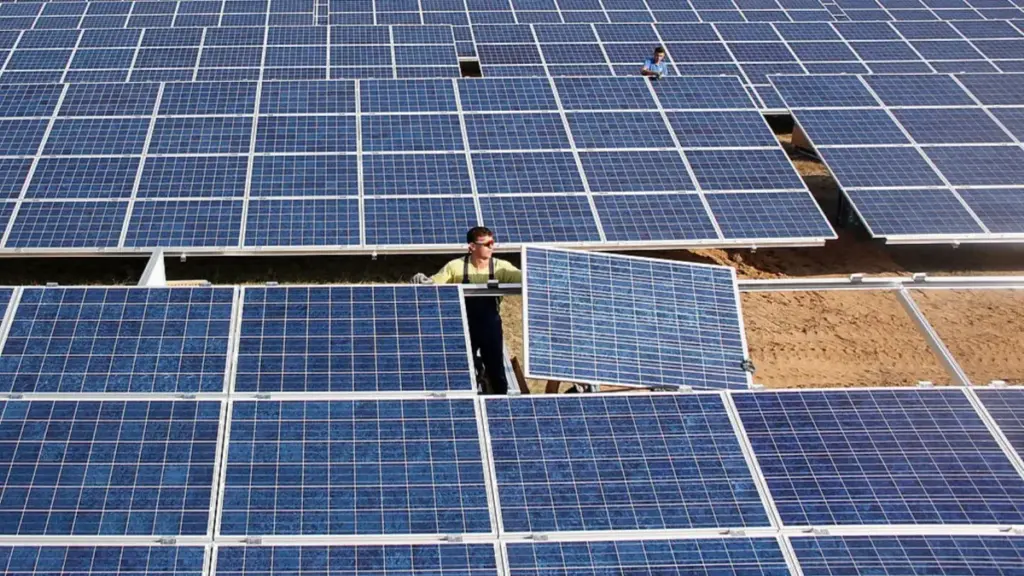
Amid this systemic failure, a single bright spot emerged: solar power. Proving to be the only major energy source that consistently outperformed normal baselines during the summer of extremes, photovoltaic systems became the backbone of the grid. When paired rapidly with burgeoning battery storage technologies, solar energy successfully powered thousands of air conditioning units through historic peak loads.
However, as climate change accelerates the frequency and intensity of these events—making events like Western Europe’s June heat wave roughly 200 times more likely today than in a pre-industrial climate—experts warn that the continent faces an existential grid stress test. With only a fraction of European households currently air-conditioned compared to other developed economies, the continent’s energy infrastructure must undergo a radical transformation to survive the warming century.
Detailed Chronology of a Crisis: The Summer of Extremes
The unfolding energy crisis of 2026 was not a sudden catastrophe, but a compounding sequence of climatic events that systematically dismantled traditional baseload power generation while stretching demand to its absolute limits.
June: The Onset of the Heat Dome
The crisis began in earnest in June, when a powerful heat dome settled over Western Europe. The meteorological phenomenon trapped hot air across the continent, shattering historical temperature records and triggering a surge in power demand. According to data from the energy think tank Ember, extreme temperatures in late June bumped up Italy’s domestic power demand by an astonishing 28 percent compared to the previous week. In France, electricity demand spiked by 14 percent over the same timeframe.
As the sun began to set each evening, bringing an end to solar generation while temperatures remained stubbornly high, electricity and natural gas prices spiked dramatically. Some evening spot prices reached levels not seen since the dark days of the 2022/2023 winter gas crisis, which was catalyzed by Russia’s invasion of Ukraine and subsequent supply weaponization.
July: The Double Blow of Drought and Stagnation
While June tested the grid with sudden heat, July compounded the crisis with historic dryness. England and Wales reported their driest July on record, while water levels in the Danube River—a vital commercial and ecological artery winding through central and Eastern Europe—reached historic lows. The receding waters offered stark, haunting reminders of the past, exposing World War II shipwrecks, unexploded ordnance, and prehistoric relics in its exposed channels.
Yet, the ecological exposure was mirrored by an industrial shortfall. Europe’s hydropower production plummeted to its lowest July level in a decade. Simultaneously, warm, shallow rivers threatened the water supplies essential for cooling thermal power stations.
In the United Kingdom, five major gas plants were forced to collectively reduce their output by 2.5 gigawatts because excessive ambient and water temperatures reduced the efficiency of their cooling systems. Compounding the issue, heat-induced low wind speeds cut the country’s typical wind farm generation in half during June, exposing the vulnerability of wind assets to meteorological stagnation.
In France, the situation was equally acute. The country lost 18 percent of its nuclear capacity to "environmental factors" in mid-July alone, extending a troubling trend of summertime nuclear outages that has plagued the country in recent years. French nuclear installations rely heavily on river water drawn in at ambient temperatures. After circulating through the plant, the water is discharged back into the river at elevated temperatures.
Because French law strictly caps the temperature of this discharged water to protect aquatic flora and fauna, plants must scale back operations when intake water is already pre-heated by regional heat waves and prolonged droughts.
Supporting Context & Metrics: The Anatomy of Grid Vulnerability
To understand how close Europe came to systemic blackouts during the summer of 2026, one must examine the stark metrics driving the modern energy transition.
The Nuclear and Hydro Constraint
- France’s Nuclear Exposure: 18% of total nuclear capacity lost in mid-July due to high river temperatures and regulatory discharge caps.
- Hydropower Deficit: Europe’s total hydro output slumped to its lowest July level in a decade, driven by record-low water levels in regions like the Danube basin and Welsh watersheds.
- Thermal Output Reductions: United Kingdom gas plants slashed output by a combined 2.5 gigawatts due to compromised cooling efficiency.
The Rise of Solar and Storage
While thermal and wind assets struggled, solar power experienced an operational renaissance. European heat waves naturally align with optimal conditions for photovoltaic generation: persistently clear, cloudless skies.
- Generation Surge: Europe’s solar panels produced 17 percent more power during the summer’s heat waves than their historical seasonal averages, according to Ember.
- The Battery Buffer: Battery storage systems played a pivotal role in capturing this daytime overproduction and discharging it during the dangerous evening hours, when solar output dropped to zero but cooling demand remained elevated.
- Exponential Growth: Solar and storage deployment continued at a breakneck pace. Europe installed 36 gigawatt-hours of battery storage in 2025—a staggering 48 percent increase over the previous year. This marked the twelfth consecutive year of record-breaking growth for the European battery sector.
The Demographic and Cultural Shift on Air Conditioning
Perhaps the most telling metric regarding Europe’s future energy vulnerability lies in its current lack of cooling infrastructure.
- Penetration Rates: Only about 23 percent of households across Europe currently have access to or regularly use air conditioning.
- Regional Disparities: While roughly half of households in southern nations like Italy and Spain possess air conditioning, the figure drops to just 25 percent in France—paling in comparison to the United States, where over 90 percent of households are air-conditioned.
This low baseline represents a ticking demographic time bomb for the grid. As heat waves become more frequent and lethal, millions of Europeans are expected to install cooling units, driving baseline electricity demand far beyond historical projections.
This reality has forced even ideological shifts. Once stalwart opponents of air conditioning due to its high greenhouse gas emissions, European environmental politicians have softened their stances. As Marine Tondelier, national secretary of France’s Ecologist Party, conceded: "There are places where we just can’t do without it now."
Official Statements and Industry Analysis
Industry leaders, policymakers, and climate scientists have seized upon the summer of 2026 as a definitive turning point for European energy policy.
Walburga Hemetsberger, CEO of the industry group SolarPower Europe, highlighted the evolving nature of grid management during extreme weather events:
"The next challenge is the evening period. Temperatures often remain high after sunset and AC demand can stay elevated, even as solar production declines. This is why battery storage is becoming such an important part of the energy transition."
The financial and regulatory toll of the heat waves has also sparked urgent calls from market analysts. Beatrice Petrovich, a senior energy analyst covering Europe at Ember, noted that the market symptoms observed over the summer were symptomatic of deeper structural rigidities:
"Extreme price spikes during heatwaves are a blaring signal for regulatory changes that increase power system flexibility. Treating this summer as a turning point for energy storage would be an opportunity to remove existing barriers."
Scientists studying the attribution of these events emphasize that the climate crisis is no longer a distant threat, but an active participant in European daily life. Research indicates that the intense June heat wave that scorched Western Europe was roughly 200 times more likely in today’s fossil fuel-warmed atmosphere than it would have been just two decades ago.
Future Outlook: Adapting Europe’s Grid for a Warming World
In response to the lessons of 2026, heavy investments and strategic pivots are already underway. Governments and utility operators are realizing that historical planning models are no longer fit for purpose.
Industrial Adaptation and Capital Investment
France’s state-owned utility has announced an ambitious capital expenditure program, planning to invest over $10 billion over the next 15 years to climate-proof its nuclear and hydropower fleets. This funding will target advanced engineering solutions, including closed-loop cooling technologies and specialized equipment designed to chill discharged water before it re-enters river ecosystems, ensuring compliance with environmental standards without necessitating shutdowns.
However, adapting to the new climatic normal will require far more than retrofitting legacy plants. Grid operators must simultaneously accommodate surging electricity demand driven not only by residential air conditioning, but also by the exponential expansion of power-hungry data centers supporting the artificial intelligence boom.
Regulatory Reform and Grid Flexibility
Experts agree that technological deployment alone will not suffice. Regulatory frameworks across the European Union must evolve to remove bureaucratic bottlenecks standing in the way of transmission upgrades, cross-border interconnectors, and large-scale battery deployment.
By streamlining market rules to reward flexibility and fast-response storage, Europe can turn the painful lessons of this summer’s energy crunch into a blueprint for a resilient, decarbonized grid. The summer of 2026 demonstrated the fragility of an energy system built for a climate that no longer exists; the response to it will determine whether Europe can successfully navigate the hotter, harsher future ahead.