Executive Overview
For decades, the ritual of brewing tea was deceptively simple: turn on the stove, wait for a rolling boil, pour water over a tea bag, and steep until you remembered it was there. But for tea enthusiasts, culinary professionals, and wellness-minded consumers alike, a quiet revolution has taken place in the kitchen. We now understand that the difference between a properly steeped cup of tea and a ruined one comes down to a single, highly controllable variable: water temperature.
Exposing delicate green or white tea leaves to boiling 212°F water can instantly scald them, releasing an onslaught of bitter tannins and astringent catechins. Conversely, failing to reach at least 200°F for robust black or herbal teas yields a flat, flavorless brew. Enter the modern tea kettle—a specialized appliance category that has evolved far beyond the basic aluminum whistling pots of the past.
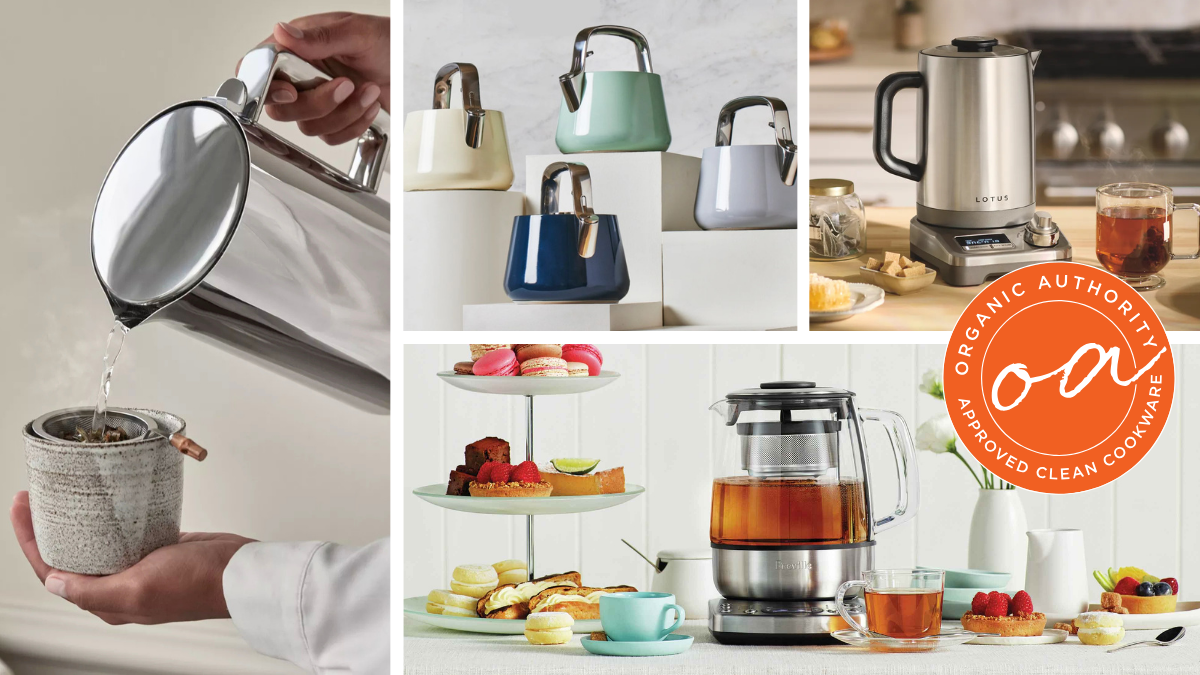
Today’s market features intelligent electric appliances with micro-processor temperature controls, automated loose-leaf baskets, and meticulously engineered stovetop vessels designed with health and sustainability in mind. Addressing growing consumer concerns over chemical leaching, modern manufacturers are heavily prioritizing non-toxic materials, ensuring that microplastics and heavy metals never touch your morning brew.
This comprehensive guide examines the four best tea kettles on the market today, breaking down their technical specifications, material safety profiles, and real-world performance to help you elevate your daily routine.
Detailed Chronology: The Evolution of Water Heating Technology
The way humanity heats water for hot beverages has undergone a dramatic technological arc, moving from primitive open-fire vessels to computerized countertop appliances. Understanding this evolution helps contextualize why today’s high-end kettles command premium price points and offer such specialized features.
- Ancient Roots (Pre-20th Century): For centuries, cast-iron, copper, and clay kettles were standard. The primary objective was purely functional: boiling water over a direct flame as quickly as possible. Temperature regulation was managed entirely by human intuition, guesswork, and culinary experience.
- The Post-War Whistling Stovetop Era (Mid-20th Century): The advent of mass-manufactured stainless steel and enamel-coated pots introduced the ubiquitous whistling tea kettle. While durable, these stovetop models offered zero temperature control. Boiling water meant 212°F—take it or leave it.
- The Electric Kettle Breakthrough (Late 20th Century): Popularized heavily in Europe and later adopted globally, electric kettles shifted the power source from stovetops to dedicated electrical bases, drastically cutting down boiling times and introducing basic automatic shut-off mechanisms for safety.
- The Precision Revolution (Present Day): Modern engineering has transformed the kettle into a smart kitchen device. Today’s top-tier units utilize digital thermistors, PID (Proportional-Integral-Derivative) controllers, double-wall thermal insulation, and automated mechanical lifts to guarantee exact degree-by-degree temperature management.
Supporting Context & Metrics: The Science of Temperature and Material Safety
Why Water Temperature Dictates Flavor
Every variety of tea plant (Camellia sinensis)—as well as herbal infusions—contains a distinct chemical profile of catechins, polyphenols, amino acids, and essential oils. These compounds extract at vastly different thermal thresholds:
- White & Green Teas (160°F–185°F): These delicate, unoxidized leaves require lower temperatures to highlight sweet, grassy, and floral notes without turning bitter.
- Oolong Teas (190°F–200°F): Partially oxidized oolongs thrive in moderately hot water, balancing floral aromas with rich, roasted undertones.
- Black & Herbal Teas (208°F–212°F): Fully oxidized black teas and caffeine-free herbal infusions demand near-boiling or full-boiling water to fully unlock their deep, malted, or earthy profiles.
Without a precision kettle, tea lovers are forced to play a frustrating guessing game—either boiling water and waiting anxiously for it to cool, or settling for sub-optimal, astringent brews.
The Hidden Danger: Kettle Materials and Chemical Leaching
Because water is heated rapidly and repeatedly inside a confined space, the materials comprising your kettle matter profoundly.
Historically, budget-friendly electric kettles utilized hidden plastic components around internal water level indicators, filters, lids, and spouts. Emerging scientific research indicates that exposing plastics to high-heat environments accelerates the breakdown and leaching of synthetic compounds, potentially shedding micro- and nanoplastics directly into drinking water. Furthermore, inferior plastics can impart a chemical taste to sensitive brews.
Modern premium kettles emphasize inert, food-grade materials—such as high-grade 304 stainless steel, borosilicate glass, and ceramic coatings—ensuring that your water remains chemically pristine from the tap to your teacup.
In-Depth Review: The 4 Best Tea Kettles on the Market
1. Caraway Tea Kettle
- Best For: Non-toxic stovetop brewing and minimalist kitchen aesthetics.
- Price: $195 (Use code
10organicauthorityfor 10% off) - Overall Rating: 4.1 / 5
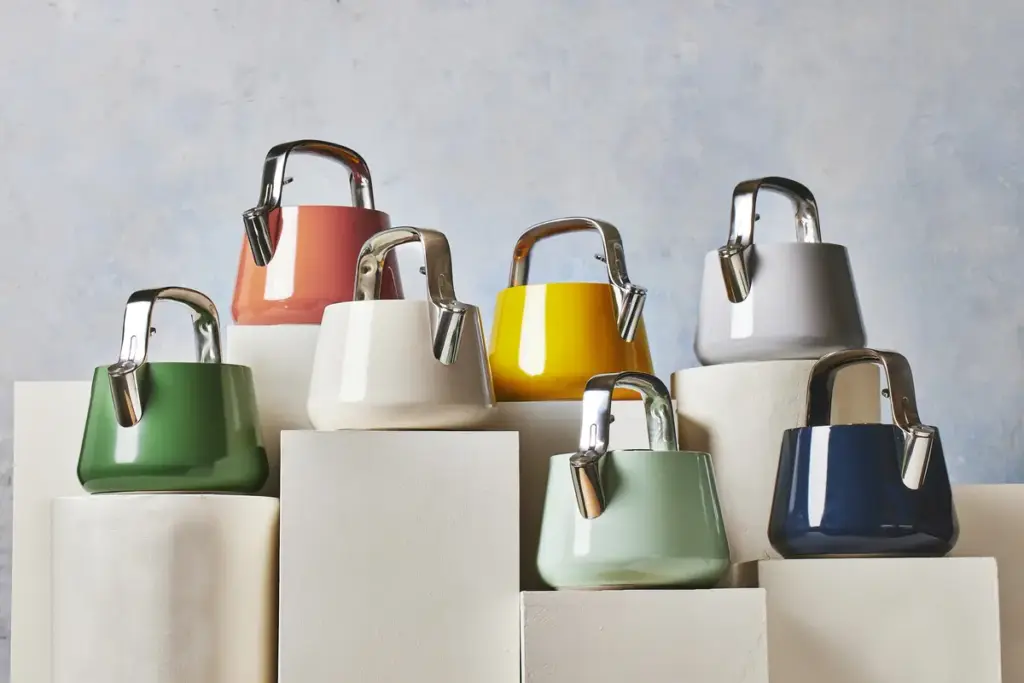
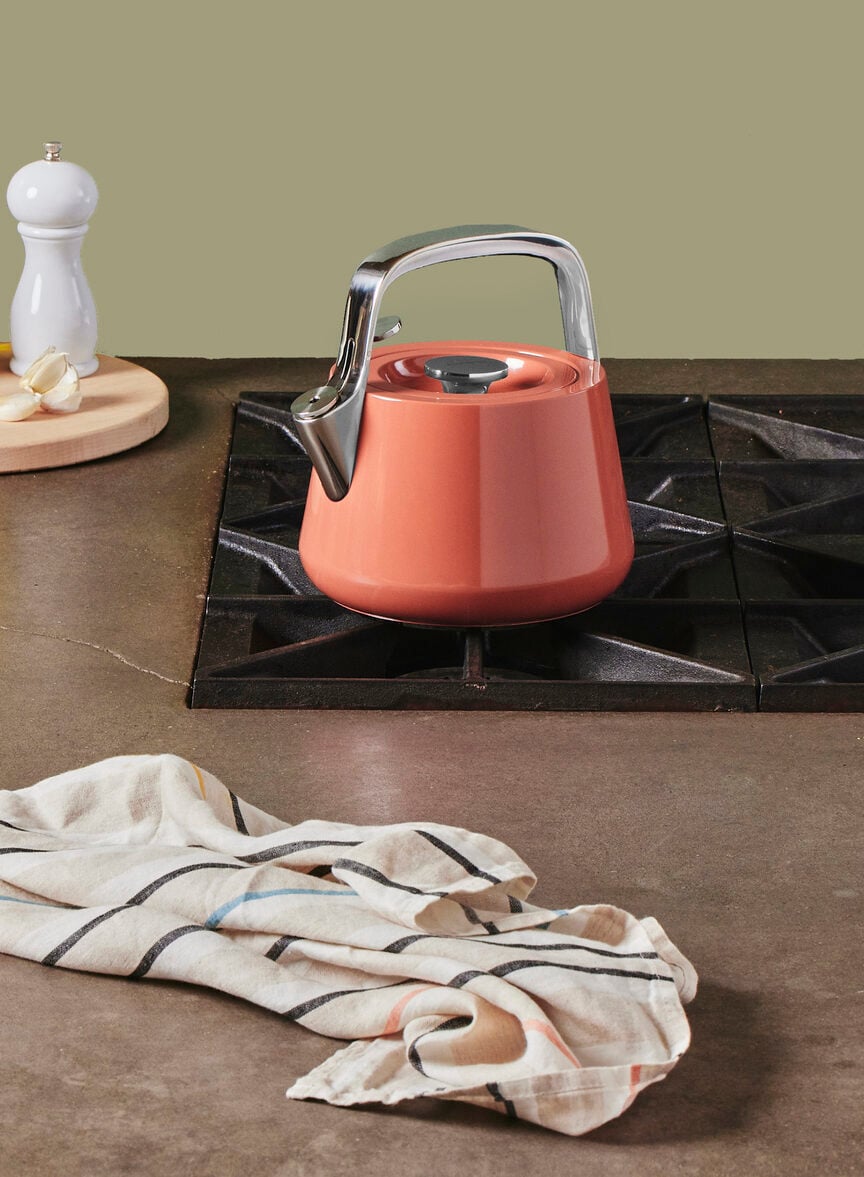
If you prefer the timeless reliability of a stovetop vessel without digital complications, the Caraway Tea Kettle is a standout statement piece. Coated in a gorgeous ceramic finish and constructed with a fully stainless steel interior, this kettle guarantees that your water never touches exposed plastic, heavy metals, or harmful chemicals like PTFE, PFOA, and PFAs.
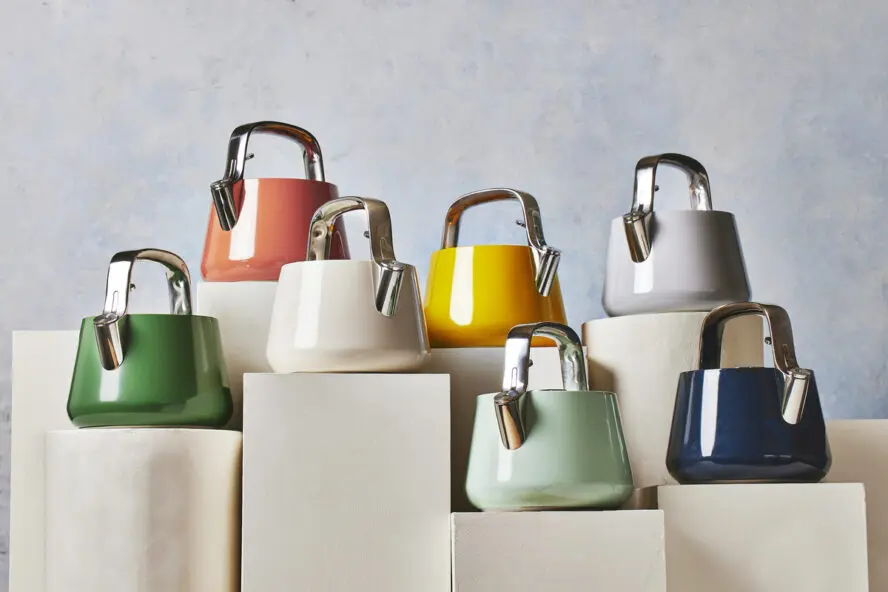
Compatible with all stovetops—including induction—the Caraway kettle features an ergonomic handle and a pleasant, single-tone whistle that alerts you to a rolling boil without startling the household. Available in nine stunning modern colorways (ranging from classic cream and black to vibrant sage and marigold), it boasts a generous two-quart capacity capable of brewing up to eight cups of tea at once.
- Pros: Ceramic-coated stainless steel; zero plastic water contact; induction compatible; lovely aesthetic.
- Cons: Higher price point for a traditional stovetop kettle; lacks precise digital temperature controls.
2. Lotus Purist Precision Temperature Kettle
- Best For: Professional-grade tea drinkers and pour-over coffee aficionados.
- Price: $299.95
- Overall Rating: 4.6 / 5
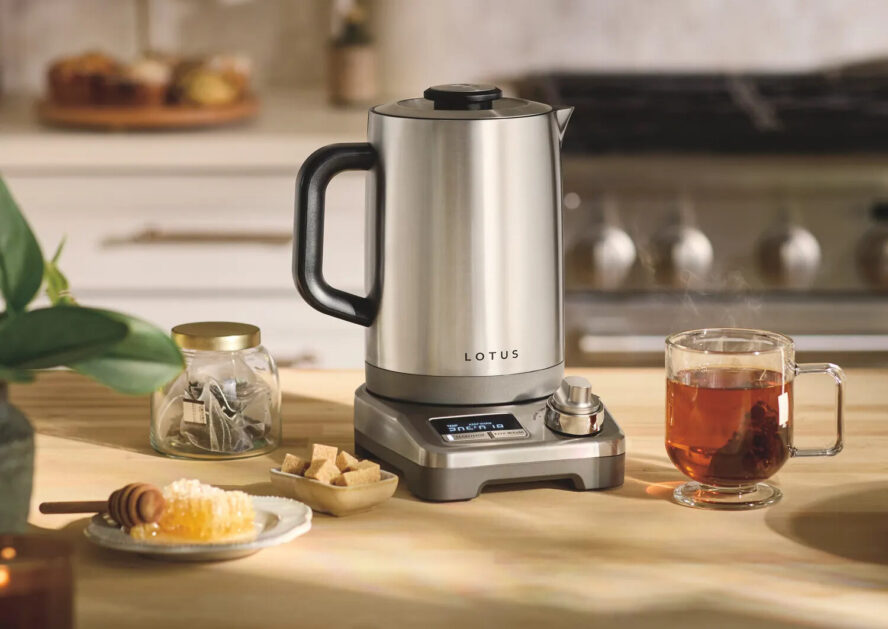
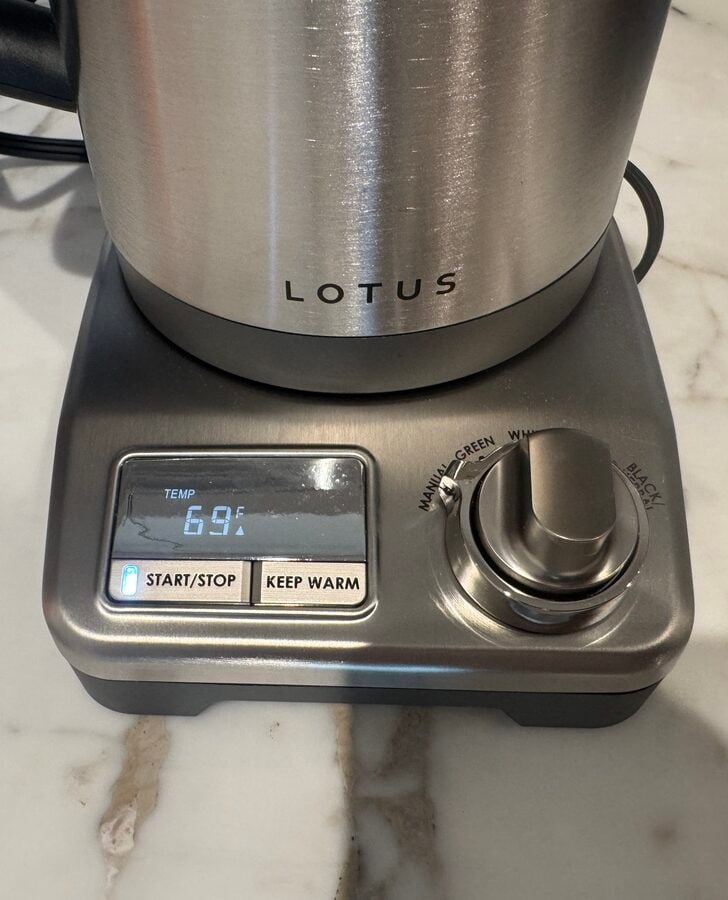
The Lotus Purist Precision Temperature Kettle bridges the gap between consumer simplicity and laboratory-grade accuracy. Offering an intuitive digital display and a rotating control dial, this electric kettle features dedicated preset programs for green, white, oolong, and black teas, alongside manual temperature adjustments ranging from 95°F to 212°F.
Constructed from sleek, double-walled stainless steel, the Lotus keeps exterior surfaces cool to the touch while utilizing a "Keep Warm" thermal mode to maintain your chosen temperature over extended periods. Its fully detachable lid accommodates a standard bottle brush for effortless cleaning, and an integrated auto-shutoff mechanism prevents dry-boil damage.
- Pros: Degree-by-degree temperature precision; double-wall insulation; convenient Keep Warm mode; 1.5-liter capacity.
- Cons: Premium price point; short power cord; operation beeps can be loud.
3. Breville Tea Maker
- Best For: Full automation and avid, daily loose-leaf tea drinkers.
- Price: $329.95
- Overall Rating: 4.4 / 5
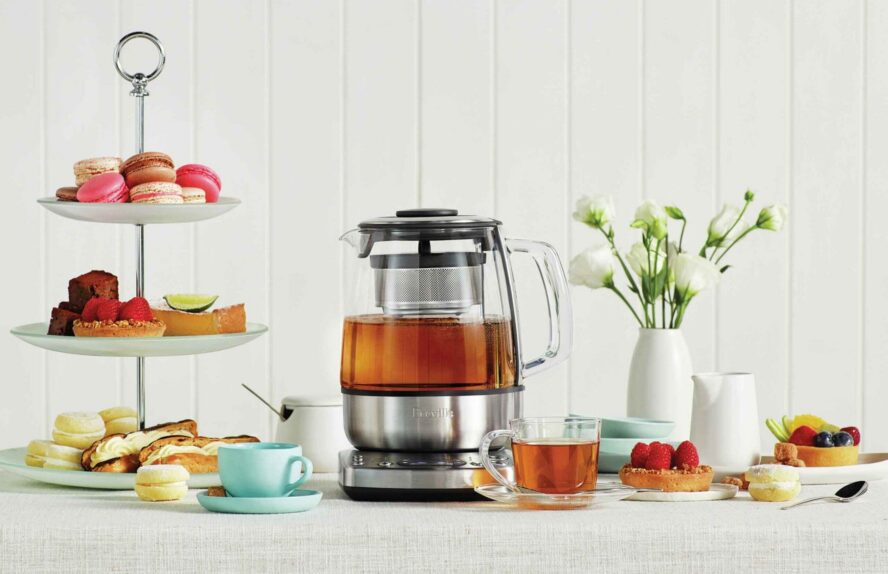
For the ultimate tea aficionado, the Breville Tea Maker represents the pinnacle of hands-off efficiency. This appliance goes beyond merely heating water—it actively brews loose-leaf tea directly within its German-made thermal shock-resistant glass pitcher via an automated, motorized tea basket.
Users simply load the stainless steel basket, select their desired tea type and strength presets, and let the machine do the work. Once the optimal steeping time is reached, the internal motor automatically lifts the basket out of the water, halting extraction and completely eliminating the risk of over-steeped bitterness.
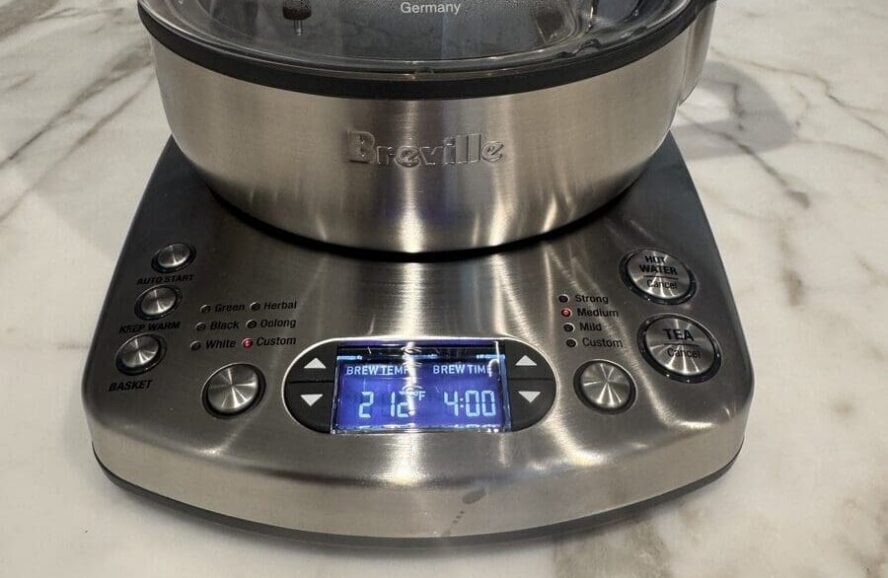
- Pros: Fully automated brewing cycle; auto-lifting basket prevents bitterness; programmable Delay Start and Keep Warm functions.
- Cons: Premium price; large countertop footprint; minor plastic elements in the internal brewing basket assembly.
4. Aarke Kettle
- Best For: Scandinavian design lovers seeking streamlined functionality.
- Price: $250
- Overall Rating: 4 / 5
The Aarke Kettle exemplifies sophisticated minimalism. Drawing inspiration from high-end Scandinavian design, this stainless steel electric kettle combines the ease of preset temperatures with an exceptionally clean, compact aesthetic.
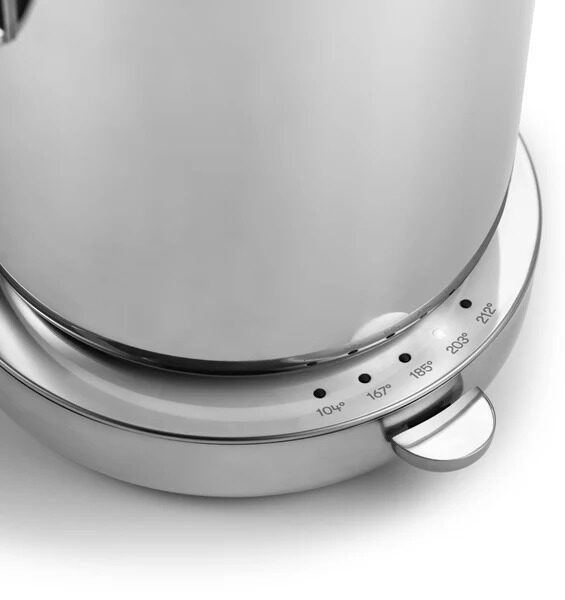
Featuring five targeted temperature settings (104°, 170°, 185°, 200°, and 212°F), the Aarke heats up to 1.2 liters of water in roughly three minutes. Its double-walled insulation ensures quiet operation and exterior thermal safety, while an internal limescale filter protects water purity over years of daily use.
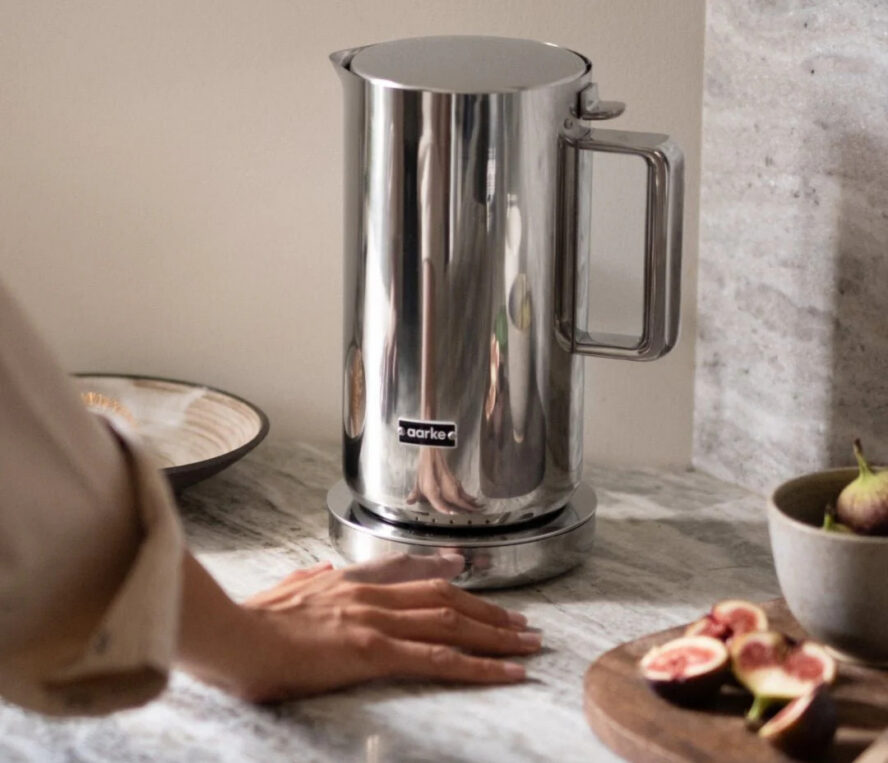
- Pros: Premium Scandinavian design; all-stainless steel interior; double-wall insulation; quick heating time.
- Cons: Limited preset choices compared to fully variable digital models; high price.
Comparative Analysis Table
| Kettle | Type | Material Safety | Capacity | Temperature Control | Key Features | Price |
|---|---|---|---|---|---|---|
| Aarke Stainless Steel Kettle | Electric | All-stainless steel interior; zero plastic contact | 1.2 Liters | 5 Preset settings | Double-wall insulation, quiet boil, memory function | $250.00 |
| Caraway Tea Kettle | Stovetop | Ceramic-coated stainless steel; PFAS/PTFE/PFOA-free | 2 Quarts | None (Stovetop boiling) | Induction safe, ergonomic handle, single-tone whistle | $195.00 |
| Lotus Purist Precision Kettle | Electric | Double-wall stainless steel; zero plastic contact | 1.5 Liters | Manual (95°F–212°F) & Presets | Keep Warm mode, thermal carafe, cool-touch exterior | $299.95 |
| Breville Tea Maker | Electric | Glass and stainless steel | 51 oz (Water) / 41 oz (Brew) | Auto presets & Manual control | Auto-lowering basket, brew strength, Delay Start | $329.95 |
Future Outlook: Where is Kettle Technology Heading?
As consumer demand for healthy home appliances continues to intersect with smart-home technology, the future of the tea kettle points toward even greater efficiency and health integration.
Industry analysts predict that future iterations of precision kettles will likely incorporate IoT (Internet of Things) connectivity, allowing users to schedule custom brewing profiles directly via smartphone applications or voice assistants. Furthermore, material science innovations will continue to push plastic out of small kitchen appliances entirely, with manufacturers adopting advanced medical-grade ceramics, pure quartz glass, and aerospace-grade alloys.
Whether you opt for the artistic simplicity of the Caraway stovetop kettle or the fully automated wizardry of the Breville Tea Maker, investing in a high-quality, non-toxic, temperature-controlled kettle is a transformative upgrade that will permanently elevate your daily beverage ritual.