Executive Overview
After years of grueling, tense negotiations and a relentless succession of missed deadlines, the United States federal government has intervened in the century-old crisis governing the American West’s most vital waterway. With the existing operating framework set to expire in October 2026, the US Bureau of Reclamation has officially released its long-awaited proposal for a new management blueprint for the Colorado River.
The broad, 10-year framework outlines operational parameters that will be reassessed and adjusted every two years. Under this federal directive, the lower-basin states of California, Arizona, and Nevada face staggering potential reductions: a combined loss of up to 3 million acre-feet of water annually, representing roughly 40% of their total supply.
To contextualize the scale of this intervention, a single acre-foot—the volume of water required to cover an American football field to a depth of one foot—amounts to approximately 326,000 gallons (1.2 million liters), which is enough to supply three average households for a year.
Yet, water policy experts, environmental scientists, and state representatives universally characterize the federal mandate not as a definitive solution, but as a critical stopgap. Designed primarily to protect the structural integrity of the basin’s failing infrastructure—specifically the gargantuan reservoirs of Lake Mead and Lake Powell—the plan buys the seven squabbling states a temporary reprieve. It grants negotiators a two-year window to forge a consensus that has thus far eluded them, pulling the system back from an immediate catastrophic collapse while leaving the thorniest questions of equity and survival unresolved.
Detailed Chronology: A Century of Over-Allocation Meets Modern Collapse
The 1922 Original Sin
The roots of the current crisis extend far beyond the modern climate emergency, tracing back to the signing of the Colorado River Compact in 1922. Negotiated during an anomalously wet decade, the treaty divided the river’s bounty equally between the upper-basin states (Colorado, New Mexico, Utah, and Wyoming) and the lower-basin states (California, Arizona, and Nevada), awarding each bloc rights to 7.5 million acre-feet annually.

From its headwaters in the Rocky Mountains across 1,450 miles (2,300 km) to its desiccated delta in Mexico, the river was treated as an endless treasury. In reality, the legal framework doled out significantly more water rights than the river has historically carried.
The Decades-Long Divergence
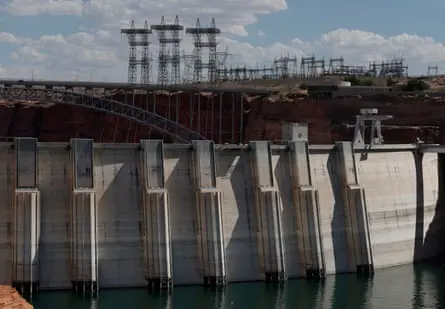
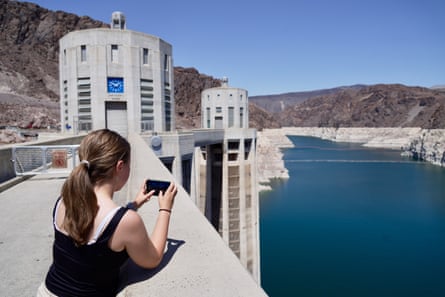
For decades, the system absorbed this structural deficit through massive engineering marvels—most notably the construction of Hoover Dam and Glen Canyon Dam—which created Lake Mead and Lake Powell. However, as the American West urbanized, raising sprawling metropolises like Los Angeles, Phoenix, and Las Vegas, and turning the desert into an agricultural powerhouse, consumption outpaced natural replenishment.
The divergence became critical in the 21st century as anthropogenic climate change warmed and dried the American Southwest. Snowpack in the Rocky Mountains—the natural reservoir that feeds the river—now melts earlier, evaporating at accelerated rates before ever reaching the main stem. Simultaneously, thirsty, parched soils soak up a larger share of the runoff.
Since 2020, average flows in the Colorado River have plummeted by 32% compared to historical 20th-century baselines, with total flows hovering just above 10 million acre-feet annually. This modern reality stands in stark defiance of a legal apparatus that promised 15 million acre-feet to human users alone, entirely discounting the ecological needs of the river basin.
The 2023–2026 Impasse and Federal Intervention
For the past three years, upper- and lower-basin states have blown through deadline after deadline, locked in an interstate standoff. Upper-basin states have fiercely resisted mandatory cuts, arguing that they consume only a fraction of what they are legally allotted and insisting that lower-basin states—which rely heavily on the river for intensive desert agriculture and massive urban populations—are uniquely responsible for drawing down the system. Lower-basin states, conversely, argue that they have already absorbed significant voluntary reductions and demand that their northern neighbors share the burden.
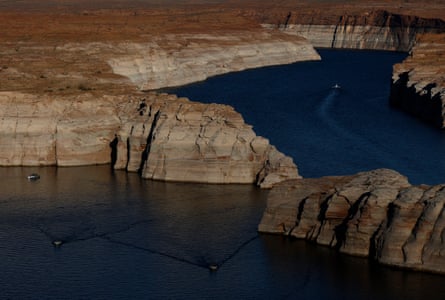
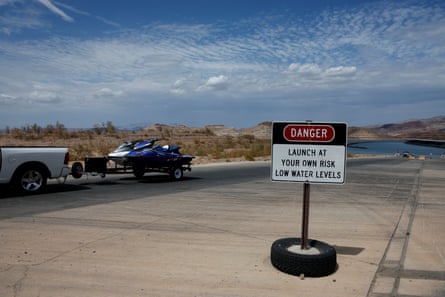
As storage levels dropped precipitously through 2024 and 2025, the crisis reached a historic tipping point in early 2026. A compounding "snow drought" and a severe spring heatwave pushed Lake Powell’s water line just 37 feet above the minimum threshold required to generate hydroelectric power at Glen Canyon Dam—a facility that supplies electricity to nearly 6 million households and businesses. Had levels fallen any further, gravity would have failed to carry water downstream, threatening a catastrophic "deadpool" scenario.

Prompted by this existential threat, the Bureau of Reclamation stepped into the void on Friday, releasing a framework designed to prevent system collapse while forcing the states back to the negotiating table.
Supporting Context & Metrics: The Anatomy of a Resource Crisis
To fully grasp the gravity of the Bureau of Reclamation’s new blueprint, one must understand the sheer scale of the Colorado River’s economic and ecological footprint, as well as the harrowing mathematical deficit facing the basin.
+-------------------------------------------------------------------------+
|                  THE COLORADO RIVER BY THE NUMBERS                      |
+-------------------------------------------------------------------------+
| • Geographic Reach: 1,450 miles from the Rockies to Mexico              |
| • Human Dependency: ~40 million people, dozens of Indigenous tribes     |
| • Agricultural Impact: 5.5 million acres of irrigated farmland          |
| • Economic Value: Generates an estimated $1.4 trillion in economic      |
|   activity annually                                                     |
| • Flow Reduction: Average annual flows dropped by 32% since 2020        |
| • Proposed Cuts: Up to 3 million acre-feet/year for lower-basin states  |
+-------------------------------------------------------------------------+
Agricultural Vulnerability
While urban centers capture media headlines, agriculture accounts for more than 70% of all Colorado River water usage. The river irrigates vast swaths of desert farmland producing alfalfa and hay—staples used to feed cattle—along with the vast majority of the winter lettuce and leafy green vegetables consumed across the United States. Any mandatory, large-scale reduction in water allocations directly threatens domestic food security and rural agricultural economies.
The Hydrological Reality: Why El Niño Won’t Save Us
Faced with dwindling reserves, regional stakeholders frequently look to seasonal climate patterns for salvation. However, scientific consensus dashes hopes of a meteorological bail-out.
While strong El Niño patterns occasionally bring heavy winter precipitation to parts of the West, historical data spanning more than a century demonstrates no reliable correlation between El Niño strength and increased Colorado River runoff.
"El Niño is not gonna save our bacon here," warned Brad Udall, a senior water and climate research scientist at Colorado University. "If we had a decent winter, it would only buy us a little time. But arguably, that could confuse the nature of the serious steps we’d still need to take."
Dr. Jack Schmidt, director of the Center for Colorado River Studies at Utah State University, echoed this sober assessment: "If we have another mediocre year of runoff—not an excessively low year, just a mediocre year—we’d go over the cliff. Even if we had the ultimate gangbuster year, we would still not get out of the crisis we’re in."
Official Statements and Stakeholder Reactions
The release of the federal framework has elicited a polarized spectrum of responses, reflecting deep-seated regional animosities and the looming threat of protracted litigation.
The Lower Basin: A Dangerous Bridge
For the lower-basin states facing immediate, mandatory reductions—including a required 1.25 million acre-foot shave in 2027 and 2028 alone—the response has been a mix of reluctant acceptance and sharp critique.
JB Hamby, chair of the Colorado River Board of California and the state’s Colorado River commissioner, acknowledged the plan as a necessary tactical pause while reaffirming California’s stance on burden-sharing.
"This is a bridge, not a permanent solution," Hamby said in an official statement. "Three states cannot carry the responsibility of all seven. The next two years under the federal plan provide an opportunity to reach an agreement between all the basin states that spread that responsibility fairly across the basin."
Others were far less diplomatic. Bill Hasencamp, manager of Colorado River resources for the Metropolitan Water District of Southern California, criticized the framework’s short-term focus, telling regional media outlets before its formal adoption: "We need to plan for our future. And this deal does not let us do that."
State executives also registered strong objections. Arizona Governor Katie Hobbs deemed several federal options unacceptable, while Nevada Governor Joe Lombardo pledged to aggressively combat "any outcome that imposes unreasonable impacts" on his constituents.
Academic and Expert Warnings
Independent researchers and policy analysts have expressed profound skepticism regarding the long-term efficacy of the 10-year stopgap.
"This just kicks the can down the road," said Noah Garrison, a water researcher at UCLA’s Institute of the Environment and Sustainability. "There is a potential for extremely serious consequences if we don’t address this. We’re putting the water supply for 40 million people at risk."
Dr. John Berggren, regional policy manager at Western Resource Advocates, emphasized that the current cuts, while historic in scale, may still fall short of mathematical necessity.
"In order to best protect the system, there needs to be pretty significant shortages," Berggren noted. "We’re going to have to do more."
Future Outlook: The Specter of Supreme Court Litigation
Even as the Bureau of Reclamation implements its 10-year blueprint, the overarching threat hanging over the American West is not merely climatic, but legal. For decades, water lawyers have whispered of the "Law of the River"—a complex web of compacts, court decrees, and federal guidelines—unraveling in a courtroom. That theoretical fear is now materializing.
During a Senate committee hearing prior to the federal plan’s release, Amy Haas, executive director of the Colorado River Authority of Utah, offered a sobering warning. Pointing to a "public display over hiring high-dollar firms" and state war chests actively amassing litigation funds, Haas warned that sister states were actively preparing to sue one another.
Legal scholars suggest that the lower basin is positioning itself to file lawsuits against the upper basin, arguing that upstream states must be held legally accountable for failing to meet historical delivery obligations amid climate-induced supply shrinkage. Because interstate water disputes fall under the exclusive original jurisdiction of the United States Supreme Court, such litigation could tie up regional management decisions for decades.
The Path Forward
Experts agree that avoiding a legal and humanitarian catastrophe requires shifting the conversation away from mere allocation cuts toward structural supply augmentation and demand management.
"We are going to have to at some point agree on reductions in supply across the seven basin states, and we have absolutely not been able to do that," UCLA’s Noah Garrison observed. "But even more, we need to look at ways to maximize water supply, and that’s going to require a host of solutions."
Solutions highlighted by researchers include scaling up municipal water recycling programs, implementing advanced desalination technologies, and restructuring agricultural pricing signals to incentivize high-water-use crop shifts in hyper-arid climates.
Without such systemic transformations, the federal government’s 10-year blueprint will serve as nothing more than a brief interlude before the American West crashes headlong into an irreversible ecological and economic reckoning.