Executive Overview
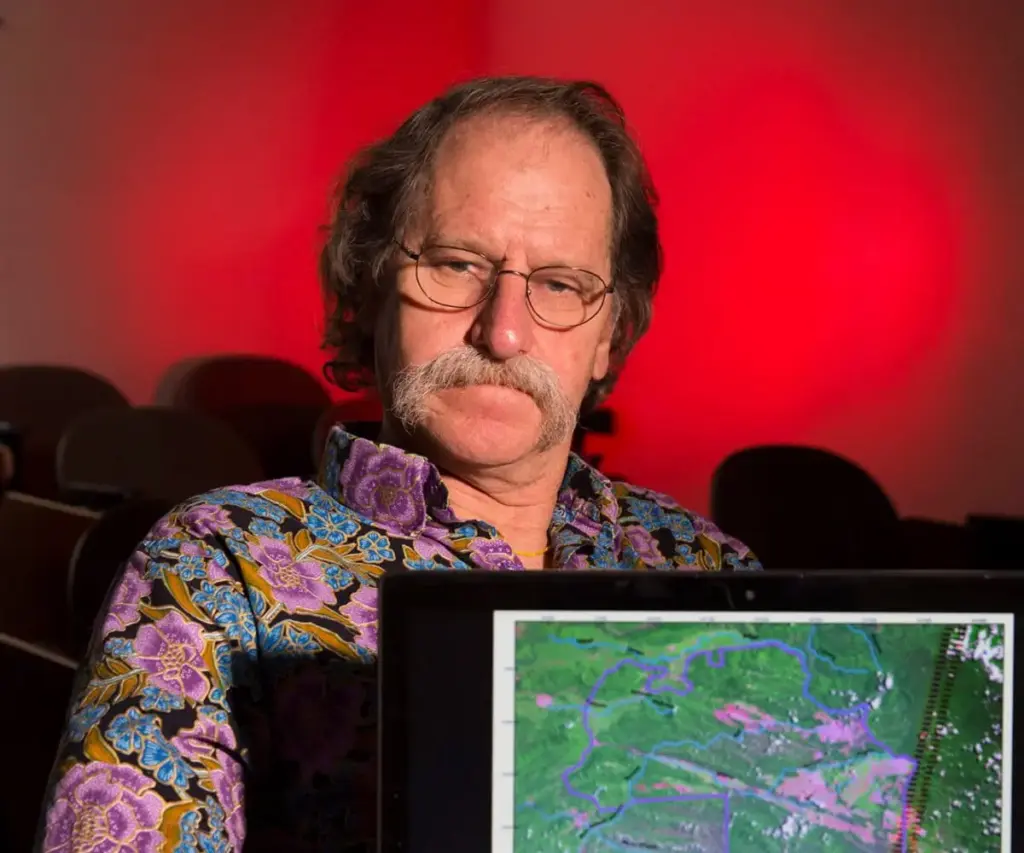
The death of Dr. J. Peter Brosius on July 29, at the age of 72, marked the passing of one of the most rigorous and compassionate anthropological voices of our time. For four decades, Brosius immersed himself in the lives and landscapes of the Penan people of Sarawak, Malaysian Borneo. His passing closes a remarkable chapter of scholarship that bridged academic anthropology, grassroots advocacy, and landmark legal victories for Indigenous land rights.
To the global public, the name Sarawak became synonymous with dramatic environmental clashes in the early 1990s. Logging roads in the remote Upper Baram region turned into battlegrounds where Penan families erected wooden barricades, putting their bodies between state security forces, heavy timber trucks, and towering bulldozers. As these protests captured international headlines, opposing narratives hardened. The government of Chief Minister Abdul Taib Mahmud sought to suppress media scrutiny, dismissing the Penan as a "backward" people easily manipulated by foreign agitators. Simultaneously, international environmental NGOs often romanticized them as primitive forest dwellers engaged in a timeless, static struggle to protect an untouched Eden.
Brosius spent his entire career challenging both of these convenient extremes. Through meticulous field research, he demonstrated that the Penan were neither helpless pawns of Western activists nor relics of a pristine, unchanging past. Instead, they were dynamic, self-determining agents navigating complex modern political landscapes, internal community divisions, and rapidly shifting economic realities. By refusing to let nuance be sacrificed for the sake of easy political slogans, Brosius sometimes found himself at odds with both state timber interests and well-meaning international campaigners. Yet, his unwavering commitment to ground-level truth ultimately yielded profound impacts: his decades of painstaking documentation dismantled colonial-era legal frameworks and secured groundbreaking judicial recognition for Indigenous land stewardship in Malaysia.
Detailed Chronology: Four Decades in the Forests of Sarawak
To understand the depth of Brosius’s contribution, one must trace a timeline that stretches far beyond the high-profile blockades of the 1990s.
The Early Years and Ground-Level Realities (1980s)
Brosius arrived in Sarawak well before the international spotlight found the region. Beginning in the early 1980s, he embedded himself within Penan communities, learning their language, mapping their migration histories, compiling genealogies, and recording oral traditions. During these formative years, he recognized that generalizations about "the Penan" masked vast local differences.
When the logging crisis escalated into blockades in the early 1990s, Brosius’s longitudinal data revealed a starkly complex picture. Penan responses to the encroachment of commercial timber companies were far from monolithic. While some communities chose direct, militant resistance through road blockades, others opted to negotiate with logging companies, seeking immediate financial compensation, trade goods, or employment opportunities. For Brosius, these divergent strategies were not signs of disunity or weakness; they were calculated decisions made by distinct communities navigating unprecedented pressures under deeply difficult circumstances.
The Clash of Narratives (1990s–2000s)
As international environmental organizations rushed to champion the Penan cause, Brosius began critically examining how local realities were being translated for Western audiences. In a series of influential academic papers, he analyzed the mechanics of transnational advocacy campaigns. He demonstrated how complex, localized political struggles over land rights, regional autonomy, and resource distribution were frequently flattened into simplistic moral tales designed to resonate with donors and activists in Europe and North America.
Brosius warned of the strategic dangers inherent in this simplification. When Indigenous groups are portrayed exclusively as pristine forest dwellers existing entirely outside of modern markets or contemporary politics, their claims become inherently fragile. If their lifestyles shift—or if they engage in trade, wage labor, or political negotiation—outsiders can easily dismiss them as having "lost their authenticity." Brosius argued passionately for an anthropology that honored Indigenous peoples as modern political actors.

The Legal Breakthrough and Vindication (2012)
The apex of Brosius’s applied anthropological work culminated in the courtroom. For generations, the legal framework governing Native Customary Rights (NCR) in Sarawak was heavily stacked against nomadic and semi-nomadic peoples like the Penan. Under colonial and post-colonial land laws, legal recognition of customary ownership heavily favored communities that could prove physical, permanent clearing of primary forest for agriculture—such as wet-rice farming.
Because the traditional Penan lifestyle left the forest canopy standing, the state could legally classify their ancestral lands as "vacant state land" ripe for logging concessions and plantations.
Brosius spent decades dismantling this legal fiction. Central to his research was the documentation of molong—a Penan practice that roughly translates to "to preserve, foster, or nurture." Across generations, Penan families managed specific stands of wild sago palms, fruit trees, and durable boat-making timber. They practiced sustainable resource management, carefully harvesting mature trunks while nurturing younger shoots and leaving wild stocks intact.
In 2012, this lifetime of archival work translated into legal history. Brosius took the stand as an expert witness in a landmark Native Customary Rights case involving the Penan community of Long Jaik. Armed with decades of maps, linguistic notes, photographic records, and meticulous family genealogies, he dismantled the state’s argument that the Penan merely wandered aimlessly through an unmanaged wilderness. The court accepted molong as an active, structured system of historical land stewardship, establishing a monumental legal precedent for Penan customary land claims in Malaysia.
The Final Return (Summer 2026)
True to his lifelong dedication, Brosius remained active in the field until his final days. In the summer preceding his passing on July 29, 2026, he returned to Sarawak one last time. For several weeks, he walked the forest trails alongside Penan families, mapping ancestral areas just as he had done four decades earlier, ensuring that knowledge of the land would be preserved for the generations yet to come.
Supporting Context & Metrics: The Human and Ecological Stakes
The landscape in which Brosius worked has undergone cataclysmic changes over the past fifty years. Sarawak, located on the Malaysian island of Borneo, once hosted some of the oldest and most biologically diverse tropical rainforests on Earth.
- Deforestation and Habitat Loss: By the time the courts began recognizing customary land claims in the 2010s, the physical reality on the ground had drastically deteriorated. The vast majority of primary dipterocarp forests across Sarawak’s interior had already been heavily degraded by industrial logging, clear-cut for vast oil palm and timber plantations, or permanently inundated by massive hydroelectric dam projects.
- Cultural Resilience: Despite losing substantial portions of their ancestral foraging grounds to industrial development, Penan communities demonstrated remarkable demographic and cultural resilience. Estimates place the total Penan population at roughly 10,000 to 12,000 individuals, the majority of whom have transitioned from nomadic foraging to settled village life while fiercely maintaining their cultural identity and linguistic heritage.
- The Scale of Brosius’s Archive: Brosius’s academic legacy includes dozens of peer-reviewed articles, foundational texts on environmental anthropology, and an irreplaceable archive of maps, genealogies, and oral histories gathered across 40 years of continuous collaboration with Indigenous elders.
| Metric / Indicator | Contextual Overview |
|---|---|
| Duration of Fieldwork | 40 years of continuous engagement with Sarawak Penan communities |
| Key Legal Milestone | 2012 Long Jaik Native Customary Rights case (legal validation of molong) |
| Primary Geographic Focus | Upper Baram and interior river basins of Sarawak, Malaysian Borneo |
| Core Anthropological Concept | Critiquing transnational environmental representation and validating molong stewardship |
Official Statements and Academic Tributes
The academic and Indigenous communities responded to Brosius’s passing with an outpouring of grief, respect, and recognition of his monumental contributions.
Colleagues at the University of Georgia (UGA), where Brosius spent much of his distinguished academic career, released statements highlighting his profound integrity as a scholar and educator.

"Pete Brosius did not just study a community from a distance; he lived with them, listened to them, and stood beside them through decades of profound turbulence," noted a departmental tribute from UGA Anthropology. "His work fundamentally changed how anthropologists think about environmental movements, Indigenous agency, and the ethics of representation. He taught us that respect for Indigenous peoples requires seeing them not as static museum pieces, but as complex, modern human beings shaping their own destinies."
Indigenous leaders in Sarawak also expressed deep sorrow over the loss of a trusted ally who spent a lifetime validating their ancestral connection to the forests. Longtime collaborators remembered Brosius not merely as an outside researcher, but as a steadfast friend who treated Penan oral history and ecological knowledge with the same rigorous scientific gravity usually reserved for Western documentation.
Future Outlook: The Ongoing Struggle for Borneo’s Interior
As the international conservation community reflects on the life and legacy of J. Peter Brosius, the future of Sarawak’s Indigenous communities remains fraught with complex challenges.
While landmark legal victories—such as the recognition of molong stewardship in the Long Jaik case—opened vital legal pathways for land restitution, the implementation of these rulings remains slow and uneven. Vast tracts of land continue to face pressures from commercial agribusiness, lingering logging interests, and regional infrastructure projects. Furthermore, younger generations of Penan face the delicate modern challenge of balancing integration into the broader Malaysian economy with the preservation of traditional ecological knowledge and language.
Nevertheless, the framework that Brosius left behind provides an enduring roadmap. By proving that Indigenous land rights do not depend on the destruction of nature to be legally recognized, his scholarship permanently altered Malaysian jurisprudence. More importantly, by amplifying the authentic voices of the Penan rather than relying on romanticized Western tropes, Brosius ensured that the story of Borneo’s forests is told on the terms of the people who call them home.
Dr. J. Peter Brosius leaves behind a towering intellectual legacy, a transformed legal landscape, and countless Penan families who will continue to walk, map, and protect the ancestral forests he dedicated his life to understanding.