Executive Overview
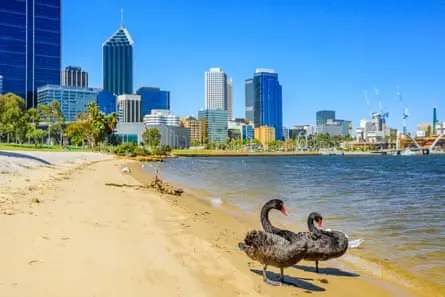
Western Australia stands at a critical environmental precipice. As the high-pathogenicity H5N1 avian influenza virus edges closer to the state’s iconic coastlines and inland waterways, scientists, conservationists, and Indigenous custodians are bracing for what could be an unprecedented ecological crisis. At the epicenter of this anxiety is the black swan (Cygnus atratus), a species that serves not merely as a biological entity, but as the living heraldic emblem of the state itself.
According to leading virologists and ornithologists, the black swan is considered a primary "indicator species" for the arrival and devastation of H5N1. Lacking a vital immune protein common in other avian species that helps recognize viral incursions, these birds are exceptionally vulnerable. Once infected, they face a staggering mortality rate, often succumbing to a hyper-inflammatory response triggered by the pathogen.
The arrival of the virus in Western Australia—sparked months ago by migratory species—has exposed historical vulnerabilities in Australia’s biosecurity preparedness, which critics argue has leaned too heavily toward safeguarding agricultural sectors at the expense of native wildlife. As neighboring states grapple with mass mortality events involving thousands of coastal birds, Western Australian authorities are scrambling to evaluate emergency vaccination programs, trial experimental treatments on captive populations, and confront the sobering reality that entire local colonies of the state’s most cherished bird could be wiped out in a matter of weeks.
Detailed Chronology of an Approaching Crisis
The trajectory of H5N1 toward Western Australia’s unique ecosystems has been a slow-moving emergency years in the making. While various strains of avian influenza have circulated globally for decades, the current H5N1 lineage has rewritten the rules of wildlife epidemiology, devastating mammalian and avian populations across North America, Europe, and parts of Asia over the past five years.
- Five Years Prior: The highly pathogenic H5N1 variant establishes widespread dominance across the Northern Hemisphere, causing unprecedented mass die-offs in wild seabirds, raptors, and marine mammals. Australian authorities increase surveillance, recognizing that it is only a matter of time before migratory flyways bridge the gap to the isolated continent.
- Early 2026: The virus successfully breaches Australian borders, with initial mass mortality events reported in South Australia. Over 1,000 greater crested terns are found dead across three separate incidents, signaling that the threat has transformed from a theoretical risk into an active, localized epizootic.
- Nine Weeks Prior to Present: Biosecurity officials confirm that a migratory bird has carried the H5N1 virus to the shores of Western Australia. The detection triggers immediate threat assessments across state agencies, putting conservation parks, wetlands, and indigenous lands on high alert.
- The Present Day: The Western Australian government initiates preliminary vaccine trials at Perth Zoo, administering doses to five endangered black cockatoos. Concurrently, environmental agencies evaluate the feasibility of deploying vaccines to wider native populations, even as experts warn that logistical hurdles may render widespread immunization of wild birds virtually impossible.
Supporting Context & Metrics: Vulnerability and the Indicator Species
The profound concern surrounding black swans is rooted in hard science. A comprehensive national risk assessment conducted by the Commonwealth Department of Climate Change, Energy, the Environment and Water (DCCEEW) places black swans in the "very high risk" category for H5N1 susceptibility.
University of Queensland virologist Dr. Kirsty Short explains that the biological makeup of black swans sets them up for catastrophic outcomes when exposed to novel pathogens. Unlike many other bird species that have co-evolved with various influenza strains and developed robust defense mechanisms, black swans lack a key immune protein involved in rapidly recognizing viral infections. This immunological blind spot can trigger a runaway, fatal inflammatory response once the virus enters their system.
+-------------------------------------------------------------------------+
|                  H5N1 Vulnerability Spectrum in Australia               |
+--------------------------+-----------------------+----------------------+
| Species Group            | Immune Profile        | Risk Level           |
+--------------------------+-----------------------+----------------------+
| Agricultural Poultry     | Monitored / Farmed    | High (Controlled)    |
| Little Penguins (Vic)    | Studied / Colony-bound| High                 |
| Greater Crested Terns    | Highly Migratory      | Severe (Mass Deaths) |
| Black Swans (WA)         | Deficient Key Protein | "Very High Risk"     |
+--------------------------+-----------------------+----------------------+
Ornithologist Floyd Holmes, speaking from Phoenix Environmental Sciences, highlights the social and behavioral patterns of black swans that exacerbate this biological risk. Black swans inhabit both coastal estuaries and inland freshwater systems, frequently gathering in massive, dense colonies during the breeding season.
"It is not likely to wipe out all of the swans across the continent in one sweep," Holmes notes, "but for any local groups of swans, particularly in the south-west, that all congregate and breed in a single place, the potential to just lose that entire population all at once is definitely there. It would be pretty devastating for that local area."
The crisis also exposes systemic gaps in funding and preparedness. Lindall Kidd, a waterbird ecologist with BirdLife Australia, points out that Western Australia—and the nation as a whole—is effectively playing catch-up. Much of the federal and state funding earmarked for bird flu preparedness over the past several years was funneled directly into protecting the agricultural and poultry industries, leaving native, non-commercial species largely unprotected.
"Our birds are already under pressure from habitat loss through land clearing and climate change; we could be looking at death by a thousand cuts," Kidd warns. "There was a known gap in preparedness prior to the bird flu incursion, and we did not have enough plans in place especially for some of our more common, widely spread species. They are the ones in our urban areas, like pelicans and swans."
Official Statements and Policy Responses
As the crisis unfolds, federal and state governments are under intense pressure to justify their preparedness measures and outline clear strategies for mitigating wildlife loss.
Federal Agriculture Minister Julie Collins reported that the federal government has allocated $113 million toward overarching bird flu preparedness. This expenditure includes a $2 million investment dedicated to purchasing vaccines designed to protect captive populations of high-priority native species. The vaccine in question is manufactured by US animal health corporation Zoetis and was originally formulated for commercial poultry operations, specifically chickens.

However, the deployment of this vaccine to native wildlife presents significant regulatory and practical hurdles. Western Australian Environment Minister Matthew Swinbourn acknowledged these limitations, noting that the vaccine is not currently registered for use in wildlife.
"The feasibility of vaccination in black swans is being explored," Swinbourn stated, emphasizing that immunization is "just one tool in the fight against the disease."
When pressed on the efficacy of the Zoetis vaccine when administered to non-chicken species, federal representatives remained cautious. A ministerial spokesperson stated that "the vaccination rollout led by states and territories has commenced and will continue across the country in the coming weeks and months," though empirical data regarding cross-species antibody response remains sparse.
Dr. Short underscores these concerns, pointing out historical research gaps. "There were some studies that were done vaccinating different birds in a zoo with an H5N1 vaccine, and they found that parrots didn’t mount a very good antibody response for some reason," she says. "So there are obviously species-dependent variations, and I think we really should have invested in understanding what this virus means specifically for Australia."
Adding to the logistical nightmare is the delivery mechanism: most avian vaccines require a two-dose regimen administered weeks apart. In wild, highly mobile populations, this requirement makes mass vaccination practically impossible. While conservationists in Victoria have managed to initiate a vaccination program targeting 5,000 little penguins on Phillip Island, that success relies entirely on the fact that the colonies are heavily studied, accustomed to human presence, and return reliably to the exact same burrows every single night. For open-water dwellers like the black swan, replicating such a program presents an insurmountable challenge.
Cultural Resonance and the Indigenous Connection
Beyond the ecological and economic dimensions of the H5N1 threat lies a profound cultural tragedy. For the Noongar people of south-west Western Australia, the black swan is far more than a biological organism or a provincial heraldic symbol; it is an integral part of their spiritual, ecological, and cultural heritage.
Known in the Noongar language as Maarli or Kuljak, the black swan carries a deep totemic significance that stretches back tens of thousands of years—predating European settlement and its subsequent adoption as Western Australia’s official state bird emblem. Dr. Glen Stasiuk, a Noongar researcher from Murdoch University, explains that the bird’s cultural footprint is vast.
"With connections to brotherhood and the seasons, it is a very important bird," Stasiuk notes. The potential loss of large numbers of these birds carries a psychosocial and cultural weight that ecologist Lindall Kidd describes as "massive."
For generations, the presence, migration, and nesting habits of Maarli have served as seasonal indicators for Indigenous custodians, guiding land management practices and cultural ceremonies. The decimation of these populations by an introduced viral pathogen would represent an irreparable cultural wound, severing a living link between the Noongar people and their traditional lands.
Future Outlook: Three Scenarios for Western Australia
As H5N1 continues its march across the Australian continent, scientists and conservationists are forced to weigh the possible futures awaiting Western Australia’s wildlife. According to Floyd Holmes, the long-term outlook for the black swan boils down to three distinct possibilities:
- Natural Adaptation and Immunity: Over time, surviving populations develop a natural resistance or immunity to the H5N1 strain, allowing the species to rebound, albeit after enduring severe initial population bottlenecks.
- Geographic Isolation: The virus fails to penetrate every remote wetland and isolated waterway across the vast expanse of Western Australia, leaving isolated pockets of black swans untouched and capable of serving as a genetic reservoir.
- Catastrophic Extirpation: The virus proves universally fatal to the local gene pool, leading to the localized or near-total collapse of swan populations across the south-west and coastal areas, forever altering the landscape and stripping the state of its most recognizable living symbol.
"I suspect that the number of swans is going to go down," Holmes reflects cautiously. "Hopefully it doesn’t reach zero. I don’t think it will, but I guess time will tell."
For now, Western Australia watches its wetlands with bated breath. As researchers monitor mortality rates in the eastern states and refine trial vaccinations in zoos, the fate of the black swan hangs in the balance—a stark reminder of the fragility of native ecosystems in an era of global ecological disruption.