The transformation of the European automotive landscape has crossed a critical threshold. According to newly released data from automotive analysts New Automotive and industry body E-Mobility Europe, battery-electric vehicle (BEV) registrations across 14 key European Union and European Free Trade Association (EFTA) markets experienced a staggering 51% surge in March 2026. This monumental jump resulted in more than 224,000 newly registered electric vehicles in a single month, pushing BEVs to capture roughly 22% of total new car sales across those monitored territories, and an estimated 21.2% specifically within the EU.
While climate regulations and falling battery costs have traditionally served as the primary growth engines for the electric vehicle market, the underlying catalysts have drastically evolved. This unprecedented springtime surge is increasingly intertwined with an urgent geopolitical imperative: energy security. Renewed conflict and instability in the Middle East have once again thrown Europe’s heavy reliance on imported fossil fuels into sharp relief, transforming the EV transition from an environmental goal into an immediate strategic necessity.
Cumulatively, the first quarter of 2026 saw EU nations register upwards of 500,000 new electric vehicles—representing a robust 33.5% year-over-year increase compared to the same period in 2025. Far from being an isolated statistical anomaly or a temporary spike driven by localized incentives, this broad-based momentum signals that the European e-mobility market has entered a mature, highly resilient phase. Consumers, commercial fleet operators, and policymakers are moving in unison to decouple the continent’s vital transportation network from the volatile global oil market.
Detailed Chronology: The Path to March 2026’s Record-Breaking Surge
To understand the magnitude of the March 2026 milestone, it is essential to trace the trajectory of the European EV market over the preceding eighteen months, a period marked by shifting regulatory frameworks, economic headwinds, and sudden geopolitical shocks.
The Post-Incentive Stabilization (Late 2024 to Mid-2025)
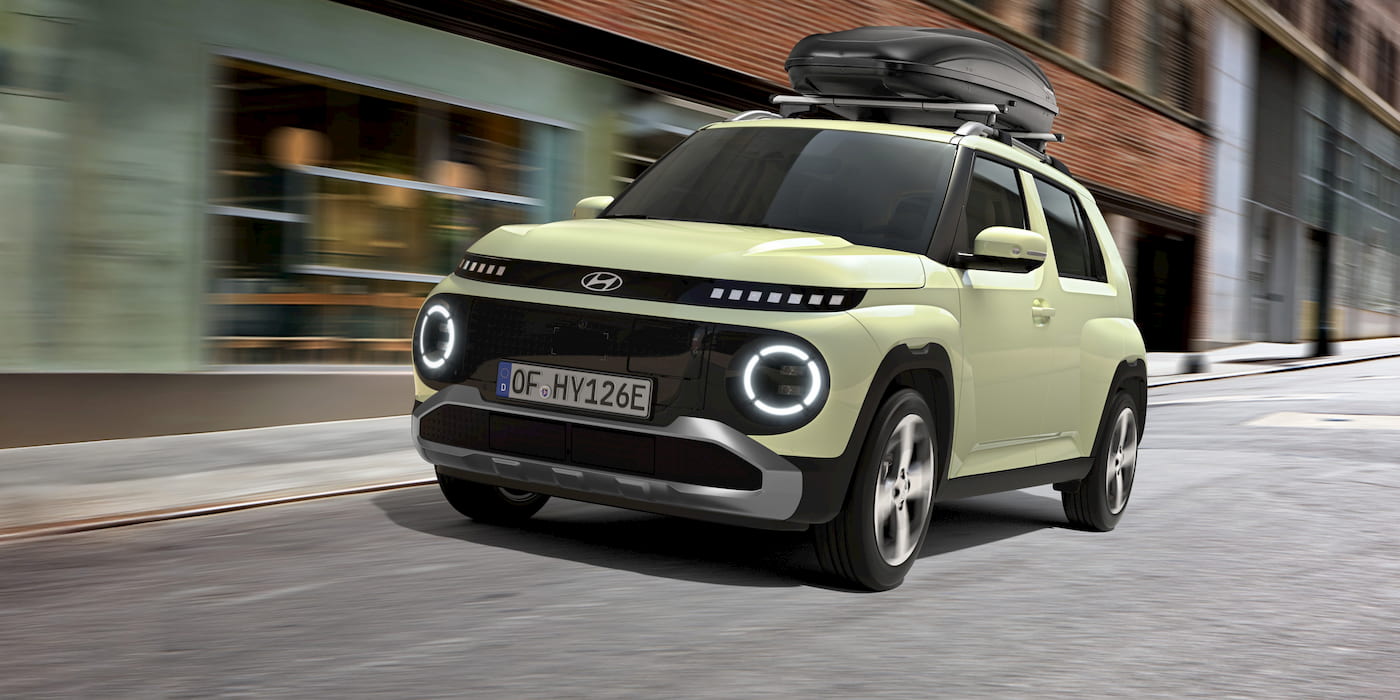
Following the sudden phase-out or reduction of generous EV purchase subsidies in several core European economies—most notably Germany’s abrupt termination of its Umweltbonus scheme at the end of 2023—the continental market experienced a cooling-off period throughout 2024. Growth rates flattened, leading many legacy automakers to reevaluate their immediate production targets. However, strict EU fleet-wide carbon dioxide emission standards, which ratcheted downward entering 2025, forced manufacturers to maintain competitive pricing strategies, introduce more affordable entry-level models (such as the Hyundai Inster and various sub-€25,000 urban hatchbacks), and protect their market share.
The Regulatory Tightening and Economic Realignment (Late 2025)
By the closing months of 2025, the market began to find its footing organically. Sticker price parity between internal combustion engine (ICE) vehicles and BEVs drew closer, driven by localized discounting and cheaper lithium-ion cell chemistry. Countries that had previously lagged behind, such as Italy and Poland, began implementing targeted, streamlined financial frameworks to support middle- and lower-income households in adopting electric transit. Italy, which languished at a sluggish 5% EV market share for much of 2025, began implementing structured structural reforms.
The Geopolitical Shock and Spring Acceleration (Early 2026)
As 2026 commenced, macroeconomic pressures compounded with rising geopolitical instability in the Middle East. The resulting volatility in global crude oil markets sent shockwaves through European energy supply chains. Consumers facing mounting fuel costs at the pump began accelerating their vehicle replacement cycles. The data for Q1 2026 reflects this compounding urgency: January and February established steady gains, paving the way for the explosive 51% year-on-year growth observed in March, where monthly registrations breached the 224,000 mark.
Supporting Context & Metrics: Broad-Based Growth Across Europe’s Economies
A critical feature of the March 2026 data is that the surge was not concentrated in a single pioneering nation or propped up by anomalous tax loopholes in niche markets. Instead, expansion was distributed broadly across Europe’s largest and most economically diverse territories.
The Big Five Outperform
Germany, France, Spain, Italy, and Poland—collectively representing the heavyweights of the European economy—all recorded year-to-date BEV growth rates exceeding 40%.
France: Retaining its crown as a large-market leader, France saw EVs capture a remarkable 28% of all new car sales in March. Continued momentum from the government’s social leasing scheme—which provides low-cost long-term leases on electric vehicles to lower-income workers—has helped propel the country’s year-to-date growth toward an impressive 50%.
Germany: Following a period of market readjustment in the wake of previous subsidy reforms, Germany staged a powerful rebound. Roughly one in every four new vehicles registered in the country during March was fully electric, fueling a 42% increase year-to-date.
Italy: Long considered a laggard in the European e-mobility transition due to an underdeveloped public charging infrastructure and historically low consumer incentives, Italy emerged as a standout success story. After hovering near a meager 5% market share at the close of 2025, Italy’s BEV adoption climbed to 8.6% in March, anchoring a 65% year-to-date surge in registrations.
Poland: Mirroring Italy’s trajectory, Poland demonstrated that Central and Eastern European markets are rapidly clearing infrastructural hurdles, recording robust double-digit growth percentages that outpace historical baselines.
The Nordic Benchmark: Norway, Denmark, and Finland
While major economies are accelerating their transitions, the Nordic nations continue to operate in a league of their own, illustrating the ultimate destination of the electric mobility curve.
+-------------------------------------------------------------+
|              MARCH 2026 EV MARKET SHARE (SELECT NORDIC)     |
+-------------------------------------------------------------+
| Norway  ████████████████████████████████████████  98.4%     |
| Denmark ███████████████████████████████           76.6%     |
| Finland ████████████████████████                  50.0%     |
+-------------------------------------------------------------+
Norway: Setting the definitive global benchmark, Norway reported that an astonishing 98.4% of all new car registrations in March were fully electric. The internal combustion engine is effectively obsolete for new passenger car sales in the country.
Denmark: Proving that Norway’s success is replicable, Denmark recorded 76.6% of all new car sales going fully electric in March.
Finland: Finland successfully crossed the psychological and structural milestone of having nearly 50% of its monthly new vehicle registrations powered entirely by batteries.
Official Statements and Industry Perspectives
The convergence of economic data, geopolitical anxiety, and environmental policy has prompted strong commentary from prominent industry leaders and energy analysts.
Chris Heron, secretary-general of E-Mobility Europe, emphasized the direct correlation between automotive choices and continental resilience.
"March’s surge in electric car sales is one of Europe’s biggest recent gains in energy security, in a month when oil dependence has become a real vulnerability," stated Heron. "Across the EU’s major markets, EV sales are growing at rates above 40%, marking a clear step change, not statistical noise. That translates into half a million electric cars registered so far this year, cutting roughly 2 million barrels of oil demand annually."
Echoing these sentiments, Ben Nelmes, CEO of New Automotive, highlighted the fundamental shift in how consumers and businesses view their transportation options amidst broader macroeconomic instability.
"Every electric vehicle registered means Europe is less reliant on imported oil," noted Nelmes. "At a time when energy security has moved to the top of the political agenda, the EV transition is delivering real and measurable resilience. The pace of change we’re now seeing across major European markets—including countries like Italy and Poland that were slower to start—suggests the transition has entered a new phase."
Industry analysts point out that this behavioural pivot by consumers is occurring even before the full downstream economic impacts of current Middle Eastern oil supply disruptions have trickled down to everyday retail fuel prices. Fleet managers and private buyers alike are proactively hedging against future energy shocks by shifting capital toward domestically generated, grid-supplied electricity.
Future Outlook: Navigating 2026 and Beyond
As Europe moves past the halfway point of the decade, the implications of the Q1 2026 performance extend far beyond immediate sales figures. Several key trends will dictate the pace and shape of the electric vehicle transition for the remainder of 2026 and into the late 2020s:
1. Supply Chain Localization and Trade Dynamics
With energy security firmly established as a cornerstone of European policymaking, pressure will intensify on domestic and regional manufacturing capacity. Automakers operating within the EU will face heightened incentives to source battery cells, critical minerals, and powertrain components within allied jurisdictions to avoid supply chain bottlenecks and potential trade tariffs. The expansion of European gigafactories, supported by public-private partnerships, will be critical to sustaining vehicle affordability.
2. Charging Infrastructure as the Next Frontier
While vehicle sales figures in markets like Italy and Poland are accelerating, the long-term sustainability of this growth depends heavily on the continuous rollout of high-speed public charging infrastructure. Urban centers, multi-dwelling residential buildings, and cross-border highway corridors must keep pace with the exponential influx of half a million new BEVs hitting European roads every quarter. Public investments tied directly to energy independence funds are expected to prioritize grid modernization and ultra-fast charging hubs.
3. Fleet Electrification and Commercial Adoption
Commercial fleets represent the next massive wave of adoption. Because corporate vehicles are driven significantly more miles per year than privately owned cars, their transition to electric power yields an outsized reduction in foreign oil dependency. Fleet managers, driven by both corporate environmental, social, and governance (ESG) mandates and total cost of ownership (TCO) calculations, are increasingly bypassing hybrid options in favor of 100% battery-electric deployments.
Conclusion
The 51% surge in European EV sales recorded in March 2026 is much more than a successful quarter for the automotive industry; it represents a defining moment in Europe’s modern industrial history. By demonstrating that the adoption of electric vehicles can scale rapidly and broadly across diverse national economies, Europe is actively engineering a structural break from fossil fuel hegemony. If current consumer sentiment, fleet purchasing habits, and supportive regulatory frameworks hold firm through the remainder of the year, the continent’s transition to electric mobility will cement itself not merely as a climate success story, but as the bedrock of its long-term geopolitical and economic resilience.