Executive Overview
Amidst the scorching heat waves that routinely punish urban centers like New York during the peak of summer, thinking about home heating appliances feels counterintuitive, if not downright exhausting. Yet, the conversation surrounding heating and cooling technology has shifted fundamentally. At the center of this transformation is the heat pump—a versatile, highly efficient electric appliance that not only warms homes during frigid winters but can also run in reverse to provide vital air conditioning during sweltering summer months.
Over the past decade and a half, the trajectory of heat pumps in the United States has been nothing short of meteoric. According to recent industry reports, sales have doubled over the last 15 years, cementing a decisive victory in the race against legacy fossil fuel heating. Most notably, during the first quarter of 2026, heat pump sales outpaced traditional natural-gas furnaces by an impressive 32%.
These statistics are striking because they unfold against a backdrop of sweeping policy changes. A critical federal tax credit designed to subsidize the purchase and installation of residential heat pumps officially expired at the close of 2025, following the Trump administration’s legislative rollback of key incentives established under the 2022 Inflation Reduction Act (IRA). Conventional wisdom—bolstered by recent experiences in the electric vehicle (EV) market—suggested that the sudden withdrawal of financial assistance would cause consumer demand to plummet.
Instead, the opposite happened. Despite the elimination of subsidies worth up to $2,000 per household, the US heat pump market has not only held its ground but continued to grow. This resilience has caught energy economists and policy analysts by surprise, signaling a profound structural maturation in how Americans heat and cool their homes. As the data shows, the era of the heat pump is no longer reliant on temporary government life support; it has crossed a critical threshold into self-sustaining market dominance.
Detailed Chronology: From Legislative Push to Market Independence
To understand the current health of the heat pump sector, it is essential to trace the policy milestones and market dynamics that have shaped the industry over the past several years.
The Policy Catalyst (2022–2025)
The modern boom of the US heat pump industry received its most aggressive legislative boost with the passage of the Inflation Reduction Act in August 2022. The IRA introduced sweeping incentives aimed at accelerating the nation’s transition away from fossil fuels, prominently featuring Section 25C tax credits. For consumers who installed qualifying energy-efficient heat pumps between January 1, 2023, and December 31, 2025, the federal government offered tax credits covering up to 30% of the total project cost, capped at $2,000 annually.
During this window, manufacturers, installers, and advocacy groups leaned heavily into these incentives. They marketed heat pumps as both an environmental imperative and a financially savvy upgrade, leveraging government money to help offset the historically steep upfront costs of equipment and installation compared to traditional gas furnaces.
The Cliff Effect Warning Signs (Late 2025)
When the incoming political administration signaled its intent to dismantle key components of the IRA, clean energy advocates grew deeply concerned. The anxiety was grounded in recent precedent. Just months prior, generous federal tax credits of up to $7,500 for new electric vehicle purchases came to an abrupt end on September 30, 2025.
The automotive market reacted exactly as economists predicted. In the immediate quarter leading up to the September deadline, EV sales experienced a massive, artificial spike as buyers rushed to lock in the savings before the subsidy vanished. Immediately following the expiration, EV sales fell off a cliff, entering a prolonged slump before slowly beginning to normalize months later. Industry observers naturally assumed the heat pump market would mirror this volatile boom-and-bust cycle when its own financial incentives expired on January 1, 2026.
The 2026 Reality Check
Effective January 1, 2026, federal financial assistance for heat pumps was completely zeroed out. Yet, shipment and sales data compiled by the Air Conditioning, Heating, and Refrigeration Institute (AHRI)—a trade association representing roughly 90% of the US market—revealed a radically different story.
Following a flat period between December 2025 and January 2026, heat pump shipments began a steady, organic climb into the spring. This upward trajectory mirrored seasonal demand curves observed in previous years, but with a notable twist: the 2026 spring rebound was noticeably stronger than historical averages. Rather than contracting in the face of lost subsidies, the market demonstrated robust health, proving that consumer adoption has detached from short-term fiscal policy shocks.
Supporting Context & Metrics: The Mechanics and Market Economics
Why have heat pumps defied expectations? To answer this, one must examine the underlying thermodynamic mechanics, operational savings, and broader macroeconomic forces driving consumer decisions.
Thermodynamic Efficiency and the Economics of Operation
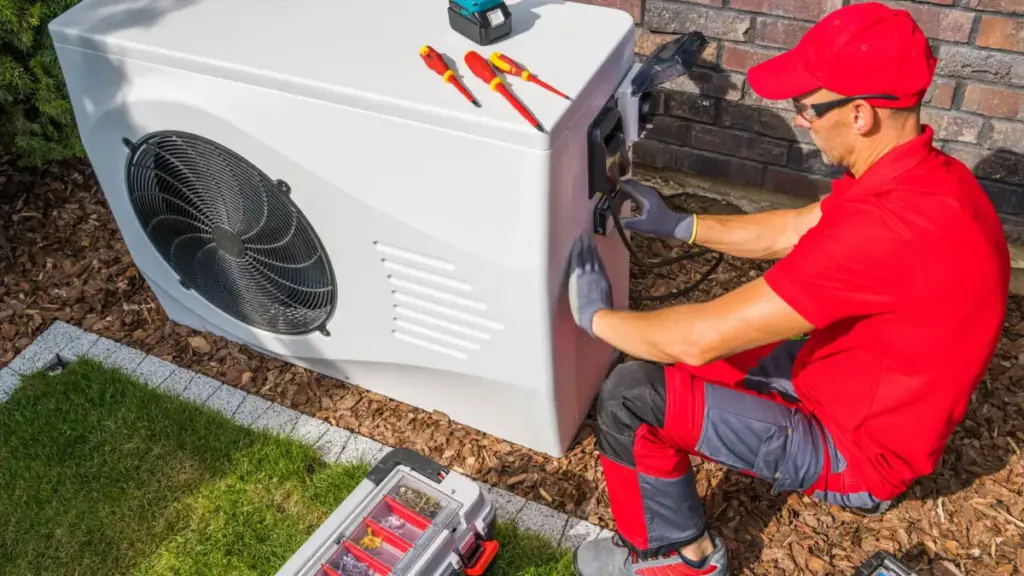
At its core, a heat pump does not generate heat by burning fuel or via direct resistance electrical coils; instead, it uses electricity to move thermal energy from one location to another. Operating on the same foundational principles as a standard refrigerator, a heat pump utilizes a circulating refrigerant loop that expands and compresses, gathering ambient heat from the outside air (even during cold winter days) and releasing it indoors. In warmer months, the cycle reverses, extracting heat from inside the home and expelling it outdoors.
This transfer process yields extraordinary efficiency ratings, often exceeding 300% to 400% under optimal conditions. Once a consumer absorbs the initial capital expenditure of purchasing and installing the system, the ongoing operational costs are significantly lower than those associated with traditional gas furnaces, oil boilers, or standard baseboard electric heaters.
The Upfront Cost Hurdle vs. Long-Term Value
Despite their operational savings, heat pumps have historically faced a major barrier to entry: upfront costs. Purchasing and integrating a modern multi-zone heat pump system into an existing home frequently requires complex electrical upgrades, ductwork modifications, and specialized labor, making the initial price tag substantially higher than replacing a worn-out gas furnace with a direct equivalent.
While the $2,000 federal tax credit was undoubtedly helpful in bridging this financial gap, the post-2026 data indicates that consumers are increasingly factoring long-term utility savings, home resilience, and indoor air quality into their purchasing decisions. As electricity grids grow cleaner and natural gas prices experience ongoing volatility, the total cost of ownership over a 15-to-20-year lifespan heavily favors the heat pump, independent of federal intervention.
Global Momentum
The resilience of the US market is mirrored internationally. Over the past four consecutive years, heat pumps have consistently outsold gas furnaces across the United States. Furthermore, this is not an isolated domestic phenomenon. Major global economies, including China and nations across the European Union—most notably Germany—have accelerated their own structural pivots toward heat pump adoption as a cornerstone of national energy security and carbon reduction mandates.
Official Statements and Expert Analysis
Energy economists and industry analysts have closely monitored the post-subsidy landscape to decode consumer behavior. Their findings suggest a profound maturation of the green technology sector.
In a comprehensive analysis published in July 2026, prominent energy economist and University of California, Berkeley professor Lucas Davis examined whether US households would continue purchasing heat pumps in the absence of federal tax credits. Reviewing AHRI shipment metrics and broader retail trends, Davis concluded that the market had outgrown its reliance on government subsidies.
"It appears that the U.S. market for heat pumps is strong enough that it does not depend on tax credits," Davis wrote in his analysis.
This sentiment aligns with broader industry forecasts. When MIT Technology Review designated heat pumps as a breakthrough technology in its annual list, the editorial consensus was clear: humanity had officially crossed the threshold into the "era of the heat pump."
Industry stakeholders note that consumer awareness has reached a tipping point. Word-of-mouth recommendations, rising contractor familiarity, and aggressive manufacturing investments by major HVAC brands have transformed heat pumps from a niche environmental product into the default mainstream choice for residential climate control. While regulatory frameworks and state-level incentives still play a supportive role in specific regions, the primary engine of growth is now consumer demand driven by tangible performance and long-term utility savings.
Future Outlook: The Road Ahead for Building Decarbonization
The successful weathering of the 2026 tax credit expiration marks a watershed moment for climate policy and energy technology. It demonstrates that green technologies can achieve true market self-sufficiency, transitioning from subsidized experiments to indispensable household infrastructure.
However, challenges remain on the horizon. Achieving economy-wide building decarbonization requires retrofitting millions of older homes, many of which present difficult architectural and electrical challenges. Overcoming these barriers will require continued innovation from manufacturers to drive down equipment costs, ongoing training programs for the HVAC workforce to ensure flawless installations, and targeted utility-level rate structures that favor electrification.
Nevertheless, the data from the first half of 2026 offers profound encouragement. The path toward widespread technology adoption is rarely a straight line, particularly when transformation relies on the decentralized decisions of individual homeowners navigating complex remodeling projects. Despite political headwinds and the abrupt removal of financial scaffolding, the heat pump market continues to forge ahead. The era of the heat pump is not merely surviving—it is accelerating.