Executive Overview
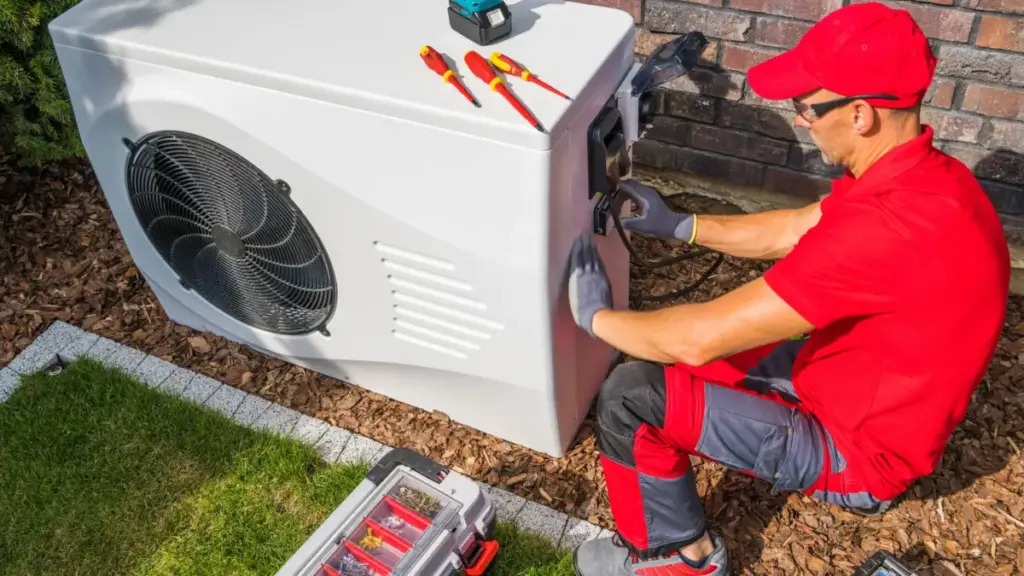
Amidst the scorching, unrelenting heat waves baking cities like New York, discussing home heating appliances might feel fundamentally out of season. Yet, while the mercury climbs outdoors, an entirely different kind of heat is sweeping the American residential energy market. Heat pumps—versatile, highly efficient electrical systems capable of both warming homes in the winter and reversing their cycles to cool them in the summer—are undergoing a massive transformation. Over the past 15 years, US sales of these systems have quietly doubled, fundamentally altering the domestic climate landscape.
Perhaps most remarkably, this surge is outpacing traditional fossil fuels. During the first quarter of 2026, heat pump sales outpaced traditional natural-gas furnaces by a staggering 32 percent.
These milestones are astonishing not just for their scale, but for their timing. At the close of 2025, a critical federal financial catalyst for the technology officially expired. Sweeping legislative changes enacted by the Trump administration dismantled many of the green-energy incentives established under the landmark 2022 Inflation Reduction Act (IRA), zeroing out the lucrative consumer tax credits that offered up to $2,000 for qualifying heat pump installations.
Conventional economic wisdom predicted a predictable, steep downturn. Energy analysts pointed to the chaotic trajectory of the electric vehicle (EV) market just months prior, where the sudden September 2025 sunset of a $7,500 tax credit triggered a frantic pre-deadline purchasing spike followed by a precipitous market collapse. Yet, as recent data from the Air Conditioning, Heating, and Refrigeration Institute (AHRI) demonstrates, the heat pump sector has shrugged off the loss of federal subsidization. Instead of flatlining or falling off a cliff, shipments have continued a steady, resilient climb from winter into spring.
As energy economists and industry analysts scramble to parse the data, one conclusion is becoming increasingly clear: the era of the heat pump is no longer a fragile, policy-dependent experiment. It has evolved into a self-sustaining market movement destined to reshape global residential energy.
Detailed Chronology: From Legislative Lifelines to Market Independence
To understand the current resilience of the heat pump market, one must trace the timeline of policy, public adoption, and manufacturing maturity that brought the technology to this juncture.
2022–2025: The Era of Subsidized Acceleration
When the US federal government passed the Inflation Reduction Act in 2022, it injected unprecedented capital into the American clean energy transition. For homeowners, the legislation introduced robust financial incentives, most notably Section 25C of the tax code, which provided a tax credit covering up to 30 percent of the cost of purchasing and installing an energy-efficient heat pump, capped at $2,000 annually.
For an appliance that historically struggled with high upfront capital costs compared to legacy gas furnaces, this credit served as a vital bridge. It encouraged early adopters and risk-averse homeowners to take the plunge, smoothing out the financial friction of retrofitting older homes. Sales responded in kind, steadily climbing year-over-year. By 2024, MIT Technology Review formally designated heat pumps as an official annual breakthrough technology, declaring that the world had entered "the era of the heat pump."
Late 2025: The Looming Fiscal Cliff
The landscape shifted dramatically in the waning months of 2025. Following political realignments and subsequent legislative maneuvering by the Trump administration, a broad swath of the green-energy subsidies introduced by the IRA was targeted for elimination.
Included in these sweeping cuts was the consumer tax credit for heat pump installations, which was slated to expire permanently on January 1, 2026.
This policy reversal sent a ripple of anxiety through the clean tech sector. Stakeholders anticipated a replay of historical subsidy-cliff scenarios. The most prominent parallel occurred in the automotive sector, where a $7,500 federal tax credit for new electric vehicles expired on September 30, 2025. In the immediate lead-up to that deadline, consumer demand surged artificially as buyers rushed to secure the discount. Once the incentive vanished, EV sales plummeted off a steep cliff, taking months to stabilize as automakers scrambled to adjust pricing strategies and consumers digested the new reality.
Industry watchers naturally expected a comparable shock for home electrification. Analysts warned that without the $2,000 incentive, ordinary households would defer upgrades, opting instead to replace broken, conventional gas and oil furnaces with cheaper, familiar fossil-fuel alternatives.
January–July 2026: Defying Gravity
The anticipated market crash failed to materialize. According to shipment data tracked by the Air Conditioning, Heating, and Refrigeration Institute (AHRI)—a trade association representing roughly 90 percent of the US HVAC market—heat pump shipments remained steady from December 2025 to January 2026, pivoting immediately into a gradual, sustained rise through the spring months.
In a newly published analysis, Lucas Davis, an energy economist and professor at the Haas School of Business at the University of California, Berkeley, examined this unexpected resilience. Davis noted that the upward trajectory of heat pump shipments from winter to spring closely mirrors seasonal historical trends seen in previous years, but with a notable caveat: the rebound in 2026 is actually stronger than in prior cycles.
Rather than signaling a contraction, the data suggests that the American consumer base for heat pumps has attained a critical mass of organic demand, rendering federal tax credits secondary to the underlying consumer value proposition.
Supporting Context & Metrics: The Mechanics of Modern Efficiency
Why are homeowners continuing to purchase and install heat pumps in record numbers, even in the absence of government assistance? The answer lies in the fundamental thermodynamics, structural economics, and evolving reliability of the technology itself.
The Physics of Heat Transfer
To appreciate the staying power of heat pumps, it helps to review how they operate. Unlike traditional electric resistance heaters or fossil-fuel furnaces—which generate heat by burning gas, oil, or consuming vast quantities of electricity—heat pumps act as thermal transporters.
Using a closed-loop system filled with specialized refrigerant, a heat pump continuously cycles between expansion and compression states. In heating mode, the refrigerant absorbs ambient thermal energy from the outside air (even in sub-freezing temperatures) and concentrates that heat, releasing it indoors. In cooling mode, the process is reversed, extracting heat from the interior of the home and expelling it outside, functioning identically to a standard air conditioner.
This mechanism yields astonishing efficiency metrics. While a standard gas furnace operates at peak efficiencies of roughly 80 to 98 percent, high-end modern heat pumps can achieve coefficients of performance (COP) where they deliver three to four units of thermal energy for every single unit of electrical energy consumed.
The Economics of Home Operation
While the upfront capital expenditure (CapEx)—encompassing equipment purchase and complex installation labor—remains a formidable hurdle, the operational expenditure (OpEx) tells a vastly different story.
Once installed, a heat pump is generally significantly cheaper to run on a monthly basis than legacy gas, propane, or oil furnaces, particularly as utility markets fluctuate and fossil-fuel pricing remains volatile. Homeowners routinely discover that the long-term energy savings offset the lack of a tax credit over a predictable amortization window. Furthermore, as municipal and regional electric grids gradually incorporate higher percentages of renewable generation, heat pumps deliver a compounding decarbonization dividend, successfully stripping direct fossil-fuel combustion out of the residential building stock.
Global Momentum
The American phenomenon is not occurring in a vacuum. The transition toward electrified thermal management is a truly global movement. According to data from the International Energy Agency (IEA), nations across Europe and Asia have heavily leaned into the technology. China has emerged as a dominant manufacturing and deployment hub, while Germany and other European nations have aggressively restructured their building codes to phase out fossil-fuel boilers in favor of ambient heat recovery systems, proving that market momentum for heat pumps transcends localized American tax policy.
Official Statements & Expert Analysis
The unexpected decoupling of heat pump sales from federal tax credits has drawn profound reactions from economists, policy analysts, and industry leaders.
Dr. Lucas Davis, Energy Economist and UC Berkeley Professor:
In his detailed July 2026 assessment published via the Energy at Haas blog, Davis cut straight to the core of the market data, addressing the anxiety surrounding the expiration of Section 25C tax credits:
"It appears that the U.S. market for heat pumps is strong enough that it does not depend on tax credits. The data from the first half of 2026 clearly demonstrates that consumer adoption trends are following historical seasonal patterns without missing a beat, indicating that the baseline economic and environmental case for the technology has matured past the need for artificial life support."
Davis’s findings challenge the conventional economic consensus that green technology transformations remain perpetually tethered to government subsidies. While subsidies undeniably accelerate initial awareness, market sustainability ultimately relies on consumer word-of-mouth, contractor familiarity, and long-term utility bill relief.
Industry Trade Representatives (AHRI):
AHRI leadership has similarly emphasized the growing maturity of the contractor ecosystem. Over the past five years, HVAC technicians—historically hesitant to install unfamiliar refrigerant systems requiring specialized electrical load calculations—have received targeted training. Today, local plumbing and heating companies actively market heat pumps to consumers as premium home upgrades rather than niche, experimental alternatives.
Climate Analysts and Tech Journalists:
Reflecting on the milestone, environmental journalists who designated the technology a breakthrough years prior have noted a profound shift in consumer psychology. Where homeowners once viewed heat pumps as compliance-driven sacrifices made for the sake of the planet, they are now viewed as high-performance, dual-purpose luxury climate control systems that provide superior comfort compared to aging, drafty furnaces and window AC units.
Future Outlook: The Next Frontier for Residential Electrification
As the US market pushes through the second half of 2026, the trajectory of the heat pump industry points toward sustained, albeit complex, growth. The path forward, however, is not entirely without friction.
Remaining Structural Hurdles
While the expiration of federal tax credits did not break the market, cost remains a primary barrier to universal adoption. Low- and moderate-income (LMI) households often find the upfront barrier of $10,000 to $20,000 for equipment, electrical panel upgrades, and ductwork modifications to be prohibitive. While top-tier consumers and middle-income families are absorbing the loss of the federal credit, targeted state-level programs and localized utility rebates will remain crucial if the technology is to penetrate lower-income housing stock equitably.
Additionally, infrastructure challenges persist. In colder climates, older homes frequently require comprehensive air sealing, insulation upgrades, and electrical panel overhauls to support high-capacity electric heating loads. Ensuring that the domestic electrical grid can support a massive influx of winter heating electrification will require coordinated utility planning and capital investment.
The Innovation Horizon
Looking ahead, manufacturers are pouring research and development capital into next-generation cold-weather heat pumps. These advanced systems can extract warmth from outdoor air even when temperatures plunge well below zero, entirely eliminating the need for inefficient backup electric resistance strips.
Furthermore, smart-home integration is transforming heat pumps into active participants in grid management. Modern units can communicate with smart thermostats and local utilities, automatically pre-heating or pre-cooling homes during periods of low electricity demand and high renewable generation, thereby saving consumers additional money while stabilizing the electrical grid.
Conclusion: A Permanent Transformation
The transition to a new industrial paradigm is rarely a smooth, unbroken line. Roadblocks, political shifts, and economic headwinds are inevitable when attempting to re-engineer the foundational infrastructure of millions of individual households.
Yet, the definitive story of 2026 is one of quiet, stubborn resilience. By outperforming natural-gas furnaces and shrugging off the loss of federal tax credits, heat pumps have crossed a historic threshold. The era of the heat pump is no longer a policy-dependent aspiration; it is an established, irreversible market reality.