Executive Overview
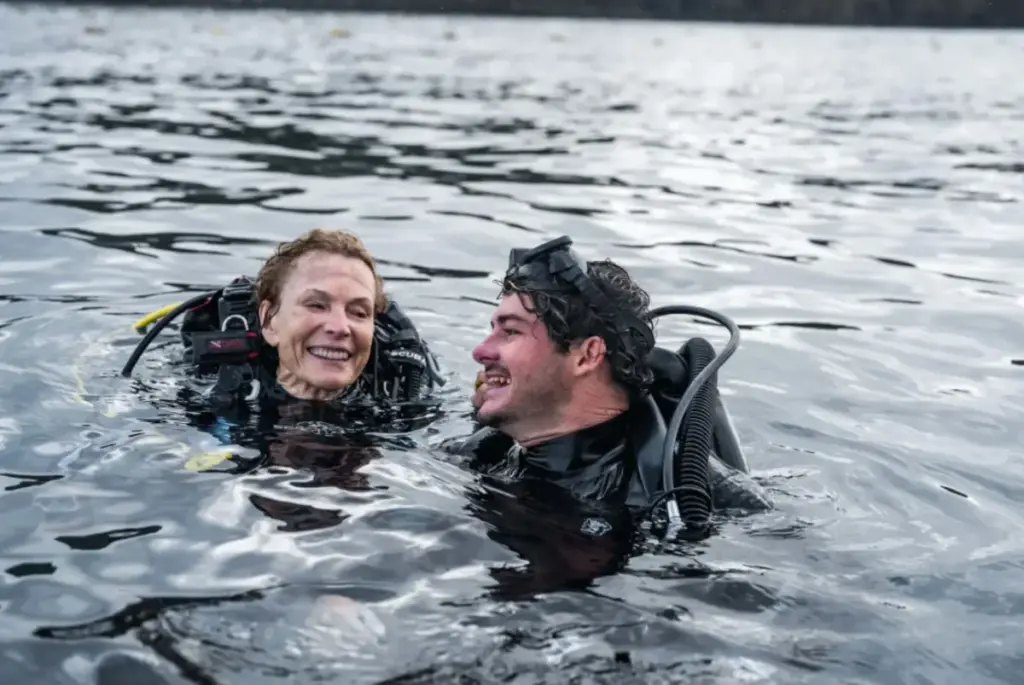
As the global climate crisis accelerates, the planet’s oceans—the primary life-support system of the Earth—face unprecedented threats from rising temperatures, ocean acidification, overfishing, and widespread coral bleaching. In a powerful new collaborative feature for CNN’s Call to Earth series, legendary oceanographer Dr. Sylvia Earle and Titouan Bernicot, the young visionary founder of Coral Gardeners, have joined forces to bridge a generational divide in environmental activism. This alliance between a veteran scientist with decades of deep-sea exploration and a digital-native conservation entrepreneur offers a unified blueprint for planetary survival.
The feature highlights five foundational strategies designed to reverse the degradation of marine environments: empowering local grassroots leaders, scaling opportunities for public participation, deploying cutting-edge technology, shifting from single-species management to whole-ecosystem protection, and recognizing the intrinsic link between ocean health and human survival.
This comprehensive report examines the intersection of wisdom and innovation represented by Earle and Bernicot. It provides an in-depth analysis of their proposed solutions, contextualizes them within the broader framework of international marine policy, and explores how humanity can transition from exploitation to stewardship before critical ecological tipping points are breached.
Detailed Chronology: The Evolution of Marine Conservation
To understand the significance of the partnership between Dr. Sylvia Earle and Titouan Bernicot, one must trace the historical trajectory of marine conservation over the past half-century. The field has evolved from isolated academic research into a global, tech-driven movement involving millions of citizens worldwide.
The Era of Exploration and Discovery (1970s – 1990s)
For decades, ocean conservation was largely the domain of academic institutions and pioneering divers who labored in relative obscurity. Dr. Sylvia Earle, famously dubbed "Her Deepness" by The New Yorker, emerged during this era as a trailblazer. In 1970, she led the pioneering Tektite II project, spending two weeks living in an underwater habitat off the coast of the U.S. Virgin Islands. Throughout the late 20th century, Earle documented the silent destruction of coral reefs and benthic ecosystems caused by destructive industrial fishing practices, notably bottom trawling.
During these formative decades, the prevailing public perception of the ocean was one of infinite bounty—a vast, inexhaustible resource capable of absorbing all anthropogenic waste and withstanding endless extraction. Conservationists struggled to secure mainstream political attention, operating with rudimentary tools and sparse funding. Environmentalism during this period was predominantly reactive, focusing on stopping specific atrocities—such as commercial whaling or toxic dumping—rather than implementing proactive, systemic ecosystem management.
The Rise of Grassroots Activism and Global Awareness (2000s – 2010s)
As the dawn of the 21st century brought clearer satellite data and more sophisticated climate modeling, the scientific community began sounding increasingly urgent alarms. Coral reefs experienced their first globally documented mass bleaching events in 1998 and 2010, driven by rising sea surface temperatures.
Simultaneously, the democratization of the internet and the advent of digital media changed the landscape of conservation. Activism shifted from institutional lobbying to decentralized, grassroots mobilization. NGOs began utilizing digital platforms to educate the global public about issues such as plastic pollution, shark finning, and ocean dead zones. It was during this period of heightened digital awareness that a new generation of ocean advocates began to come of age—youth who had grown up witnessing the rapid degradation of the natural world and who possessed unprecedented access to global communication tools.
The Convergence of Wisdom and Innovation (Present Day)
The current era is defined by the urgent necessity of collaboration across demographics. Titouan Bernicot represents a new archetype of conservationist: digitally native, entrepreneurial, and radically impatient with bureaucratic inertia. Raised in the islands of French Polynesia, Bernicot witnessed firsthand the rapid whitening and death of the coral reefs he surfed and swam over during his youth. In response, he founded Coral Gardeners at just sixteen years old, transforming a local youth initiative into a globally recognized organization focused on reef restoration through science and technology.
The CNN Call to Earth collaboration between Earle and Bernicot symbolizes a crucial passing of the torch, as well as a strategic synthesis. It combines Earle’s encyclopedic knowledge, institutional respect, and macro-level vision with Bernicot’s agility, technological savvy, and capacity to mobilize millions of young people online. Together, they articulate a cohesive methodology for turning the tide, proving that effective conservation requires both the depth of historical experience and the speed of modern innovation.
Supporting Context & Metrics: The State of the Global Ocean
To fully appreciate the urgency of the strategies proposed by Earle and Bernicot, one must examine the empirical data regarding the current health of the world’s oceans. The metrics paint a sobering picture of ecological distress, underscoring why incremental changes are no longer sufficient.
The Crisis Facing Coral Reefs
Coral reefs are often referred to as the rainforests of the sea. Occupying less than 0.1% of the ocean floor, they support at least 25% of all marine species, providing essential habitat, spawning grounds, and coastal protection for over half a billion people worldwide. However, according to the Intergovernmental Panel on Climate Change (IPCC):
- Temperature Anomalies: More than 50% of the world’s coral reefs have suffered severe degradation over the past three decades due to marine heatwaves.
- The 1.5°C Threshold: If global temperatures rise by 1.5 degrees Celsius above pre-industrial levels, scientific models project that 70% to 90% of warm-water coral reefs will disappear. At a 2-degree increase, that figure rises to over 99%.
- Economic Impact: The degradation of reefs threatens global fisheries, tourism industries, and coastal infrastructure, putting trillions of dollars in economic activity at risk.
Overfishing and Biodiversity Loss
Industrial fishing fleets operate across vast swaths of the high seas, often unchecked by national jurisdictions.
- Depleted Stocks: The United Nations Food and Agriculture Organization (FAO) reports that more than 34% of global fish stocks are currently fished at biologically unsustainable levels, up from just 10% in the mid-1970s.
- Bycatch: Millions of tons of unintended marine life—including sharks, sea turtles, dolphins, and seabirds—are caught and discarded annually as bycatch, severely disrupting marine food webs.
The Ocean as a Carbon Sink
Despite these pressures, the ocean remains our greatest ally in the fight against climate change. Since the industrial revolution, the oceans have absorbed approximately 90% of the excess heat generated by anthropogenic greenhouse gas emissions and roughly 30% of carbon dioxide emissions.
However, this buffering capacity comes at a severe cost. The absorption of carbon dioxide has led to ocean acidification—lowering the pH of seawater and making it increasingly difficult for calcifying organisms, such as corals, clams, and microscopic phytoplankton, to build and maintain their shells and skeletons. Protecting the ocean is not merely an environmental altruism; it is a fundamental prerequisite for human habitability on Earth.
The Five Solutions for a Healthier Ocean
In their CNN feature, Dr. Sylvia Earle and Titouan Bernicot outline five actionable, interconnected pillars for marine recovery. These solutions move beyond passive concern, offering a pragmatic roadmap for governments, corporations, and individuals alike.
1. Supporting Local Leaders and Indigenous Stewardship
The frontline defenders of marine ecosystems are frequently local and indigenous communities who have coexisted with coastal environments for generations. Earle and Bernicot emphasize that top-down conservation mandates imposed by distant governments often fail because they ignore the socioeconomic realities and traditional knowledge of local populations.
- Empowering Indigenous Management: Indigenous peoples manage or hold tenure over a significant portion of the world’s remaining biodiversity hotspots. Supporting their legal rights and incorporating their traditional ecological knowledge into modern marine spatial planning yields superior conservation outcomes.
- Grassroots Capacity Building: Financial resources and technical training must be channeled directly to grassroots leaders rather than remaining trapped within large international NGOs. By empowering coastal communities to act as the primary guardians of their local waters, conservation becomes economically sustainable and culturally resonant.
2. Expanding Opportunities for Public Participation
Conservation cannot remain the exclusive domain of scientists and policymakers. To truly shift the global paradigm, marine protection must become a participatory mass movement.
- Citizen Science Initiatives: Platforms that allow everyday divers, snorkelers, and beachgoers to collect data—such as logging water temperatures, photographing bleached corals, or tracking marine species—provide researchers with massive datasets that would otherwise be impossible to compile.
- Democratizing Activism: Bernicot’s work with Coral Gardeners exemplifies how digital platforms can turn passive social media users into active environmental stewards. By gamifying conservation, utilizing transparent impact reporting, and creating accessible pathways for individuals to "adopt" and plant corals online, public engagement reaches unprecedented scales.
3. Harnessing Cutting-Edge Technology
Technology is leveling the playing field between underfunded conservationists and destructive industrial extractors. Both Earle and Bernicot advocate for the aggressive deployment of modern tech innovations in marine management.
- Artificial Intelligence and Machine Learning: AI algorithms are now being utilized to monitor coral health through high-resolution underwater imagery, automatically identifying disease, bleaching, and pest infestations (such as crown-of-thorns starfish) faster and more accurately than human divers.
- Biotechnology and Resilient Corals: Scientists are identifying "super corals"—heat-resistant strains that naturally survive extreme thermal stress. By breeding and outplanting these resilient strains, conservationists are buying critical time for reefs while global carbon emissions are brought under control.
- Satellite Monitoring and E-DNA: Advanced satellite tracking exposes illegal, unreported, and unregulated (IUU) fishing in marine protected areas (MPAs), while environmental DNA (e-DNA) sampling allows researchers to detect the presence of rare or endangered species simply by analyzing water samples.
4. Transitioning to Whole-Ecosystem Protection
Historically, marine conservation often focused on single species—such as saving whales, sea turtles, or specific commercially valuable fish. While species-specific interventions remain important, Earle stresses that nature does not operate in silos.
- Marine Protected Areas (MPAs): Establishing fully and highly protected marine reserves—where all extractive activities, including fishing and mining, are strictly prohibited—allows entire ecosystems to regenerate. Research consistently demonstrates that well-managed MPAs exhibit higher biodiversity, greater biomass, and enhanced resilience to climate shocks.
- The "Hope Spots" Initiative: Sylvia Earle’s global foundation, Mission Blue, has championed the designation of "Hope Spots"—special places that are scientifically identified as critical to the health of the ocean. By rallying public and political support around these specific geographic areas, Mission Blue aims to achieve formal protection for 30% of the ocean by 2030 (the "30×30" target).
5. Recognizing Ocean Health as Human Survival
Perhaps the most fundamental philosophical shift advocated by Earle and Bernicot is the eradication of the false dichotomy between human interests and environmental protection. For decades, environmentalism was often framed as a sacrifice of human economic well-being for the sake of nature.
- The Blue Economy: A healthy ocean is the foundation of a sustainable global economy. Fisheries, coastal tourism, marine biotechnology, and renewable offshore energy all depend on intact, functioning marine ecosystems.
- The Breath of the Planet: As Earle frequently reminds the public, every second breath we take comes from the ocean, primarily generated by marine phytoplankton. Destroying the ocean is, quite literally, an act of slow-motion suicide. Protecting marine ecosystems is the ultimate act of self-preservation.
Official Statements and Expert Perspectives
The synthesis of experience and innovation presented in the CNN feature has resonated deeply across the international scientific and conservation communities.
Reflecting on the collaboration, Dr. Sylvia Earle noted the profound urgency of bridging generational divides in the environmental movement:
"We are living in the most important time in human history. What we do—or fail to do—over the next ten years will determine the state of all life on Earth for the next ten thousand years. Working with young leaders like Titouan gives me immense hope. They possess the digital reach, the fearless energy, and the unyielding determination that our movement has always needed. We cannot afford to wait for the next generation to take over; we must collaborate right now, combining the wisdom of experience with the power of modern innovation."
Echoing this sentiment, Titouan Bernicot, founder of Coral Gardeners, emphasized the responsibility of youth in steering the future of marine stewardship:
"Growing up on the island of Moorea, I watched my playground—the coral reef—turn white and die before my eyes. We didn’t have the luxury of waiting for adults to solve a crisis happening in our own backyard. Today, technology and social media allow us to connect a kid in Paris or New York directly to a coral reef in French Polynesia. When we combine Sylvia’s lifelong scientific authority with our generation’s digital mobilization, we create an unstoppable force for ocean restoration. Protecting the ocean is no longer just a choice; it is our generation’s defining obligation."
Independent marine biologists and policymakers have also lauded the framework. Dr. Marcus Henderson, a senior marine ecologist unaffiliated with the project, remarked:
"The Earle-Bernicot alliance cuts through the traditional paralysis of conservation politics. Too often, science remains locked in academic journals, while activism lacks empirical rigor. By pairing Mission Blue’s macro-strategic ‘Hope Spots’ with Coral Gardeners’ micro-targeted, tech-driven reef restoration, they have outlined a comprehensive operational manual that both local communities and global institutions can immediately implement."
Future Outlook: The Road to 2030 and Beyond
As the international community looks toward crucial environmental milestones, such as the United Nations Sustainable Development Goals and the global implementation of the 30×30 marine protection target, the roadmap provided by Dr. Sylvia Earle and Titouan Bernicot serves as both a warning and a beacon of hope.
The challenges ahead are formidable. Deep-sea mining looms as a catastrophic new threat to pristine benthic environments, plastic pollution continues to choke marine life, and global carbon emissions have yet to peak decisively. The temptation toward ecological fatalism is strong.
However, the partnership between Earle and Bernicot proves that despair is a luxury humanity cannot afford. By decentralizing conservation, embracing technological innovation, respecting indigenous stewardship, and fundamentally reframing the relationship between humanity and the sea, a different future remains possible.
The tide can still be turned. But doing so will require the wisdom of elders who understand the ancient rhythms of the deep, combined with the fierce, digital-native urgency of youth who refuse to inherit a silent, dying sea. As the CNN Call to Earth feature powerfully demonstrates, the time for passive observation has passed; the era of active, unified restoration has arrived.