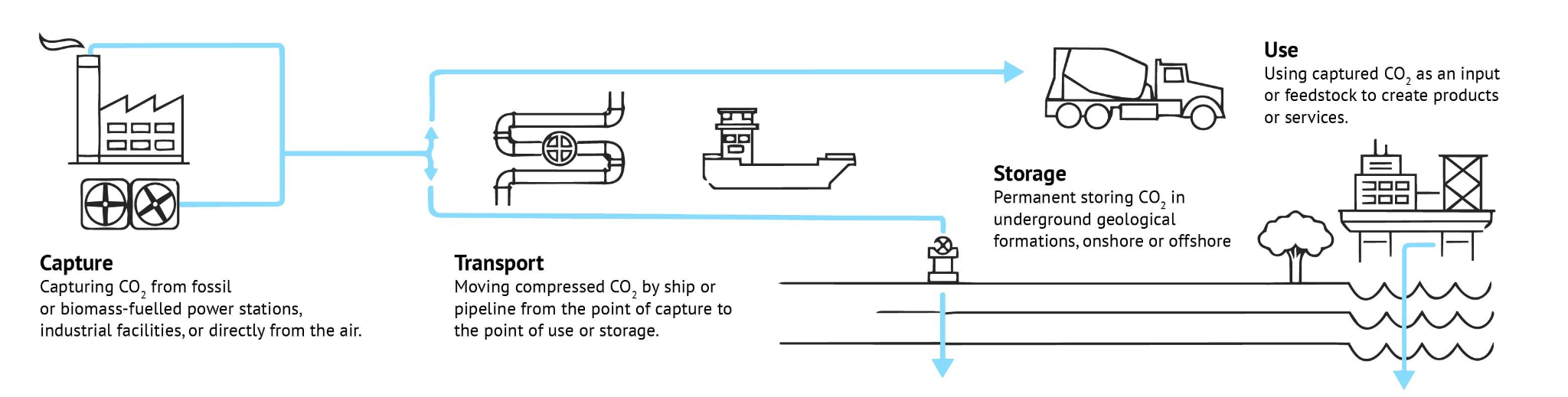
Carbon Capture and Storage (CCS) sits at the center of the global strategy to mitigate climate change. Championed by international institutions, national governments, and energy conglomerates, the technology promises to intercept carbon dioxide ($textCO_2$) at industrial smoke stacks and lock it deep underground in perpetuity. In theory, CCS offers a viable pathway to decarbonize heavy manufacturing and power generation without completely dismantling existing industrial assets.
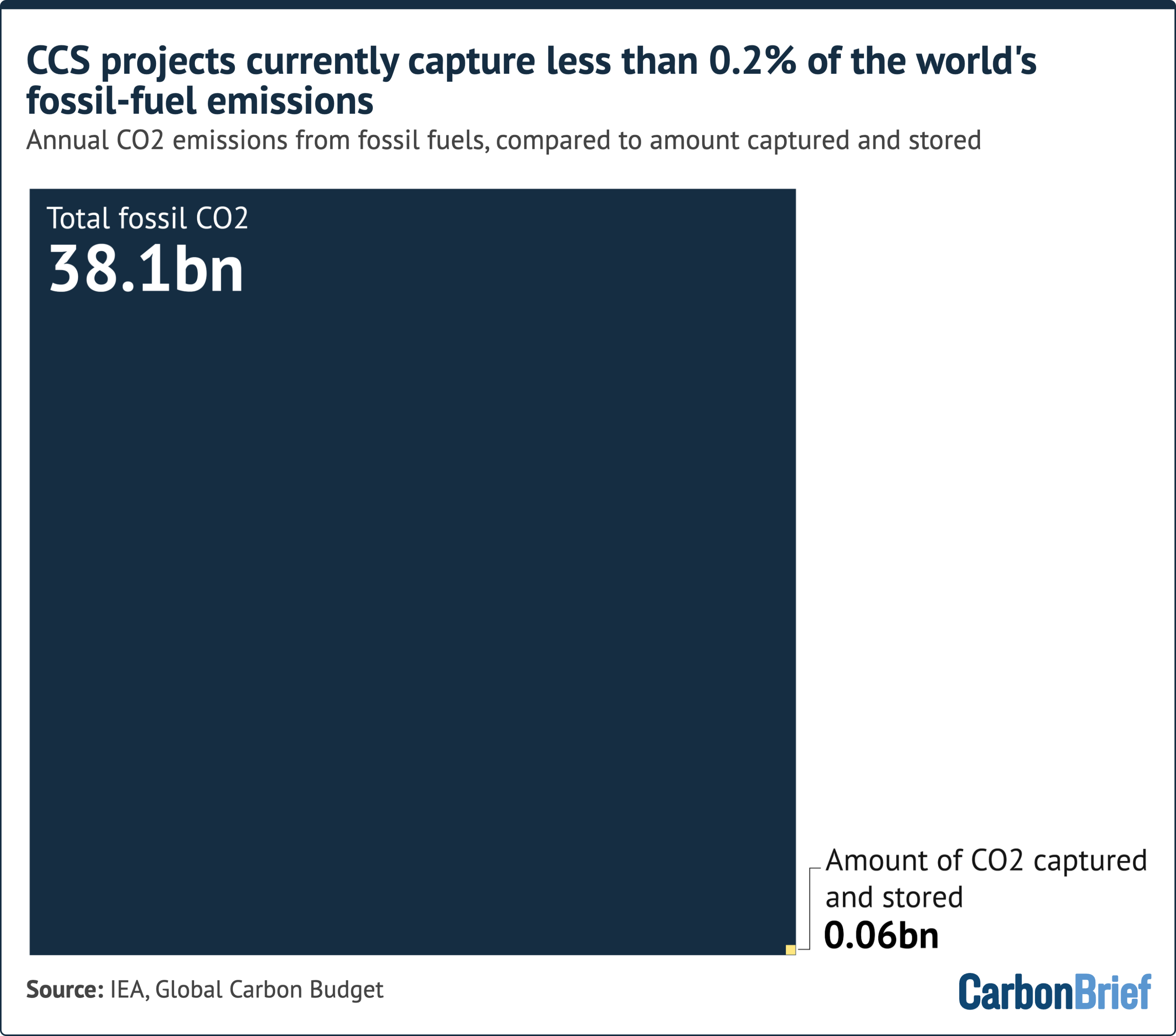
However, a stark divide has emerged between theoretical climate modeling and real-world execution. While the Intergovernmental Panel on Climate Change (IPCC) and the International Energy Agency (IEA) define CCS as an indispensable tool for achieving global net-zero emissions, the technology’s operational track record is marked by high costs, modest deployment scales, and underperforming capture efficiencies. Today, commercial facilities capture roughly 62.5 million tonnes of $textCO_2$ annually—representing less than 0.2% of total global emissions from fossil fuels.
+-----------------------------------------------------------------------+
|                       GLOBAL FOSSIL FUEL EMISSIONS                    |
|                        ~38.1 Billion Tonnes / Year                    |
|                                                                       |
|  [||] <0.2% Captured & Stored Globally (~62.5 Million Tonnes / Year)  |
+-----------------------------------------------------------------------+
As sovereign nations commit hundreds of billions in public subsidies and levy-funded schemes—exemplified by the United Kingdom’s flagship £21.7 billion industrial rollout—a fierce debate has intensified. Environmental advocates, financial analysts, and independent scientists argue that CCS risks becoming a costly distraction that preserves fossil fuel reliance. Conversely, engineers and policy advisors contend that without CCS, eliminating emissions from "hard-to-abate" sectors like cement and chemical manufacturing remains structurally impossible.
Detailed Chronology: The Evolution of Carbon Capture
1970s               1976              2005              2015              2020s-2026
  |-------------------|-----------------|-----------------|-------------------|
Enhanced Oil       Academic          IPCC Special      Paris Agreement    Transition to
Recovery (EOR)     Proposal for      Report on CCS     Reignites Global   Industrial
Introduced in US   Ocean Injection   Identifies 3      Interest in Hard-  Clusters &
& Canada           (Marchetti)       Small Projects    to-Abate Sectors   Blue Hydrogen
Origins in Fossil Fuel Extraction (1970s–1990s)
Carbon capture technology did not originate as a climate mitigation strategy. It was developed by the oil and gas industry in the early 1970s in the United States and Canada as an engineering solution for Enhanced Oil Recovery (EOR). By injecting pressurized $textCO_2$ into mature, depleted oil fields, producers could mobilize residual crude oil that was otherwise unrecoverable.
To this day, natural gas processing facilities—where $textCO_2$ must be separated from raw methane to meet commercial standards—remain the primary source of captured carbon.
Academic Conceptualization & Early Climate Interest (1976–2005)
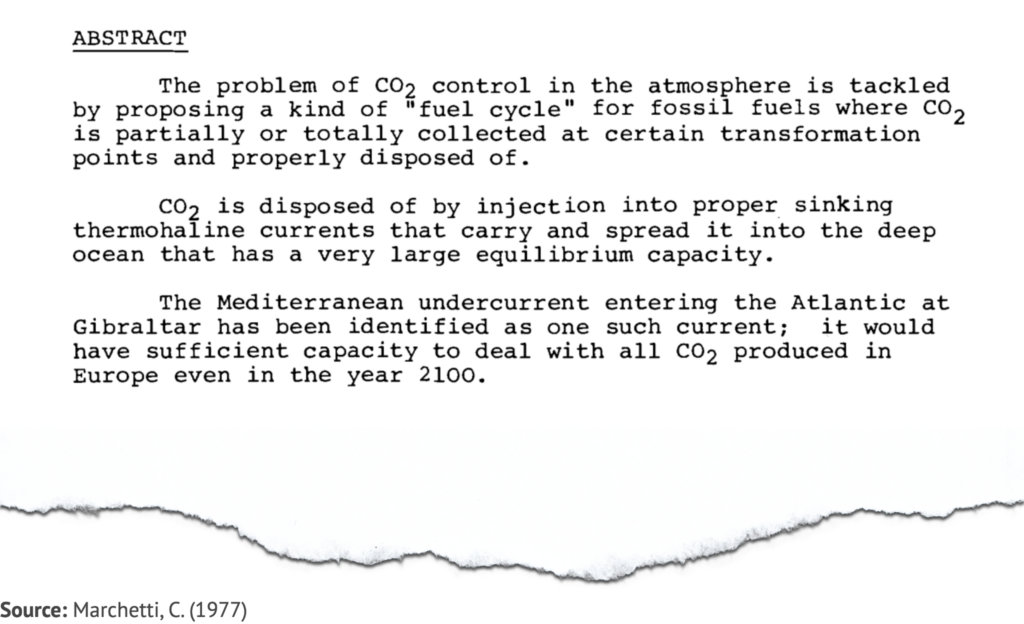
The concept of capturing industrial $textCO_2$ to combat atmospheric warming was first published in 1977 by Italian physicist Cesare Marchetti, who proposed injecting captured emissions into deep Atlantic thermohaline currents via the Strait of Gibraltar. By 2005, the IPCC published its landmark Special Report on Carbon Dioxide Capture and Storage, formally elevating CCS into mainstream climate policy. At the time, only three small-scale commercial projects dedicated to geological storage existed globally.
The Coal-CCS Pivot and Subsequent Collapse (2006–2014)
During the late 2000s, energy policy in North America and Western Europe turned to CCS as a mechanism to decarbonize coal-fired power plants. Governments poured billions into flagship demonstration initiatives. However, most of these early projects collapsed due to cost overruns, severe technical hurdles, and the rapid cost-competitiveness of utility-scale onshore wind and solar energy. By the mid-2010s, only a handful of coal-CCS facilities—such as Boundary Dam in Canada and Petra Nova in the United States—achieved commercial operation, both facing persistent operational challenges.
Net-Zero Frameworks and Industrial Clusters (2015–Present)
The signing of the Paris Agreement in 2015 and subsequent national net-zero commitments fundamentally shifted the narrative around CCS. Policy focus expanded from coal power generation to "hard-to-abate" industrial processes (cement, steel, lime, and chemical refining) alongside low-carbon "blue" hydrogen production. Contemporary strategies emphasize shared pipeline networks and offshore storage hubs—known as industrial clusters—designed to achieve economies of scale across regional industrial zones.
Supporting Context & Core Metrics
The Global Operational Baseline
Data from the IEA’s project pipeline illustrates the current global operational landscape for CCS:
Metric
Current Status (2026)
Net-Zero Target (IEA 2035)
Operational Facilities
75 global projects
Hundreds of utility/industrial hubs
Annual Capture Volume
62.5 Mt$textCO_2$ / year
~1,700 Mt$textCO_2$ / year (~27x growth)
Primary Commercial End-Use
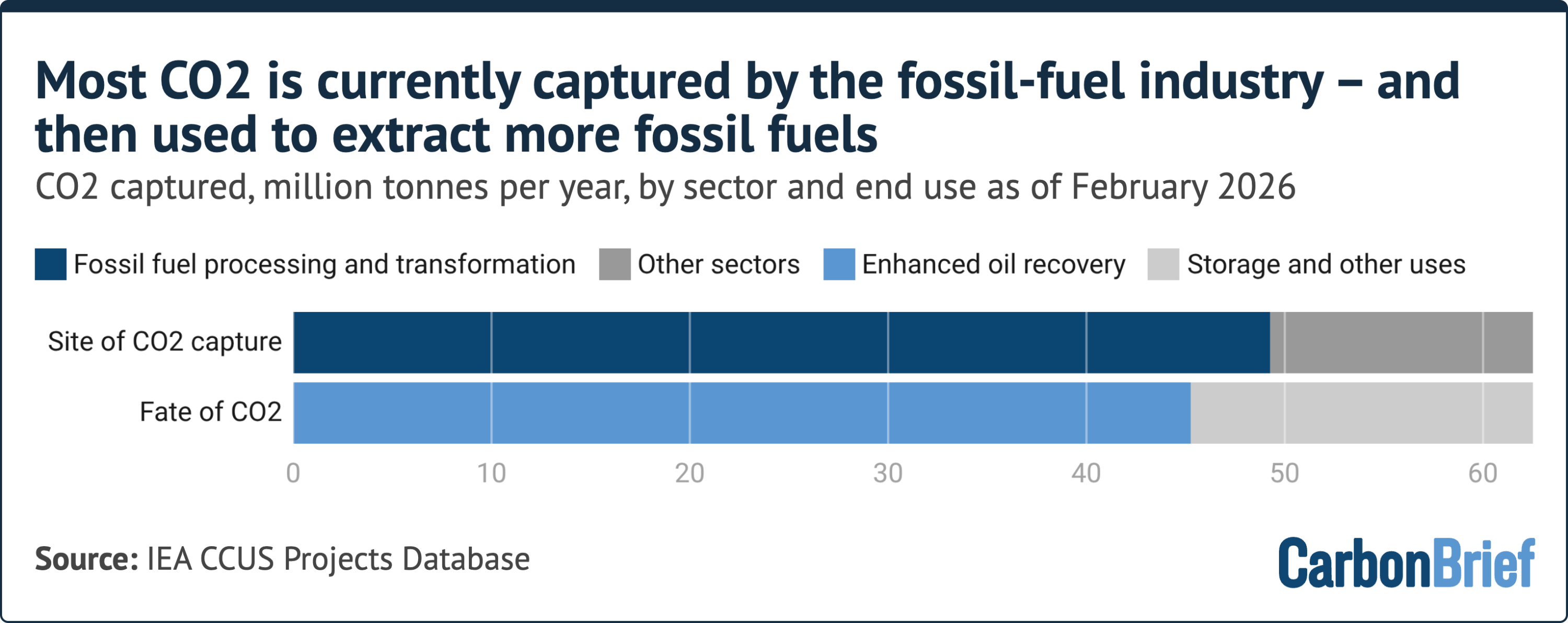
~75% dedicated to Enhanced Oil Recovery
100% dedicated to permanent storage
Primary Capture Source
~78% from gas processing facilities
Heavy industry, hydrogen, and clean power
Share of Fossil Fuel Emissions
< 0.2%
~10–15%
Current Global CO2 Capture Destination:
  [======================================== 75%] Enhanced Oil Recovery (EOR)
  [============ 25%] Permanent Underground Storage / Industrial Use
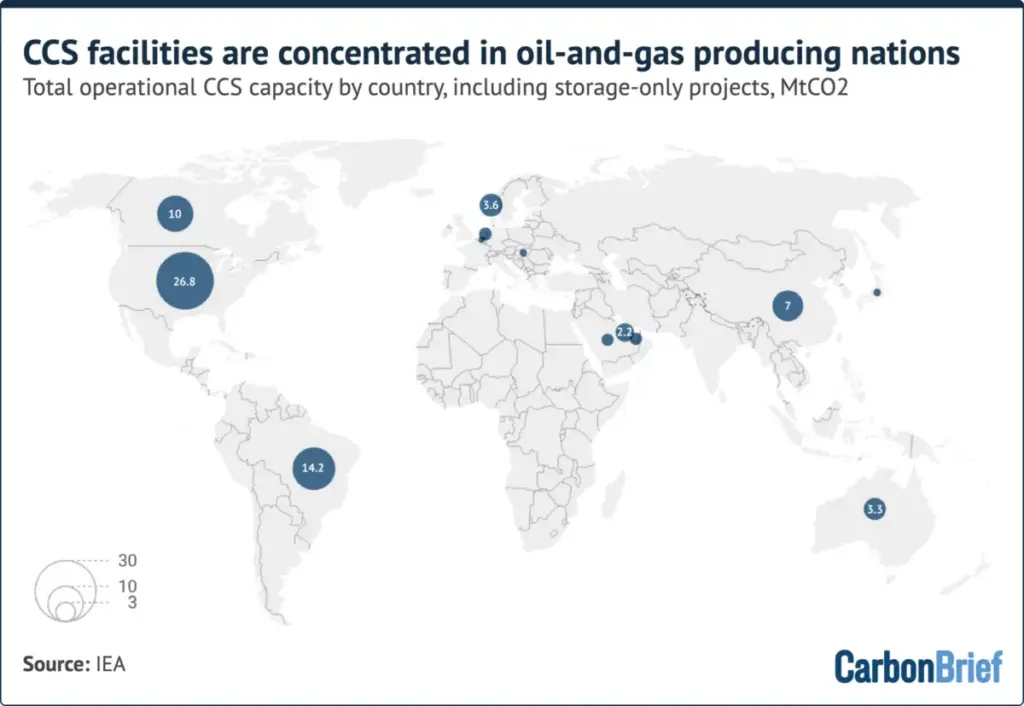
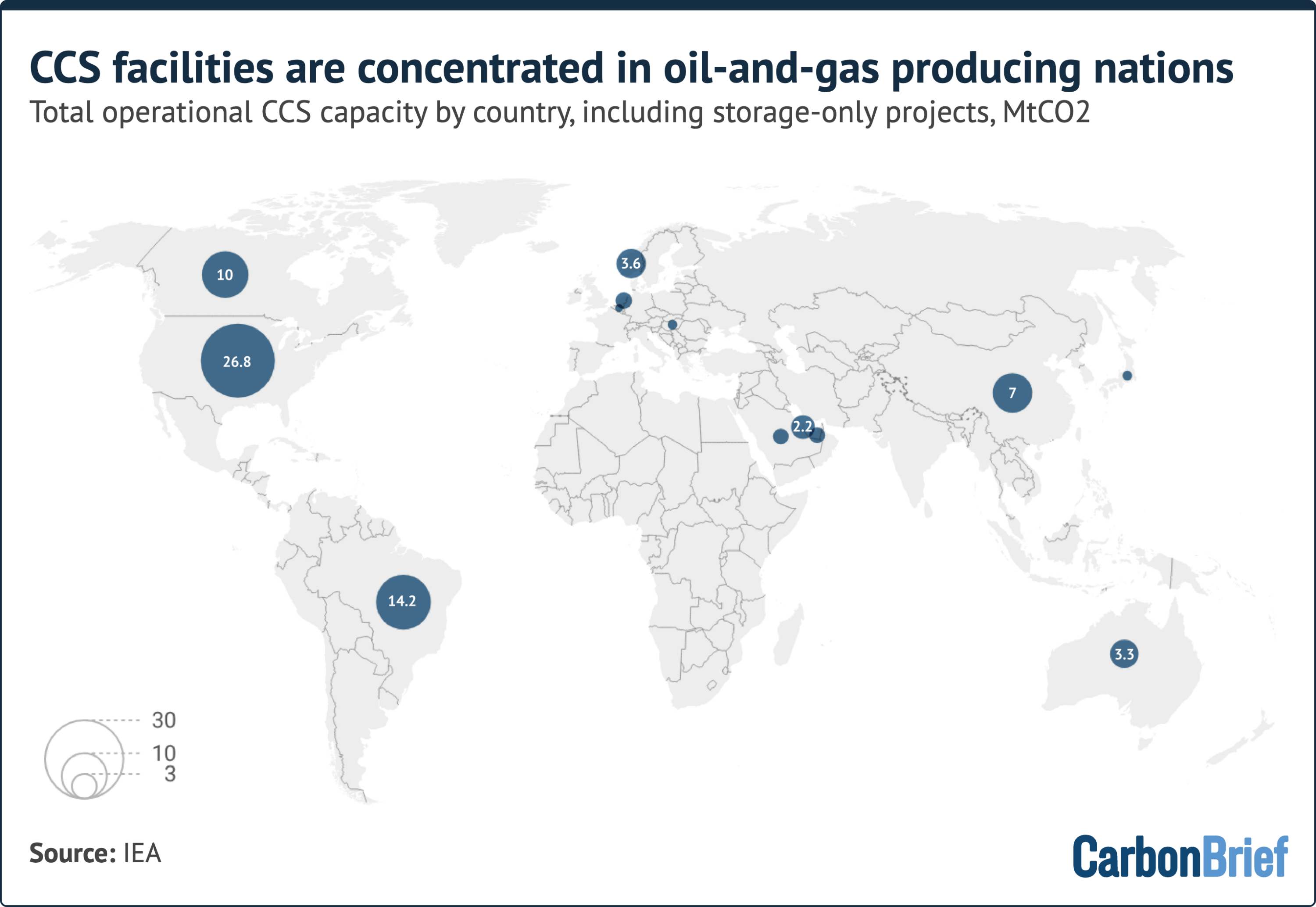
Geographically, operational capacity remains concentrated in mature energy-producing nations:
United States: 26.8 Mt$textCO_2$/year
Brazil: 14.2 Mt$textCO_2$/year
Canada: 10.0 Mt$textCO_2$/year
China: 7.0 Mt$textCO_2$/year
The Project Pipeline vs. Real-World Deliverability
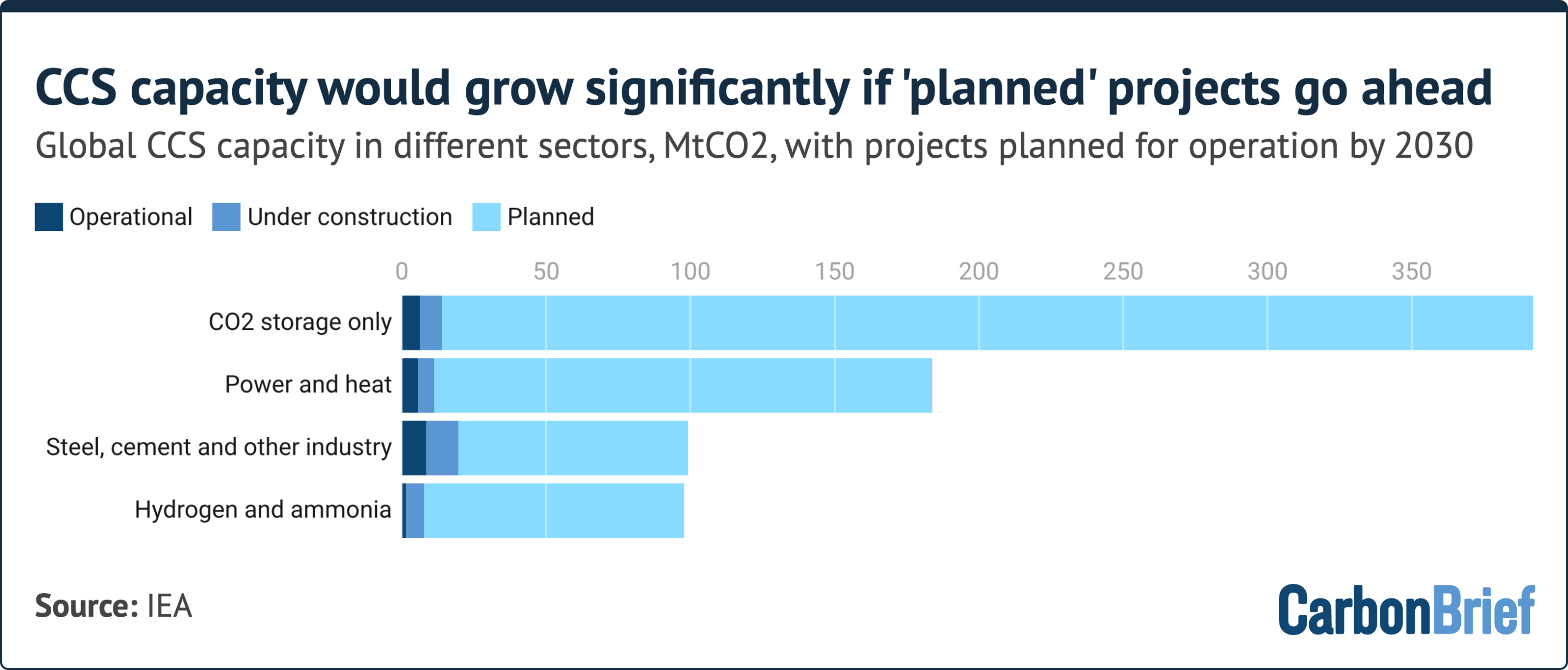
While existing operational capacity remains low, the project pipeline appears extensive. As of early 2026, 93.7 Mt$textCO_2$/year of capacity is actively under construction worldwide, with an additional 1,279.6 Mt$textCO_2$/year in early engineering or feasibility planning.
However, project mortality rates in the CCS sector are historically high. Many announced projects encounter long delays or cancellation due to regulatory hurdles, volatile carbon prices, public opposition, and unfavorable economics.
Global Capacity Pipeline (MtCO2/year):
  Existing Operational : [==] 62.5
  Under Construction   : [===] 93.7
  Planned Projects     : [==================================================] 1,279.6
Sectoral Re-Evaluation: Power Generation vs. Heavy Industry
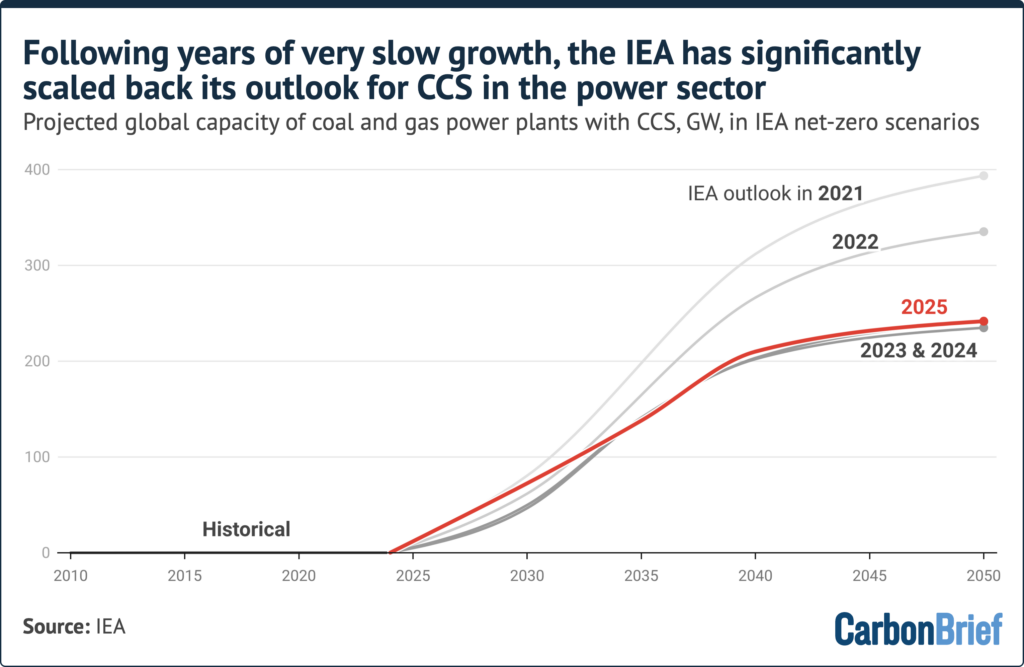
Systemic shifts are occurring in how energy planners contextualize CCS. Between 2021 and 2025, the IEA revised down its 2050 projected capacity for CCS in power generation by one-third. This downward adjustment reflects the plumetting levelized cost of energy (LCOE) for renewables combined with battery energy storage systems (BESS), which increasingly undercut fossil fuel generation fitted with CCS.
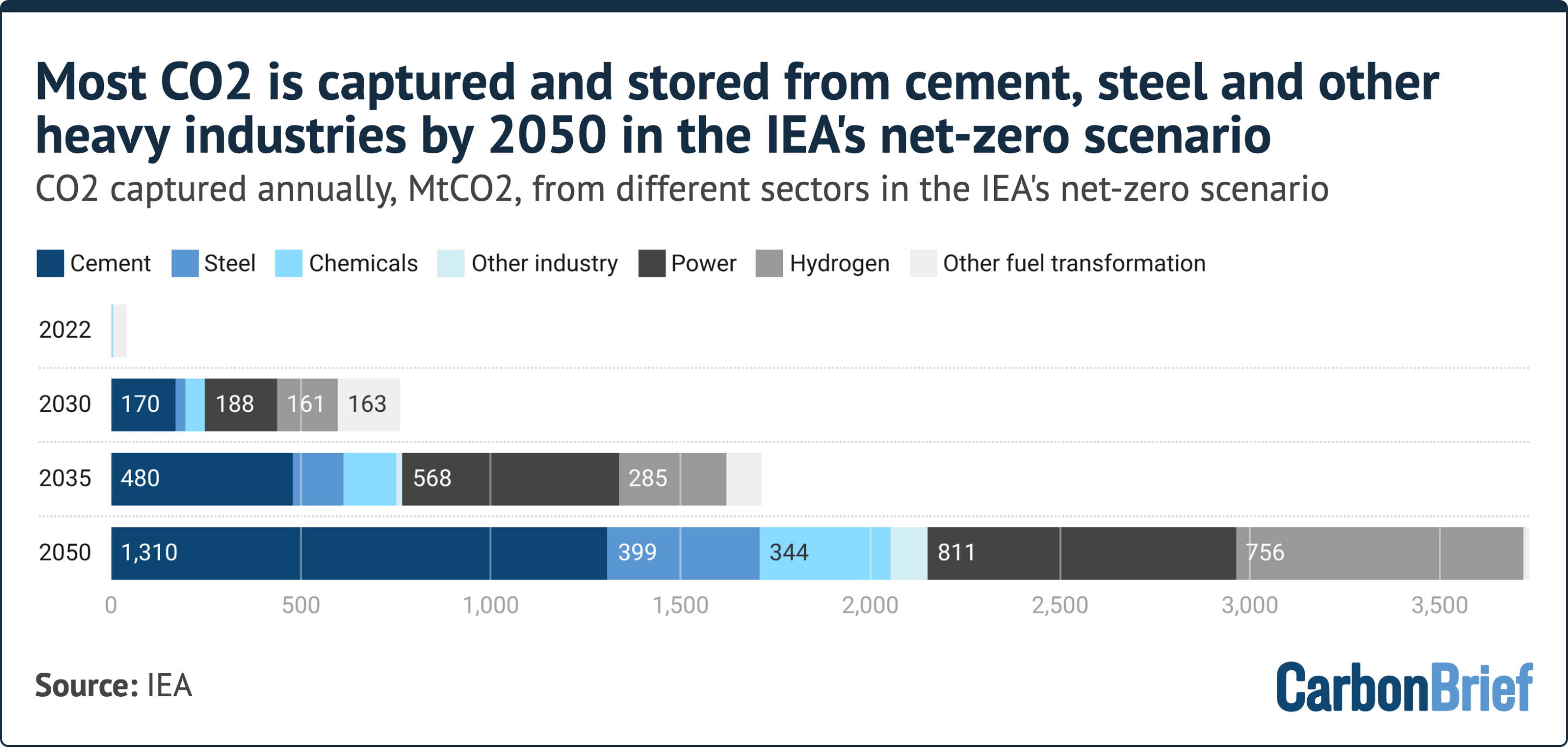
IEA Net-Zero 2050 Target Distribution for CO2 Capture:
  [=========================== 60%] Heavy Industry (Cement, Steel, Chemicals)
  [================= 40%] Split: Power Generation & Blue Hydrogen Production
The Performance and Cost Gap
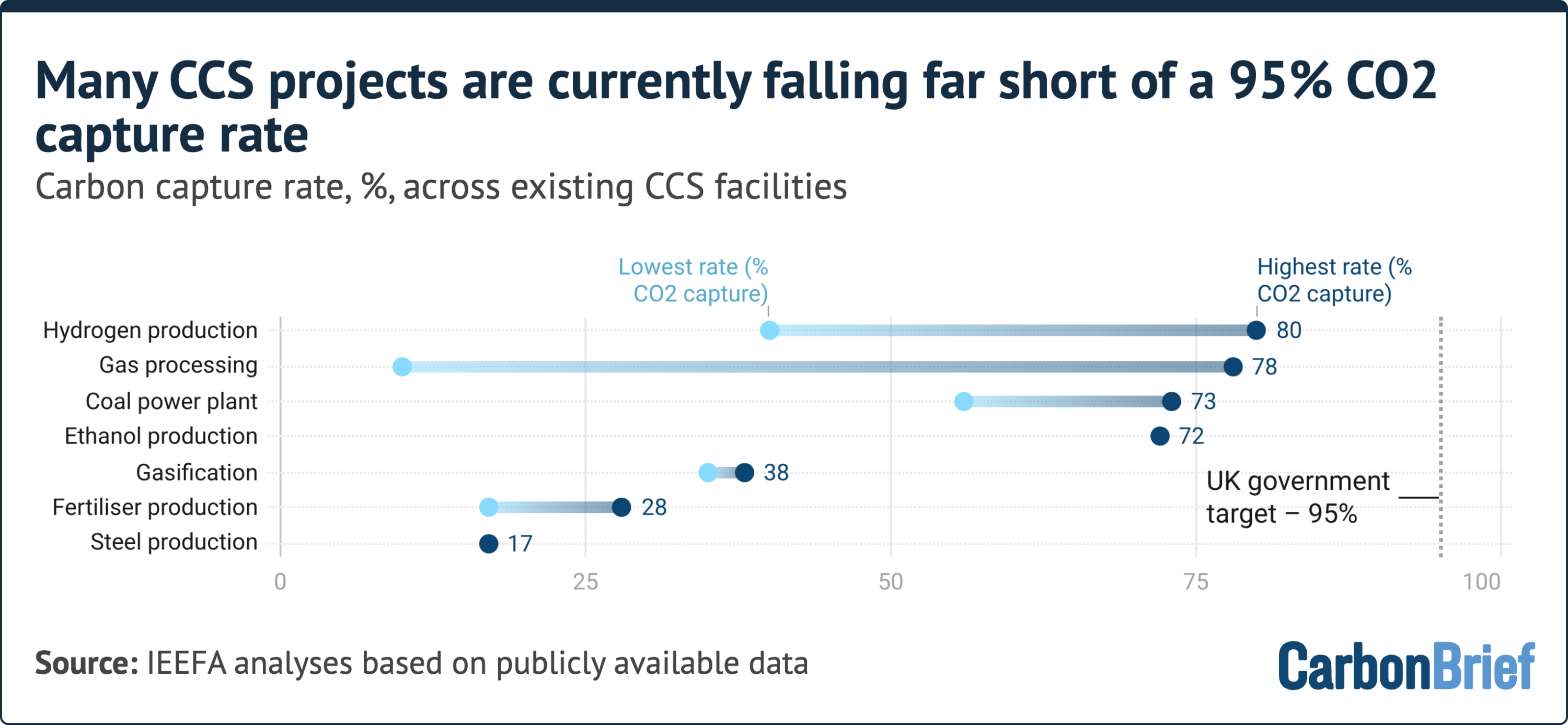
A central point of contention involves capture efficiency. While regulatory guidelines in regions like the UK mandate design capture rates of 90% to 95%, real-world evaluations conducted by the Institute for Energy Economics and Financial Analysis (IEEFA) reveal that actual historical performance routinely falls short:
Steel Production Applications: Peak historical capture rates near ~17%.
Hydrogen Production: Realized capture rates range between 60% and 80%.
Gas Processing Facilities: Historical capture rates vary widely from 40% to 85%.
Financially, an influential study from the University of Oxford’s Smith School of Enterprise and the Environment concluded that a net-zero transition relying heavily on high CCS usage could cost $1 trillion more per year globally than a low-CCS pathway centered on aggressive electrification and energy efficiency.
Official Statements, Legal Friction & The UK Case Study
The United Kingdom’s Industrial Bet
The UK has established one of the world’s most detailed legal and financial frameworks for CCUS deployment, committing up to £21.7 billion in capital support and revenue guarantee contracts over 25 years. The policy targets the creation of geographically grouped industrial clusters:
East Coast Cluster (Teesside and the Humber, North East England)
HyNet North West (North West England and North Wales)
Track 2 Clusters (Targeting ~2030 Deployment):
Acorn Project (North East Scotland)
Viking Cluster (Humber Region)
These hubs are designed to aggregate emissions from power plants, blue hydrogen facilities, waste-to-energy plants, and heavy manufacturing, transporting the compressed gas through pipelines to depleted North Sea gas fields and deep saline aquifers.
           +-------------------------------------------------------+
           |                UK INDUSTRIAL CLUSTERS                 |
           +-------------------------------------------------------+
                                      |
         +----------------------------+----------------------------+
         |                                                         |
  [TRACK 1: Late-2020s]                                     [TRACK 2: ~2030]
  - East Coast Cluster (Teesside/Humber)                    - Acorn Project (Scotland)
  - HyNet (North West / North Wales)                        - Viking Cluster (Humber)
Official Government & Regulatory Positions
UK policymakers and climate advisors argue that industrial decarbonization cannot succeed without these investments.
Ed Miliband, UK Secretary of State for Energy Security and Net Zero, emphasized the strategic necessity of the commitment:
"This investment… will help unlock hard-to-abate sectors and play an vital role in achieving clean power, securing thousands of skilled industrial jobs for generations to come."
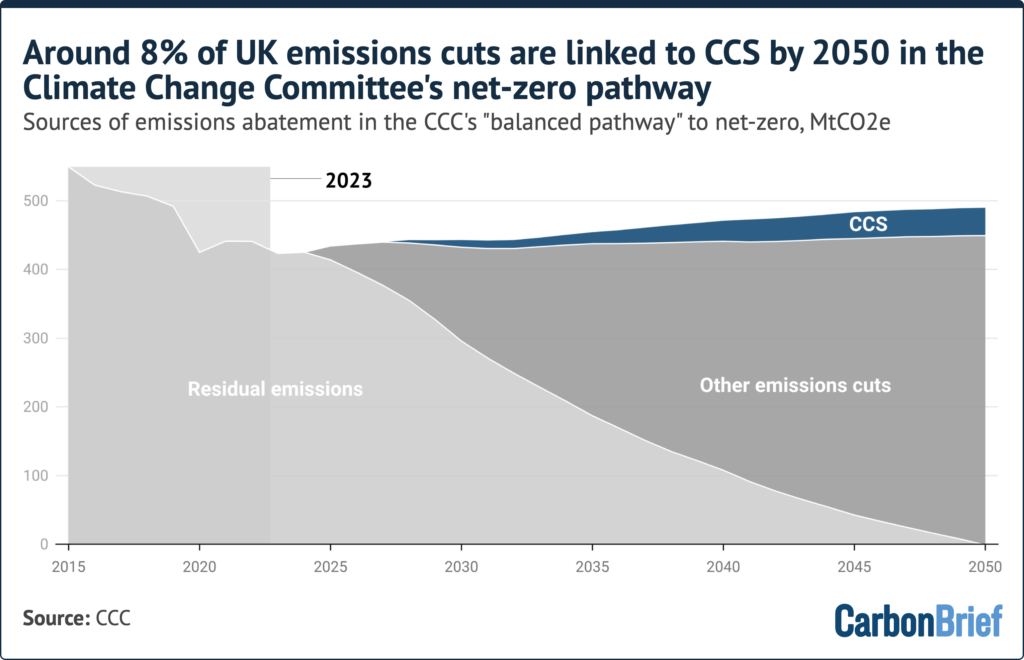
This position aligns with the strategic guidance of the UK Climate Change Committee (CCC). In its Seventh Carbon Budget recommendations, the CCC asserts that CCS must deliver approximately 8% of direct UK emissions abatement by 2050 (rising to 15% when including Bioenergy with Carbon Capture and Storage, or BECCS).
Dr. Jamie Tarlton, CCS Lead at the Climate Change Committee, observed during a industry conference:
"We cannot see a practical route to net-zero that does not include CCS, though we have gradually adjusted our overall capacity expectations downward as direct electrification options in other sectors become increasingly viable."
Academic and Technical Endorsements
Advocates within the technical community emphasize that subsurface engineering expertise makes oil and gas operators naturally suited to execute carbon storage.
Dr. Jennifer Roberts, Deputy Director of the UK Carbon Capture and Storage Research Centre (UKCCSRC) at the University of Strathclyde, noted:
"From an IPCC climate modeling perspective, reaching net-zero without CCS is far more expensive, disruptive, and potentially out of reach… CCS is intrinsically tied with an industry sector that is historically high-polluting, but these companies possess the explicit subsurface engineering track record needed to execute multi-billion-dollar infrastructure projects."
Prof. Stuart Haszeldine, Professor of Carbon Capture and Storage at the University of Edinburgh, added:
"If we are going to continue burning natural gas for dispatchable power, then we must fit CCS on those facilities. Otherwise, we are simply authorizing sustained, unabated emissions under the radar."
   PERSPETIVES ON CARBON CAPTURE AND STORAGE (CCS)
   -----------------------------------------------------------------------------
   ADVOCATES / POLICYMAKERS                 CRITICS / FINANCIAL ANALYSTS
   - Essential for "hard-to-abate" industry - Extremely high cost vs renewables
   - Unlocks dispatchable low-carbon power  - Low historical capture rates
   - Leverages subsurface oil/gas expertise - Methane leakage throughout gas chain
   - Preserves critical industrial jobs    - Risk of locking in fossil fuel use
Criticisms, Financial Risks, and Legal Challenges
Despite official backing, the UK’s strategy faces pushback from public policy bodies, energy economists, and environmental lawyers.
A 2025 report by the House of Commons Public Accounts Committee (PAC) raised concerns over the distribution of consumer funding, noting that three-quarters of the £21.7 billion commitment will be financed through additions to energy bills rather than direct taxation. The PAC warned that the UK’s cluster model:
"…does not guarantee that financial support is prioritized to the specific sectors that need it most urgently, such as cement production, while exposing energy billpayers to substantial financial risks."
Legal challenges have also impacted flagship projects. Dr. Andrew Boswell, an independent energy analyst, mounted a high-profile judicial review against the Net Zero Teesside Power project (a joint venture by BP and Equinor). The challenge centered on the project’s lifecycle carbon assessment, arguing that upstream methane leaks from imported natural gas would offset the emissions saved by capture technology at the facility.
Andrew Reid, Lead Energy Finance Analyst at IEEFA, questioned the economic rationale of fossil-fuel-based CCS:
"Is there really any point in attempting to decarbonize gas-fired power generation when doing so introduces massive capital costs, operational complexity, and ongoing fuel supply risk? While CCS may be necessary for cement and process chemicals, applying it to power systems remains fundamentally uneconomic."
From an academic perspective, Lina Lefstad, ecological economist at Lund University, pointed out the structural inertia created by high-CCS modeling:
"Integrated Assessment Models have been instrumental in keeping CCS on the agenda… Yet if the fossil fuel industry stood to make effortless windfall profits from commercial CCS alone, we would have seen large-scale deployment decades ago. The truth is that the engineering remains capital-intensive and economically difficult."
Strategic Outlook & Future Imperatives
           THE CCS VALUE LADDER (Prioritizing Climate Impact)
           =================================================
           [ HIGH VALUE ]  1. Cement & Lime Manufacturing
                           2. Industrial Process Chemistry
                           3. Bioenergy with CCS (BECCS)
                           4. Blue Hydrogen (Transition Phase)
           [ LOW VALUE  ]  5. Gas & Coal Power Generation
           =================================================
1. Re-Evaluating the "CCS Ladder"
To maximize the climate impact of limited public subsidies, climate policy research organizations—including Bellona and E3G—advocate for a strict "CCS Ladder." Policy frameworks must distinguish between:
High-Value Applications: Sectors with unavoidable chemical process emissions (e.g., cement kilns, lime processing, primary chemical synthesis) where no alternative zero-carbon chemistry exists.
Low-Value Applications: Sectors where low-cost direct electrification, battery storage, and utility-scale renewables offer superior economic and environmental performance (e.g., fossil-fuel power generation and domestic heating).
2. Tightening Regulatory Capture Mandates
As governments structure long-term commercial models, regulatory approvals will increasingly demand strict performance standards:
Minimum Operational Thresholds: Enforcing mandatory minimum 90–95% capture rates for operational subsidies, moving away from average or theoretical baseline targets.
Upstream Supply Chain Accountability: Accounting for full lifecycle emissions—including fugitive methane leakage across natural gas extraction and transport—to calculate net emissions reductions accurately.
Transitioning to "Polluter Pays" Frameworks: Shifting financial support from long-term public subsidies toward carbon border adjustment mechanisms (CBAM), carbon pricing, and mandatory carbon take-back obligations for fossil fuel producers.
3. Conclusion
Carbon Capture and Storage occupies a nuanced position in global climate strategy. It is neither a universal silver bullet that allows the uninhibited growth of fossil fuel infrastructure, nor a non-viable technology to be entirely dismissed.
Instead, CCS operates as a specialized, capital-intensive engineering tool. Its future viability hinges on targeted deployment: prioritizing decarbonization in heavy industrial manufacturing where zero-carbon alternatives do not exist, while avoiding its use where cheaper, cleaner renewable solutions are already available.