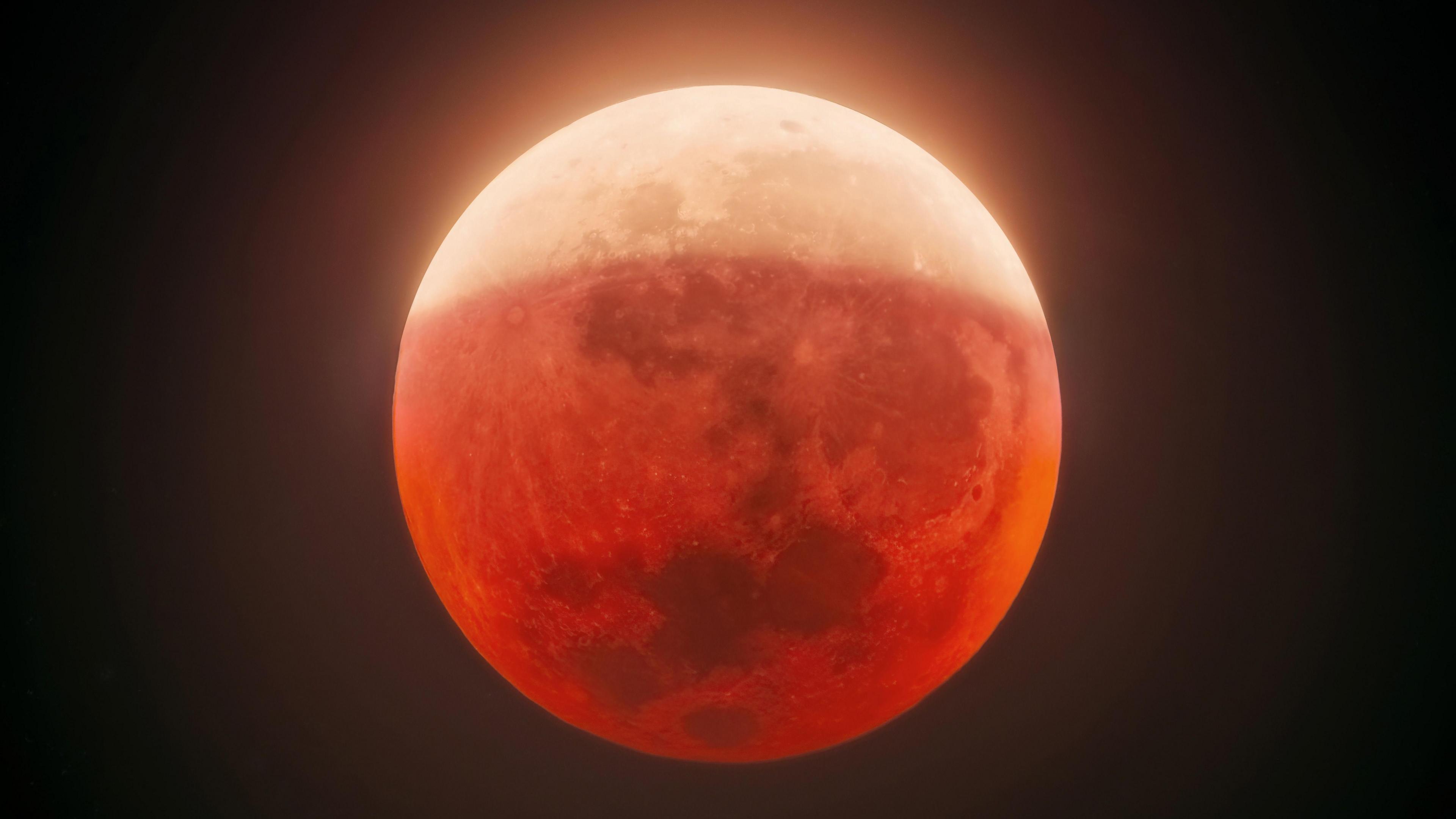
Stargazers, amateur astronomers, and casual night-sky enthusiasts across the United Kingdom are preparing their equipment and clearing their schedules for an impending celestial spectacle. In the early hours of Friday, 28 August, a rare partial lunar eclipse will grace the British skies, offering a striking visual display as the Sun, Earth, and Moon align in precise cosmic harmony. This celestial event coincides with the peak of the full August Moon—traditionally and colloquially known as the "Sturgeon Moon"—which is projected to take on a dramatic, eerie reddish glow.
This upcoming astronomical highlight arrives hot on the heels of another major cosmic event: just weeks after the UK experienced its most dramatic partial solar eclipse in nearly three decades, the night sky is once again commanding public attention. Adding an extra layer of visual grandeur to the lunar eclipse is its trajectory. Positioned remarkably low on the southwestern horizon during its peak, the Moon will undergo a well-documented psychological and optical phenomenon known as the "Moon illusion," making the lunar disc appear significantly larger, brighter, and more imposing than a typical full moon.
However, capturing this ethereal red hue will require careful planning and a degree of meteorological fortune. With low-pressure weather systems dominating the British Isles, visibility conditions are expected to be a mixed bag. While central and eastern regions of England and Wales are currently favored with forecasts of clearer skies, northern areas—particularly Scotland—face the prospect of cloud cover and passing showers. As anticipation builds across the country, scientists, meteorologists, and astronomy societies are encouraging the public to look upward and witness one of nature’s most captivating orbital alignments.
Detailed Chronology: The Timeline of the Eclipse
For those planning to observe or photograph the event, timing is everything. Because the eclipse culminates in the pre-dawn hours just before the celestial body dips below the horizon, observers will need to adhere to a strict timeline to catch the optimal phases of the alignment.
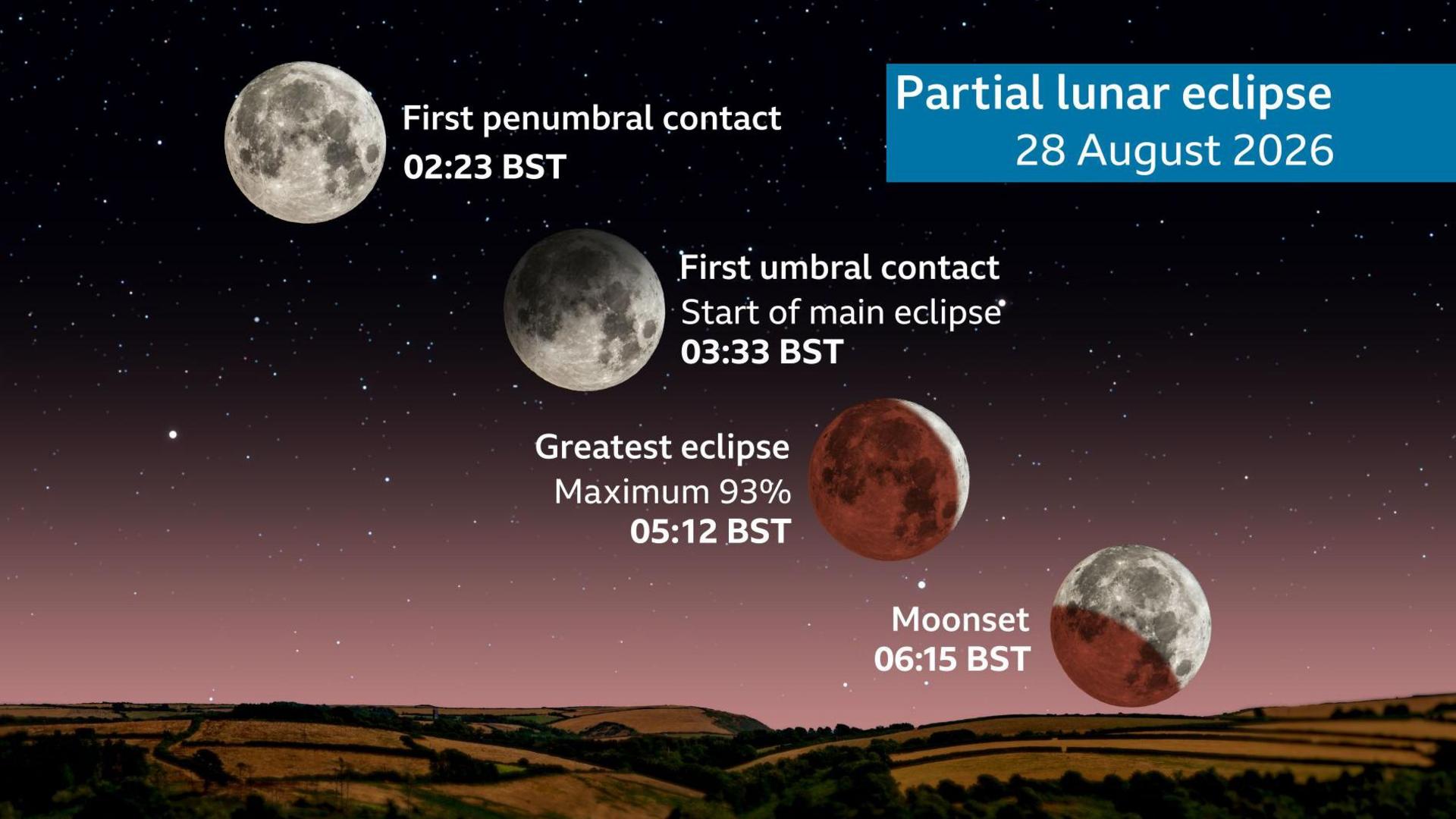
According to data compiled by the Royal Observatory in Greenwich, the chronological sequence of events for London and surrounding regions follows a precise cosmic clock:
02:23 BST – First Penumbral Contact: The subtle outer edge of Earth’s shadow (the penumbra) begins to brush against the lunar surface. To the casual observer, the change in brightness at this stage is minimal, often requiring close attention to notice a slight dimming on one side of the lunar disc.
03:33 BST – The Partial Eclipse Begins: The pivotal moment arrives when the Moon officially makes contact with Earth’s darkest, most concentrated shadow—the umbra. A distinct, dark bite appears to be taken out of the bright full moon as it steadily sinks lower into the south-western sky.
05:12 BST – Maximum Eclipse: Reaching its zenith, approximately 90% (with some models calculating up to 93%) of the Moon’s surface will be submerged within the umbra. This is when the striking reddish-copper coloration is most intense, bathing the lunar landscape in the refracted light of all of Earth’s simultaneous sunrises and sunsets.
06:15 BST – Moonset: For viewers in the capital and much of southern England, the Moon sinks below the horizon, moving entirely out of sight just as morning twilight breaks.
Exact moonset and eclipse visibility times will vary slightly depending on geographical latitude and longitude across the UK. Observers situated further north or west must adjust their watches accordingly to account for regional variations in planetary geometry.
Supporting Context & Metrics: Science of the Shadow and the "Moon Illusion"
What Causes the Moon to Turn Red?
The transformation of a brilliant, silvery full moon into a deep, rust-colored sphere is one of astronomy’s most beautiful optical illusions, driven entirely by atmospheric physics.
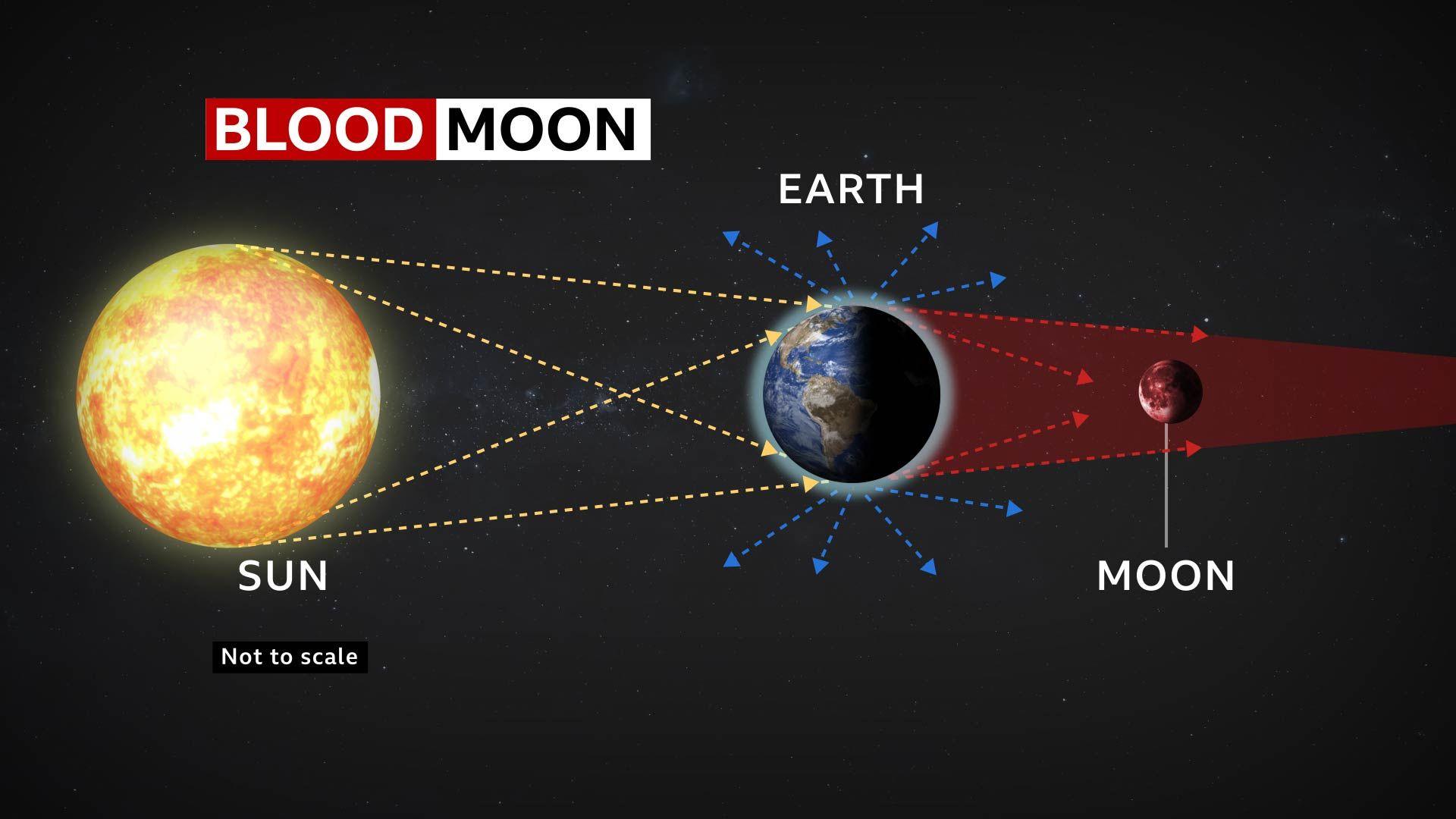
A lunar eclipse occurs strictly during a full moon phase, when the Earth moves directly between the Sun and the Moon. As our planet blocks direct sunlight from reaching the lunar surface, one might assume the Moon would plunge into absolute darkness. Instead, it glows with a crimson or coppery hue.
This phenomenon is explained by Rayleigh scattering—the same scientific principle that turns our skies blue during the day and paints our sunsets red. As sunlight travels toward the Moon, it passes through the thick envelope of Earth’s atmosphere. The shorter, high-frequency wavelengths of the light spectrum (such as blue and violet) scatter in every direction upon colliding with atmospheric gas molecules and particles. Conversely, the longer, lower-frequency wavelengths (such as red and orange) pass through the atmosphere relatively unhindered, bending—or refracting—around the curvature of the Earth and projecting onto the lunar surface.
In essence, when looking at a "Blood Moon" or an eclipsed red moon, an observer is seeing the combined light of every sunrise and sunset happening simultaneously across the globe, cast outward into the cold vacuum of space and reflected back down to Earth.
The Power of the "Moon Illusion"
Adding to the visual drama of the 28 August event is its low elevation in the sky. As the eclipse reaches its maximum phase, the Moon will hang precariously close to the south-western horizon.
This positioning triggers a well-known psychological and physiological phenomenon known as the Moon illusion. When the Moon is high in the zenith, it appears smaller because there are no immediate points of reference nearby for scale. However, when the Moon is viewed low on the horizon alongside familiar terrestrial objects—such as trees, hills, buildings, and chimneys—the human brain perceives the lunar disc as being massively magnified. While optical instruments and cameras prove that the physical angular size of the Moon remains entirely unchanged regardless of its altitude in the sky, this quirk of human visual processing creates an unforgettable, monumental aesthetic experience.
Official Statements & Expert Guidance
Astronomers and weather specialists emphasize that observing this partial lunar eclipse requires neither specialized equipment nor protective eye gear—unlike solar eclipses, which can cause permanent retinal damage if viewed directly. The event is entirely safe to watch with the naked eye, though binoculars or a modest telescope will vastly enhance the viewing experience, allowing spectators to trace the crisp, curved boundary of Earth’s shadow moving across lunar craters and maria.
Dr. Greg Brown, an astronomer at the Royal Museums Greenwich, highlights the unique nature of horizon-based celestial events:
"Events like this remind us of the dynamic, clockwork nature of our solar system. While total lunar eclipses command massive public attention, a deep partial eclipse occurring just as the Moon sets provides a magnificent photo opportunity, especially when framed against urban skylines or rural landscapes where the Moon illusion can work its full magic."
To maximize viewing potential, astronomical societies recommend the following protocols:
Seek Elevated Vantage Points: Find a hill, rooftop, or open field with an unobstructed view toward the south-western horizon, ensuring that tall buildings or dense woodlands do not block the low-lying Moon before it sets.
Arrive Early: Because the most dramatic phases occur in the hour leading up to dawn, observers should allow their eyes time to adjust to the dark well before the peak at 05:12 BST.
Monitor Local Micro-Climates: Given the transitional nature of late-August weather fronts, cloud cover can fluctuate rapidly. Checking minute-by-minute updates via meteorological applications is vital.
Future Outlook: The UK’s Busy Astronomical Calendar
The late-August partial lunar eclipse marks another major milestone in what has proven to be an unusually active and visually rewarding year for British stargazers. Coming on the heels of July’s historic partial solar eclipse—the most substantial solar obstruction visible from the British Isles in nearly three decades—the public appetite for astronomy and public science engagement is at an all-time high.
Looking further ahead into the celestial calendar, the autumn and winter months will bring their own unique highlights, including annual meteor showers such as the Perseids (which peak earlier in August) and the Geminids in December, alongside planetary conjunctions visible to the naked eye.
However, events that combine planetary alignment, optical illusions, and the striking atmospheric chemistry of a red lunar canvas remain relatively infrequent visitors to the UK’s early morning skies. For those willing to set their alarms ahead of the Friday dawn rush, the 28 August eclipse offers a brief, fleeting window to witness the delicate, grand mechanics of our solar system played out live overhead—a fleeting reminder of our place in the wider cosmos.