Executive Overview
The transition to zero-emission transportation and the rapid expansion of renewable energy generation have introduced a secondary, highly complex logistical challenge: what happens to the massive volume of lithium-ion batteries powering our electric vehicles (EVs) once they complete their vehicular lifecycles? Traditionally, the default end-of-life pathway has pointed straight toward energy-intensive recycling facilities. However, a pioneering partnership between autonomous driving titan Waymo and battery repurposing specialist B2U Storage Solutions is rewriting that script.
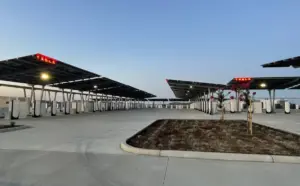
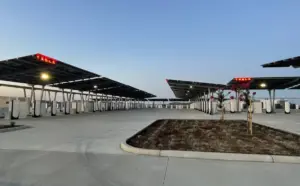
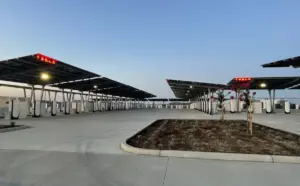
Under a newly minted agreement, retired battery packs harvested from Waymo’s sprawling fleet of autonomous robotaxis will bypass immediate recycling. Instead, they will embark on a second career supporting electrical infrastructure as part of grid-connected energy storage systems deployed across California and Texas.
This strategic alliance forms a crucial bridge between the mobility and energy sectors. By capturing the residual value of lithium-ion batteries that still possess substantial charge capacities—often retaining 70% to 80% of their original capacity—the collaboration tackles two pressing economic and environmental hurdles simultaneously: stabilizing increasingly stressed regional power grids and lowering the capital expenditure required for utility-scale stationary energy storage. As thousands of commercial EV batteries transition from transportation to the power sector in the coming years, this initiative sets a compelling precedent for the circular economy, proving that a battery’s utility does not end the day it is retired from the road.
Detailed Chronology: The Evolution of Second-Life Energy Storage
To understand the significance of the Waymo-B2U partnership, it is essential to trace how the concept of second-life EV batteries has evolved from a theoretical academic paper into a multi-million-dollar industrial reality.
The Early Years of EV Batteries (2010–2018)
When modern commercial electric vehicles began scaling globally in the early 2010s, automotive engineers and environmental scientists quickly recognized a looming bottleneck. Lithium-ion batteries degrade over time through repeated charge and discharge cycles, eventually dropping below the performance thresholds required for reliable vehicle range and acceleration. During this foundational period, the prevailing consensus assumed that once a battery package hit roughly 80% state-of-health, it would be shredded and smelted or chemically leached to recover raw minerals like lithium, cobalt, and nickel.
However, forward-thinking researchers noted that an 80% degraded automotive battery still held immense potential for applications that did not demand the high-density power delivery and lightweight constraints of an automobile. Stationary storage—where weight and volume are largely secondary to cost and safety—emerged as the logical bridge.
The R&D and Pilot Phase (2019–2024)
Throughout the early 2020s, early movers began experimenting with localized stationary storage systems built from salvaged EV packs. Early prototypes proved technically feasible, yet the industry struggled with scalability. Integrating disparate battery management systems (BMS) from various automotive manufacturers, dealing with varying states of degradation, and securing regulatory safety certifications proved daunting and expensive.
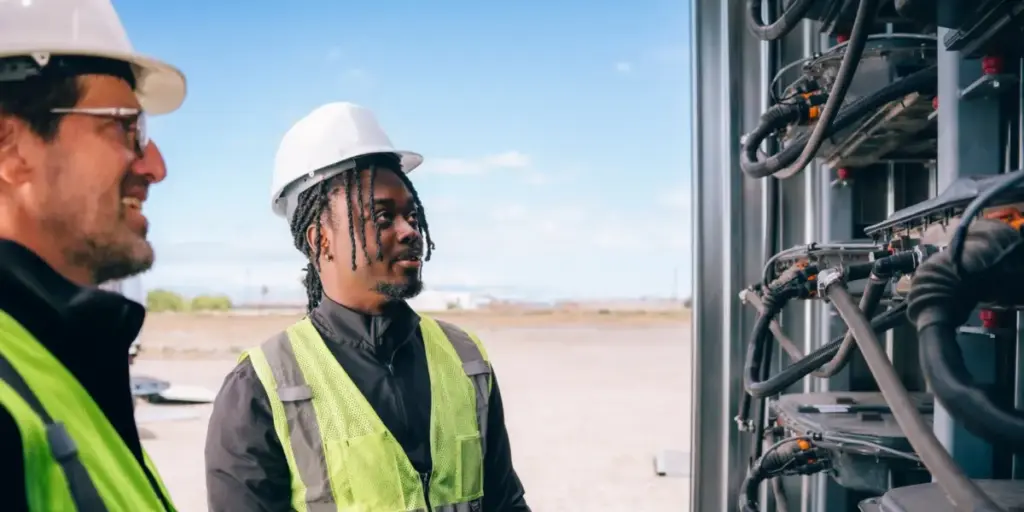
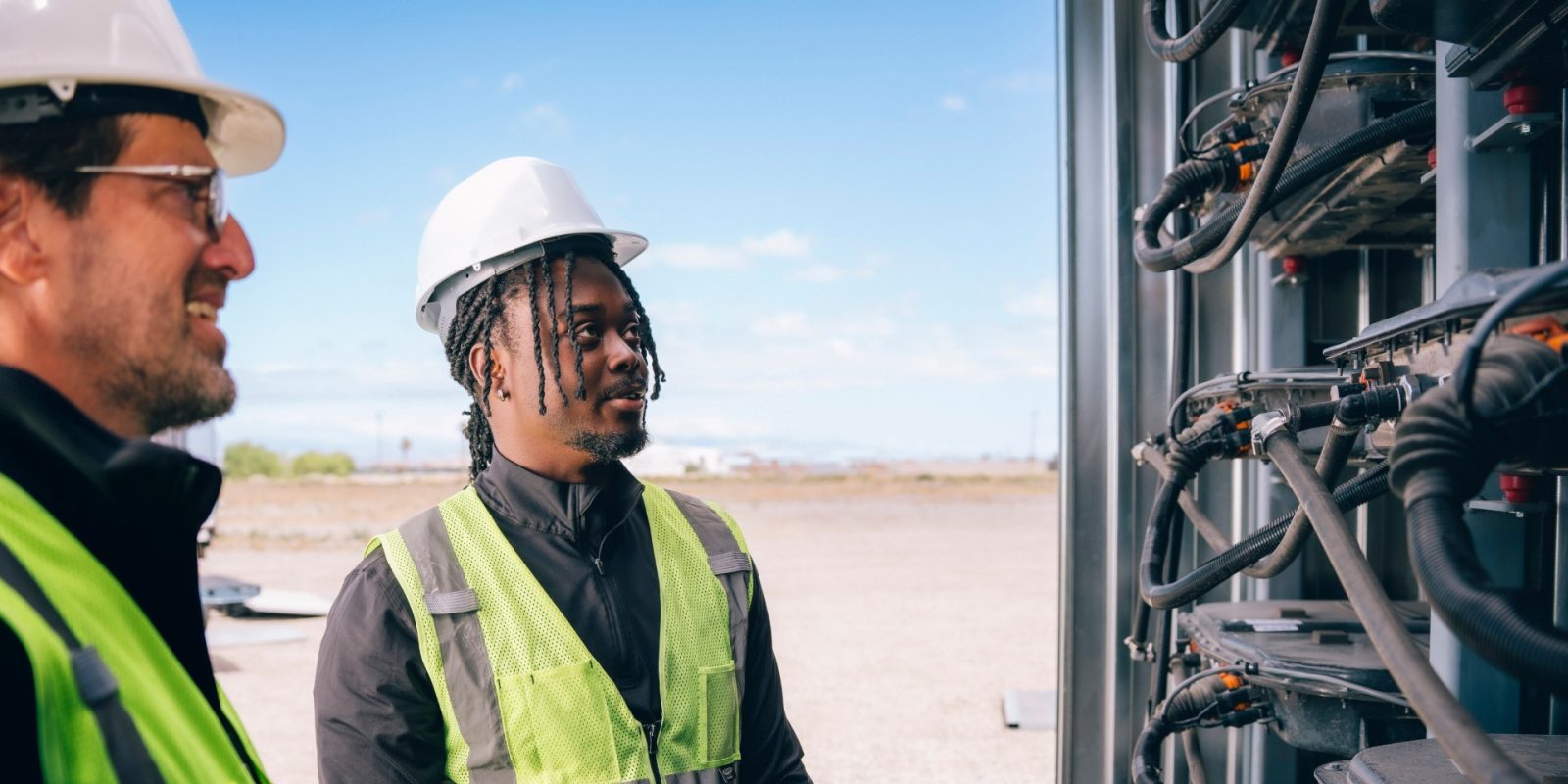
During this timeframe, B2U Storage Solutions carved out a technological niche by developing proprietary control and safety architectures designed to manage individual retired battery packs safely and efficiently. By bypassing the need to completely tear down and repackage battery modules—instead managing them at granular levels within proprietary containerized units—B2U streamlined the deployment of second-life assets.
The Commercialization Leap (2025–Present)
By 2026, the convergence of massive robotaxi fleet deployments and acute grid instability transformed second-life batteries from a niche eco-friendly concept into a commercial imperative. Autonomous fleets, such as Waymo’s continually expanding robotaxi operations, accumulate high mileage and experience predictable, intensive duty cycles. This results in a steady, reliable stream of retired battery packs.
The partnership between Waymo and B2U represents the maturation of this market. Rather than treating battery retirement as a fragmented waste management issue, forward-thinking mobility providers are now locking in structured, circular economic pipelines with energy storage operators before their vehicles even hit the assembly line.

Supporting Context & Metrics: The Intersection of Mobility, Grids, and Economics
The economics underpinning the Waymo-B2U collaboration are anchored in hard market realities: soaring electricity demands, vulnerable regional power grids, and the skyrocketing cost of virgin raw materials.
The State of the Grid in California and Texas
Waymo and B2U are concentrating their initial deployments in two of the most critical energy markets in the United States: California and Texas (ERCOT).
- California leads the nation in renewable energy integration, boasting massive wind and solar generation footprints. However, the state faces the notorious "duck curve" phenomenon—a sharp mismatch between peak solar generation during midday and peak electricity demand in the early evening when the sun sets. Stationary battery storage is essential to absorb midday surpluses and discharge them during evening hours.
- Texas, managed by the Electric Reliability Council of Texas (ERCOT), operates an independent grid that has faced severe stress during extreme weather events, including deep winter freezes and blistering summer heatwaves. The addition of rapid-response stationary storage is vital to preventing rolling blackouts and maintaining frequency regulation.
Why Retired EV Batteries Excel in Stationary Storage
A common misconception is that a "retired" EV battery is spent or useless. In reality, automotive applications require extreme peak-power delivery (rapid acceleration) and high energy density within a compact, lightweight enclosure.
When a battery pack drops below the threshold acceptable for driving, it still retains robust chemical stability and significant capacity. In a stationary environment:
- Lower C-Rates: The charge and discharge rates (C-rates) required for grid support are typically much lower and gentler than those demanded by an accelerating robotaxi.
- Thermal Management: Stationary containers can house sophisticated, centralized HVAC and liquid cooling systems, protecting the aged chemistry from thermal stress.
- Cost Arbitrage: Building utility-scale energy storage systems using brand-new lithium-ion cells requires significant capital expenditure and places additional demand on global mining supply chains. Repurposing existing packs slashes material acquisition costs, providing a lower cost-per-kilowatt-hour storage solution for grid operators.
| Metric / Factor | Automotive Application (Waymo Robotaxi) | Stationary Grid Application (B2U Storage) |
|---|---|---|
| Primary Stress Factor | High continuous power draw, fast charging, vibration | Gentle cycling, thermal regulation, predictable loads |
| Capacity Retention Threshold | 100% down to ~80% State-of-Health (SoH) | ~80% down to economic end-of-life (often <50%) |
| Weight & Volume Constraints | Highly restrictive (must fit inside a vehicle chassis) | Flexible (housed in industrial shipping containers or warehouses) |
| Environmental Impact | Zero direct tailpipe emissions; intensive initial manufacturing footprint | Absorbs renewable energy surplus; delays raw-material recycling |
Official Statements and Industry Perspectives
The partnership has drawn widespread acclaim from industry leaders who view the initiative as a benchmark for corporate environmental responsibility paired with sound financial strategy.

Freeman Hall, CEO of B2U Storage Solutions, emphasized the dual benefit of extracting maximum economic output from existing manufacturing inputs:
"By extending the use of these batteries as grid storage, we are monetizing the full potential of EV batteries, now providing crucial stability to the power grid as energy demand continues to grow."
Adam Lenz, Head of Sustainability and Environment at Waymo, underscored the brand’s commitment to lifecycle stewardship:
"Through this partnership, we can repurpose our batteries for local grid storage and ensure our batteries continue to provide economic and environmental value to the community long after they’ve retired from the road."
Industry analysts have noted that as autonomous vehicle fleets scale globally, managing physical hardware footprints will become a primary regulatory and public relations battleground. Partnerships that demonstrate circular economy models proactively help companies insulate themselves against upcoming regulatory tightening regarding battery waste and extended producer responsibility (EPR).

Future Outlook: The Path Ahead for Circular Energy Systems
Looking toward the horizon, the Waymo-B2U initiative is expected to catalyze a broader transformation across both the autonomous vehicle and energy storage sectors.
Scaling Up to Thousands of Units
As Waymo continues to expand its commercial autonomous ride-hailing footprint into new metropolitan areas across the United States, the volume of retiring battery packs will scale exponentially. B2U’s containerized storage technology is uniquely positioned to absorb this influx, with projections pointing toward the integration of thousands of retired packs into regional power markets over the next decade.
The Ultimate Destination: Closed-Loop Recycling
It is important to note that second-life repurposing does not eliminate the need for recycling—rather, it defers it. After a battery spends five to ten years operating within a B2U grid-storage container, its chemical capacity will eventually degrade to a point where further stationary use is economically unviable.
At that juncture, the batteries will finally be routed to dedicated recycling facilities. However, by inserting a multi-year stationary storage phase in the middle, the carbon footprint amortized per kilowatt-hour of total battery utility is slashed dramatically. Furthermore, advanced hydrometallurgical recycling technologies will have had several more years to mature, ensuring that when these batteries do reach their ultimate end-of-life, a higher percentage of critical minerals can be recovered and fed directly back into the manufacturing of brand-new cells.
A New Standard for Corporate Sustainability
The success of this collaboration establishes a blueprint that other automakers, fleet operators, and logistics companies will likely feel compelled to follow. As consumers and regulators demand genuine accountability throughout the entire lifecycle of clean-tech products, the era of treating EV batteries as single-use commodities is drawing to a close. By turning old robotaxi batteries into the guardians of our power grid, Waymo and B2U are demonstrating that the future of clean energy is profoundly, beautifully circular.