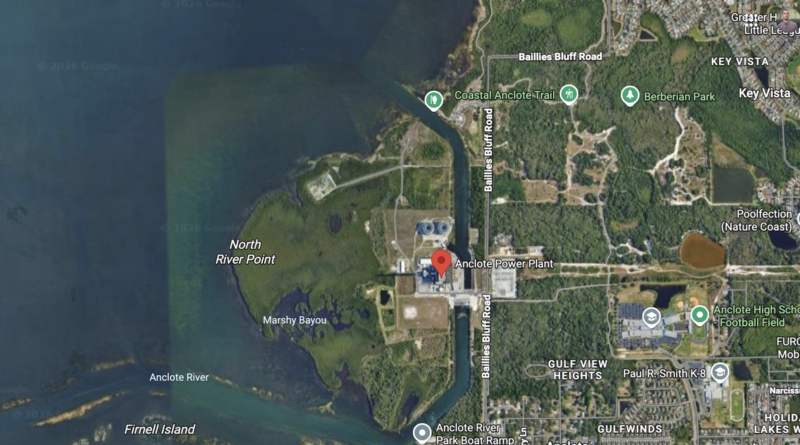
On August 20, a hazardous industrial accident occurred at Duke Energy’s Anclote Power Plant located in Holiday, Florida, sending approximately 3,200 gallons of sodium bisulfite spilling across the facility’s asphalt and surrounding soil. While initial assessments by both the utility provider and state environmental regulators confirmed that the corrosive chemical agent did not breach the nearby Anclote River, the incident has rapidly escalated into a wider public policy debate.
The spill serves as a glaring window into the systemic hazards associated with aging fossil fuel infrastructure situated near densely populated residential communities and sensitive coastal ecosystems. Environmental advocacy groups, energy policy analysts, and local stakeholders have seized upon the event to underscore the inherent risks of relying on legacy generation assets. With Duke Energy Florida continuing to draw roughly 90% of its total generation mix from polluting fossil sources, critics argue that such accidents are not isolated anomalies, but rather predictable hazards of an outdated energy paradigm. As Florida’s economy remains deeply dependent on pristine natural environments and a booming tourism sector, the incident has intensified calls for transparency, accountability, and an accelerated transition toward safe, renewable energy alternatives.
Detailed Chronology of the Incident
The sequence of events surrounding the August 20 spill unfolded rapidly, drawing immediate attention from regional environmental watchdogs and regulatory bodies.
The Release and Immediate Response
According to reports filed with Florida environmental regulators, the containment failure at the Anclote Power Plant resulted in the uncontrolled release of approximately 3,200 gallons of sodium bisulfite. The chemical, widely utilized in power plant operations for oxygen scavenging and wastewater treatment, flooded sections of the facility’s yard, coming into direct contact with on-site soil and asphalt surfaces.
Because sodium bisulfite acts as a strong irritant capable of causing severe reactions upon contact with human skin, mucous membranes, and respiratory tissue, the breach triggered immediate internal safety protocols. Emergency containment measures were deployed by plant personnel to prevent the liquid from migrating off-site.
Regulatory Notification and Containment Verification
Duke Energy officially alerted the Florida Department of Environmental Protection (FDEP) on the day of the incident, initiating a standard protocol for industrial chemical releases. Joint assessments conducted by utility operators and state inspectors focused heavily on preventing the chemical from entering local hydrological systems.
Authorities confirmed that rapid containment efforts successfully prevented the 3,200 gallons of sodium bisulfite from reaching the adjacent Anclote River. While this averted an immediate aquatic disaster—which could have devastated local marine life and water quality—the physical footprint of the spill on the facility grounds required intensive cleanup, soil testing, and remediation procedures to neutralize residual chemical hazards.
Understanding Sodium Bisulfite: Chemical Profile and Associated Risks
To fully comprehend the gravity of the Anclote Plant incident, it is essential to examine the chemical nature of sodium bisulfite ($NaHSO_3$) and the specific hazards it poses to human health and the environment.
Industrial Utility vs. Toxicity
In thermal power generation facilities, sodium bisulfite plays a critical technical role. It is frequently injected into boiler feed water systems to eliminate dissolved oxygen, thereby mitigating oxidative corrosion in high-pressure pipes and turbines. Additionally, it is used to dechlorinate water and manage various chemical effluent streams.
However, its industrial utility is counterbalanced by significant toxicity profiles:
Dermal and Tissue Irritation: Direct contact with concentrated sodium bisulfite solutions can cause acute skin irritation, chemical burns, and severe damage to eye tissue.
Respiratory Hazards: Inhalation of mists or sulfur dioxide fumes released by the chemical can severely irritate the upper respiratory tract, triggering asthma attacks or acute distress in sensitive individuals.
Environmental Impact: If introduced into natural waterways, sodium bisulfite can rapidly deplete dissolved oxygen levels as it oxidizes into sulfates. This oxygen starvation effect poses a lethal threat to fish populations, aquatic invertebrates, and local flora.
The proximity of the Anclote facility to residential zones and waterways means that any failure in the handling, storage, or transport of such chemicals carries an unacceptable baseline risk for the surrounding community.
Supporting Context & Metrics: Florida’s Energy Landscape and Infrastructure Vulnerability
The spill at the Anclote Power Plant is not an isolated event; rather, it is symptomatic of broader structural vulnerabilities inherent in Florida’s current energy architecture.
The Fossil Fuel Dominance in the Sunshine State
Despite being geographically positioned as the "Sunshine State" with world-class solar potential, Florida lags significantly behind other major states in renewable energy deployment. Duke Energy Florida, one of the state’s largest investor-owned utilities, continues to maintain an energy generation portfolio heavily skewed toward fossil fuels.
Current metrics indicate that approximately 90% of Duke Energy Florida’s total electricity generation mix relies on polluting sources, primarily natural gas and legacy coal infrastructure. Maintaining this fossil-heavy infrastructure requires the daily handling, storage, and combustion of hazardous materials, exposing surrounding communities to chronic pollution and acute industrial risks.
Cumulative Pressures on Local Communities
Residents living in the shadow of major industrial power plants face a compounded array of safety and environmental burdens. These include:
Routine Air Emissions: Particulate matter, nitrogen oxides, and greenhouse gases released during normal operations.
Coal Ash Management: Long-term storage challenges associated with toxic coal combustion residuals, which threaten groundwater supplies.
Industrial Accidents: Unplanned chemical spills, fires, and mechanical failures that jeopardize worker safety and residential tranquility.
Economic Vulnerability: The compounding costs of maintaining, retrofitting, and cleaning up aging fossil fuel assets—costs that are frequently passed down to ratepayers.
Official Statements and Stakeholder Perspectives
The incident has galvanized environmental organizations and policy advocates, who are utilizing the platform to demand systemic accountability and an urgent pivot toward clean energy.
Sierra Club Florida’s Call for Transparency
Susannah Randolph, Sierra Club Florida Chapter Director, sharply criticized the utility provider’s handling of safety protocols and emphasized the unfair burden placed on local residents.
"People living near Duke Energy’s facility shouldn’t have to wonder whether the next spill will threaten their health or their community," stated Randolph. "This incident is a stark reminder that fossil fuel infrastructure comes with real risks. No Florida family, regardless of zip code, should have to accept these risks in order to keep the lights on. There are cleaner, safer options available. Sierra Club Florida calls for transparency about the Duke spill, including its cause, full environmental impacts, and what steps are being taken to prevent future incidents."
The CLEO Institute on Economic and Environmental Protection
Susan Glickman, Vice President of Policy and Partnerships for The CLEO Institute, expanded the critique to encompass Florida’s broader economic model, noting the critical intersection between environmental health and the state’s tourism-driven economy.
"As this chemical spill demonstrates, the costs for fossil fuel-based energy systems are many," Glickman remarked. "With 90% of Duke Energy Florida’s generation mix coming from these polluting sources, it’s yet another proof point that we must transition to cheaper, cleaner energy solutions to both protect our pocketbooks and our health. With tourism being the pillar of the state’s economy, we cannot risk spills like this, which tarnish the natural environment."
Future Outlook: The Imperative for a Clean Energy Transition
The August 20 sodium bisulfite spill at the Anclote Power Plant serves as a cautionary tale for utility operators, regulators, and consumers across the state of Florida. As climate change increases the frequency of extreme weather events—which can further stress aging industrial facilities—the argument for maintaining 20th-century fossil fuel infrastructure becomes increasingly indefensible.
Pathways Forward
To safeguard public health, protect local ecosystems, and stabilize energy costs, industry experts and advocates agree that several critical steps must be taken:
Rigorous Independent Investigation: State and federal regulators must conduct a transparent, comprehensive audit into the root causes of the Anclote Plant containment failure, imposing strict accountability measures on Duke Energy.
Accelerated Retirement of Legacy Assets: Utility resource planning must prioritize the accelerated decommissioning of older fossil-fueled generation units in favor of modern, decentralized renewable microgrids.
Massive Investment in Clean Energy: Scaling up solar power, battery energy storage systems (BESS), and energy efficiency programs will reduce reliance on hazardous chemical inputs and slash greenhouse gas emissions.
Enhanced Community Protections: Until full decarbonization is achieved, stringent monitoring, double-containment infrastructure, and rapid-response communication protocols must be mandated for all industrial facilities operating near populated waterways.
Ultimately, the Anclote Power Plant incident reinforces the reality that a fossil-fuel-driven energy grid carries hidden, recurring costs that extend far beyond monthly utility bills. True energy security for Florida lies not in managing the industrial risks of the past, but in embracing the clean, safe, and sustainable technologies of the future.