Executive Overview
Across the United States, the waste management and recycling sector is experiencing a transformative wave of infrastructure development. Driven by surging populations, shifting real estate landscapes, and an escalating demand for sustainable resource management, local municipalities and private enterprises alike are ramping up plans to build and expand modern recycling facilities. From the mountainous terrain of Utah to the bustling tourism hub of Central Florida, the rural expanse of Northeast Michigan, and the booming tech corridors of Texas, stakeholders are forging new public-private partnerships, securing vital funding, and expanding their geographic footprints.
However, this national push for upgraded recycling capabilities does not come without its hurdles. Municipalities are navigating complex budgetary constraints, rising construction costs, and the rigorous demands of securing long-term operational partners. Concurrently, specialized recyclers are optimizing their supply chains to meet the rigorous data security and environmental compliance needs of a rapidly evolving technology sector.
This comprehensive report examines the latest developments in municipal recycling upgrades, requests for proposals (RFPs) for new Materials Recovery Facilities (MRFs), and strategic commercial expansions reshaping the American recycling landscape.
Detailed Chronology & Regional Developments
The nationwide push toward modernized waste and recycling infrastructure is best understood through the unique lenses of four distinct regional projects currently making headlines. Each initiative highlights a different facet of modern recycling development, ranging from municipal relocation struggles to competitive bidding processes and corporate expansion.
1. Recycle Utah: A Race Against Time in Park City
For more than a year, the future of Recycle Utah, the nonprofit organization that has managed recycling processing services in the Park City, Utah, area since 1991, hung in the balance. The organization’s long-standing drop-off center faced imminent closure due to sweeping neighborhood redevelopment plans spearheaded by the local municipal government, most notably the long-awaited Bonanza 5-acre development plan advanced by the Park City Council.
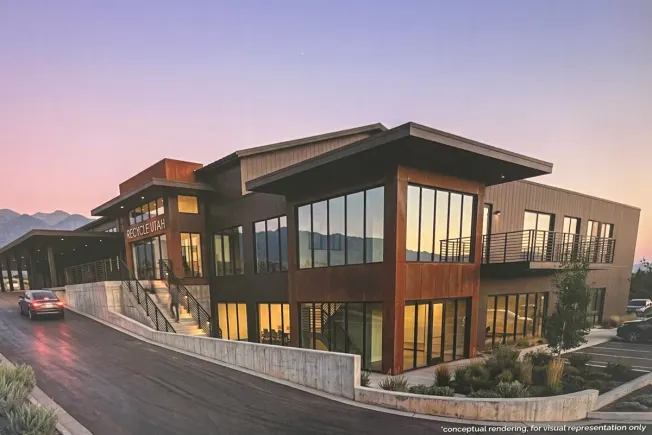
The turning point arrived in May, when the Park City Council officially approved a pivotal plan to allocate four acres of city-owned land to the nonprofit, offering a viable path forward. Building on this momentum, Recycle Utah unveiled its official early design plans for the brand-new drop-off center during the 11th annual 100-Mile Meal.
Despite securing the land, the timeline remains compressed. Recycle Utah has been given until March 1, 2027, to completely vacate its current facility. In the coming months, the organization will launch an aggressive capital fundraising campaign to finance the construction of the new site. According to project disclosures on the organization’s official website, the new facility will represent a massive spatial upgrade. Leadership notes that the future site is slated to be roughly ten times the size of their current location, enabling significantly higher processing volumes and enhanced community services.
2. Orange County, Florida: Seeking Long-Term MRF Partnerships
In Central Florida, Orange County is taking a formalized, market-driven approach to expanding its recovered materials infrastructure. Faced with a booming population and immense tourist influx, the county’s Utilities Solid Waste Management Division has issued a formal Request for Proposals (RFP) to source a qualified private partner to finance, build, operate, and own a state-of-the-art Material Recovery Facility.
The scope of the Orange County project is expansive. The chosen vendor will be expected to deliver comprehensive recycling, processing, and marketing services under a long-term agreement. The initial term of the contract is slated for an impressive 15 years, with provisions for two separate five-year extensions, signaling a multi-decade commitment to regional sustainability. Bids for this high-stakes infrastructure project are officially due on October 1.
3. Northeast Michigan Materials Management Authority: Overcoming Budgetary Bumps
In the industrial and rural stretches of Northeast Michigan, the Northeast Michigan Materials Management Authority (NMMMA) is doubling down on its commitment to local infrastructure by reissuing a construction bid for a new recycling facility near Alpena.
This step follows a temporary setback earlier in the planning cycle. NMMMA was previously forced to walk away from a finalized bid agreement with Devere Industrial after escalating construction and material costs pushed the proposed project significantly over budget. Undeterred, the authority refined its project parameters and reissued the construction bid, with submissions remaining open until October 9.
4. Dynamic Lifecycle Innovations: Strategic Expansion into Texas
While municipalities focus on residential and commercial stream processing, private enterprise is scaling up to meet the demands of the corporate tech sector. Dynamic Lifecycle Innovations, an industry leader in IT asset disposition (ITAD) and electronics recycling, officially opened a brand-new, cutting-edge facility in Waco, Texas.
This marks the company’s very first operational footprint in the Lone Star State, strategically placing it in close geographic proximity to a rapidly expanding southern technology hub. Prior to this expansion, Dynamic Lifecycle Innovations operated primary facilities in Wisconsin, Tennessee, and Virginia. The new Waco site is comprehensively equipped to handle secure reverse logistics, asset tracking, certified data destruction, electronics recycling, and data center decommissioning.
Supporting Context & Metrics
To fully appreciate the scale of these infrastructure investments, it is essential to examine the underlying metrics, funding mechanisms, and operational statistics driving these projects forward.
Demographic Pressures and Material Volumes
The demand for recycling capacity is directly proportional to population growth and consumer habits. Consider the operational profile of Orange County, Florida:
- Resident Population: Home to more than 1.5 million permanent residents.
- Tourism Impact: Welcomes more than 75 million annual visitors, creating immense commercial and hospitality waste streams.
- Collection Volume: The Orange County Utilities Solid Waste Management Division currently collects approximately 60,000 tons of single-stream recyclable materials annually.
- Customer Base: Services approximately 240,000 residential customers across the county.
Without robust MRF infrastructure, handling these immense tonages efficiently becomes economically and environmentally untenable, making the current RFP a critical milestone for regional waste diversion goals.
Financial Engineering and Grant Funding in Michigan
Building modern MRFs requires substantial capital injection, often necessitating creative public-private financial models. For the NMMMA project near Alpena, Michigan, total project costs are projected to fall between $5.7 million and $5.9 million, depending on the final architectural and operational design chosen.
Rather than relying solely on municipal bonds or ratepayer increases, NMMMA successfully secured substantial outside financial backing:
- $1.2 million grant from the Michigan Department of Environment, Great Lakes, and Energy (EGLE).
- $2.7 million grant from the United States Department of Agriculture (USDA).
This layering of state and federal grants illustrates the vital role that external subsidization plays in bringing vital recycling infrastructure to fruition in semi-rural and economically diverse regions.
Scope of Specialized Recycling Services
Not all recycling facilities are designed for traditional curbside paper and plastics. Recycle Utah provides a textbook example of a facility filling critical regional voids. Operating since 1991, the center handles traditional commingled recyclables alongside notoriously difficult-to-manage materials:
- Consumer electronics and e-waste.
- Household batteries and specialized lighting/lightbulbs.
- Expanded polystyrene foam (Styrofoam): Notably, Recycle Utah stands as the single operational facility within the entire state of Utah that accepts and processes expanded polystyrene foam, preventing significant volumes of non-biodegradable waste from entering local landfills.
Official Statements and Industry Insights
Key stakeholders across the country have emphasized the strategic importance of these developments, highlighting how new facilities align with broader corporate and municipal visions for sustainability.
Regarding the corporate rationale behind the Texas expansion, Casey Dingfelder, Executive Vice President of ITAD at Dynamic Lifecycle Innovations, noted the powerful economic currents pulling recycling infrastructure southward:
"Texas continues to attract significant investment in technology and digital infrastructure, creating greater demand for secure, responsible lifecycle solutions."
Dingfelder’s sentiment underscores a broader trend: as data centers, semiconductor manufacturing plants, and corporate headquarters proliferate across the southern United States, the localized infrastructure for handling electronic waste and secure asset disposition must evolve in parallel.
Meanwhile, leadership at Recycle Utah emphasized the massive leap forward represented by their impending relocation and facility expansion. Commenting on the transition from their long-held, constrained urban footprint to a property ten times larger, organization representatives shared via their official web portal:
"We are now in active planning for a future facility roughly ten times the size of our current location."
This sentiment reflects a widespread industry realization: legacy recycling centers, many of which were established decades ago under vastly different economic and material conditions, are no longer adequate to handle modern waste streams. Scaling up requires bold real estate acquisitions and forward-thinking municipal cooperation.
Future Outlook & Next Steps
As the autumn contracting season approaches, several critical milestones will dictate the success of these ongoing recycling initiatives:
- The Orange County RFP Deadline (October 1): Municipal leaders and industry observers will closely monitor which private waste management giants submit bids to finance, build, and operate the county’s next-generation recovered materials processing facility under the anticipated 15-year agreement.
- The NMMMA Bid Closure (October 9): Construction and engineering firms will finalize their proposals for the Alpena-area facility, with local authorities hoping that the adjusted financial parameters will successfully attract a reliable builder within budget.
- Recycle Utah’s Capital Campaign (Late 2026 / Early 2027): With a hard deadline of March 1, 2027, to vacate its historic site, the Park City nonprofit faces an intensive period of fundraising, architectural design finalization, and site preparation to ensure zero interruption in community recycling services.
- Integration of Advanced ITAD Services: As Dynamic Lifecycle Innovations settles into its new Waco facility, the success of this regional rollout will likely serve as a blueprint for other e-waste recyclers looking to capture market share in high-growth technology corridors.
Ultimately, the events unfolding in Utah, Florida, Michigan, and Texas point to a maturing American recycling industry. By combining municipal foresight, aggressive grant acquisition, private sector capital, and public partnerships, communities are laying the physical foundation necessary to meet the environmental and economic demands of the decades ahead.
This report draws upon ongoing industry tracking from the Waste Dive: Recycling newsletter. Municipal leaders, facility operators, and industry professionals wishing to share updates regarding recycling facility upgrades, retrofits, or expansions are encouraged to contact the editorial team directly at [email protected].