JOHANNESBURG — In a dramatic pre-dawn operation that has laid bare the brazen mechanics of transnational wildlife smuggling, South African border enforcement authorities intercepted a passenger carrying fifty suspected endangered parrot eggs at the continent’s busiest aviation hub. The suspect, a 50-year-old Thai national, attempted to bypass customs at Johannesburg’s O.R. Tambo International Airport utilizing a makeshift, body-worn incubator bag—a method conservationists warn highlights the extreme lengths to which international black-market syndicates will go to bypass border security.
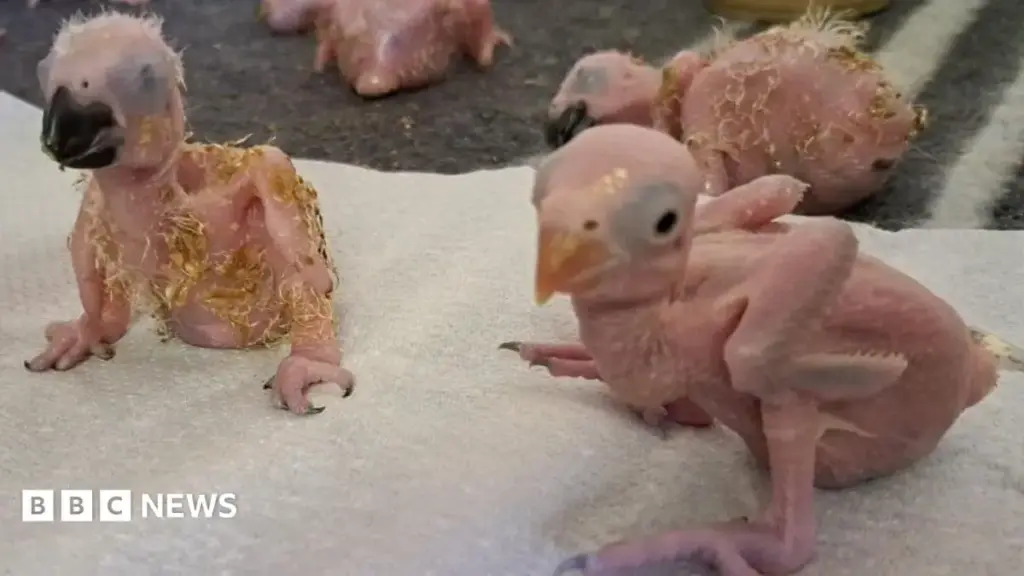
The high-stakes intervention, which took place last Thursday, has since yielded a delicate race against time. Following the seizure, specialized wildlife veterinarians and avian experts rushed the fragile cargo to secure facilities, where several of the poached eggs have already successfully hatched. As the investigation deepens, the incident has amplified global concerns over the surging illicit trade in exotic avian species, placing South Africa’s frontline conservation forces squarely at the center of an international enforcement battle.
Executive Overview
The interception at O.R. Tambo International Airport represents a significant tactical victory for South Africa’s environmental enforcement apparatus, yet it simultaneously serves as a stark reminder of the country’s vulnerability to transnational organized crime. South Africa is globally renowned for its staggering biodiversity, making it both a premier destination for legitimate ecotourism and a prime target for illicit wildlife trafficking rings. While public consciousness is frequently dominated by high-profile poaching crises involving rhinoceros horn, elephant ivory, and pangolin scales, the multi-million-dollar illicit trade in live birds, reptiles, and specialized genetic material continues to operate in the shadows.
The seizure of the fifty eggs is not an isolated incident. It closely mirrors a nearly identical smuggling attempt intercepted at the same airport just months prior, in July, when border officials apprehended a 23-year-old Thai citizen attempting to smuggle a staggering 418 parrot eggs through international arrivals. Together, these consecutive enforcement actions point toward a burgeoning, highly organized operational pipeline connecting rural breeding grounds—or illicit harvest sites—in Southern Africa directly to lucrative exotic pet markets in Southeast Asia.
If convicted under South Africa’s stringent environmental legislation, the primary suspect faces severe penal consequences, including a fine of up to 10 million rand (approximately $626,000 USD / £461,000 GBP), a prison sentence of up to ten years, or both. Beyond the immediate judicial proceedings, the case has galvanized conservation bodies, triggering renewed calls for heightened intelligence sharing, enhanced border profiling, and aggressive international policing cooperation to dismantle the syndicates driving the avian trafficking trade.
Detailed Chronology of the O.R. Tambo Airport Interception
The Approach and Profiling
The operation unfolded on Thursday morning within the bustling corridors of O.R. Tambo International Airport (ORTIA), a premier aviation gateway serving millions of international passengers annually. According to preliminary intelligence briefings released by the Department of Forestry, Fisheries and the Environment (DFFE), law enforcement analysts had been tracking suspicious passenger movements and booking patterns originating from high-risk transit hubs in the region.
The suspect, whose identity has been withheld pending formal arraignment, stepped off an international flight carrying standard cabin baggage. However, routine behavioral profiling and targeted risk-assessment protocols flagged the individual for secondary inspection. As customs officials directed the 50-year-old Thai national toward the search area, officers observed signs of physiological distress and physical restriction, prompting a comprehensive physical and baggage search.
The Discovery of the "Homemade Incubator"
Upon conducting a physical frisk and examining the passenger’s attire, enforcement officers uncovered a sophisticated, improvised thermal containment system secured directly to the suspect’s torso. Designed to maintain the precise, delicate thermal requirements necessary for avian embryonic development, the "homemade incubator bag" functioned essentially as a wearable micro-climate chamber.
Inside the contraption, fifty individual eggs—each exhibiting fragile, calcified shells and varying stages of internal development—were carefully nested to cushion against mechanical shock and maintain body heat. Wildlife trade experts note that transporting avian eggs in such improvised wearable devices requires a precise understanding of avian incubation dynamics, suggesting that the courier had undergone specialized operational training or was acting under the direct instruction of experienced traffickers.
Immediate Containment and Hatching
Recognizing the extreme biological vulnerability of the seized cargo, customs officials immediately escalated the situation, mobilizing the "Green Scorpions"—South Africa’s elite environmental enforcement unit—alongside specialized wildlife veterinarians. Time was of the essence; even minor fluctuations in temperature, humidity, or excessive vibration during the interdiction phase could have proven fatal to the developing embryos.
The eggs were rapidly transferred under controlled temperature conditions to specialized facilities managed by the National Zoological Garden in Pretoria. According to subsequent updates from the DFFE, a significant portion of the rescued eggs have successfully broken through their shells over the past several days. The newly hatched chicks are currently undergoing intensive, round-the-clock supportive care administered by specialized avian zookeepers and veterinary geneticists aiming to stabilize their conditions and maximize their long-term survival probabilities.
Supporting Context & Metrics: The Scale of Avian Trafficking
Understanding the CITES Framework
Preliminary forensic and ornithological assessments indicate that the seized eggs belong to high-value parrot species explicitly protected under the Convention on International Trade in Endangered Species of Wild Fauna and Flora (CITES). CITES is an international agreement between governments designed to ensure that international trade in specimens of wild animals and plants does not threaten their survival.
Many African and South American parrot species targeted by poachers fall under Appendix I or Appendix II of CITES, meaning commercial international trade is either strictly prohibited or heavily regulated through a complex system of permits. Traffickers routinely bypass these legal barriers by targeting wild nests during breeding seasons, harvesting unhatched eggs—which are significantly easier to conceal and transport than vocal, fluttering adult birds—and smuggling them across international borders via commercial air routes.
The Mechanics of Egg Smuggling
The logistics underpinning the illegal parrot egg trade are deceptively complex. Unlike adult birds, which require feeding schedules, spacious travel crates, and veterinary clearance that routinely trigger alarms at customs checkpoints, eggs present a distinct tactical advantage to smugglers. They are silent, compact, and can be concealed within personal clothing, hollowed-out electronics, or specialized luggage compartments.
However, this method carries immense biological risks. Developing embryos require precise incubation temperatures (typically fluctuating narrowly between 37°C and 38°C) and specific humidity levels. X-ray scanners utilized by airport security, while vital for detecting contraband, can also expose developing embryos to ionizing radiation, further compromising hatch rates. The fact that traffickers continue to risk millions of dollars on egg smuggling underscores the astronomical profit margins commanded by rare exotic birds on the international black market.
Historical Precedent: The July Seizure
The gravity of last Thursday’s interception is sharply contextualized by a massive enforcement action executed just months prior at the same airport. In July, enforcement agencies at O.R. Tambo detained a 23-year-old Thai citizen who was attempting to smuggle an astonishing 418 parrot eggs out of the country.
That massive haul represented one of the largest single avian smuggling interventions in South Africa’s recent history. Law enforcement analysts reviewing the July case alongside last Thursday’s arrest are investigating potential operational links between the two couriers. Both suspects hailed from Thailand, a well-documented nexus point in the global illegal wildlife trade network, pointing toward the possible involvement of a centralized syndicate orchestrating systematic poaching raids on protected bird habitats across Southern Africa.
Official Statements and Institutional Responses
The success of the O.R. Tambo operation drew praise from high-ranking government officials, who emphasized the critical need for multi-agency collaboration in combating transnational environmental crime.
David Maynier, South Africa’s Minister of Environment, issued a commendation praising the swift and coordinated response of the participating agencies:
"Illegal wildlife trafficking can only be challenged by a coordinated defense of our natural heritage. The interception at O.R. Tambo International Airport is a testament to the vigilance, professionalism, and seamless cooperation between our environmental inspectors, the Green Scorpions, and national law enforcement divisions."
Minister Maynier also directed specific gratitude toward the scientific and husbandry staff managing the aftermath of the raid:
"I want to extend my deepest appreciation to the dedicated staff at the National Zoological Garden in Pretoria, who have been working tirelessly under immense pressure to incubate the seized eggs and provide specialized, round-the-clock care to the newly hatched chicks."
The Role of the Green Scorpions
Formally known as the Environmental Management Inspectorate (EMI)—though widely recognized by their colloquial moniker, the "Green Scorpions"—this specialized enforcement network operates across national, provincial, and municipal levels. Established to bridge the gap between traditional police work and environmental science, the Green Scorpions possess sweeping powers to investigate crimes, execute search warrants, seize contraband, and issue compliance notices.
In recent years, the unit has increasingly pivoted toward intelligence-led policing, embedding operatives within transport hubs and logistics networks to intercept syndicates before illicit wildlife products can leave the African continent. Officials emphasize that last Thursday’s arrest was the direct result of proactive intelligence sharing between border control agents, the South African Police Service (SAPS), and international conservation watchdogs.
Future Outlook: Strengthening the National Anti-Poaching Strategy
A Holistic Enforcement Framework
South Africa’s structural approach to combating wildlife trafficking underwent a profound evolution six years ago, when the government adopted a comprehensive national strategy aimed at dissolving traditional institutional silos. Historically, conservation enforcement operated largely independently of customs inspections, tax investigations, and organized crime units.
Today, the framework mandates deep integration between:
- Government Institutions: Policy development and habitat management.
- Law Enforcement & Police: Tactical interdiction, surveillance, and arrest operations.
- Conservation Authorities: Species identification, forensics, and wildlife rehabilitation.
- Customs Officials: Port-of-entry screening and cargo profiling.
- Prosecutors: Specialized legal teams trained to navigate complex environmental statutes and secure maximum penalties.
- International Partners: Cross-border intelligence sharing with destination and transit countries, particularly across Southeast Asia.
The Road Ahead: Challenges and Priorities
Despite these structural enhancements, enforcement authorities face daunting ongoing challenges. Transnational criminal syndicates are notoriously adaptable, quickly shifting smuggling routes, altering courier profiles, and exploiting regional vulnerabilities in neighboring countries with weaker border controls to funnel contraband into South Africa before flying it abroad.
Furthermore, the rehabilitation and eventual disposition of seized wildlife—such as the newly hatched parrot chicks currently under intensive care in Pretoria—present long-term logistical and ethical hurdles. Once mature, these birds cannot simply be released into the wild without extensive genetic verification, behavioral conditioning, and habitat security assessments, as improper release can introduce diseases or disrupt local ecosystems.
As the 50-year-old Thai national prepares to face formal charges in a South African court, environmental ministries are signaling that prosecution is merely the first step. Investigators are aggressively pursuing digital footprints, communication records, and financial transactions linked to the suspect’s phone and luggage in an effort to climb the organizational ladder and dismantle the higher-level architects of the syndicate.
For South Africa, the O.R. Tambo seizure is simultaneously a warning of persistent criminal enterprise and a demonstration of resilient protective systems. As global demand for exotic pets continues to fuel the engines of extinction, the nation’s frontline defenders remain locked in a high-stakes vigilance, standing guard over a natural heritage that the world cannot afford to lose.