By Corporate Knights Editorial Desk Published: August 2026
Executive Overview
For decades, international climate architecture has relied on regulated carbon markets—often referred to as compliance markets—to compel industrial polluters to draw down their greenhouse gas emissions. Operating on a cap-and-trade principle, these mechanisms establish absolute upper limits on carbon pollution, permitting corporations to buy and sell emissions allowances. This framework creates a dynamic financial incentive, driving industry leaders to uncover the most cost-effective methods for decarbonization.
Yet, a glaring blind spot persists in almost all of these regulatory schemes: nature.
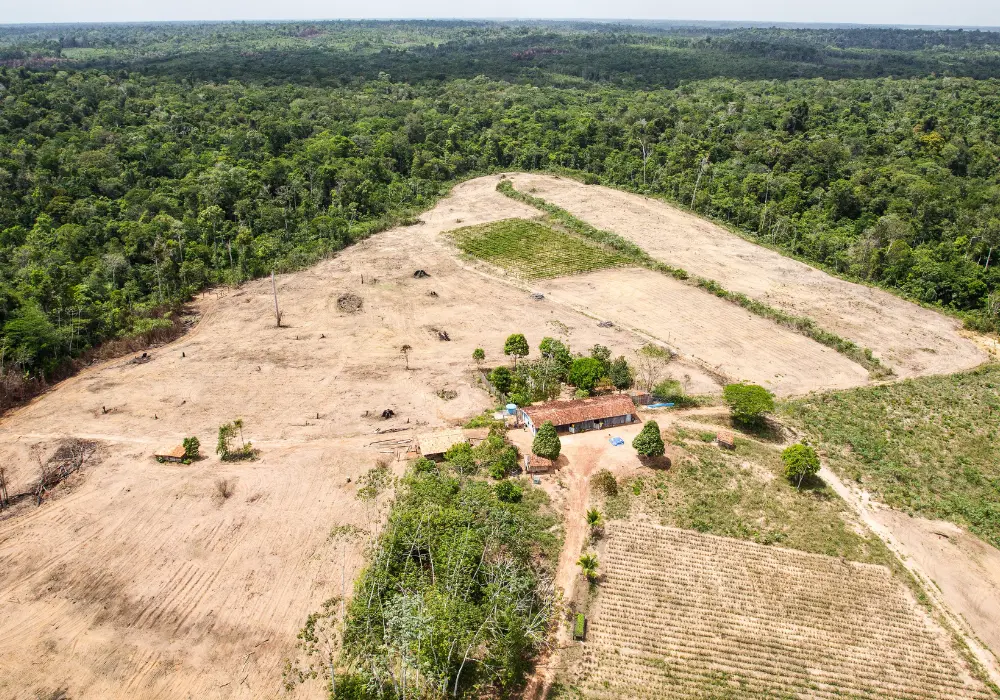
While strategies like halting tropical deforestation, mitigating catastrophic wildfires, and restoring degraded landscapes represent some of the most potent, immediate pathways for lowering atmospheric carbon, they have largely been excluded from mandatory compliance markets. Instead, nature-based climate solutions have been relegated to the volatile voluntary carbon market (VCM), which has recently faced intense public scrutiny, investigative exposés, and widespread corporate skepticism over data integrity and additionality.
Dr. Christopher Costello, chief economist at the Environmental Defense Fund (EDF), argues that excluding nature from compliance markets represents the single largest untapped opportunity in global climate policy. In a candid interview with Corporate Knights managing editor Mark Mann, Costello outlines how scaling and integrating nature into rigorous, government-backed compliance architectures could dwarf current industrial emission reductions. However, doing so requires moving past the reputational failures of the voluntary market and establishing institutional safeguards that guarantee transparency, scientific rigor, and enduring accountability.
Detailed Chronology: The Evolution of Carbon Markets and the Nature Blind Spot
To understand the urgency of Costello’s thesis, one must trace the historical development of carbon pricing mechanisms over the past twenty years.
The Rise of Compliance Architectures
Beginning in the early 2000s with initiatives like the European Union Emissions Trading System (EU ETS), governments recognized that command-and-control environmental legislation was often too rigid and expensive to drive rapid industrial transformation. By capping total regional or national emissions—and ratcheting that cap downward year after year—governments established a predictable trajectory toward net-zero targets (such as Canada’s mid-century mandate).
Within these compliance markets, market forces took over. If a company modernized its production lines or adopted fleet-wide electrification, it could reduce its emissions below its allocated allowance and sell the surplus to a less efficient competitor. Crucially, this system allowed society to achieve absolute tonnage reductions at the lowest possible economic friction.
The Voluntary Market Detour
Concurrently, private entities and corporations seeking to offset their operational footprints turned to the voluntary carbon market. Unlike compliance markets, VCMs lack governmental caps. They function instead as a patchwork of bilateral contracts, often funding conservation or reforestation projects in the Global South.
While well-intentioned, the voluntary market struggled with systemic structural flaws. Most notably, it suffered from the "additionality problem"—paying landowners for conservation outcomes that would have occurred naturally anyway, without the financial intervention. When investigative journalism exposed high-profile projects that failed to deliver verified carbon sequestration, the resulting scandals cast a long, damaging shadow over the entire concept of pricing and trading nature.
The New Frontier: Merging Ecology with Regulation
Today, the climate policy debate stands at a crossroads. As industrial compliance systems mature, economists and ecologists are pressing governments to bridge the chasm between formal cap-and-trade systems and the natural world. With New Zealand serving as a rare pioneering exception, the world’s roughly 60 to 70 other compliance markets are being urged to incorporate nature-based assets, transforming how humanity accounts for ecological stewardship.
Supporting Context & Metrics: Nature as a Smokestack
The global carbon budget is defined by stark numbers. Human activity pumps approximately 53 gigatons (53 billion tons) of carbon dioxide equivalents into the atmosphere annually. Reaching global net-zero requires reducing that 53-gigaton baseline down to absolute zero.
The Scale of Industrial vs. Natural Reductions
Currently, all mandatory compliance markets combined achieve annual reductions on the order of 1 to 2 gigatons. While meaningful, this pace leaves a massive deficit.
According to research from the Environmental Defense Fund, incorporating nature into well-designed compliance markets could yield an astonishing 8 to 14 gigatons of carbon reductions per year at a relatively low economic price point. Nature, therefore, possesses the potential to dwarf all existing industrial decarbonization efforts combined—if the regulatory framework is constructed correctly.
Reframing Natural Ecosystems
A fundamental shift in perspective is required to unlock this potential. Society readily conceptualizes a smokestack emerging from a coal-fired power plant, a steel mill, or a vehicular tailpipe. We rarely, however, view nature as an active emissions source. Yet, as Costello points out, nature features its own smokestack.
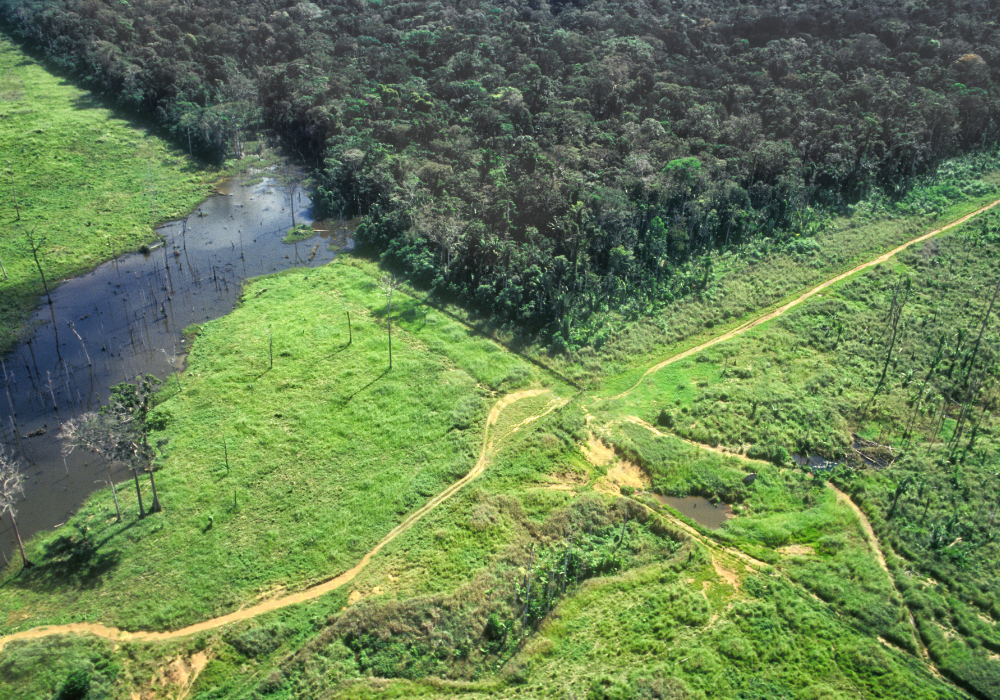
Deforestation: Every acre of forest cleared in the Amazon basin or tropical Southeast Asia releases massive volumes of stored carbon into the atmosphere, often via slash-and-burn agricultural conversion.
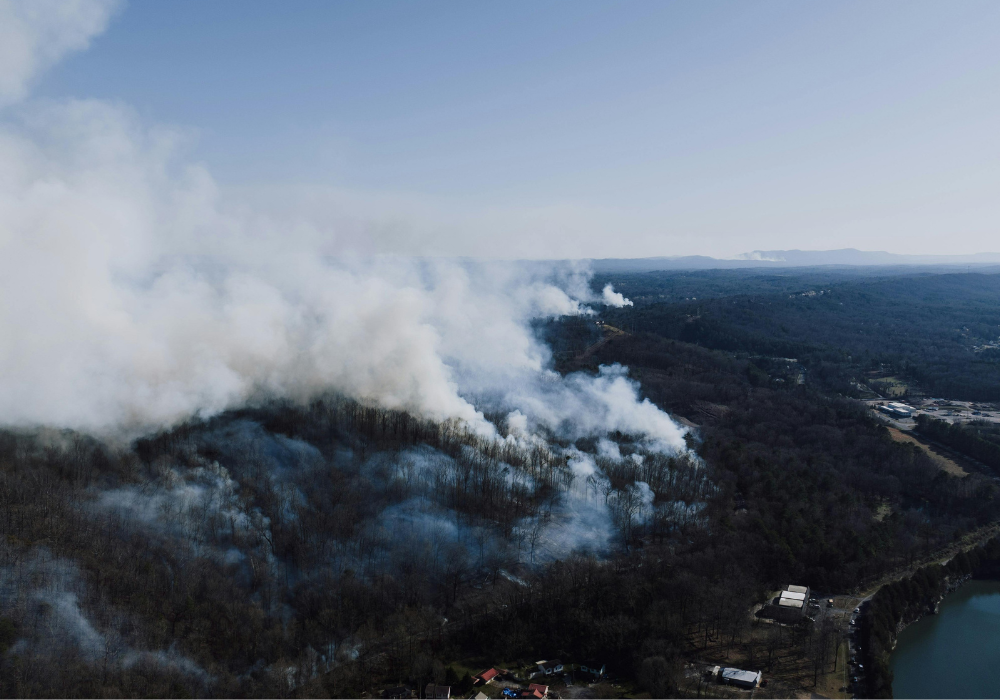
Megafires: Mismanaged forests transformed by climate stress and drought fuel catastrophic wildfires. In 2023, Canada experienced its worst wildfire season on record, releasing an estimated three billion tons of carbon into the atmosphere—a single-year emission volume that completely eclipsed the country’s combined industrial and transportation sectors.
Conversely, healthy ecosystems act as vital planetary carbon sinks. Forests, agricultural soils, mangrove swamps, and coastal kelp ecosystems possess the biochemical capacity to pull vast quantities of carbon out of the air. Managing these assets through market incentives creates a dual-action mechanism: it stops destructive emissions at the source while supercharging natural sequestration.
Official Statements & Expert Insights
In his conversation with Corporate Knights, Dr. Christopher Costello addressed the central tensions, economic realities, and methodological hurdles associated with pricing nature.
"We all want to make progress on climate change, but we want to do it affordably… If carbon markets are designed right, they offer an opportunity to make fast progress on climate change, but do it in a cost-effective, affordable way that’s really transparent."
— Dr. Christopher Costello, Chief Economist, Environmental Defense Fund
Addressing the skepticism surrounding nature-based credits in the wake of voluntary market controversies, Costello emphasized that his proposal relies on proven regulatory structures rather than speculative contracts:
"I’m not coming into this naively saying, ‘I’ve got snake oil here, I’ve got the next big thing.’ I’m borrowing from the successes of the 60, 70 or 80 carbon markets out there in the world that we’ve learned a lot from… How do we apply that compliance architecture in nature?"
Costello explained that the primary vulnerability of the voluntary market—project-by-project accounting—is neutralized within a compliance framework through jurisdictional measurement:
"The way the compliance approach fixes that additionality and several other problems is that you’re not just measuring the emissions from one project. You’re taking the whole jurisdiction and you’re measuring emissions every year, or even more frequently, from all the properties in that place. And then you set the cap on all those entities and that’s where trading is allowed. That cap ensures that your tons are additional."
Addressing concerns that cheap natural offsets might inadvertently depress carbon prices and reduce the urgency for heavy industry to innovate, Costello drew a sharp distinction between market integrity failures and genuine economic efficiencies:
"There are two reasons prices can be low in a carbon market. The first is a lack of integrity or credibility… But there’s another reason prices can be low: you have fully credible, real tons being removed from the atmosphere, and you’ve found an inexpensive way to make progress on climate change. I like that. I want more of those tons, not less."
Future Outlook: Overcoming Data Hurdles and Charting the Path Forward
As governments and policy institutes evaluate the integration of nature into regulated carbon markets, significant practical challenges remain—foremost among them being monitoring, reporting, and verification (MRV).
The Data Challenge: From Forests to Oceans
Measuring carbon emissions from an industrial smokestack is relatively straightforward compared to tracking fluxes across complex biological ecosystems. Scientists and economists categorize ecological MRV into varying tiers of technological maturity:
Forests: Global monitoring systems, satellite remote sensing, and LiDAR technology have made researchers relatively proficient at measuring carbon storage and loss in forested biomes.
Agriculture: Soil carbon sequestration holds immense potential, though tracking biological activity across millions of private farms remains methodologically complex.
Marine Environments: While physics and chemistry confirm that coastal ecosystems—such as salt marshes, mangroves, and kelp forests—sequester immense amounts of carbon (often termed "blue carbon"), accurately quantifying precise tonnage at a local scale remains technologically nascent.
Costello suggests a pragmatic, phased approach to market design: start where scientific certainty is highest—primarily in forestry and land-use management—while investing in research and technology for oceans and agriculture over the long term.
Conclusion: A New Mandate for Climate Economics
The integration of nature into compliance markets is no longer merely an academic exercise; it is an urgent economic and ecological imperative. By shifting the incentives surrounding forest management, halting preventable deforestation, and rewarding ecological restoration through robust, government-backed cap-and-trade frameworks, society can transform nature from a volatile climate liability into its greatest planetary ally.
As the debate intensifies in legislative halls from Ottawa to Geneva, the success of future climate policy will hinge on whether leaders possess the institutional courage to build a market system that honors both industrial innovation and the living earth.