Executive Overview
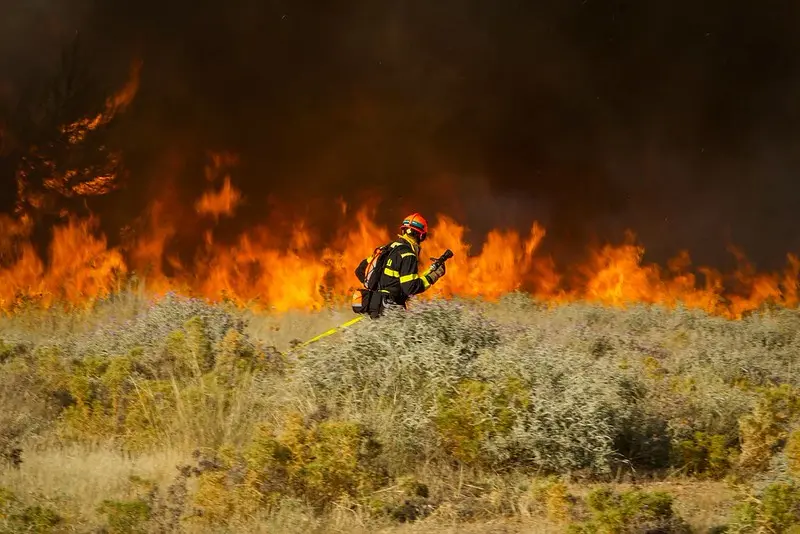
A compounding environmental catastrophe across Southern and Central Europe has ignited a major diplomatic standard-bearing moment at the highest levels of global governance. United Nations Secretary-General António Guterres, alongside foreign ministers from the United Kingdom, France, and Spain, has explicitly attributed the deadly wildfires currently sweeping the European continent to anthropogenic climate change. The unified political front has used the compounding emergency to issue an urgent, unyielding call for immediate acceleration in global greenhouse gas emission reductions.
Speaking from UN headquarters, Secretary-General Guterres warned that the global climate architecture is breaching critical thresholds, stating that the "climate crisis is in overdrive." Guterres alerted the international community that the record-breaking global heat recorded throughout recent weeks is merely a "warm-up act" for worse disruptions to come. This escalation coincides with the rapid intensification of El Niño—a naturally occurring climate pattern in the tropical Pacific Ocean characterized by weakened trade winds and warming sea surface temperatures—which is currently overlaying baseline global warming and, in Guterres’s words, "adding fuel to a planet already on fire."
The diplomatic intervention follows the release of a authoritative report by the World Meteorological Organization (WMO). The report confirms that the ongoing El Niño phenomenon is projected to mature into a "strong event" between now and October. The synthesis of human-induced atmospheric heating and natural ocean-atmosphere oscillations threatens to push global temperatures into uncharted territory, drastically elevating the risk of hyper-extreme weather, disrupted precipitation patterns, and catastrophic fire conditions across multiple continents.
Detailed Chronology of an Escalating Disaster
[Late Spring] -----------> [Mid-Summer] -----------> [Late Summer / Autumn Forecast]
Severe Drought Pre-conditions    Stubborn "Heat Domes"         WMO: Strong El Niño Apex
European Flora Dehydrated        Wildfires Surge Across Med.   Compounding Global Disruption
The Mediterranean Inferno: Emergence of the Heat Dome
The immediate antecedent to the ongoing wildfire crisis began in the late spring, when prolonged, multi-year rainfall deficits across Southern Europe severely depleted soil moisture and desiccated forest biomass. By mid-summer, a series of stagnant high-pressure atmospheric systems—frequently referred to as "heat domes"—locked over the Mediterranean basin and extended into Southern and Western Europe.
- Early Summer Pre-conditioning: Persistent dry spells across the Iberian Peninsula, Southern France, and the Aegean Archipelago reduced fuel moisture levels in forests and shrublands to unprecedented lows.
- The Mid-Summer Heatwaves: Temperatures routinely crossed the 40°C (104°F) threshold across Greece, Italy, France, and Spain, creating extreme fire weather conditions marked by low atmospheric humidity and strong, variable winds.
- Ignition and Escalation: Multiple fire fronts erupted almost simultaneously across Southern Europe. Firefighting infrastructures in several nations were overwhelmed as blazes encroached upon urban-wildland interfaces, forcing massive coastal evacuations, destroying fragile ecosystems, and causing multiple civilian and emergency worker fatalities.
The Meteorological Pivot: Enter El Niño
In tandem with localized atmospheric trapping over Europe, oceanographic indicators in the equatorial Pacific began registering rapid thermal anomalies. The transition from a prolonged La Niña period to an El Niño state occurred at a pace that surprised many climate monitoring agencies.
By late summer, the World Meteorological Organization formally declared the establishment of El Niño conditions, detailing how warmer equatorial surface waters were beginning to alter global atmospheric jet streams. The convergence of these macro-meteorological shifts culminated in the Friday briefing at the UN, where world leaders synthesized the operational realities on the ground with macro-climate projections, demanding a fundamental realignment of global energy and industrial policies.
Supporting Context & Technical Metrics
Quantifying the Catastrophe: Burn Rates and Thermal Anomalies
Data compiled by the European Forest Fire Information System (EFFIS) and the Copernicus Emergency Management Service illustrates the dramatic scale of the current fire season relative to historical baselines.
| Indicator | Historical Baseline (2006–2022 Average) | Current Season Metrics | Percentage Increase / Variance |
|---|---|---|---|
| Total European Burnt Area (Hectares) | ~350,000 ha (Mid-Season) | >780,000 ha | +122% above average |
| Mediterranean Sea Surface Temp. Anomaly | 23.5°C Baseline | Peak 28.7°C Recorded | +5.2°C Local Variance |
| Atmospheric CO2 Concentration | 418 ppm (2021) | ~424 ppm (Current) | Upward Planetary Trajectory |
| Wildfire Carbon Emissions (EU Sector) | ~40 Megatons CO2/year | >105 Megatons CO2 (YTD) | Substantial Net Positive Flux |
The spatial intensity of the blazes has altered local ecosystems. High-intensity crown fires have bypassed conventional firebreaks, generating fire-induced weather phenomena such as pyrocumulonimbus clouds. These structures produce lightning and unpredictable wind gusts, further scattering embers and accelerating the spread of fire.
       [ Elevated Greenhouse Gas Concentrations ]
                          │
                          ▼
            [ Baseline Global Warming ]
                          │
   ┌──────────────────────┴──────────────────────┐
   ▼                                             ▼
[ Heat Dome Formation ]               [ El Niño Oscillation ]
(European Atmospheric Stagnation)      (Pacific Thermal Loading)
   │                                             │
   └──────────────────────┬──────────────────────┘
                          ▼
             [ Extreme Wildfire Risk ]
The Mechanics of ENSO: How Ocean Coupling Amplifies Terrestrial Heat
The El Niño-Southern Oscillation (ENSO) is a principal driver of global climate variability. During an El Niño event, trade winds that typically blow westward along the equator weaken, allowing warm ocean water to surge eastward toward the South American coast.
- Oceanic Thermal Release: The redistribution of warm water releases immense latent thermal energy into the atmosphere, shifting global convective precipitation belts.
- Jet Stream Disruption: The altered atmospheric heating disrupts the polar and subtropical jet streams, leading to prolonged weather blockings—such as the persistent high-pressure ridges seen over Europe—that lock in extreme heat and drought.
- Compounding Human-Caused Heat: Because El Niño adds an additional layer of warming on top of baseline climate change driven by burning fossil fuels, global mean surface temperatures during strong El Niño years routinely shatter historical records.
Economic and Infrastructure Vulnerabilities
The economic fallout from the wildfire crisis extends well beyond immediate emergency response costs:
- Tourism Industry Disruption: Key Mediterranean economies face severe contractions in their primary summer revenue drivers as resort zones evacuate and travel advisories issue warnings against regional transit.
- Agricultural Rupture: Drought and fire have decimated olive groves, vineyards, and citrus orchards across Western Europe, straining agricultural supply chains already stressed by geopolitical friction.
- Civil Defense Strain: National firefighting capabilities are reaching operational limits. The rapid exhaustion of civil protection budgets has forced emergency requests for cross-border resource sharing under the European Union Civil Protection Mechanism (RescEU).
High-Level Rhetoric and Diplomatic Interventions
The UN Imperative: Guterres Issues Planetary Warning
Delivering a stark address to journalists, UN Secretary-General António Guterres framed the wildfire crisis not as a localized environmental emergency, but as a systemic breakdown of the Earth system caused by fossil fuel dependency.
"The climate crisis is in overdrive," Guterres stated. "What we are witnessing across Southern Europe and around the globe is not an anomaly—it is the predicted reality of unchecked greenhouse gas emissions. The global heat seen so far is just a warm-up act. As El Niño intensifies, it is adding fuel to a planet already on fire. Current global commitments remain woefully inadequate. We must move from reactive crisis management to an outright war on carbon emissions."
Guterres stressed that the window to limit global temperature rise to 1.5°C above pre-industrial levels—the primary target set by the 2015 Paris Agreement—is rapidly closing. He urged G20 nations, responsible for roughly 80% of global emissions, to radically accelerate their decarbonization timelines and provide robust financial support to vulnerable states on the frontlines of climate adaptation.
"The climate crisis is in overdrive... The global heat seen so far is just a warm-up act. As El Niño intensifies, it is adding fuel to a planet already on fire."
— António Guterres, UN Secretary-General
The European Triad: UK, France, and Spain Demand Structural Reforms
Joining the Secretary-General’s call, foreign ministers from the UK, France, and Spain delivered synchronized statements emphasizing the geopolitical and existential dimensions of the crisis.
- The United Kingdom: The UK Foreign Secretary underlined the national security implications of climate instability, emphasizing that escalating environmental crises drive forced migration, economic volatility, and regional instability. The UK delegation reaffirmed its commitment to international climate finance while pressing partners to honor pledges made under successive COP summits.
- France: The French Foreign Minister highlighted the strain on European infrastructure, pointing out that extreme fires are moving northward into regions historically unaccustomed to such events. France advocated for strengthening European climate resilience frameworks, modernizing trans-national firefighting fleets, and enforcing stricter industrial emission caps within the European Union’s Green Deal framework.
- Spain: Speaking on behalf of a country on the immediate frontlines of Mediterranean desertification, the Spanish Foreign Minister described the crisis as a direct challenge to human habitability in Southern Europe. Spain reiterated that immediate, sweeping mitigation efforts are far less costly than the long-term economic, ecological, and human toll of uncontrolled global warming.
Future Outlook: Meteorological Predictions and Policy Horizons
The WMO Projections: An Impending Climate Apex
The World Meteorological Organization’s latest scientific assessment presents a sober short-to-medium-term outlook. According to the WMO models, El Niño will continue to strengthen through the autumn, peaking between October and the early months of the following year.
[ Current Phase ] ───> [ Autumn Peak (Oct–Dec) ] ───> [ Extended Impacts (Early Next Year) ]
• High European Heat    • El Niño reaches "Strong"       • Global Mean Temp Records Broken
• Active Wildfires        Threshold                      • Severe Marine Heatwaves
• Severe Drought        • Disrupted Rainfall Patterns    • Escalated Ecological Stress
The WMO projects a high probability that global atmospheric temperatures will exceed historical maximums during this timeframe. Regional rainfall anomalies are expected to worsen, causing extreme wet conditions in some areas while deepening multi-year droughts in others, including parts of Southern Europe, Northern Africa, and South America.
Adapting Civil Defense and Rewriting Global Climate Policy
As the compounding impacts of climate change and El Niño unfold, international institutions and sovereign governments face two distinct imperatives: immediate tactical adaptation and radical long-term policy reform.
Tactical and Structural Adaptation
- Redesigning Urban-Wildland Interfaces: European nations must rewrite zoning laws, enforce defensible space around infrastructure, and phase out flammable mono-culture forestry practices in favor of climate-resilient ecosystem management.
- Expanding Inter-State Capabilities: Enhancing multinational response fleets like RescEU will be critical as single-nation emergency services find themselves repeatedly overwhelmed by multi-front fire crises.
- Upgrading Early Warning Infrastructure: Integrating satellite-based thermal imaging with real-time AI fire-behavior modeling will be vital to protecting populations and deploying resources pre-emptively.
Long-Term Strategic Decarbonization
The political momentum generated by the joint UN, UK, French, and Spanish statements is expected to shape upcoming multilateral negotiations, including the next UN Climate Change Conference (COP). The focus must shift decisively toward:
- Enforcing Binding Emission Cuts: Accelerating the phase-out of all unabated fossil fuels and setting enforceable national emission reduction targets.
- Operationalizing Climate Finance: Fully capitalizing Loss and Damage funds to assist nations suffering irreversible impacts from compounding climate disasters.
- Grid Modernization and Energy Sovereignty: Rapidly scaling renewable energy generation, energy storage infrastructure, and cross-border clean power grids to reduce carbon reliance while securing energy independence.
The present wildfire crisis across Europe serves as an undeniable physical confirmation of climate modeling. As El Niño amplifies baseline global heating, world leaders are left with a stark choice: translate high-level rhetoric into immediate, radical emissions reductions, or confront an accelerating cycle of planetary climate emergencies.