Executive Overview
The landscape of modern municipal solid waste management and advanced recycling is undergoing a structural transformation, driven by the critical need to meet aggressive state-mandated recycled content targets and evolving extended producer responsibility (EPR) regulations. At the forefront of this industrial evolution is a powerful, synergistic partnership between Rumpke Waste & Recycling, polypropylene (PP) innovator PureCycle, and major packaging producer IPL Schoeller.
During a joint webinar hosted by the Stewardship Action Foundation and the National Stewardship Action Council, representatives from these three organizations detailed how cutting-edge technologies are reshaping the postconsumer recycled (PCR) resin supply chain. By pairing state-of-the-art, artificial intelligence (AI)-powered Material Recovery Facility (MRF) sorting infrastructure with sophisticated solvent-based purification processes, the partnership is successfully transforming low-value scrap plastic into high-purity, food-grade resin.
This collaborative model addresses a long-standing bottleneck in the plastics recycling industry: the scarcity of high-quality feedstock. While packaging manufacturers face intense regulatory pressures and consumer demands to incorporate higher percentages of PCR content into their product lines, traditional sorting technologies have historically struggled to isolate specific polymers—particularly polypropylene—with the purity required for sensitive applications like food-contact packaging.
Through substantial capital investments in advanced optical sortation and AI systems, Rumpke has demonstrated that next-generation MRFs can achieve capture rates for polypropylene as high as 98% to 99%. This exceptional bale quality feeds directly into PureCycle’s proprietary dissolution facility in Ironton, Ohio, which outputs PureFive resin—a material trusted by packaging leaders like IPL Schoeller to produce clear deli tubs, hot-drink lids, and pickle containers. Together, these industry leaders are proving that regionalized, high-tech circular economies are not only viable but essential for the future of sustainable manufacturing.
Detailed Chronology of Technological Integration
The seamless integration between waste collection, advanced material sorting, and polymer purification did not happen overnight. It represents a deliberate, multi-year chronological progression of strategic investments, grant-backed initiatives, and infrastructure overhauls.
The 2021 Foundation: Initial PP Sortation Enhancements
The foundation of the current partnership was laid in 2021, when Rumpke Waste & Recycling recognized the untapped potential of polypropylene within the residential and commercial waste streams. Historically, PP was frequently mixed with other plastics or downgraded to lower-value applications due to sorting inefficiencies.
To bridge this gap, Rumpke secured financial and strategic assistance via a targeted grant from The Recycling Partnership’s Polypropylene Recycling Coalition. This funding enabled the waste management provider to integrate specialized sorting equipment designed explicitly to isolate polypropylene bales.
Between 2021 and the opening of its newer facilities, this initial upgrade allowed Rumpke to process approximately 8,200 tons of polypropylene, averaging a steady and reliable output of roughly 350 tons per month. This early success proved that targeted investments in separation technology could generate sufficient feedstock volume to attract industrial-scale chemical and physical recyclers.
The 2024 Paradigm Shift: Opening the Columbus MRF
Building upon the momentum of its earlier pilot investments, Rumpke executed a massive leap forward in 2024 by opening a cutting-edge, $100 million MRF in Columbus, Ohio. Constructed using advanced sorting hardware from machinex and other industry leaders, the facility was engineered to handle complex waste streams with unprecedented precision.
The Columbus plant incorporates a diverse suite of advanced recycling technologies tailored to target multiple material types simultaneously, with a heavy emphasis on capturing rigid plastics like polypropylene. According to Rumpke marketing specialist Rob Kurtz, the facility’s integration of next-generation optical sorters and automated tracking systems allows the company to capture and sort PP at an astonishing 98% to 99% effectiveness rate. This leap in technological efficiency transformed Rumpke from a conventional regional hauler into a high-grade materials supplier capable of meeting the stringent purity requirements demanded by advanced processing facilities.
Current Expansion: The Upcoming Cincinnati Facility Overhaul
With the success of the Columbus MRF serving as a proven blueprint, Rumpke is not resting on its laurels. The company has announced plans to invest between $55 million and $60 million into upgrading its 14-year-old facility in Cincinnati, Ohio.
While the facility has served the region well for over a decade, it requires a comprehensive technological modernization to match the throughput and efficiency standards of the Columbus plant. The planned overhaul includes the installation of advanced optical sorters and AI-powered machinery capable of continuous learning and real-time material identification.
Furthermore, the expansion project encompasses a larger physical footprint, including an expanded tip floor, increased warehouse storage, and a higher number of shipping docks. These logistical enhancements are designed to streamline the outflow of sorted commodities, directly accelerating the velocity at which recycled materials re-enter the circular economy.
PureCycle’s Downstream Scaling in Ironton and Pennsylvania
As Rumpke optimized its sorting capabilities upstream, PureCycle scaled its processing capacity downstream. PureCycle established its flagship purification facility in Ironton, Ohio, designed to process up to 107 million pounds of polypropylene annually.
To support this massive processing engine, PureCycle has established offtake agreements with multiple bale suppliers. However, the company notes a distinct stratification in feedstock quality. While lower-grade bales originating from conventional sorting facilities are routed to PureCycle’s secondary sortation plant in Denver, Pennsylvania—where incoming material composed of roughly 70% PP is upgraded to a 95% purity standard—bales arriving from Rumpke’s advanced Columbus facility bypass secondary sorting altogether.
Complementing the Ironton purification plant, PureCycle recently brought its compounding site online. This addition enables the facility to produce up to 100 million pounds of high-grade resin pellets annually, cementing the operational bridge between municipal waste collection and industrial manufacturing.
Supporting Context & Metrics
Understanding the mechanics and environmental significance of this partnership requires an examination of the underlying metrics, operational geographies, and technological distinctions that set this supply chain apart from conventional recycling models.
Material Recovery and Geographic Footprints
The economic and environmental viability of recycling relies heavily on logistics and transportation emissions. Rumpke has structured its operational geography to minimize transit footprints, aiming to send its processed recycled commodities to manufacturing facilities within a 250-mile radius of its MRFs. Notably, approximately 80% of Rumpke’s recovered materials find their second life within the state of Ohio, directly supporting localized manufacturing ecosystems.
| Metric / Operational Factor | Data / Specification |
|---|---|
| Rumpke PP Processing Volume (Historic) | ~8,200 total tons (~350 tons/month since 2021) |
| Rumpke PP Sortation Efficiency | 98% to 99% capture and sorting rate |
| Columbus MRF Capital Investment | $100 million (Opened 2024) |
| Cincinnati MRF Planned Upgrade | $55 million to $60 million |
| PureCycle Ironton Plant Capacity | ~107 million pounds per year |
| PureCycle Compounding Site Output | Up to 100 million pounds of resin per year |
| IPL Schoeller PCR Incorporation | 20% to 25% PCR in food-contact packaging |
| Local Distribution Target | Within a 250-mile radius (~80% stay in Ohio) |
The Dissolution Technology Distinction
A critical technical nuance emphasized during the stakeholder webinar is PureCycle’s operational classification. While the broader industry often groups advanced processing methods under the umbrella of "chemical recycling," Christian Bruey, PureCycle’s director of sustainability and external affairs, draws a sharp and important distinction regarding his company’s methodology.
PureCycle does not utilize depolymerization—the chemical breakdown of polymer chains into their constituent monomers, which is common among other chemical recycling operations. Instead, PureCycle employs a physical dissolution process.
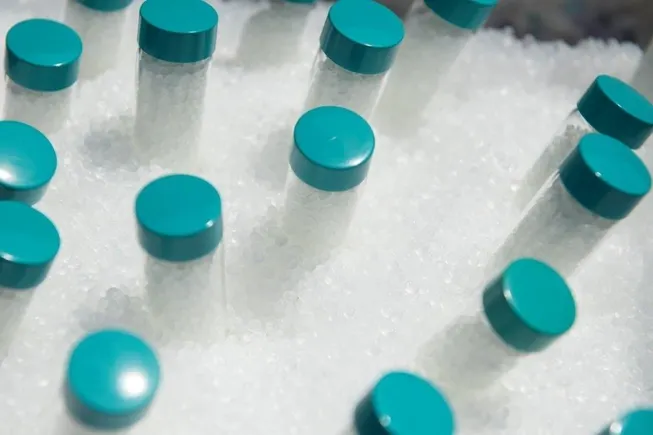
In this system, post-consumer polypropylene is dissolved in a specialized solvent to strip away contaminants, colorants, additives, and odors at a molecular level. Once purified, the polypropylene is resolidified into uniform pellets known as PureFive resin. Because the polymer chains remain intact throughout the dissolution process, PureCycle avoids the energy-intensive breaking and rebuilding of chemical bonds typical of true depolymerization.
Furthermore, PureCycle operates entirely independently of mass balance accounting credits. In many advanced recycling schemes, companies allocate recycled content credits across production lines based on mass balance accounting, even if the physical end product contains virgin material. PureCycle rejects this model for its primary output:
"There are no mass balance credits that we need to sell. The pellet that we sell is the recycled content," Bruey asserted during the discussion.
Every pellet of PureFive resin exiting the Ironton facility physically embodies the postconsumer material sourced from upstream partners like Rumpke.
Official Statements & Industry Perspectives
The collaborative success of this closed-loop ecosystem relies on open communication and aligned goals across the entire supply chain. Key leaders from Rumpke, PureCycle, and IPL Schoeller shared vital insights during the Stewardship Action Foundation webinar regarding the challenges and triumphs of scaling PCR integration.
Rumpke Waste & Recycling: The Value of Upstream Innovation
Rob Kurtz emphasized that heavy capital expenditures in modern sorting equipment are not merely operational upgrades; they are relationship-builders that instill confidence in end-market buyers.
"What we found by utilizing the newer technology is we are able to sort more efficiently and effectively," Kurtz explained, highlighting the 98% to 99% capture rate for polypropylene achieved at the Columbus MRF.
Kurtz also underscored the forward-looking vision of the upcoming Cincinnati facility investments, noting that adding advanced optical sorters, AI-driven identification systems, and expanded loading docks is essential "to help us get all of that material back out into the circular economy."
PureCycle: Feedstock Quality as a Competitive Advantage
Christian Bruey of PureCycle pointed directly to the disparity in quality across the recycling market, noting that not all MRFs are equipped to deliver the high-grade bales required for sensitive end uses.
"Not everybody has the latest and greatest technology like Rumpke does at the Columbus MRF," Bruey stated.
While lower-quality bales require intensive remediation at secondary sortation centers like the one in Denver, Pennsylvania, Rumpke’s advanced sorting infrastructure provides PureCycle with a pristine, direct-to-plant feedstock. This high input quality ensures that the Ironton facility can maintain consistent output metrics for its PureFive resin, which is already utilized in consumer-facing applications such as hot-drink lids and specialty stadium cups.
IPL Schoeller: Securing Food Safety and Regulatory Compliance
For packaging manufacturers, the ultimate test of recycled resin is its ability to meet rigorous food-safety standards while satisfying statutory mandates. Melissa Vettleson, a sustainability and materials engineer for IPL Schoeller, discussed how the reliability of the Rumpke-PureCycle supply chain has given her company the confidence to scale its sustainable product lines.
IPL Schoeller currently utilizes PureFive resin to manufacture food-contact packaging, including clear deli meat tubs containing 20% food-grade recycled PP and pickle containers featuring 25% PCR content. Vettleson noted that these applications are critical for keeping the company compliant with emerging state-level regulations:
"The PureFive pellets help IPL Schoeller meet specific recycled content and extended producer responsibility related targets," she explained.
IPL Schoeller is a registered producer under Oregon’s ground-breaking EPR program and actively distributes food containers in New Jersey, which enforces strict statewide recycled content mandates for rigid plastic packaging. Vettleson credited the combined efforts of Rumpke’s meticulous bale quality and PureCycle’s advanced dissolution technology with providing "that consistent quality that we can rely on, a state that’s going to work in our process and provide a very high level of food safety."
Future Outlook & Regulatory Horizon
As the solid waste and packaging industries look toward the remainder of the decade, the integration of AI-powered sorting and physical dissolution models offers a promising template for overcoming systemic recycling challenges. However, the trajectory of this market will be heavily influenced by external regulatory pressures and shifting public perception regarding advanced recycling technologies.
Navigating Regulatory Headwinds and Public Scrutiny
The broader landscape of advanced and chemical recycling faces intense scrutiny from environmental advocacy groups. Critics frequently demand tighter environmental regulations, increased operational transparency, and rigorous oversight of facility emissions and outputs. At the same time, federal agencies such as the U.S. Environmental Protection Agency (EPA) have offered increasingly vocal support for technological innovations in plastics recycling to combat the global waste crisis.
By positioning its dissolution process as a physical purification method distinct from traditional depolymerization—and by completely avoiding mass balance credit accounting—PureCycle has managed to navigate some of these controversies. Nonetheless, the industry as a whole must maintain high standards of transparency to retain consumer trust and secure social license to operate.
The Expansion of EPR and Mandatory Recycled Content
State-level legislation will remain the primary market driver for PCR adoption in the United States. Programs such as Oregon’s EPR framework, alongside rigid plastic packaging mandates in states like New Jersey, California, Washington, and Maine, are fundamentally altering corporate procurement strategies.
Packaging producers can no longer treat sustainability as an optional corporate social responsibility initiative; it is now a legal prerequisite for doing business in major domestic markets. Consequently, partnerships that guarantee a secure, traceable, and food-safe supply of PCR resin—such as the alliance between Rumpke, PureCycle, and IPL Schoeller—will transition from niche collaborations to indispensable anchors of the American manufacturing sector.
The Road Ahead: AI, Automation, and Regional Circularity
Looking forward, the roadmap for sustainable waste management points toward deeper automation, greater use of artificial intelligence to sort complex multi-material packaging streams, and localized supply chains that keep carbon footprints low.
Rumpke’s continued investments in Ohio underscore the economic viability of regional circular economies. By capturing valuable polymers close to home and routing them to specialized purification facilities within the same geographic corridor, industrial partners are cutting transport emissions while simultaneously insulating themselves against global supply chain volatility.
Ultimately, the success of this tripartite model demonstrates that solving the plastics crisis requires cooperation across the entire lifecycle of a product. From municipal waste collection and AI-driven sorting to molecular purification and high-precision packaging manufacturing, the path to a fully circular economy is being paved by technology, regulatory alignment, and proactive industrial partnership.