For two decades, renowned National Geographic photographer Joel Sartore has pursued one of the most ambitious and poignant wildlife documentation projects in modern history: the Photo Ark. Operating with a deceptively simple yet striking formula—photographing species of every size against plain black or white backgrounds—Sartore has traveled the globe to capture the raw, unfiltered essence of animals living under human care.
Marking its milestone 20th anniversary somewhere in Australia, the Photo Ark officially surpassed a staggering threshold: its 18,000th documented animal species. While pinning down the exact subject that tipped the scales is nearly impossible amid a relentless stream of field work, Sartore playfully and proudly awards the honor to the critically endangered red handfish (Thymichthys politus). Looking remarkably like a grumpy, crimson Muppet, this rare marine creature perfectly embodies the project’s core mission: bringing vital, spotlight-grabbing attention to the planet’s most vulnerable and overlooked inhabitants.
Born out of a deeply personal crucible—a pivotal moment when Sartore paused his high-flying international assignments to care for his wife during her successful cancer recovery—the Photo Ark has transformed from a localized tribute to local wildlife into a global conservation institution. Today, the project serves as an invaluable visual record of biodiversity at a critical juncture in Earth’s history. Through intimate portraits that capture everything from massive elephants to microscopic insects, Sartore is racing against time to make humanity look its fellow creatures in the eye before irreversible extinctions alter the planet forever.
Detailed Chronology: Two Decades of Unrelenting Fieldwork
The Genesis: A Wife’s Illness and a Local Awakening
Twenty years ago, Joel Sartore was living the classic life of a globetrotting photojournalist for National Geographic. His lens captured far-flung ecosystems, dramatic landscapes, and iconic wildlife. However, his trajectory shifted abruptly when his wife was diagnosed with cancer. Pulling back from international assignments to stay close to home in Nebraska, Sartore sought solace and purpose nearby. He began visiting local zoos and photographing animals against clean, neutral backgrounds.
When his wife successfully recovered from cancer, the localized photography experiment did not end. Instead, it evolved into an obsessive, life-defining crusade. Sartore realized that standard wildlife photography, while beautiful, often failed to connect deeply with the general public because it placed animals in sprawling, distracting natural habitats. By isolating subjects against stark black or white backdrops, he forced viewers to confront the animal directly—eye to eye—evoking immediate empathy and stripping away the noise of the natural world.
Opportunistic Encounters and Relentless Pursuit
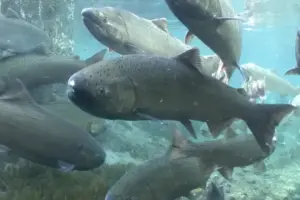
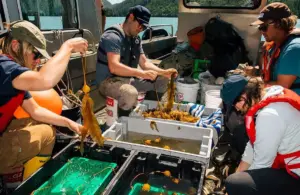
If you look for Joel Sartore, you will almost invariably find him working. Displaying a practical, optimistic Midwestern demeanor, the photographer captures subjects wherever they happen to appear. His methodology is aggressively opportunistic, spanning zoos, aquariums, pet shops, and bioblitzes—intensive events where scientists and volunteers race against the clock to catalog every living species in a given area. His workspace has included stream samplings by the Tennessee Valley Authority, subterranean caves in Kenya, and even his own front porch in Nebraska.
This opportunistic ethos is matched by fierce dedication. During a mid-August interview, Sartore noted that while scheduling is nearly 100% opportunistic, his preparation can span years. He famously spent four years scouting a single bull moose in the wild before capturing its likeness.
His relentless drive was famously captured by Chun-Wei Yi, director of the PBS documentary RARE: Creatures of the Photo Ark. Yi recounted trailing Sartore through the grueling, humid Cameroon highlands in Central Africa after a fruitless 10-hour hike searching for Cross River gorillas (Gorilla gorilla diehli). Expecting the exhausted photographer to finally capitulate, Yi instead watched in amazement as Sartore dropped to his knees—not out of defeat, but because he had discovered a fresh pile of cow dung. Peeling back the moist lumps with ecstatic enthusiasm, Sartore unearhed four new species of dung beetles for the Photo Ark, proving that a master conservation photographer can find wonder and value where others see only refuse.
Historic Milestones and Heart-Wrenching Goodbyes
While the Photo Ark celebrates joyous discoveries—such as discovering a rare moth on a domestic screen door or securing portraits of mischievous springbok mantises at the Auckland Zoo—it is also heavily marked by profound grief. Sartore has photographed multiple "endlings"—the very last known individuals of their respective species—before watching them slip entirely into extinction.
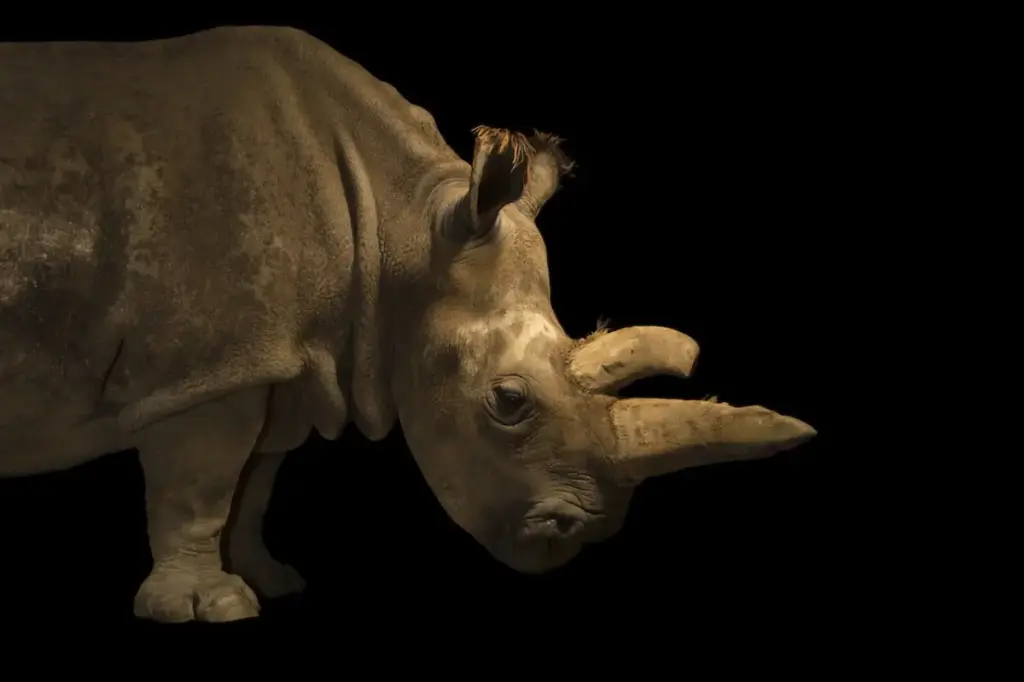
Among the most heart-wrenching memories for Sartore is his encounter with Nabiré, a northern white rhinoceros (Ceratotherium simum cottoni) housed at the Dvůr Králové Zoo in the Czech Republic. When Sartore arrived to photograph her in July 2015, Nabiré was elderly and suffered from severe fluid-filled cysts that precluded surgery. Guided gently by a keeper who had raised her from infancy, Nabiré was lured into a room prepared with Sartore’s iconic black backdrop using her favorite vegetation pushed ahead via a broom.
"She was super sweet," Sartore recalls. "She came over to the bars and sniffed us, and we scratched her nose and her ears and she ate a little bit more. And then she laid down, went to sleep." As the crew packed up their gear, Sartore stopped and placed his hand on the massive animal, feeling the rhythmic rise and fall of her breath. She passed away just one week later. Today, her subspecies is functionally extinct, with only two aging females surviving in Kenya and a handful of frozen embryos offering a slim, uncertain path toward resurrection.
Similarly, Sartore photographed Toughie, a Rabbs’ fringe-limbed tree frog (Ecnomiohyla rabborum) from Panama, who stood as the final known representative of his species. Toughie died under professional care at the Atlanta Botanical Gardens in 2016, inspiring an elegiac musical tribute to his passing. These poignant losses fuel Sartore’s urgency, reminding him—and the world—that human survival is inextricably linked to the fate of these disappearing species.
Supporting Context & Metrics: The Scale of the Photo Ark
Total Species Documented: 18,000 species and counting, achieved during the 20th anniversary tour in Australia.
Primary Subject Focus: Animals living under human care, including those in zoos, aquariums, rescue centers, and breeding facilities worldwide.
Milestone Species: The critically endangered red handfish (Thymichthys politus), an elusive, benthic marine creature native to Tasmanian waters, serves as the symbolic 18,000th subject.
Work Ethic: Sartore maintains a relentless schedule, working 364 days a year—taking only Christmas off—balancing field photography with international speaking engagements, writing, and interviews.
The Next Generation: Cole Sartore, his 33-year-old son, frequently accompanies him on international expeditions, acting as a skilled photographer and designated successor to carry the Photo Ark forward.
Official Statements and Expert Perspectives
The profound impact of Joel Sartore’s work extends far beyond aesthetic appreciation, directly influencing global conservation strategies and public policy.
Morgan Heim, a National Geographic Explorer and executive director of the International League of Conservation Photographers (ILCP), offered high praise for her colleague’s enduring legacy:
"Joel Sartore represents the truest spirit of conservation photography, putting his storytelling skills to work for the planet long before the term was widely used… When you look at the scale of the Photo Ark, the sheer effort behind it, and how effectively he puts that work to work, it’s mind-boggling."
Heim also shared a vivid anecdote highlighting the unpredictable nature of field assignments, recalling an instance where a vulture unexpectedly vomited on her while she was holding lighting equipment for Sartore: "Don’t worry—I used his softbox as a shield, and the photos were phenomenal."
Despite widespread acclaim and tangible conservation victories—such as the international publicity blitz that helped save the critically imperiled Florida grasshopper sparrow (Ammodramus savannarum floridanus) from total collapse—Sartore consistently deflects personal praise.
"I can’t sit here and pound my chest over any of them," Sartore reflects. "I meet environmental heroes every single day. I’m kind of a voyeur. I’m popping in and harvesting the good work that these people do. And then I go on down the road. But I’m not skipping away. I’m kind of walking with my head down on a lot of these."
Rather than succumbing to environmental despair over the extinction crisis, Sartore remains staunchly optimistic. His hope is anchored firmly in the dedicated conservationists he meets worldwide who have devoted their lives to protecting biodiversity.
"I don’t get down or depressed… we have too much work to do," Sartore asserts. "We want to show people what biodiversity looks like at this point in time, so people will wake up and care and want to do something other than fight with each other."
Future Outlook: Securing the Legacy of the Ark
As the Photo Ark enters its third decade, questions regarding its long-term sustainability naturally arise. Operating a project of this magnitude requires tireless physical exertion, deep financial investments, and unwavering psychological resilience. Recognizing these demands, Sartore has thoughtfully planned for the future.
His 33-year-old son, Cole Sartore, has increasingly stepped into the fold as an integral partner on overseas expeditions. Described by his father as his "heir apparent," Cole shares the same deep passion for wildlife and technical proficiency behind the camera, ensuring that the visual cataloging of Earth’s species will continue long after Joel steps back from active fieldwork.
Furthermore, Sartore’s philosophy challenges humanity to fundamentally rethink its relationship with the animal kingdom. Having looked thousands of different species directly in the eye, he argues that animals possess far greater cognitive complexity, emotional depth, and problem-solving capabilities than mainstream society typically acknowledges—pointing to the tool-using intelligence of ravens, the sophisticated communication networks of prairie dogs, and the navigational dances of honeybees.
"I just have looked so many animals in the eye," Sartore concludes. "When you are really close to an animal and you are looking them in the eye, don’t they have a basic right to exist, all the way down to the grasshoppers and the praying mantises? Don’t they? I think they do."
Through the remaining chapters of the Photo Ark, Joel Sartore continues to hold up a mirror to humanity, urging civilization to recognize the staggering diversity of life sharing our planet before silence replaces song.